This article contains affiliate links: if you buy through them we may earn a commission, at no extra cost to you. Read our affiliate disclosure.
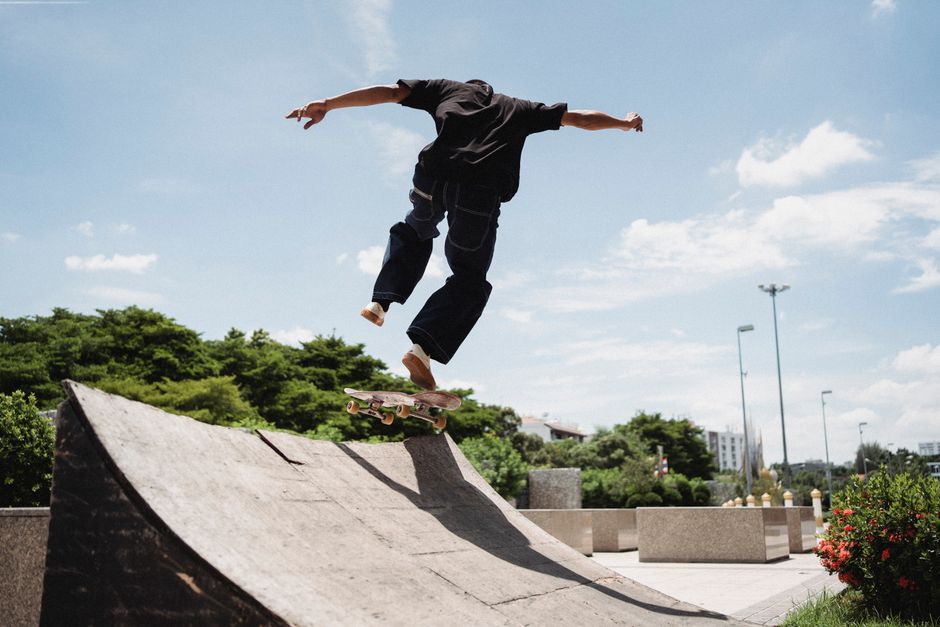
It is the first warm Saturday of spring and the park is packed. A dad is lacing up his skate shoes next to his nine-year-old, who is strapping on wrist guards and snapping her helmet buckle without being asked. Across the bowl, a teenager rolls the bolts on his trucks with a skate tool before his first run. Nobody is making a fuss. That is skateboarding injury prevention: the small habits around a skater, from how you bail out of a slam and what you wear to where and when you skate, that aim to lower the chance of getting hurt. They can lower the odds. They cannot promise a session without a fall.
Quick answer: The American Academy of Orthopaedic Surgeons (AAOS) advises learning to fall (crouch, roll, land on the fleshy parts, stay relaxed), wearing a properly fitted helmet, wrist guards and knee and elbow pads, learning to stop and turn before tricks, practicing tricks in a supervised skatepark, and keeping out of traffic and off wet ground. See a sports medicine doctor, physical therapist or athletic trainer if a wrist or ankle is still swollen or sore the next day, and call 911 for any concussion danger sign or a crash with a car.
General information, not medical advice. This page is about lowering risk. For what each skating injury looks like and what happens next, see our skateboarding injuries guide; for the sport as a whole, start at the skateboarding hub.
Where the risk sits for skaters
Prevention works best when it aims at how skaters actually get hurt. In a 2020 analysis of US emergency department data, about three in four head and face injuries came from simply falling off the board, and about one in fourteen from being hit by a motor vehicle (Partiali and colleagues, Journal of Oral and Maxillofacial Surgery). An older US study found that the skateboarding injuries bad enough to need a hospital stay were far more likely than average to involve a car (Kyle and colleagues, Journal of Trauma, 2002). So the two big levers are a less harmful fall and no cars.
Warm up before you roll
Unlike soccer, skateboarding has no widely tested named warm-up program such as the FIFA 11+, and we did not find one published by World Skate or a medical body. What exists is common practice, not trial evidence. A typical order is easy pushing and carving, leg swings, ankle rolls, then tricks you can land nearly every time before anything new. Our training page has a full routine. The one part with a named source is the board check: AAOS suggests inspecting your equipment before each use, so tighten loose trucks and look for a cracked deck or a chipped wheel before you drop in.
Learning to fall
Falling is the skill most new skaters skip. The AAOS and POSNA position statement says to get low when balance goes, land on the fleshy parts instead of the hands, roll, and stay loose. In a Br J Sports Med review of contest video, McIntosh and colleagues saw many falls but also real skill among competitive skaters at controlling them and limiting head impacts.
Ways to practice, as session habits rather than a tested program:
- Start on grass or a soft surface, standing, and rehearse the crouch-and-roll with your wrists tucked rather than reaching out.
- On the board, bail off sideways at walking speed on flat ground before you ever try it rolling.
- Once you have pads on, learn to knee-slide on a smooth bowl or ramp so a slam turns into a slide.
- Let a bad trick go instead of hanging on to it.
Progress in the order the experts recommend
AAOS is clear about sequence: master stopping, slowing down and turning before tricks, practice tricks and jumps in a controlled place such as a supervised skatepark, and do not go faster than your experience allows. We found no study that tests a specific trick ladder, so the order on our training page is common skater practice, not a published progression. The American Academy of Pediatrics (AAP) adds that supervised, technique-focused resistance training is safe and useful for kids and teens, with gains over at least 8 weeks of 2 to 3 sessions a week.
Balance and strength off the board
A 2024 scoping review found only 19 studies on the physical demands of skateboarding, so no one can yet say conditioning prevents injury. The one firm recommendation is NATA’s: a balance and neuromuscular program of at least 3 months after an ankle sprain. NATA also says a previous sprain is the most consistent risk factor for the next one, so a first rolled ankle deserves proper rehab. Our training page shows the exercises; if an ankle keeps rolling, a physical therapist (PT) can build the plan.
Where you skate matters
Surface and surroundings change the odds, and this is where the sources are most direct.
- Skatepark over street. In a US trauma database of 24,903 injured skaters, injuries at skateparks were linked to lower odds of severe traumatic brain injury than injuries elsewhere (Mitchao and colleagues, Injury, 2022). AAOS recommends a supervised skatepark for tricks and jumps.
- Stay out of traffic. AAOS says to avoid traffic, never hold on to a moving vehicle (“skitching”), and avoid crowded areas.
- Scan the ground. AAOS lists cracks, rocks and debris as hazards, and says to avoid homemade ramps.
- Skip wet days. AAOS says never to skate in wet weather.
- Leave the headphones home. AAOS says not to wear them, so you can hear a car, a bike or a skater behind you.
- Watch the light. Nationwide Children’s Hospital warns that skating at dusk or after dark can be dangerous; choose a lit park over the street.
NATA says to get used to the heat gradually over 7 to 14 days, and that heat stroke (confusion, collapse, odd behavior) is an emergency: call 911 and start cooling. The American Academy of Dermatology recommends a broad-spectrum, water-resistant sunscreen of SPF 30 or higher. On lightning, NATA’s guidance is that no place outside is safe and to wait 30 minutes after the last thunder. See our session and contest day page for more.
Helmets, wrist guards and pads: what is verified and what is not
Helmets. Helmet use among skaters is low: only about 5% of the injured skaters in the 2022 trauma database study wore one, and a CDC analysis found 74.6% of middle schoolers in selected states rarely or never wore a helmet when skateboarding or rollerblading. In that same trauma study, helmet use was linked to about half the odds of a severe brain injury. That is an observational link, not proof of cause. The Consumer Product Safety Commission (CPSC) lists ASTM F1492 (and Snell N-94) as the standards for skateboard helmets, which are designed for more than one moderate impact, but only a limited number. AAOS says a properly fitting helmet is for “any age, level of experience, or arena”, sits flat and low on the forehead, has side straps in a “V” under each ear, and does not move when you shake your head. Replace it if damaged, outgrown, or at least every 5 years.
Wrist guards and pads. AAOS says wrist guards help support the wrist and reduce the chance of breaking a bone in a fall, and that knee and elbow pads reduce the severity of cuts and scrapes. We found no large study of wrist guards in skateboarders; the best evidence comes from neighboring sports, where in-line skaters without wrist guards had about ten times the odds of a wrist injury (Schieber and colleagues, New England Journal of Medicine, 1996) and a systematic review in snowboarders found a lower wrist injury risk with guards (Russell and colleagues, 2007). The AAP puts the reduction at almost 90% for wrist guards, 80% for elbow pads and 30% for knee pads; treat those as published estimates, not guarantees.
Maker claims. Certification labels such as “CPSC” and “ASTM F1492” are the verifiable part; look for them inside the helmet. Words like “impact-absorbing” or “tough” are marketing and mean little without a standard behind them. AAOS also recommends closed-toe shoes with slip-resistant soles.
Two pieces of kit that fit this checklist; check the label standards before you buy, and see our skateboarding gear guide for sizing and more options.
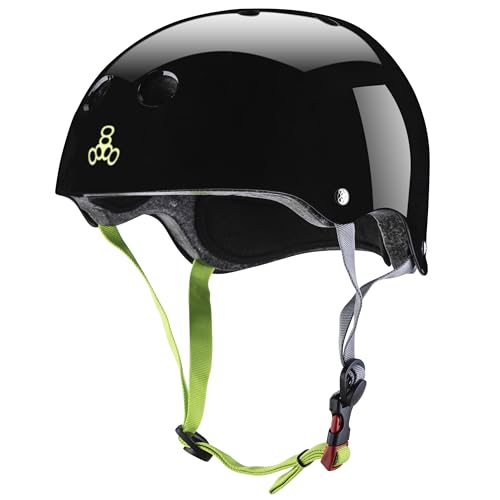
Triple Eight Dual Certified Helmet
- CPSC bike + ASTM F1492 (per listing)
- EPS liner, adjustable fit

Triple Eight Saver Series 3-Pack
- Knee, elbow pads and wrist guards
- Junior to Large
$41.00 at Amazon, as of Nov 17, 2026 01:07 UTC
Check price on AmazonConcussion: prevention and what to do
A helmet may cut the risk of a severe brain injury, but it does not rule out a concussion. The CDC HEADS UP program says that anyone who might have a concussion stops for the day and does not return until a health care provider clears them. At World Skate events, a suspected concussion means removal and no return for 14 days, and then only after a medical practitioner clears the skater. In one US trauma center study (Tominaga and colleagues, Brain Injury, 2015), most of the head impacts in admitted skaters were to the back of the head, which fits the board-shoots-forward, skater-falls-backward slam; it is one more reason to practice getting low and staying loose. Call 911 or go to the emergency department for CDC danger signs such as one pupil larger than the other, a worsening headache, slurred speech, repeated vomiting, seizures or loss of consciousness.
Young skaters
AAOS and the Pediatric Orthopaedic Society of North America do not recommend skateboarding for children under 5, and say that children 6 to 10 should be watched closely by an adult. They advise a helmet, wrist guards and knee and elbow pads for all children and teens. For age-by-age notes, see our youth skateboarding page.
What prevention cannot do
No helmet, pad or habit makes skateboarding injury-proof. Most advice here rests on observational studies and neighboring sports, and falls are part of learning; prevention aims to make them less likely to hurt, not to remove them. For everyday basics after a session, see our recovery page.
When to see a professional
- Emergency (call 911): any concussion danger sign, a bone that looks bent or out of place, numbness, a deep wound, or a crash with a car.
- Within a day or two: a wrist or ankle that stays swollen or sore, a child who protects an arm, or a suspected concussion. AAOS notes that a scaphoid fracture near the thumb can be mistaken for a sprain.
- Soon: an ankle that keeps rolling, or pain that returns session after session. Ask a sports medicine doctor, physical therapist or athletic trainer.
Skateboarding injury prevention: FAQs
How do you learn to fall off a skateboard?
AAOS advises getting low, landing on the fleshy parts of the body instead of your hands, rolling, and staying relaxed. Practice on grass first, then at slow speed on flat ground, and add pads before you try knee slides.
Do wrist guards prevent broken wrists in skateboarding?
AAOS says they reduce the chance of breaking a bone in a fall. The strongest studies come from in-line skating and snowboarding, and we found no large skateboarding-only study.
Does a helmet prevent concussion?
Not entirely. Helmet use was linked to about half the odds of a severe brain injury in one large US trauma database, but any hard fall can still cause a concussion. The CDC says a skater with a suspected concussion stops for the day and returns only when a health care provider clears them.
Is a skatepark safer than skating on the street?
For serious injuries, the research points that way. Skatepark injuries were linked to lower odds of severe brain injury than injuries elsewhere, and the injuries serious enough for a hospital stay were much more likely to involve a car in one US study. AAOS recommends a supervised skatepark.
Sources
- AAOS OrthoInfo, Skateboarding Safety
- AAOS and POSNA, Position Statement 1127, In-Line Skating and Skateboarding Safety
- AAOS OrthoInfo, Scaphoid Fracture of the Wrist
- Kyle and colleagues, skateboarding injuries and participation rates, Journal of Trauma, 2002
- Partiali and colleagues, skateboarding head and face injuries, Journal of Oral and Maxillofacial Surgery, 2020
- Mitchao and colleagues, helmets and skatepark injuries, Injury, 2022
- Waltzman and colleagues (CDC), helmet use among middle school students, Journal of Safety Research, 2023
- Tominaga and colleagues, skateboarding head injuries at a trauma center, Brain Injury, 2015
- McIntosh and colleagues, managing head injury risks in competitive skateboarding, British Journal of Sports Medicine, 2021
- Schieber and colleagues, wrist guards in in-line skaters, New England Journal of Medicine, 1996
- Russell and colleagues, wrist guards in snowboarders, systematic review, Clinical Journal of Sport Medicine, 2007
- NATA position statement on conservative management and prevention of ankle sprains
- American Academy of Pediatrics, resistance training for children and adolescents
- American Academy of Pediatrics, HealthyChildren.org, safety at play
- NATA position statement on exertional heat illnesses
- NATA position statement on lightning safety
- American Academy of Dermatology, how to apply sunscreen
- CDC HEADS UP, concussion signs, symptoms and danger signs
- World Skate, Skateboarding Street and Park Competition Rules (April 2025)
- Nationwide Children’s Hospital, Center for Injury Research and Policy, skateboarding
General information for education only, not medical advice. It does not replace a visit with a doctor, physical therapist or athletic trainer. See how we write and check our pages in our editorial policy.