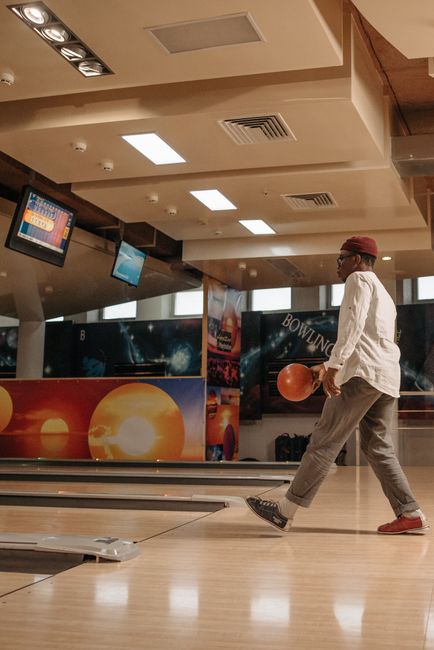
Ninth frame, game three, lane 14. You left the 7-10 split a minute ago and your next shot is already starting in your head: a missed spare, a lost game, a lost match. The ball is back in the rack, your team is watching, and the lane has not changed one bit. Mental training for bowlers is the practice of using attention, routines, self-talk and planning to bowl the next shot, not the last one, whether you are in a Wednesday league, a high school match or a tournament squad. It does not replace practice, and it cannot promise a higher average.
Quick answer: A short, repeatable pre-shot routine, a plan for what you do after a split or an open frame, and goals you control are the most practical mental tools for bowlers. Research on bowling itself is small, so most of this is general sport-psychology guidance, and none of it guarantees a score. See a doctor or a licensed mental health professional, not only a coach, if worry, low mood, disordered eating or exhaustion are affecting daily life.
General information for bowlers. Back to the bowling hub. Food, drink and logistics for a long block are on our league night and tournament day page, and the physical side is on the bowling training page.
What the research on bowlers says, and what it does not
Bowling has far less sport-psychology research than golf or tennis. A 1996 study in the Journal of Sports Sciences (Thomas and colleagues) had 172 bowlers rate themselves on a set of skills. Bowlers averaging 170 or more differed from those averaging under 135 on seven components, including greater mental toughness, more planning and evaluation, and more confidence in their equipment and technique. It was a self-report comparison: it shows how better bowlers describe themselves, not that training those traits raises an average.
A 2018 study in the same journal (Goh and colleagues) tracked the eyes of 11 elite and 10 sub-elite ten-pin bowlers under low- and high-anxiety conditions. Before starting the approach, bowlers looked at more locations when anxious, whatever their level. Elite bowlers held a longer quiet eye (a steady final look at a target) during the movement itself rather than before it. It was a small lab study, but it fits a simple idea: pressure can make attention wander, and a specific target gives it somewhere to return.
A pre-shot routine for the approach
A pre-shot routine is the same short sequence every time before you step onto the approach. An Exercise and Sports Science Australia (ESSA) position statement on performance under pressure (Schweickle and colleagues, Sports Medicine, 2026) lists pre-performance routines among four evidence-based strategies. It is a broad review across sports, not a bowling trial.
Bowling suits a routine because you shoot, step back and wait your turn. We did not find a study that tests a specific bowling routine, so the sequence below is common coaching practice, not a prescription. Build your own and keep it short:
- Read: check the lane and pick your target (arrow, dot or breakpoint) and the pin you are aiming at, before you pick up the ball.
- Set: dry the ball and your hand, take your stance and one slow breath with a longer exhale.
- See it: look at the target and picture the line the ball will take.
- Go: one cue word such as “smooth” or “through”, then start your approach and let the swing happen.
- Finish: hold your balance at the foul line until the ball hits the pins, then step back and decide what the shot told you.
Practice the routine in league and open bowling until it takes about the same time every shot, so it feels normal on a big night. Our bowling rules page covers etiquette and scoring.
Handling a split or an open frame
Many bowlers give away the next shot after a split or an open frame. We found no bowling study on this, so these are common coaching ideas:
- Give it a short, fixed ending. One breath and one sentence, for example “Pin was left, next shot,” then step back.
- Shoot the spare as its own shot. The spare has its own target, its own line and its own routine.
- Sort the cause quietly. Was it your release, your target or the lane? If unsure, note it and ask a coach later.
- Decide what stays the same. After an open, many bowlers rush. Write down “same routine, same pace.”
Naming the shot rather than the score (“second arrow, same line” rather than “I need a strike”) is a process goal, a focus on what you control. An expert statement for Exercise and Sports Science Australia (Swann and colleagues, Sports Medicine) cautions that goal setting has risks and pitfalls.
Focus across a three-game series
A league night asks you to hold a repeatable delivery for three games, and a tournament block can ask for six. Two things change as it goes on: you get tired, and the lane changes. In a 2023 study in Sensors (Seiferheld and colleagues), six elite bowlers threw six blocks of 12 strike shots. Ball speed fell over the blocks and wrist and elbow angles changed, which the authors linked to changing traction between ball and lane. It measured movement, not attention, but it is a reminder that game three is not game one, so a plan for adjusting is part of focus.
- Set a check-in each game. For example, after the fifth frame ask: where is my ball reacting, and is my timing still the same?
- Break the series into pieces. Three frames at a time is easier than thirty. This is a coaching idea, not a study result.
- Reset between games. Drink water, wipe your hands and let the last game go.
- Watch for slow drift. If your swing feels different late in a session, ask a coach or pro shop; for pain or numbness, see our bowling injuries page.
Confidence, self-talk and goal setting
A 2011 meta-analysis of 32 studies (Hatzigeorgiadis and colleagues, Perspectives on Psychological Science) found a moderate positive effect of self-talk on sports performance, with more benefit for fine skills and new tasks than for gross, well-learned movements. The review did not test bowlers. Keep self-talk short and about the next shot.
Confidence is easiest to hold when it rests on evidence: practice you completed, spares you converted, a log of your averages. The 1996 study above linked higher averages with more confidence in equipment and technique, one reason to settle ball and fit decisions before a big event, not mid-block.
Goals work best when they are flexible. A common coaching idea is a goal ladder: an A goal (a personal best), a B goal (a solid series) and a C goal (stay with your routine and finish in good shape). It is a practice, not a study result.
Tournament pressure
The ESSA position statement says pressure can have both helpful and unhelpful effects, and that training with some pressure can prepare athletes for it. For bowlers, that can mean a small stake in practice, such as a spare game against a friend, while still following your routine.
In a team or Baker format your frames matter to others. Agree beforehand how you will talk between shots, for example one note on lane reaction and no blame for a miss. We found no bowling teamwork study, so this is common-sense practice.
See the game day page for schedules and food, and the leagues and associations page for where bowlers compete.
Visualization
Imagery means rehearsing a shot in your mind: the line, the breakpoint, the ball hitting the pocket. We found no bowling imagery study. It is widely used and costs nothing, so try it as an extra, for example on a spare you often miss.
Young bowlers
A 2025 paper in the British Journal of Sports Medicine asks whether goal setting in youth sport may unintentionally contribute to dropout. It is a reason to keep young bowlers’ goals about effort, skills and fun rather than averages. Youth leagues, scholarships and age groups are on the youth bowling page.
Mental performance is not the same as mental health
Pre-shot routines and self-talk are performance tools. Anxiety, depression, disordered eating, sleep problems and burnout are health matters and need more than “just focus”. The International Olympic Committee consensus statement on mental health in elite athletes (Reardon and colleagues, British Journal of Sports Medicine, 2019) says mental health symptoms and disorders are common among elite athletes, can impair performance and cannot be separated from physical health.
Signs to take seriously include dread of bowling that does not ease, ongoing low mood, restricting food, or poor sleep. Talk to a doctor or licensed mental health professional. In the United States, you can call or text 988 (Suicide and Crisis Lifeline) any time if you or someone else is in crisis; outside the US, use your local emergency number or crisis line. A sport psychology professional can help with performance skills, and the Association for Applied Sport Psychology lists resources at appliedsportpsych.org. College and national-team bowlers can ask their athletics department or federation what support exists.
Frequently asked questions
Does mental training raise a bowling average?
It may help some bowlers, but there is no guarantee. Bowling-specific research is small: higher-average bowlers rate themselves higher on mental toughness and planning (Thomas 1996), but that does not show training those traits raises an average.
What should I do right after a split?
Take a breath, give the frame one short sentence, and treat the spare as a fresh shot with its own target and routine. That is common coaching practice; we found no bowling study testing a method.
How long should a pre-shot routine be?
Short enough that you can repeat it every shot, including at league pace. There is no tested ideal length for bowling. The ESSA statement (2026) supports routines in general, so pick steps you can keep the same.
Why do I bowl worse in tournaments?
Pressure can help or hurt (ESSA position statement 2026). In a small study of elite and sub-elite bowlers, anxiety led to looking at more locations before the approach (Goh 2018). Keeping your routine the same helps.
Is nervousness before a match normal?
Nerves are very common. If anxiety is intense, constant or affects sleep, eating or daily life, talk to a doctor or licensed mental health professional. In the US, 988 is available for crisis support.
Should I change my ball or my target when I am struggling?
Sometimes the lane has changed and an adjustment is right; the 2023 elite-bowler study saw ball-lane traction change over a long block. But changing everything after one bad frame can make it worse. Decide adjustment rules in practice.
Sources
- Thomas PR, Schlinker PJ, Over R. Psychological and psychomotor skills associated with prowess at ten-pin bowling. J Sports Sci 1996 (link, PMID 8809717)
- Goh WX et al. Pre-movement and during-movement visual search behaviours vary depending on expertise and anxiety levels in ten-pin bowling. J Sports Sci 2018 (link, PMID 29429397)
- Seiferheld BE et al. Full-body kinematics and vertical ground reaction forces in elite ten-pin bowling: a field study. Sensors 2023 (link, PMID 37837114)
- Schweickle MJ et al. Performance under pressure in sport: a position statement from Exercise and Sports Science Australia. Sports Med 2026 (link, PMID 42271117)
- Hatzigeorgiadis A et al. Self-talk and sports performance: a meta-analysis. Perspect Psychol Sci 2011 (link, PMID 26167788)
- Swann C et al. Goal setting in exercise and physical activity: an expert statement for Exercise and Sports Science Australia. Sports Med 2026 (link)
- Goddard SG et al. Goal setting in youth sport: are we unintentionally contributing to dropout? Br J Sports Med 2025 (link)
- Reardon CL et al. Mental health in elite athletes: IOC consensus statement (2019). Br J Sports Med 2019 (link, PMID 31097450)
- 988 Suicide and Crisis Lifeline (link)
- Association for Applied Sport Psychology resources (link)
General information for education only, not medical advice. It does not replace a doctor, licensed mental health professional or qualified coach. See our editorial policy for how we research and write.