This article contains affiliate links: if you buy through them we may earn a commission, at no extra cost to you. Read our affiliate disclosure.
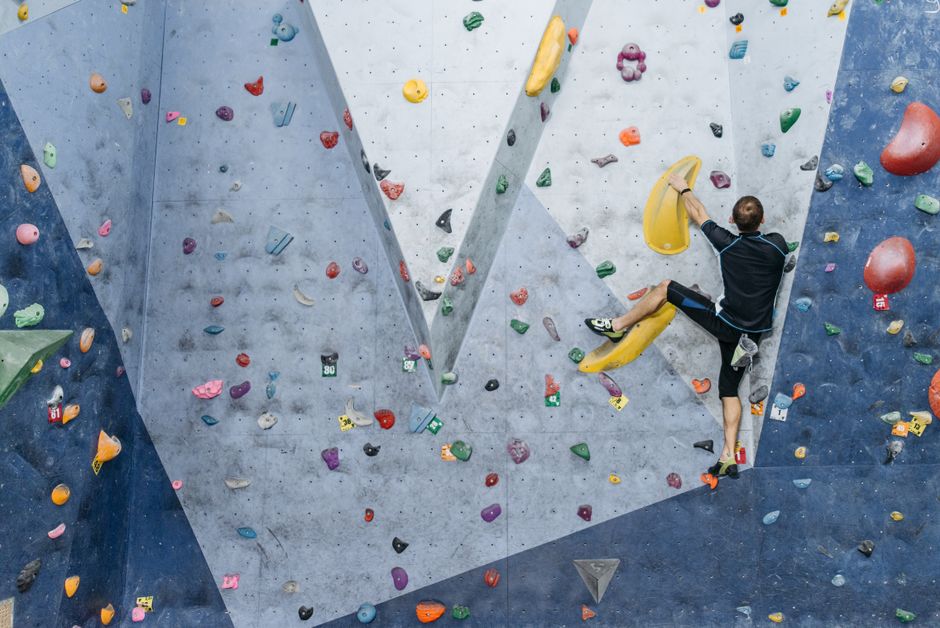
It is a Tuesday evening at the bouldering gym. The lights are bright, the chalk haze is thick, and a climber who has been away for three weeks stretches her arms, hangs from big jugs for a minute, then walks straight to the steepest wall to try the problem she sent before the break. Her fingers feel fine. Whether they will in two days is the question this page is about. Climbing injury prevention is the set of habits, from how a session starts to how a rope is checked, that lower the chance of getting hurt on the wall or at the crag. It applies to kids on a youth team, gym regulars, college club climbers, weekend sport climbers and competitors on the World Climbing circuit alike.
Quick answer: Climbers get hurt in two main ways: slow overload of the fingers, shoulders and elbows, and falls, mostly onto mats or from rope mistakes. Build finger load gradually, balance all that pulling with pushing and shoulder work, learn to fall, and run a partner check before every rope climb. Prevention lowers risk but never removes it. See a doctor, physical therapist or hand therapist for a pop in a finger, finger pain in a teen climber, a shoulder that slips, or any head injury.
General information, not medical advice. This page is about lowering risk. For what each climbing injury looks like, see our climbing injuries guide. Back to the climbing hub.
What actually needs preventing
A 2026 scoping review of 45 studies (Vagy and colleagues, BMJ Open Sport and Exercise Medicine) found sprains and strains of the fingers, hands, ankles and shoulders were the most common climbing injuries, with finger pulley injuries frequent in both sport climbing and bouldering. Leung (2023) agrees that finger injuries are the most common. In US emergency departments, a 2014 to 2023 analysis found falls behind 58.8% of climbing injuries seen there. So there are two jobs: protect tissues that adapt slowly, and manage the moments when something goes wrong suddenly.
Warm-up before you pull hard
Fingers, tendons and pulleys do not like going from cold to maximal. Our session and comp day page lays out a warm-up sequence many coaches use. To be upfront about the evidence: no climbing-specific warm-up trial turned up in our searches, so the common advice (easy climbing first, then gradually harder moves, and small edges last) is accepted practice rather than a tested protocol.
- Start with easy climbing or movement that raises your heart rate and loosens the shoulders, elbows and wrists.
- Move to progressively harder climbing on bigger holds before you touch small edges or a hangboard.
- After a layoff, treat your first session as a warm-up for the whole week: stay below your limit.
Technique that spares the fingers
The crimp, fingertips on a small edge with the middle knuckle sharply bent, puts the highest load on the finger pulleys. Manjunathan and Liem (2026, Current Sports Medicine Reports) note that pulley injuries make up up to 20% of climbing injuries and that crimp grip loads them. Using open-hand and half-crimp grips more often, and full crimps less, is common coaching advice consistent with that mechanism, though we found no trial proving it prevents injuries.
Progressive training load
Tendons and pulleys adapt more slowly than muscle, so a month of enthusiasm can outrun them. A 2024 review (Saeterbakken and colleagues, Sports Medicine Open) says fingerboard and campus board training should be limited in lower-graded climbers, and describes structured, low-volume, high-resistance finger training about twice a week as feasible for those who are ready. It also points out that stronger fingers mean each move uses a smaller share of your maximum, lowering the stress of a session. Practical, unproven-by-trial habits many coaches use:
- Climb first. Most newer climbers get stronger just from climbing; see climbing training for hangboard progressions.
- Change one thing at a time: more volume, steeper walls or smaller holds, not all three in one week.
- Stop at sharp pain. A dull pump is normal; a sharp pain at a finger joint is a stop sign.
- Keep rest days. The American Academy of Pediatrics (Brenner, 2016) advises young athletes to take at least 1 to 2 days off a week from their sport and breaks during the year; adults benefit from the same rhythm (see climbing recovery).
Conditioning and balance
Climbing is nearly all pulling, so many physical therapists and coaches add pushing, rotator cuff and upper back work. Saeterbakken and colleagues recommend resistance training aimed at the finger flexors, shoulder and back muscles. The shoulder is the next most commonly hurt area after the fingers, and a 2023 study (Simon and colleagues, Wilderness and Environmental Medicine) lists traumatic dislocations among the most common shoulder injuries in climbers. A 2026 review in Sports Health (Kornienko and colleagues) links overuse problems at the elbow and rotator cuff to climbing. The AAOS OrthoInfo site publishes a general rotator cuff and shoulder conditioning program.
Under-fueling matters too. A 2026 study of 417 climbers (Gronhaug and colleagues, Frontiers in Sports and Active Living) found that symptoms of low energy availability were associated with a current injury. See climbing nutrition.
Gym versus outdoors
Indoors, the main risks are repeated hard attempts on small holds, falls from bouldering walls, and busy floors. A 2025 survey of 245 injured adult boulderers (Beurienne and colleagues) found 67% of injuries were to the legs, 85% of the falls were unplanned and 74% ended feet-first. A UK major trauma center reported serious bouldering injuries from an average fall of just 2.9 meters (about 9.5 feet) (Jemmett and colleagues, 2026). General practice:
- Downclimb when you can instead of jumping, and check that nobody is under you or crossing the landing zone.
- Land on both feet with soft knees and roll back; avoid catching yourself on a straight arm.
- Outdoors, place crash pads where you will really land, close the gaps, and have a spotter guide your hips and head toward the pad.
- Outdoors you also face rockfall, weather, approach trails and anchors you did not inspect. Choose routes and conditions at the level you can handle, not the level of your best day.
Falls, rope and belay safety
The rope system rarely fails; people do. The American Alpine Club (AAC) names four common causes of lowering accidents: a rope that is too short, miscommunication, an inadequate belay and anchor failure, and its records show more than half of lowering accidents over a decade involved the rope end running through the belay device. Habits that address those causes:
- Close the system: tie a stopper knot in the rope end (the AAC suggests a triple overhand) or tie the belayer in.
- Partner check every climb: harness buckles, tie-in knot, belay device and locked carabiner.
- Agree on the plan: lowering or rappelling, and use names with commands at a busy crag.
- Brake hand stays on the rope. Petzl says to always keep a hand on the brake side of the rope on its GRIGRI assisted-braking device; the device is a backup to good belaying, not a replacement.
- Auto-belays: clip in every time. The AAC has published an account of a climber who forgot and fell 45 feet; its lesson was that auto-belay devices almost never fail, but people do.
Helmets, gear checks and fit
A 2022 scoping review (Yoon and colleagues) found head injuries made up 0% to 36% of reported climbing injuries, with outdoor falls and falling objects the leading causes. Climbing helmets are tested to the EN 12492 standard, and the UIAA publishes its own safety standards for ropes, harnesses, helmets, connectors, braking devices and crash pads. Those are the verified standards. Statements on a maker’s page, such as extra coverage or light weight, are maker claims, and a certificate says a design met a test, not that you will not be hurt.
- Look for the EN 12492 or UIAA mark on a helmet, and make sure it fits snugly. Many outdoor climbers and belayers wear one under loose rock.
- Check ropes, slings, harnesses and carabiners before use for cuts, fuzzy or flat spots and damage, and follow each maker’s retirement guidance, which varies by product.
If anyone hits their head, the CDC HEADS UP guidance is to stop for the day and see a health care provider; call 911 for danger signs such as worsening headache, repeated vomiting, slurred speech, weakness, a seizure or loss of consciousness.

Petzl BOREO Helmet
- CE EN 12492 + UIAA per maker
- 300 g S/M, 330 g M/L
- Fits 48-61 cm across two sizes
$74.95 at Amazon, as of Nov 17, 2026 02:07 UTC
Check price on Amazon
Petzl GRIGRI
- For 8.5-11 mm single ropes
- EN 15151-1 per retailer
- Keep a hand on the brake side

Black Diamond Circuit Crash Pad
- PE + PU foam
- 121 x 91 cm open
- Hinge fold, carry system
Young climbers
In teens the weak spot is often the finger growth plate rather than the pulley. Schoffl and colleagues (2022, American Journal of Sports Medicine) report finger growth plate stress injuries as the most frequent sport-specific injury in adolescent climbers, and the British Mountaineering Council, with Dr. Volker Schoffl, says campus board use is not recommended for any climber under 18, along with added weights and constant crimping. Finger pain in a young climber that lasts more than a few days deserves a doctor’s visit. Details are on our youth climbing page.
What prevention cannot do
No warm-up, tape, helmet or training plan makes climbing risk-free. Falls onto a mat can injure even careful climbers, a rope accident can happen with fully certified gear if a step is missed, and finger injuries sometimes strike strong, well-prepared people. The goal is to lower the odds and to be ready to respond, not to promise anything.
When to see a professional
- Emergency: a ground fall from height, any head-injury danger sign, neck or back pain after a fall, an obviously broken or dislocated bone.
- Within a day or two: a pop in a finger with pain and swelling, a shoulder that slipped out, an ankle you cannot walk on.
- Soon: finger pain in a teen climber, elbow or shoulder pain that returns every session, a finger that will not fully straighten.
Look for a sports medicine doctor, physical therapist, hand therapist or certified athletic trainer who knows climbers. Full injury descriptions are on climbing injuries.
Climbing injury prevention: FAQs
Does warming up prevent climbing injuries?
Nobody has shown that in a climbing-specific trial that we could find. Coaches still recommend progressing from easy climbing to harder moves, and the finger pulleys are a good reason to be careful. See our session day page.
Should I tape my fingers to prevent pulley injuries?
The evidence says not really. A 2022 systematic review found taping may reduce bowstringing a little, but cadaver studies showed no difference in the force needed to rupture a pulley.
How fast can I add hangboarding?
The 2024 review we cite gives no single safe increase, and recommends limiting fingerboard work for lower-graded climbers. Ask a qualified coach or physical therapist.
Do I need a helmet at the gym?
Our sources give no rule for indoor walls. Outdoors, many climbers and belayers wear a certified helmet because of falling objects and falls.
What is the most important belay safety habit?
The AAC emphasizes closing the system: a stopper knot in the rope end, partner checks, clear communication and a brake hand that never leaves the rope.
Is bouldering safer than rope climbing?
They are risky in different ways. Bouldering produces more ankle and knee injuries from falls onto mats, while rope accidents are rarer but can be more serious when a step is missed.
Sources
- Vagy and colleagues, scoping review of climbing injuries, BMJ Open Sport and Exercise Medicine, 2026
- Leung, climbing injuries review, Current Sports Medicine Reports, 2023
- US emergency department climbing injuries, 2014 to 2023
- Manjunathan and Liem, finger pulley injuries, Current Sports Medicine Reports, 2026
- Larsson and colleagues, to tape or not to tape, 2022
- Saeterbakken and colleagues, climbing strength training review, Sports Medicine Open, 2024
- AAP clinical report, sport specialization, Brenner 2016
- Simon and colleagues, shoulder dislocations in climbers, 2023
- Kornienko and colleagues, Sports Health, 2026
- AAOS OrthoInfo, rotator cuff and shoulder conditioning program
- Gronhaug and colleagues, low energy availability in climbers, 2026
- Beurienne and colleagues, bouldering fall injuries, 2025
- Jemmett, James and Davidson, bouldering trauma, Injury, 2026
- American Alpine Club, Lowering in Single Pitch and Multi-Pitch Climbing
- American Alpine Club, The Prescription, January 2023
- Petzl GRIGRI product page
- Yoon and colleagues, head injuries in climbing, 2022
- UIAA safety standards
- Petzl BOREO product page
- CDC HEADS UP, signs and symptoms
- Schoffl and colleagues, finger growth plate injuries, American Journal of Sports Medicine, 2022
- British Mountaineering Council, should under 18s use campus boards
- US competitive youth climbers injury study, 2022
General information for education only, not medical advice. It does not replace a visit with a doctor, physical therapist or athletic trainer. See how we write and check our pages in our editorial policy.