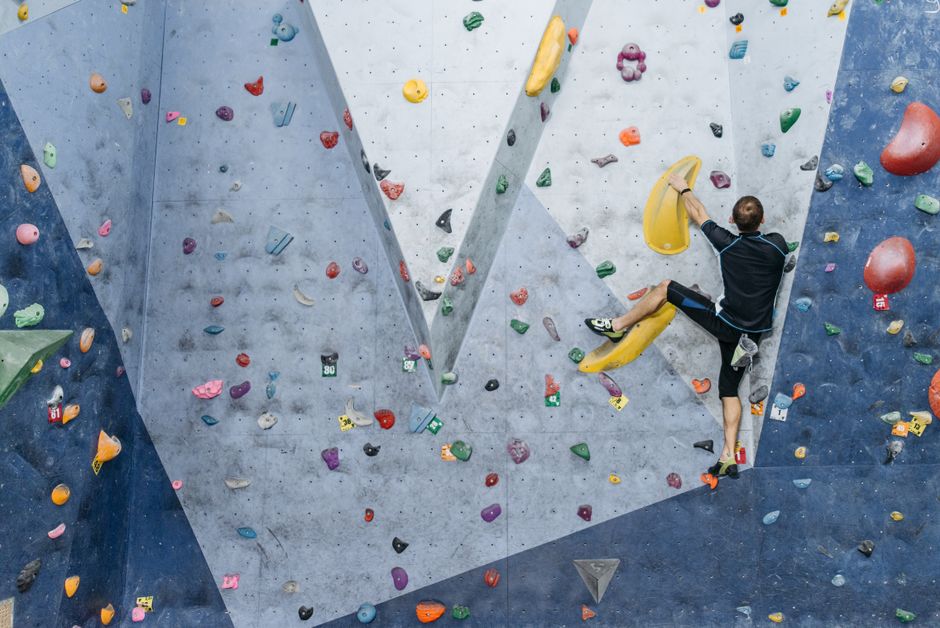
You are tied in at the third bolt of a route that is a grade harder than anything you have led this year. Your forearms are filling, the next clip is at your waist, and the bolt below your feet suddenly looks very far away. Your hands are fine; your head is the problem. Mental training for climbers is the deliberate practice of managing fear, attention, confidence and pressure so that you can climb what your body is ready for, from a gym session to a redpoint attempt to a competition round. It can help you climb more freely. It cannot guarantee a send, and it never replaces good rope, belay and landing habits.
Quick answer: Research on climbers shows that lead climbing and harder-than-usual routes raise anxiety and can make movement less smooth, and that climbers with more experience handle that better. Useful habits include practicing falls safely, reading the route before you leave the ground, keeping goals about process, and building a simple routine for attempts. None of this guarantees a send. See a doctor or a licensed mental health professional if worry, low mood, disordered eating or exhaustion are affecting daily life.
General information for climbers. Back to the climbing hub. Hangboard and strength work are on our climbing training page, and warm-up, food, skin and how competition rounds work are on the comp day page. This page covers the thinking side and does not repeat those.
Why climbing is a mental sport
A 2025 systematic review of 83 studies of the psychology of rock climbing (Psychology of Sport and Exercise) found that flow, confidence, anxiety and perception all play key roles in climbing performance. It also reported that better and more experienced climbers manage risk with smaller psychophysiological effects, and that the best levels of these traits and how to develop them are still unclear. In other words: the mind clearly matters, and nobody has a proven recipe.
Fear of falling and risk assessment
Fear before a lead fall is normal, not a flaw. In a 2025 cross-sectional study of 100 sport climbers in Poland (BMC Sports Science, Medicine and Rehabilitation), state anxiety scores were significantly higher during lead climbing than during top-rope climbing, and most participants experienced anxiety while climbing. A 2025 study of 32 intermediate climbers (Physiology and Behavior) had each person climb three on-sight routes of the same difficulty: top-rope, lead, and lead with a run-out. The lead and run-out ascents showed less fluent movement and more anxiety than top-rope. The authors concluded that an increased chance of falling is likely to be judged as a threat, and that programs for lead anxiety should focus on lowering cognitive anxiety (worrying thoughts) and building self-confidence.
A few ideas climbers and coaches use, most of them general practice rather than tested methods:
- Separate real risk from felt risk. Before you leave the ground, check the things you control: the anchor, knots, the belayer’s attention, slack in the system, and what is below the next bolt. If the fall is clean, the fear is information about difficulty, not about danger. If the fall is not clean (ledge, bolt too far, rope behind a leg), the right choice may be to skip the route or down-climb.
- Practice falling in steps, with a trusted belayer. Many instructors have climbers take short, planned falls just above a bolt on easy, safe terrain and build up gradually. We found no controlled trial of this, so treat it as common coaching practice and learn it from a qualified instructor, not from a video.
- Name the decision before the crux. Decide in advance when you will commit and when you will lower off. Making the call calmly on the ground is easier than making it pumped on the wall.
- Choose a belayer you trust. Confidence in your partner is part of the safety system. See climbing injuries for rope and landing safety.
A 2026 study of 61 intermediate to advanced climbers (Spanish Journal of Psychology) had each person lead one on-sight route either above, at or below their own on-sight level. Routes above the climber’s ability brought more somatic anxiety, lower self-confidence and poorer climbing quality. One practical reading, our interpretation rather than the authors’ advice, is that working up to a grade in steps may feel better than jumping straight to a much harder lead.
Route reading and visualization
Reading a route means looking from the ground and planning: where to rest, where the hard sequence is, which hand goes to which hold, where the clips are. In World Climbing lead events, competitors get a 6-minute group observation before an on-sight route, and in boulder finals a 2-minute group look per boulder, per the January 2026 event regulations. That window is short, so reading is a skill worth practicing at your gym.
- Read in chunks. Look for the rests first, then the crux, then the easier sections between them.
- Rehearse the sequence with your hands. Many climbers mime key moves on the ground and picture the body position for each. This is common practice. We found no climbing-specific trial of visualization, so we do not claim it improves sends.
- Picture the feeling as well as the moves. Imagine staying calm at the crux, breathing, and clipping on time.
- Be ready to change the plan. The wall rarely matches the picture. A plan that can bend is better than one that breaks.
Redpoint pressure
Projecting a route over many sessions can turn a fun goal into a heavy one: you know every move, you know the fall, and every attempt starts to feel like the one that has to work. We found no study of redpoint pressure specifically, so the following is general coaching practice. Many climbers set a process goal for each burn (for example, “breathe at every rest”) next to the outcome goal. They treat a fall as information about one move, not about themselves, and they plan rest days so tired fingers do not wear down confidence. Our training page and recovery page cover finger load and rest.
Confidence, focus and stress
In a 2025 survey of 365 climbers (Frontiers in Psychology), climbing self-efficacy, or confidence in your ability to climb, was the strongest psychological predictor of climbing competence, alongside training frequency and years of practice. The study is correlational, so it cannot show which causes which. A 2026 study of 150 climbers in the same journal found that higher mental toughness and mindfulness were each linked with lower perceived stress, and mindfulness seemed to strengthen the link between toughness and lower stress. Again these are associations, not proof that training them lowers stress.
For focus, many coaches suggest short, instructional self-talk (“feet”, “breathe”, “trust”). A 2011 meta-analysis of 32 studies by Hatzigeorgiadis and colleagues found that self-talk helped most on fine or new tasks, which fits technical moves. Words are examples, not a prescription.
Competition nerves
Competition adds an audience, a clock and often isolation, where climbers wait out of sight of the routes. Our comp day page explains the format and logistics. For the mental side, these are general practices rather than tested climbing methods:
- Build a short routine for each attempt: a breath, a look at the first moves, one cue, then go. A routine is something to do instead of worrying.
- Reset between boulders or routes. Sit, sip, let your forearms rest, and leave the last attempt behind.
- Choose process goals you control, such as reading well and committing to each move, and hold placings loosely. An expert statement for Exercise and Sports Science Australia (Swann and colleagues, Sports Medicine 2026) is a good place to read about setting goals.
- Rehearse the pressure. Practice a mock round with a time limit and an audience of friends before the real one.
Teens: a 2025 British Journal of Sports Medicine article asked whether goal setting in youth sport can unintentionally contribute to dropout, so for young climbers keep goals flexible and fun. See climbing for young athletes.
Setbacks and falls
A fall, a missed top or a round that goes badly happens to everyone. The same habits help: a small reset ritual, a plain-language review (“what happened on that move?”), then one thing to try next. Climbers returning from injury often find confidence needs rebuilding as well as strength; start with easier climbs and see climbing injuries and a professional for pain.
Mental performance is not the same as mental health
Skills like routines, focus and visualization are performance tools. Anxiety that will not ease, low mood, loss of interest, panic, disordered eating, exhaustion or thoughts of self-harm are health matters, and a coach or a book of mental tips is not the right fix. The International Olympic Committee consensus statement on mental health in elite athletes (Reardon and colleagues, British Journal of Sports Medicine 2019) treats these as health concerns that need assessment and care. Take them to a doctor or licensed mental health professional.
Eating is a particular watch point. A 2024 Swedish study of 183 advanced and elite rock climbers and 180 non-climbers (BMJ Open) found similar eating disorder symptom scores overall, but higher scores among female climbers (26%) than male (5.8%). A 2024 research review of resistance training in climbing (Sports Medicine Open) advises screening for amenorrhea and disordered eating. See climbing nutrition for fueling basics.
- In the US, you can call or text 988 (988 Suicide and Crisis Lifeline) any time; in an emergency call 911 or your local emergency number.
- The Association for Applied Sport Psychology lists resources for finding sport psychology help.
- Your doctor, or a college or national-team sport medicine staff, can refer you to a mental health professional.
Mental training: FAQs
Is fear of falling normal for climbers?
Yes. In a 2025 study of 100 sport climbers, state anxiety was significantly higher during lead climbing than top-rope, and most climbers reported anxiety. Experienced climbers tend to manage it better, according to a 2025 systematic review. If fear is severe or spreading into daily life, talk to a professional.
Does visualization help me send a route?
Many climbers use it to plan sequences and rehearse staying calm. We found no climbing-specific trial showing it improves sends, so think of it as a way to prepare, not a guarantee.
How do I handle nerves in a competition?
Common approaches are a short routine for each attempt, process goals, resetting between boulders, and rehearsing a timed mock round. These are general coaching practices, not tested climbing programs. Logistics are on our comp day page.
Should I practice falling?
Many instructors teach it in small steps with a trusted belayer on safe terrain. Learn it from a qualified instructor, because a bad setup can cause injury.
When is it more than nerves?
If worry, low mood, disordered eating or exhaustion stick around or affect school, work, sleep or relationships, see a doctor or licensed mental health professional. In the US you can call or text 988 at any time.
Sources
- Psychology of rock climbing: a systematic review. Psychol Sport Exerc 2025 (link, PMID 39389518)
- Anxiety levels and physiological responses during top-rope and lead climbing. BMC Sports Sci Med Rehabil 2025 (link, PMID 41470029)
- Psychophysiological and emotional antecedents of on-sight climbing performance with alterations in the style of ascent. Physiol Behav 2025 (link, PMID 40484106)
- Climber ability and responses to an on-sight lead climb. Span J Psychol 2026 (link, PMID 42304823)
- Sport climbing competence, self-efficacy, flow and emotional intelligence. Front Psychol 2025 (link, PMID 40547581)
- Mental toughness, stress and mindfulness in climbers. Front Psychol 2026 (link, PMID 42666592)
- Swedish rock-climbers, eating disorder and body dissatisfaction symptoms. BMJ Open 2024 (link, PMID 39414282)
- Saeterbakken A et al. Resistance training for climbers. Sports Med Open 2024 (link, PMID 38240903)
- Hatzigeorgiadis A et al. Self-talk and sports performance: a meta-analysis. Perspect Psychol Sci 2011 (link, PMID 26167788)
- Swann C et al. Goal setting in exercise and physical activity: expert statement for ESSA. Sports Med 2026 (link)
- Goddard SG et al. Goal setting in youth sport: are we unintentionally contributing to dropout? Br J Sports Med 2025 (link)
- Reardon CL et al. Mental health in elite athletes: IOC consensus statement. Br J Sports Med 2019 (link, PMID 31097450)
- World Climbing Event Regulations, Version 3, January 2026 (link)
- 988 Suicide and Crisis Lifeline (link)
- Association for Applied Sport Psychology resources (link)
General information for education only, not medical advice. It does not replace a doctor, licensed mental health professional, qualified climbing instructor or coach. See our editorial policy for how we research and write.