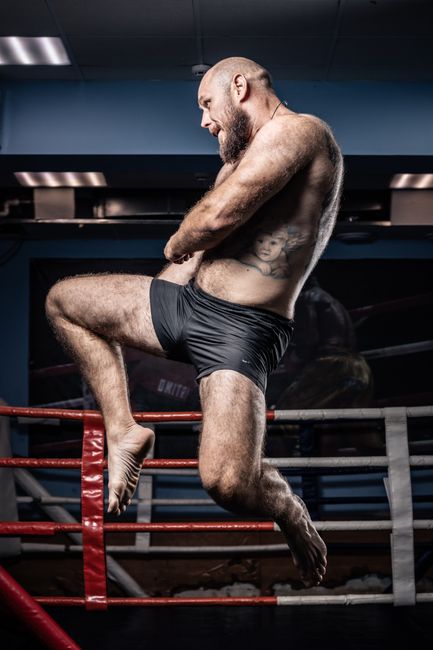
It’s the sixth week of a diet, the scale hasn’t moved, the lights at the gym feel too bright, and the notebook says you did the same weights as last Tuesday. Nobody is watching. Nobody will clap for you at 5 a.m. That is the mental side of bodybuilding: for lifters, a long game of showing up, tracking small wins and staying patient, and for competitors, a stage with a few seconds of attention at the end of months of work. Bodybuilding mental training means practicing those skills (consistency, motivation, a plan for stalls, a calm routine for show day) the way you practice a squat.
Quick answer: Keep goals you control (sessions done, reps added, poses rehearsed), write progress down, and plan your show-day routine ahead of time. Research on mental skills in bodybuilders themselves is thin, so treat every tool here as something to test, not a promise of a better physique or placing. Contest prep strains mood, sleep, eating and body image in many competitors; if worry, low mood, food rules or body checking take over your life, see a doctor or licensed mental health professional.
What the research can and can’t say
We searched for studies on motivation, goal setting and imagery in bodybuilders and found very little that tests those tools in this sport. What does exist is mostly about the psychological strain of the sport, covered in the health section below. So this page borrows carefully from broader sport research and from how coaches commonly work, and says which is which. A 2026 position statement from Exercise and Sports Science Australia (ESSA) on performance under pressure found that pressure can help or hurt, and lists four strategies with evidence behind them in sport generally: pre-performance routines, implicit attentional strategies, psychological skills training and mindfulness-based approaches. It was written for sport broadly, not for physique shows, so use it as a menu to try rather than a prescription.
Consistency and motivation
The most useful thing to know about training is that it is simple and repeatable. The 2026 American College of Sports Medicine (ACSM) position stand says healthy adults should do progressive resistance training, and found that many details lifters argue about (training to failure, equipment type, exercise order, periodization model) did not consistently change results. That is good news for your head: you don’t need the perfect program, you need one you will repeat. Our bodybuilding training page covers the volume, frequency and rest numbers.
Common coaching practice (not from a bodybuilding study) for staying consistent:
- Keep the notebook. Writing down weights and reps gives you something concrete to beat and shows progress when the mirror doesn’t.
- Set three kinds of goals. Outcome goals (a class, a weight), performance goals (add a rep to the incline press) and process goals (four sessions this week, bed by 10:30). Process goals are the ones fully in your hands.
- Make the minimum small. On a bad day, “warm up and do two sets” keeps the habit alive.
- Judge the trend, not the day. Compare month to month, not session to session.
Handling plateaus
Every lifter stalls. The ACSM position stand’s reminder is that progression can come in several forms, and small ones count. When you are stuck, a calm checklist beats a panicked program change (this list is common coaching practice, not a study result):
- Check the basics first: are you actually repeating the program, eating enough and sleeping? See bodybuilding recovery.
- Look at several weeks of numbers before deciding anything. One flat week is noise.
- Change one thing at a time and give it a few weeks, so you know what worked.
- Take an easier week if joints ache or life is stressful.
- Ask a coach to watch you lift. A fresh pair of eyes often finds what a notebook can’t.
Show-day nerves and posing
For logistics (check-in, prejudging, what to eat and pack, warning signs) go to bodybuilding show day. Here is the mental side. Nerves are normal, and ESSA notes pressure is not always harmful. The practical goal is to make the stage feel like something you have already done many times.
- Rehearse the real thing. ESSA’s statement says well-designed pressure training can prepare athletes. In prep, run full rounds of mandatories, quarter turns and your routine to music, sometimes in front of friends or a coach who will judge you. Coaches commonly suggest this; no bodybuilding-specific study tested it.
- Use a short routine. ESSA lists pre-performance routines first among its strategies. A simple one: slow breath in through the nose, longer breath out, run through your first pose in your head, walk on. Keep it the same every time you practice.
- Try a short mindfulness exercise. A 2026 systematic review of 10 randomized trials found that brief mindfulness practices (30 minutes or less) improved some short sport-related performances, such as golf putting and hand grip strength, but not muscular endurance. None of the trials was a physique show, so this is a thing to try in practice, not a proven stage tool.
We did not find strong evidence for visualization or imagery in bodybuilding. Many competitors picture their poses and the stage in advance. It costs nothing, but we can’t say how well it works.
After the show
Plan the week after the show as part of the show. In a 2026 study that followed 19 natural physique athletes through prep and 12 weeks of recovery, mood and sleep got worse during prep and improved by the end of the 12 weeks. A 2025 interview study of 19 natural physique athletes found themes of body image disruption after the show and described benefit from planning recovery early and moving from aesthetic goals toward functional ones, such as a strength target. A new goal on the calendar (a lift, a race, a vacation with no tracking) gives your motivation somewhere to land.
Mental performance is not mental health
Everything above is a performance skill. Body image disorders, muscle dysmorphia, disordered eating, depression, anxiety and burnout are health matters, and they belong with a doctor, psychologist or other qualified professional, not with a routine or a better notebook. The risk is real in this sport, so we say it plainly.
- Contest prep strains the mind as well as the body. The 2014 natural-contest-prep review by Helms and colleagues says bodybuilders face a higher risk of eating and body image disorders and should have access to mental health professionals. In a 12-month case study of one natural bodybuilder (Rossow and colleagues, 2013), mood disturbance rose sharply during the diet and returned to its starting level six months after the show. In the 2026 recovery study, eating-disorder symptoms were highest during prep and declined through recovery.
- Disordered eating and body image concerns are common in competitors. In a 2026 survey of 60 competitive bodybuilders (29 men, 31 women), both sexes reported frequent weight monitoring, common binge-eating episodes after competing and pronounced body image concerns; scores suggested a risk of orthorexia (an unhealthy fixation on “clean” eating), and the authors recommended screening and structured support after shows. It was a small, self-reported sample, so it shows a pattern, not how common this is in all bodybuilders. A 2026 narrative review of orthorexia in bodybuilders said dietary rigidity, perfectionism and compulsive exercise may raise risk, but that direct data in bodybuilding are limited.
- Muscle dysmorphia: feeling too small or not muscular enough no matter how big you are. A 2017 meta-analysis of 31 studies found more symptoms in bodybuilders than in other resistance trainers, and the most in competitive bodybuilders. A 2025 meta-analysis found higher muscle dysmorphia symptoms among anabolic steroid users than non-users and a link with obsessive-compulsive traits, and described limited use of health care among those affected.
- Signs to take seriously: food rules that run your day, binge-and-restrict cycles after a show, checking your body in mirrors or photos many times a day, training through injury or illness, feeling small however much you’ve built, low mood or dread lasting weeks, or thoughts of harming yourself. The National Institute of Mental Health (NIMH) says eating disorders affect people of all sizes, including people who look healthy, and that early help matters. See the longer list on nutrition and supplements.
If you are in the United States and in crisis or worried about your safety, call or text 988 to reach the 988 Suicide & Crisis Lifeline, free and open 24 hours a day. For eating concerns, talk to your doctor or call the ANAD Eating Disorders Helpline at 1-888-375-7767. A 2026 International Olympic Committee consensus statement addresses mental health in elite athletes, and the principle holds at every level. Outside the US, contact your local emergency number or crisis service. Parents and young lifters can start with our youth bodybuilding page.
Questions lifters and competitors ask
How do I stay motivated in the gym for months?
There is no bodybuilding-specific study that settles this. Common coaching advice is to write progress down, pick process goals you control, set a small minimum for bad days, and train with people. ACSM’s finding that few program details matter consistently means you can choose a plan you enjoy.
What should I do when my lifts stop going up?
Check sleep, food and consistency, look at several weeks of data, change one thing at a time, and take an easier week if you feel run down. If you’re hurt or in pain, see a clinician instead of pushing through.
How do I calm down before going on stage?
Rehearse under realistic conditions and use a short routine such as slow breathing and a mental walk-through of your first pose. Research supports routines and some mindfulness in sport generally, but not specifically for physique shows. Easy caffeine habits and eating your planned snacks help too; see show day.
Is feeling small after a show normal?
Mood, appetite and body image often shift after a show, and studies of physique athletes describe body image disruption and post-show binge eating. If it lasts more than a couple of weeks, feels out of control or leads to restricting or compulsive exercise, talk to a doctor or mental health professional.
What is muscle dysmorphia?
A body image condition in which you believe you are too small or not muscular enough, however big you are, often with compulsive training, rigid dieting and body checking. Research finds more symptoms in bodybuilders, especially competitors. It’s a health issue, not a mindset problem, and a qualified professional can help.
Sources
- Currier BS et al. ACSM Position Stand: Resistance Training Prescription for Muscle Function, Hypertrophy, and Physical Performance in Healthy Adults. Medicine & Science in Sports & Exercise, 2026. PMC12965823
- Schweickle MJ et al. Performance Under Pressure in Sport: A Position Statement from Exercise and Sports Science Australia. Sports Medicine, 2026. PMID 42271117
- Cao S et al. Do brief mindfulness-based interventions improve sport-related performance? A systematic review. Frontiers in Public Health, 2026. PMID 41725758
- Buechel C et al. Post-competition recovery in natural physique athletes: body composition, metabolic adaptation, and refeeding responses. Journal of the International Society of Sports Nutrition, 2026. PMID 42175739
- Buechel C et al. The harder the prep, the harder the recovery: a qualitative exploration of physique athlete perspectives on competition weight loss and restoration. Journal of the International Society of Sports Nutrition, 2025. PMID 41107212
- Helms ER et al. Evidence-based recommendations for natural bodybuilding contest preparation: nutrition and supplementation. Journal of the International Society of Sports Nutrition, 2014. PMC4033492
- Rossow LM et al. Natural bodybuilding competition preparation and recovery: a 12-month case study. International Journal of Sports Physiology and Performance, 2013. PMID 23412685
- Moro F et al. Between Aesthetics and Health: Disordered Eating, Exercise Addiction, and Body Image in Competitive Bodybuilders. Journal of Functional Morphology and Kinesiology, 2026. PMID 42346765
- D’Apolito F et al. Orthorexia Nervosa in Bodybuilders: Exploring a Critical Research Gap and the Role of Social Media and Self-Monitoring Applications. International Journal of Environmental Research and Public Health, 2026. PMID 42196731
- Mitchell L et al. Muscle Dysmorphia Symptomatology and Associated Psychological Features in Bodybuilders and Non-Bodybuilder Resistance Trainers: A Systematic Review and Meta-Analysis. Sports Medicine, 2017. PMID 27245060
- Çınaroğlu M, Yılmazer E. Muscle Dysmorphia, Obsessive-Compulsive Traits, and Anabolic Steroid Use: A Systematic Review and Meta-Analysis. Behavioral Sciences, 2025. PMID 41009236
- Eating Disorders, National Institute of Mental Health
- ANAD Eating Disorders Helpline
- Reardon CL et al. Mental health in elite athletes: International Olympic Committee consensus statement (2026). British Journal of Sports Medicine. PMID 42580854
- 988 Suicide & Crisis Lifeline
General information for education only, not medical advice. It does not replace a doctor, psychologist or other qualified professional. See how we work in our editorial policy. Back to the bodybuilding hub.