This article contains affiliate links: if you buy through them we may earn a commission, at no extra cost to you. Read our affiliate disclosure.
You are halfway through a heavy set of squats when you notice the lifter next to you cinch a thick leather belt, flip a lever, and get on with it. Meanwhile your gym bag has nothing and you wonder if you are missing something.
The short answer: you do not need a belt to start lifting, and the studies we could read are small and short. If you do want one, pick the type by how you train. A 10 mm leather belt with a lever or a prong suits heavy squats and deadlifts and, if you compete, check the federation’s rules first. A nylon belt suits mixed workouts like CrossFit. This guide compares eight belts using their listing text and the IPF rule we opened. It has no prices, no testing claims and no medical advice.
Our top picks

Gymreapers 10MM Lever Belt
- Lever buckle (listing: Camac steel)
- 10mm thick, 4 inches wide, per the listing
- Bovine leather with suede exterior
- Listing says built to IPF and USAPL requirements
$127.50 at Amazon, as of Nov 22, 2026 12:07 UTC
Check price on Amazon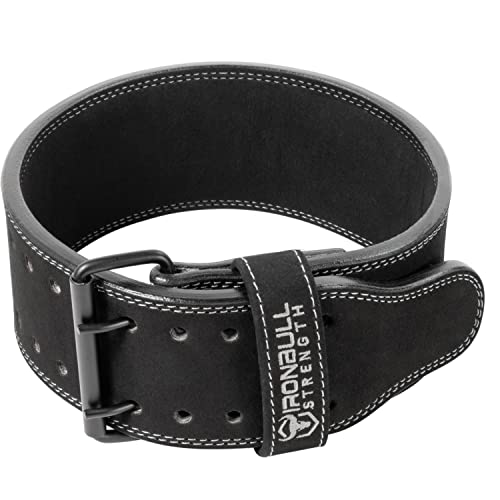
Iron Bull Strength 10mm Double Prong
- Double-prong buckle
- 10mm thick, 4 inches (10 cm) wide per the listing
- Single cut of suede leather per the listing
- Listing mentions IPF, USAPL, USPA and IPL approval and a lifetime warranty on defects
$99.95 at Amazon, as of Nov 22, 2026 12:07 UTC
Check price on Amazon
REP Leather Lined 10mm
- Single-prong buckle
- 10mm thick, 4 inches wide per the listing
- Genuine and faux leather per the listing
- Sizes S to XXL per the listing

POZTEV Lever Belt 10mm
- Lever buckle
- 10mm thick, 4-inch back per the listing
- Leather, listed as pre-broken
- Size shown in the title (Small 26 to 32 inches)
$22.71 at Amazon, as of Nov 22, 2026 12:07 UTC
Check price on Amazon
RDX IPF Compliant Powerlifting Belt
- Dual-pronged roller buckle
- 10mm and 13mm options per the listing
- 4 inches wide, cowhide leather
- Sizes S to XL with waist ranges
$42.99 at Amazon, as of Nov 22, 2026 12:07 UTC
Check price on Amazon
Element 26 Self-Locking Nylon Belt
- 100% nylon
- Uniform 4-inch width per the listing
- Full metal self-locking buckle
- Listing says approved for Olympic lifting and functional fitness competitions
$27.98 at Amazon, as of Nov 22, 2026 12:07 UTC
Check price on Amazon
Harbinger 4-Inch Nylon Belt
- Nylon web, 4 inches
- Heavy-gauge steel roller buckle
- 3-inch support strap
- Sizes S (24-29 in) to XL (37-42 in)
$25.49 at Amazon, as of Nov 22, 2026 12:07 UTC
Check price on Amazon
Iron Bull Strength Performance Auto-Lock
- 100% nylon with hook-and-loop closure
- 4.5-inch front and rear sections, contoured
- Steel auto-lock buckle
- Listing states IWF and USAW approval
$29.95 at Amazon, as of Nov 22, 2026 12:07 UTC
Check price on AmazonThe picks compared
| Product | Type | Closure | Thickness / width (listing) | What the listing says |
|---|---|---|---|---|
| Gymreapers 10MM Lever | Leather lever | Lever buckle | 10mm, 4 in | Bovine leather, suede exterior, says IPF/USAPL compliant |
| Iron Bull Strength 10mm Double Prong | Leather prong | Double prong | 10mm, 4 in | Single cut of suede leather, says IPF approved, may need break-in |
| REP Leather Lined 10mm | Leather prong | Single prong | 10mm, 4 in | Genuine and faux leather, sizes S to XXL, says IPF/USAPL compliant |
| POZTEV Lever Belt | Leather lever | Lever buckle | 10mm, 4 in (9mm variants exist) | Pre-broken leather, 1-year replacement warranty |
| RDX IPF Compliant | Leather prong | Dual-prong roller buckle | 10mm or 13mm, 4 in | Cowhide, multi-layer, says IPF/USAPL/USPA/IPL compliant |
| Element 26 Self-Locking | Nylon | Self-locking metal buckle | 4 in uniform | 100% nylon, approved for Olympic lifting and functional fitness, per maker |
| Harbinger 4-Inch Nylon | Nylon | Roller buckle | 4 in, with 3 in strap | Sizes S to XL, no competition standard stated |
| Iron Bull Strength Performance | Nylon | Auto-lock and hook-and-loop | 4.5 in front and rear | Says IWF and USAW approved, lifetime warranty |
The picks in detail
1. Gymreapers 10MM Lever Belt: leather lever belt with a stated 10mm core
This is the clearest example of the leather lever type. The listing gives thickness, width, material and buckle, and it states a competition standard, which you can check against the IPF rule we opened. The lever lets you open and close the belt in one move between sets.
What the Amazon listing says
- 10MM lever belt, 4-inch wide bovine leather with real suede exterior
- 100% Camac steel lever buckle
- Double-lined stitching, shine-finished edges
- Says it meets IPF, IPL, USPA and USAPL standards
- Described as handcrafted in a North American factory
What the research says: The IPF rule we opened allows a belt with one or two prongs or a lever, up to 13 mm thick and 10 cm wide, and only from manufacturers on its approved list. A 10 mm, 4-inch (about 10.2 cm) belt sits right at the width limit, so check the listed width against 10 cm on the size chart. We did not verify this maker's name on any approved list.
- Strengths: Lever buckle for fast on and off; Thickness and width are stated in the listing; Listing says it is made for training and competition use
- Limitations: Lever belts are set to a fixed hole, so fit changes need a tool or a re-set; Listing gives no sizing chart in its text, so check the size chart on the page; Compliance is the maker's claim; check the federation's approved list
- Suits: Lifters who want one belt for training and, later, meets, and who like a quick lever.
- Look elsewhere if: Anyone who wants easy fine-tuning of fit during a session, or who only needs a light belt for general gym use.
2. Iron Bull Strength 10mm Double Prong: classic prong belt, single cut of suede leather
A traditional prong belt. The listing says it is cut from one piece of leather and that it may need a short break-in. Prong belts are easy to size once you find your hole and then stay put, which suits lifters who wear one belt at a fixed tightness.
What the Amazon listing says
- 10mm double-prong belt, 4 inches wide
- Made from a single cut of suede leather
- Says it may need a short break-in
- Listed as IPF certified and USAPL, USPA and IPL approved
- Lifetime warranty against manufacturing defects and a 30-day satisfaction guarantee
What the research says: The IPF text we opened allows prong buckles and sets 13 mm and 10 cm maximums, so this belt's listed 10 mm and 10 cm fit inside them on paper. We could not confirm the maker's name on the approved list, so check that list before buying for a meet. We found no study that says injury is prevented by a belt.
- Strengths: Prong buckle is a type the IPF rule names as allowed; Listing states a single piece of leather; Maker states a lifetime warranty against manufacturing defects
- Limitations: Slower to open and close than a lever; Listing says it may need a break-in period; The 'potentially preventing long-term injuries' wording is a maker claim, not evidence
- Suits: Lifters who want a no-moving-parts buckle and are happy to adjust it once.
- Look elsewhere if: Anyone who changes belt tightness between warm-up sets and top sets and wants a quicker system.
3. REP Leather Lined 10mm: single-prong belt with stated size range s to xxl
REP's listing is open about the material (genuine and faux leather) and gives a size range, which helps a buyer with a bigger waist. It states compliance with IPF and USAPL standards.
What the Amazon listing says
- 10mm thick, 4-inch wide leather-lined belt
- Genuine and faux leather
- Steel buckle with iron screws and brass rivet heads
- Listing says IPF and USAPL compliant
- Single-prong buckle, sizes S to XXL
What the research says: The IPF rule says the main body may be leather, vinyl or similar non-stretch material, so a mixed-material belt is not ruled out by the text we read. It also bars extra padding or bracing, so a 'lined' belt should have no added padding. Check the product page for this detail.
- Strengths: Wide size range stated (S to XXL); Listing is clear about the mix of leather and faux leather; Single prong is simple to adjust
- Limitations: Mixed materials may not suit lifters who want all leather; Listing wording 'helps increase intra-abdominal pressure, promoting safer and stronger lifts' is a maker claim; Compliance is the maker's statement
- Suits: Lifters who want a prong belt and need an extended size range.
- Look elsewhere if: Anyone who wants an all-genuine-leather belt, or who prefers a lever.
4. POZTEV Lever Belt 10mm: lever belt sold with a stated waist range per size
The listing says the belt is pre-broken, which helps lifters who dislike break-in. The title states waist ranges per size. The same maker lists 9mm belts under a similar title, so read thickness on the exact page.
What the Amazon listing says
- Lever mechanism for quick release
- 10mm thick with 4-inch back support
- Pre-broken leather, per the listing
- 1-year free replacement warranty stated
- Sizes shown in the title as waist ranges in inches
What the research says: The title uses the letters IPF but the listing text we have does not state approval, and the IPF rule says only belts from approved manufacturers may be used in IPF competition. Treat it as a training belt unless you check the approved list.
- Strengths: Lever buckle; Waist range per size in the title; Listing describes leather as pre-broken
- Limitations: The maker also lists 9mm versions with near-identical wording, so check thickness before buying; 'IPF' appears in the title but the listing text does not say the belt is approved; Warranty wording is the maker's own
- Suits: Lifters who want a lever belt and prefer little break-in.
- Look elsewhere if: Anyone entering a federation meet, who should confirm approval on the federation's list first.
5. RDX IPF Compliant Powerlifting Belt: prong belt offered in 10mm and 13mm
The only candidate that offers a 13mm option, which is the IPF maximum thickness. The listing explains how to measure and says not to trust pant size.
What the Amazon listing says
- Listed as IPF compliant, USAPL, USPA and IPL competition level
- 10mm and 13mm genuine cowhide options
- Size chart S 25-30 in, M 30-35 in, L 35-40 in, XL 40-46 in
- Uniform 4-inch width
- Multiple layers, steel rivets, dual-pronged roller buckle
What the research says: The IPF rule caps thickness at 13 mm and width at 10 cm. A 13 mm belt is at the limit, and a 4-inch belt is slightly over 10 cm (about 10.16 cm), so verify the real width on the product page when you need a meet-legal belt.
- Strengths: Choice of 10mm or 13mm; Roller buckle with two prongs; Size chart and measuring advice in the listing
- Limitations: 13mm is stiffer and takes longer to break in; the listing says it adds rigidity; Smaller size range ends at XL; Compliance is the maker's claim
- Suits: Lifters who want to choose a thicker, stiffer belt for heavier training.
- Look elsewhere if: Beginners who have never used a belt and may find 13mm uncomfortable; consider a 10mm belt first.
6. Element 26 Self-Locking Nylon Belt: nylon belt with metal self-locking buckle
The nylon-and-buckle alternative for people who lift in many positions and want a light belt that folds into a bag. It is a different tool from a stiff leather powerlifting belt, so it is shown beside them and not ranked above or below.
What the Amazon listing says
- Self-locking technology that releases from a pull roller
- Made from 100% premium nylon with a full metal buckle
- Says a uniform 4-inch profile is the most effective design
- No padded inserts or mesh coverings
- Fully approved for use in Olympic lifting and functional fitness competitions
What the research says: The IPF rule we opened allows a non-stretch material but names prong and lever buckles, so a self-locking nylon belt is not obviously within IPF powerlifting rules. We did not open IWF or CrossFit rules, so check those before competing.
- Strengths: Self-locking buckle releases by pulling a roller, per the listing; Same width all the way around; No padded inserts, per the listing
- Limitations: Less rigid than a leather belt, so it may feel different for heavy squats and deadlifts; Some maker claims in the listing about design effectiveness are not backed by a source; Not described as approved by the IPF
- Suits: CrossFit, Olympic lifting and general gym lifters who move a lot between exercises.
- Look elsewhere if: Powerlifters who want a rigid belt, or anyone entering an IPF meet.
7. Harbinger 4-Inch Nylon Belt: simple nylon belt with a wide support strap
The plainest nylon option. The listing gives waist ranges per size and says the belt retains muscle warmth.
What the Amazon listing says
- 4-inch nylon belt with an extra wide 3-inch support strap
- 346-count nylon stitching along the length
- Heavy gauge steel roller buckle
- Sizes S 24-29 in, M 29-33 in, L 33-37 in, XL 37-42 in
- Nylon web that the listing says keeps muscles warm
What the research says: We found no independent research or rule that places this belt; it is a general-gym option. Compare its waist ranges to your own measurement.
- Strengths: Waist ranges per size in the listing; Roller buckle; Simple, low-feature design
- Limitations: The XL stops at 42 inches, so larger waists need another model; The listing does not mention a competition standard; Listing wording on 'maximum support' is a maker claim
- Suits: Gym lifters who want a basic nylon belt and fall inside the size range.
- Look elsewhere if: Larger lifters, and meet lifters.
8. Iron Bull Strength Performance Auto-Lock: contoured nylon belt with iwf and usaw wording
A different shape from the straight-width belts. The listing says 4.5 inches front and rear and names weightlifting federations, which makes it the only candidate to state IWF approval.
What the Amazon listing says
- Auto-Lock Fastening with steel buckle and hook-and-loop closure
- Contoured design, 4.5-inch front and rear
- Listing says IWF and USAW approved
- 100% premium nylon
- Lifetime warranty
What the research says: We did not open IWF or USAW rules, so we cannot confirm this approval or the belt's dimensions against them. Check the federation's own list.
- Strengths: Federation wording in the listing for Olympic weightlifting; Light nylon; Maker states a lifetime warranty
- Limitations: Contoured shape differs from the straight 4-inch belts above; Hook-and-loop closure; the listing itself says the buckle is there to reduce strain on that material; Approval wording is the maker's
- Suits: Olympic lifters and functional fitness lifters.
- Look elsewhere if: Powerlifters who need an IPF-style leather belt.
Accessories (separate from the main picks)
- Tape measure: A soft tape to measure your waist at the belly button, as the listings advise, instead of using pants size.
- Gym bag or hook: Lets a belt dry after a session; several listings stress sweat and breathability.
Do you need a lifting belt at all?
Short answer: not to start, and not for every lift. A belt is a tool for heavy squats, deadlifts and overhead presses, not a requirement for training, and it does not replace good technique or a sensible plan. This guide is a research-based comparison from listing text and the sources we could open, not a hands-on test, and it gives no medical advice.
What the studies we found say, in plain terms: in 2026 papers in the Journal of Strength and Conditioning Research, lifters did more repetitions and lifted more with a belt on, but one of them also found that the belt did not objectively improve balance even though lifters felt steadier. We did not find a systematic review we could open, so treat all of this as early and limited.
- Probably worth considering: you lift heavy and often, you already brace well, and you want to practise with the gear you will use in a meet.
- Probably not yet: you are new to lifting. Learn to brace and move well without a belt first, and ask a coach.
- Not a fix for pain: if lifting hurts your back, a belt is not a treatment. See a clinician.
Decide first whether you need a belt, then choose a type.
What the research we opened says (and does not say)
We searched PubMed on 2026-11-13 and read the records for the studies below. All are short studies on small groups, and none is a systematic review.
- Veltzke and colleagues, 2026 (J Strength Cond Res 40(8): 944-952): 49 lifters (men and women, with and without belt experience) did squats to exhaustion with and without a belt. Repetitions rose from 6.5 to 8.1 with the belt. Lifters felt steadier, but the force-plate measures did not show better balance.
- Huang and colleagues, 2026 (J Strength Cond Res 40(11): 1325-1334): 25 resistance-trained athletes had a higher one-repetition maximum in the back squat with a belt (119.2 kg versus 114.0 kg, on average).
- Harris and colleagues, 2026 (J Strength Cond Res): a pilot in 25 collegiate powerlifters used a belt fitted with a strain gauge to measure bracing. It is a measurement tool study, not a test of belts for safety.
Two surveys also mention pelvic floor problems in women who lift heavy. One of 1,072 female powerlifters listed belt use as a risk factor for leaking during lifting, while a French study of 84 female weightlifters found no difference by belt use. Surveys show association only. If this matters to you, ask a clinician.
What we did not find: a source we could open that shows a belt prevents injury. The idea that a belt ‘protects your back’ appears in some listings as a maker claim. We repeat it only as a claim.
Leather lever, 10mm prong or nylon: how the types differ
The three types in this guide differ in material, buckle and how they feel. We are describing what the listings and the one rule book we opened say, not how they feel to wear.
Leather with a lever
Stiff leather, usually about 10 mm and 4 inches, with a lever you flip to open and close. Fast on and off, but you set the fit with a screw hole, so changing it takes a moment. Candidates: Gymreapers and POZTEV.
Leather with one or two prongs
The traditional belt: the tongue goes into a hole in the belt. Easy to set and slower to change. Candidates: Iron Bull Strength, REP and RDX. RDX also lists a 13 mm option.
Nylon with a roller or self-locking buckle
Lighter and more flexible. Often made for CrossFit and Olympic lifting, where you move between many exercises. Candidates: Element 26, Harbinger and Iron Bull Strength Performance.
The IPF rule we opened names belts with one or two prongs or a lever as allowed, so both leather types are covered. It does not name self-locking nylon belts, so we cannot say they are allowed in IPF powerlifting. For other federations (USAPL, IWF, CrossFit events), check each one’s own rules, which we did not open.
Rules: what the IPF rulebook says about belts
We opened the IPF Technical Rule Book (effective 1 March 2026, version 3) and read section 3.6, Belt. Here is what it says, in our words:
- Competitors may wear a belt, outside the lifting suit.
- Only belts from manufacturers on the IPF’s approved list may be used in competition.
- The main body is leather, vinyl or similar non-stretch material, in one or more laminations.
- No additional padding, bracing or supports on the surface or inside the laminations.
- The buckle may have one or two prongs, or be quick release (lever).
- Maximum width 10 cm. Maximum thickness 13 mm along the main length.
- Maximum buckle inside width 11 cm, outside width 13 cm; tongue loop up to 5 cm wide.
What follows: a 4-inch belt is about 10.2 cm, so the exact width of a belt matters if you plan to compete. The approved list matters more than any listing wording. We did not open the USAPL or other federation rule books, so we state no rule for them. Training belts do not need approval at your gym, but ask your gym if it has a policy.
How to measure and size a lifting belt
Listings in this guide say, more than once, not to use your pants size. Several say to measure around the waist at the belly button and choose the larger size if you fall between two.
- Stand relaxed. Use a soft tape.
- Measure around your waist across the belly button, as the RDX listing says, and not where your trousers sit.
- Compare to the size chart for the exact belt. Ranges differ: for example the Harbinger listing gives M as 29 to 33 inches, and the RDX listing gives M as 30 to 35 inches.
- If you are between sizes, the RDX listing says to choose the upper size. Some other listings (for example an Iron Bull Strength neoprene belt) say to go smaller. Follow the listing for the belt you buy.
- Check you can fit the belt on while braced, since you tighten it against your breath.
Prong belts have a row of holes, so you can adjust. Lever belts are set to one hole at a time. Nylon belts adjust by strap. If you will be near a size edge, a belt that adjusts in small steps can help. Return policies vary, so check the seller’s before ordering.
Essential and optional features
- Essential: a size that fits your measured waist, a buckle you can work with chalky hands, and stitching and rivets that look solid in the listing photos.
- Useful: a stated thickness and width (several listings do not give one), a care note, a warranty statement from the maker.
- Optional: lever buckles, suede lining, colours, and approval wording for a federation you will not enter.
Watch for stiff claims. Phrases like ‘protects your back’, ‘maximum support’ or ‘engineered’ are maker wording. The only standards we could check are the IPF dimensions and buckle types above.
For a general gym lifter, the choice between a lever and a prong is mostly about habit. If you swap belt tightness between warm-up and heavy sets, a lever is quicker. If you wear one setting all session, a prong does the job. Nylon is a fair match for mixed workouts. Do not pay for competition approval unless you will compete.
Common mistakes when buying a lifting belt
- Buying too early. A belt on day one skips learning to brace.
- Using pants size. Listings explicitly warn against this.
- Assuming ‘IPF’ in a title means approved. The IPF rule says approval is by manufacturer list. Check the list.
- Buying the thickest belt first. Thicker belts are stiffer and need more break-in; the RDX listing says 13 mm adds rigidity.
- Buying the wrong variant. POZTEV lists 9 mm and 10 mm belts with near-identical titles. Check thickness and size on the page you click.
- Wearing it tight all session. This guide cannot advise on technique; ask a coach how and when to use a belt.
- Relying on it for pain. A belt is gear, not treatment.
If you take one habit from this list: read the exact listing for thickness, width, size chart and any approval wording before you pay.
By level and goal, without the price tag
New lifters
Start without a belt while you learn to brace. When your coach says it is time, a 10 mm prong or lever belt is a normal first choice.
Regular gym lifters
Match the buckle to your habit (lever for speed, prong for simplicity). Nylon is fine if your sessions mix many exercises.
CrossFit and Olympic lifters
Look at the nylon belts and the wording on federation approvals. Two Iron Bull Strength and Element 26 listings name Olympic lifting or functional fitness approval; confirm for your event.
Powerlifters entering meets
Check your federation’s approved list first. For IPF meets, the 13 mm and 10 cm limits, the buckle types and the no-padding rule apply. The 10 mm leather belts in this guide are within the thickness limit on paper.
Women and smaller lifters
Check size ranges. The Harbinger and RDX listings start at smaller waists, and the Jaffick (6 mm, padded back), RDX 7 mm padded and DMoose 6-inch neoprene belts in our candidate list differ in thickness, padding or shape; we did not pick them because they are not like-for-like with the belts compared here.
Level matters less than how heavy and how often you lift.
Care, cleaning, storage and when to replace
Only the Element 26 listing gave a care instruction we can quote: hand wash with soap and water and air dry. For leather belts we did not open a maker care page, so these points are general common sense, not verified instructions. Follow the maker’s own care card.
- Let sweat dry before storing; do not leave the belt in a closed bag.
- Wipe leather with a dry or slightly damp cloth, and avoid soaking it.
- Check stitching, rivets and the buckle regularly.
- Check the holes in a prong belt for stretching or tearing.
- Hook-and-loop closures wear; clean the hooks of lint.
Replace a belt when stitching or rivets loosen, the buckle bends or fails to lock, the belt cracks or tears, or it no longer holds its shape. Some makers state warranties (lifetime on Iron Bull Strength and Element 26 listings, a 1-year replacement on POZTEV). Read the terms, since the listing text does not give them.
Myths and facts about lifting belts
- Myth: a belt prevents back injury. Fact: we found no source we could open that shows this. Some listings say it as a claim.
- Myth: a belt does the work for you. Fact: in the studies we read, lifters did more reps or lifted more with a belt on, but they were small short-term studies, so do not expect a fixed gain.
- Myth: thicker is always better. Fact: the IPF caps thickness at 13 mm. Thickness changes feel, not rules, within that cap.
- Myth: IPF in the title means meet legal. Fact: the rule requires manufacturers to be on the approved list.
- Myth: nylon belts are only for beginners. Fact: listings position them for CrossFit and Olympic lifting. They are a different tool.
- Myth: wear it all session. Fact: we could not verify any rule on this; ask a coach.
One-minute checklist
- Do you lift heavy enough, often enough, to want a belt?
- Have you learned to brace without one?
- Do you plan to compete? Which federation, and is the manufacturer approved?
- Lever, prong or nylon?
- Measured waist at the belly button, not pants size?
- Thickness and width stated in the listing?
- Variant, size and colour right on the page you clicked?
- Do you know how to adjust it and when to take it off?
If you can answer these eight, the table above narrows eight belts to one or two.
Glossary
- Intra-abdominal pressure: pressure inside the abdomen, raised when you brace; the studies and listings use this term.
- Bracing: tightening the trunk muscles before a heavy lift.
- Lever belt: a belt closed by a lever, called ‘quick release’ in the IPF rule.
- Prong belt: a belt with a tongue that goes into a hole.
- Roller buckle: a buckle with a roller that makes tightening easier.
- Self-locking or auto-lock: a buckle that holds under load and releases with a pull.
- Hook-and-loop: the fastening that is often called Velcro.
- Approved list: the IPF’s list of manufacturers whose belts may be used in its competitions.
- 1RM: one-repetition maximum, the heaviest weight you can lift once.
What to buy first and what can wait
- Good shoes. See our weightlifting shoes guide; a stable base matters before a belt.
- Coaching or a plan. Learning to brace costs nothing.
- A belt, when you lift heavy enough. Start with the guide above, or our powerlifting belts guide.
- Grip help. Lifting straps and wrist wraps are separate tools.
- Knee sleeves. See knee sleeves if your knees feel the squat.
Browse the powerlifting gear page and weightlifting gear page for more. For tired muscles after heavy sessions, see foam rollers, massage guns and our CrossFit recovery routine.
How we chose these picks
This is a research-based comparison, not a hands-on test. Picks were chosen from a candidate list of Amazon listings for leather lever belts, 10 mm prong belts and nylon belts, to cover each of the three types asked about. Product facts come only from the Amazon listing text for each ASIN. We opened the IPF technical rules page and the 2026 IPF rule book (section 3.6, Belt) and read PubMed records for the studies cited. We could not open an NSCA position page (the request was refused) and found no systematic review we could open. We did not open USAPL, IWF or CrossFit rules, so we state no rule for them. We did not test any belt and do not use ratings, reviews or sales rankings. Selection is for fit to the buyer, not commission. No prices are quoted because they change. Listing claims are marked as the maker’s own.
Sources
- IPF technical rules page (links to the 2026 rule book) (checked 2026-11-13)
- IPF Technical Rule Book, effective 1 March 2026, v3 (section 3.6 Belt) (checked 2026-11-13)
- PubMed record: Veltzke et al., A weight lifting belt increases squat performance (J Strength Cond Res 2026) (checked 2026-11-13)
- PubMed record: Huang et al., Effect of weightlifting belt on load-velocity relationship (J Strength Cond Res 2026) (checked 2026-11-13)
- PubMed record: Harris et al., Abdominal hoop stress in powerlifters (J Strength Cond Res 2026) (checked 2026-11-13)
- PubMed record: Heidorn and Pilsetniece, powerlifting and urinary incontinence in women (Cent European J Urol 2026) (checked 2026-11-13)
- PubMed record: Lopes et al., Urinary incontinence in female weightlifters (Healthcare 2026) (checked 2026-11-13)
- Amazon product listing (ASIN B0GZQYJDPX) (checked 2026-11-13)
- Amazon product listing (ASIN B078FMN4V9) (checked 2026-11-13)
- Amazon product listing (ASIN B0FLMTHPD2) (checked 2026-11-13)
- Amazon product listing (ASIN B0CXFD5CBR) (checked 2026-11-13)
- Amazon product listing (ASIN B0DJC1NDSK) (checked 2026-11-13)
- Amazon product listing (ASIN B07BMD5V5T) (checked 2026-11-13)
- Amazon product listing (ASIN B00074H7WI) (checked 2026-11-13)
- Amazon product listing (ASIN B0CS3MZSN7) (checked 2026-11-13)
- Amazon product listing (ASIN B0G49VR373) (checked 2026-11-13)
- Amazon product listing (ASIN B09YNTP7YW) (checked 2026-11-13)
- Amazon product listing (ASIN B0C5XSV265) (checked 2026-11-13)
- Amazon product listing (ASIN B07RQFLM9Z) (checked 2026-11-13)
Frequently asked questions
Do I need a lifting belt?
Not to start. A belt is a tool for heavy lifts, not a requirement, and the studies we read were small. Learn to brace and move well first, and ask a coach.
Which type should I buy: lever, prong or nylon?
Lever and prong leather belts are the usual choice for heavy squats and deadlifts. Nylon belts suit mixed workouts. The IPF rule we opened allows prong and lever buckles.
Does a belt prevent back injury?
We found no source we could open that shows it does. Some listings say it as a claim. If you have back pain, see a clinician.
What thickness and width are allowed in IPF competition?
The IPF rule book we opened (effective 1 March 2026) sets a maximum of 10 cm wide and 13 mm thick, and only belts from approved manufacturers may be used.
Is a 10mm or 13mm belt better?
It depends on feel. The RDX listing says 13 mm adds rigidity. Both are within the IPF thickness limit. A 10 mm belt is usually less stiff to break in.
How do I size a lifting belt?
Measure around your waist at the belly button, not your pants size, and use the size chart for that exact belt. Some listings say to size up if between sizes.
Can I use a nylon belt for powerlifting?
The IPF text we opened names prong and lever buckles, and we did not see self-locking nylon belts named. Check your federation's rules and approved list.
How long does a lifting belt last?
We found no maker lifespan we could verify. Replace it when stitching or rivets loosen, the buckle fails to lock or the belt cracks. Some makers state warranties; read the terms.
Can I wear a belt for every exercise?
We could not verify a rule on this. Ask a coach which lifts to use a belt on, and note that listings generally name squats, deadlifts and presses.
Can women use the same lifting belts?
Several listings are for men and women. Check the waist-size chart. Padded, thinner or contoured belts exist, but we did not pick them for this guide.
Is a belt allowed in my gym?
We did not verify any gym's rules. Ask the front desk.