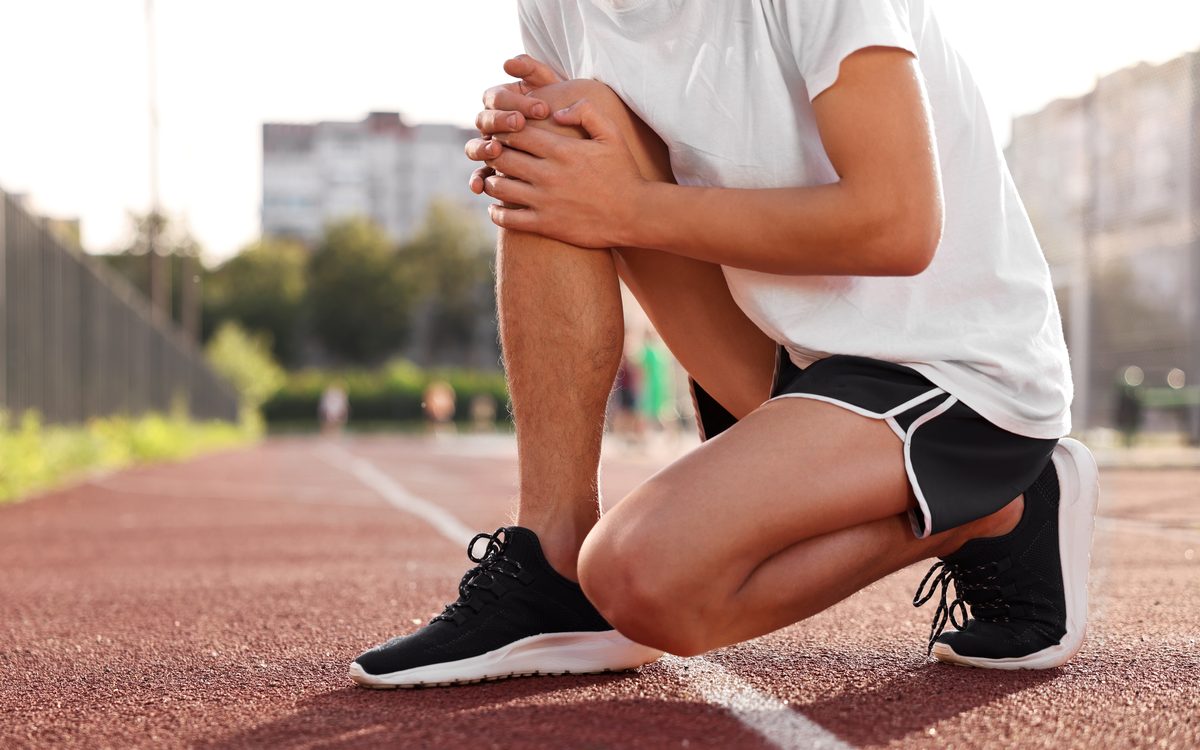
This page is for athletes, parents, coaches and returning participants who want to understand how the knee works, why it is such a common trouble spot in sport, and what usually happens when something goes wrong. It is general education, not a diagnosis.
The knee does a lot of work. It carries body weight, absorbs landings and changes of direction, and sits between two long levers, the thigh and the shin. That makes it popular with sports medicine clinics. It also means most knee problems have a clear story if you know what to look for.
Read this as a map. For detail on specific injuries such as ACL tears, meniscus problems and kneecap pain, go to our main guide, Knee Injuries in Athletes, which is the canonical page for that subject.
Basic anatomy and function
The knee is mainly a hinge joint where the thigh bone meets the shin bone, with the kneecap (patella) gliding in a groove at the front. It bends and straightens, and it allows a small amount of rotation when bent.
Several structures keep it stable. Ligaments act like strong straps: the cruciate ligaments inside the joint control forward, backward and twisting movement, and the collateral ligaments on the sides resist sideways forces. Two C-shaped pieces of cartilage, the menisci, cushion and spread load between the bones. Smooth cartilage covers the bone ends, and the big thigh muscles and tendons around the knee provide active support.
Common injury categories
Clinicians usually sort knee problems by the tissue involved:
- Ligament injuries, such as sprains or tears of the ACL or side ligaments.
- Meniscus injuries, where the cushioning cartilage is torn or worn.
- Kneecap and front-of-knee pain, often linked to how the kneecap tracks and how the joint is loaded.
- Tendon problems, where the tendons above or below the kneecap become irritated from repeated load.
- Outer-knee pain, often seen in runners and cyclists.
- Cartilage and joint-surface problems, from impact, twisting or long-term wear.
- Growth-related pain in young athletes whose bones are still growing.
Symptoms people may notice
Knee trouble can show up as pain in a specific spot, swelling, stiffness, a feeling that the knee gives way, catching or locking, or difficulty fully bending or straightening. Some people hear or feel a pop at the moment of injury. Others have a slow build-up of ache that appears with activity and eases with rest.
Symptoms overlap between conditions, which is why you cannot reliably tell one injury from another by feel alone. Fast swelling after a twist, a knee that will not take weight, or a knee that feels unstable are good reasons to be examined soon.
Typical mechanisms and sport contexts
Sudden injuries often come from a planted foot with a twist, an awkward landing, or a direct blow. These are common in sports with cutting, pivoting and jumping. Gradual problems tend to come from repeated load: more running, jumping or hills than the body is used to, or a change in shoes, surface or technique.
Different sports stress the knee differently. Pivoting and landing sports put the ligaments and menisci at risk, endurance sports tend to produce overuse pain, and snow sports can apply large twisting forces. Young athletes and adults returning after a break are both worth mentioning: each may be doing more than their knee is ready for.
Professional assessment
A doctor or physiotherapist will ask how the problem started, then examine the knee: looking for swelling, testing movement and stability, and watching how you walk or move. Imaging such as X-ray or MRI is used when it will change decisions, not for every sore knee. Sports medicine doctors, orthopaedic specialists and physiotherapists often work together on harder cases.
General care pathways
This is what clinicians commonly do, not a program to follow on your own. For many overuse problems, care is built around adjusting activity load and guided strengthening and movement work. For some ligament and meniscus injuries, clinicians discuss non-surgical care or surgery depending on the injury, the person’s age, their sport and their goals. Pain relief, supports or braces may be part of the plan. The right route depends on a proper assessment.
If you are curious about supports, our guides to the best knee braces for running and best knee sleeves explain the differences between them. A brace does not replace an assessment.
Rehabilitation and returning to activity
Recovery from a knee injury is usually a staged process led by a clinician: first settling the knee, then restoring movement, strength and control, then rebuilding sport-specific skills. Our guides on rehabilitation and returning to sport explain how clinicians think about readiness, and why timelines vary so much from person to person.
Prevention
No approach removes all risk, but habits that help include a sensible build-up of training, good landing and cutting technique, and building strength and control around the hip and knee. See warm-ups, technique and training load for the general principles, and protective equipment for where padding and supports fit in.
Relevant sports
Knee problems are especially discussed in soccer, basketball, volleyball, alpine skiing and running. Each sport page covers its own typical injuries and patterns.
Guides to read next
- Knee Injuries in Athletes: ACL, Meniscus, Patellar Pain
- Best Knee Brace for Running
- Best Knee Sleeves for Squats, CrossFit and Running
- Best Mountain Bike Knee Pads
- Rehabilitation After Sports Injury
- Return to Sport After Injury
- Warm-Ups and Injury Prevention
- Technique and Injury Prevention
- Training Load and Injury Prevention
- Joint Health for Athletes
- Soccer Injuries
- Basketball Injuries
- Alpine Skiing Injuries
- Running Injuries
- Volleyball Injuries
Frequently asked questions
Is knee pain always a sign of a serious injury?
No. Many aches settle with sensible changes to activity. But swelling soon after an injury, a knee that gives way or locks, or pain that keeps returning deserves a professional look.
Do I need a knee brace?
Not always. Braces and sleeves are used for different reasons, and some are prescribed by a clinician after specific injuries. Ask a professional if you are unsure, and see our buying guides for how the types differ.
Why do some knee injuries take so long to recover?
Ligament, cartilage and tendon tissue heal slowly, and the knee has to relearn strength and control, not just stop hurting. That is why rehabilitation is staged.
Are knee problems different in young athletes?
Yes. Growing bones create their own patterns of knee pain, so children and teens with persistent knee pain should be assessed rather than told to play through it.