This article contains affiliate links: if you buy through them we may earn a commission, at no extra cost to you. Read our affiliate disclosure.
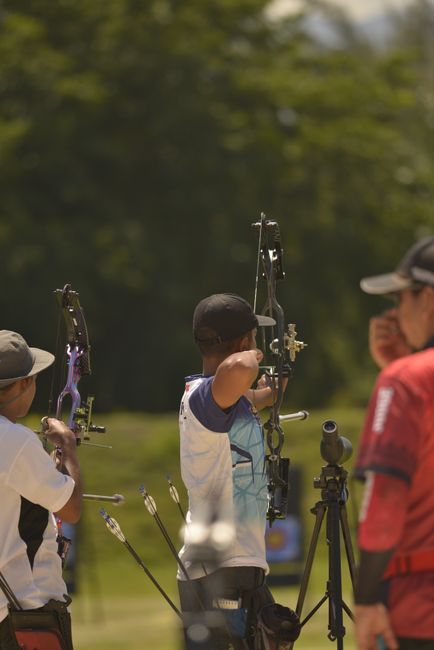
It is the first Saturday of the outdoor season. The club’s targets are out, the grass is wet, and a new archer is told to leave her bow on the stand until the whistles say otherwise. Two blasts, everyone steps to the line; one, they shoot; three, they walk. Nobody calls that injury prevention, but it is. Archery injury prevention is the set of habits around a shooter that aim to lower the chance of getting hurt: a bow that suits your strength, a gradual build-up in arrows, balanced shoulder strength, simple protective gear, and range rules that everyone follows. It can lower the odds. It cannot promise anything.
Quick answer: Archery is one of the lower-risk sports: it had among the lowest injury rates at the Rio 2016 Olympics (0 to 3% of athletes), according to the IOC study. The real risks are overuse in the drawing shoulder and neck and back, bruises from the string, and rare but serious range accidents. Start with a bow weight you can control, add arrows slowly, do balanced shoulder strength work, wear an arm guard and finger protection, and obey the range signals. See a sports medicine doctor, physical therapist or athletic trainer if shoulder pain lasts more than a couple of weeks or wakes you at night, and get emergency care right away for any puncture, deep cut or eye injury.
General information, not medical advice. This page is about lowering risk. For what each archery injury looks like and when to get it checked, see our archery injuries guide. Back to the archery hub.
What actually needs preventing
The honest picture has three parts. First, slow overuse: in a survey of 396 archers, 57.3% had been injured during practice, and the drawing shoulder was the most common site at 28.2%, with neck and back next at 19.9% (Alberola-Zorrilla and colleagues, Physiotherapy Theory and Practice). Second, the string and the hands: a US study of emergency department records found fingers were the most common injury site, and that many cuts came from handling sharp hunting points rather than target shooting (Konda and colleagues, Orthopedic Reviews, 2023; Palsbo, 2012). Third, rare range accidents, which are almost all about how people behave around bows and arrows.
A US emergency department study found about 4.4 injuries per 10,000 participants aged 6 and over, with 99% treated and released (Palsbo, Journal of Sports Medicine and Physical Fitness, 2012). So prevention here is mostly small habits, not heavy equipment or special programs.
Warm-up: what is known
Unlike soccer, archery has no widely published, tested named warm-up program such as the FIFA 11+, so be wary of anyone who says there is one. What exists is common coaching practice, not a trial. Many archers spend a few minutes on easy movement, arm swings, band pull-aparts and external rotations, then draw a band trainer slowly a few times before the first arrow, and shoot a few close warm-up arrows before scoring. Tournament-morning timing is in our tournament day guide.
Technique and the right bow weight
Technique is a risk factor, not just a scoring matter. In a survey of 62 elite German and European archers, overuse problems were mainly in the shoulder (52.9%), and the authors named technique as a risk factor and advised equipment checks (PMID 28944650). A coach can spot a collapsing bow shoulder or a locked bow elbow that invites string slap.
Draw weight is the simplest lever. Coaches start new archers light and add weight only when form stays clean. Warning signs that a bow is too heavy for you today are struggling to draw, shaking at full draw, or creeping forward at the end. This is general coaching guidance, not a published number. For a reference point, the school program NASP uses a bow with a draw weight of 10 to 20 pounds for its students, according to its own site.
Build arrow volume gradually
There is no published safe number of arrows per week, so treat any figure you read with caution. What we can say is that sudden jumps are when shoulders complain, and elite shooters feel it too: a World Archery 70 m Round is 72 arrows and the 1440 Round is 144 (World Archery Book 2). Coaches commonly raise weekly arrows in steps and keep a lighter week after a big tournament. If an arrow count or a draw weight starts to hurt, drop one of them rather than push through.
Strength and posture work
The evidence here is small but consistent. In 15 elite archers compared with non-athletes, shoulder strength differed between the two sides, and the authors suggested training programs to balance them (Clinics in Shoulder and Elbow, 2018). In university archers, a 12-week program built around the lower trapezius improved simulated competition scores and shoulder strength (PMID 35052334). The American Academy of Orthopaedic Surgeons (AAOS) publishes a rotator cuff and shoulder conditioning program (rows, external and internal rotation, scapula setting and retraction) with one rule worth repeating: you should not feel pain during an exercise. It suggests starting with 4 to 6 weeks of the program, then doing it 2 to 3 days a week.
Bands are the easy way to do this at home. A simple set like the THERABAND resistance band set covers most of it. Exercises are on our archery training page.
Sun, heat, cold and wind on the range
The American Academy of Dermatology advises broad-spectrum, water-resistant sunscreen of SPF 30 or higher, applied about 15 minutes before going out and reapplied every two hours or after sweating. The National Athletic Trainers’ Association (NATA) heat illness position statement lists the warning signs of heat exhaustion and says that cooling the person comes first. In a four-day competition study, elite archers were slightly dehydrated on waking but well hydrated before and after shooting (Esen, Walshe and Goodall, 2024), so drink early.
Two more points. Lightning means everyone leaves the range; NATA’s lightning guidance is that when thunder is heard, play stops. And in cold weather a loose jacket or sleeve is what the string catches, which is a good reason for a chest guard and a close-fitting layer.
Range safety: the rules that do the work
Serious archery accidents are rare and mostly preventable. The tools are old and simple:
- Learn the signals. Under World Archery rules, two sound signals call archers to the line, one starts shooting, three start scoring, and a series of at least five means stop shooting at once (Book 3). If the emergency signal sounds at full draw, let down; do not release.
- Nock only on the line, point at the target, and never draw with anyone in front of the line.
- Walk, don’t run, to the targets. Pull arrows from the side with one hand on the target face, after checking nobody is behind you.
- Never dry-fire. NASP’s instructor course teaches that releasing a drawn bow with no arrow can harm the archer, bystanders and the bow.
- Check equipment before every session for cracks and frays. In the 62-archer study, acute injuries were rare and mostly arm bruises, and 83.3% of them came from equipment failure.
- Backstop and space at home. Shoot only at a target built to stop arrows, with a clear zone behind and beside it. Do not shoot where anyone could walk behind it.
- Handle hunting points with care. Lacerations led the US emergency list, mostly from mishandled hunting arrows, (Palsbo 2012).
Protective gear and fit
Gear is the one place where archery prevention is easy to buy. Be clear about what is verified and what is not. The verified part: the US emergency department authors recommend protective gear such as finger tabs and forearm guards (Konda and colleagues, 2023), and NASP’s rules require tabs or gloves with no metal or rigid plastic, plus arm guards and chest protectors in its division. The unverified part: the product claims below come from the makers’ pages, and none of these products has been tested in a study we found.
- Arm guard: covers the bow forearm and stops the string bruise. The LEGEND Armguard XT is a vented, thermo-shaped foam guard with quick-release buckles, according to its listing.
- Finger tab or glove: spreads the string’s pressure and protects the skin. The BICASTER finger tab has a leather face over an aluminum plate and an adjustable finger spacer, says the maker.
- Chest guard: keeps clothing flat so the string does not catch it. The BICASTER chest guard uses a mesh inner layer and three straps, per its listing.
Our archery gear guide goes through the choices. We do not cover bows, arrows or bow parts on this site.

LEGEND Armguard XT
- Thermo-shaped EVA foam, vented
- Elastic straps, quick-release buckles
$16.70 at Amazon, as of Nov 17, 2026 01:07 UTC
Check price on Amazon
BICASTER Finger Tab (leather + aluminum plate)
- Cow leather face, aluminum plate
- Adjustable finger spacer
$19.99 at Amazon, as of Nov 17, 2026 01:07 UTC
Check price on Amazon
THERABAND Resistance Band Set
- Yellow, red, green bands
- 5 ft x 5 in each
$11.99 at Amazon, as of Nov 17, 2026 01:07 UTC
Check price on AmazonYoung archers
Archery is gentle on growing bodies compared with many sports, but it is not risk free. At a European Youth Championships, 43.5% of 200 young archers (average age 16.9) reported shoulder pain during training and 31.8% had stopped training because of an injury (Sports, 2024). The American Academy of Pediatrics (AAP) recommends at least 1 to 2 days off a week from the main sport and about 3 months off a year, in one-month blocks (Brenner, Pediatrics, 2016). See youth archery.
What prevention cannot do
Nothing on this page guarantees you will stay healthy. Tendons can still get irritated at a sensible volume, and equipment can still fail. Prevention lowers the odds, and good recovery habits help you bounce back; see our archery recovery page.
When to see a professional
- Right away (emergency): any puncture or arrow wound, a deep cut or heavy bleeding, a possible eye injury, or a fall with a head knock (the CDC HEADS UP guidance is to remove the person and not return the same day).
- Within a few days: a pop in the shoulder, sudden weakness lifting the arm, or numbness or tingling in the hand.
- Soon: shoulder pain at night or lasting more than a couple of weeks, an elbow or forearm that keeps aching, or neck and back pain that travels down an arm or leg. AAOS lists night pain and loss of strength or motion as signs that rotator cuff trouble is getting worse.
A sports medicine physician diagnoses; a physical therapist guides rehab and the return to full draw weight; an athletic trainer is often the first person you see at school and college events.
Archery injury prevention: FAQs
Is archery a dangerous sport?
No. Archery was among the lowest-injury sports at the Rio 2016 Olympics (0 to 3% of athletes), and US emergency department data show about 4.4 injuries per 10,000 participants, nearly all treated and released. Range rules are a big reason.
How do I stop my forearm getting bruised?
Wear an arm guard on the bow forearm and ask a coach to check your grip and bow-arm elbow, because the cause is often form. In the 62-archer study, the few acute injuries were mostly arm bruises.
Should I warm up before shooting?
Most coaches do: easy movement, band pull-aparts, a few slow draws with a band, then a few close warm-up arrows. There is no published, named archery program like the FIFA 11+, so this is common practice rather than trial-proven.
How do I avoid shoulder pain from archery?
Use a draw weight you can control, raise arrows gradually, and strengthen both shoulders with exercises like the AAOS rotator cuff program. Do not shoot through pain; drop the weight or the arrow count and get it checked if it does not settle.
What should I do if I hear the emergency whistle at full draw?
Let down without releasing and keep the arrow pointed at the target area. World Archery rules call for at least five signals to stop shooting.
Sources
- Soligard et al., Rio 2016 injuries and illnesses, British Journal of Sports Medicine, 2017
- Palsbo, epidemiology of recreational archery injuries, 2012
- Alberola-Zorrilla et al., Where do archers hurt?
- Konda et al., archery-related musculoskeletal injuries, Orthopedic Reviews, 2023
- Survey of 62 elite German and European archers
- Lower trapezius 12-week program in university archers
- Injuries and persistent pain in elite adolescent archery athletes, Sports, 2024
- Characteristics of shoulder muscles in archery athletes, 2018
- AAOS OrthoInfo, rotator cuff and shoulder conditioning program
- AAOS OrthoInfo, shoulder impingement and rotator cuff tendinitis
- World Archery Rule Book 3, Target Archery (2026-01-27)
- World Archery Rule Book 2 (2026-01-27)
- NASP, what is NASP
- Esen, Walshe and Goodall, nutrition and hydration of world-class archers, JISSN, 2024
- American Academy of Dermatology, how to apply sunscreen
- NATA position statement, exertional heat illnesses, 2015
- AAP clinical report, sport specialization, Brenner 2016
General information for education only, not medical advice. It does not replace a visit with a doctor, physical therapist or athletic trainer. See how we write and check our pages in our editorial policy.