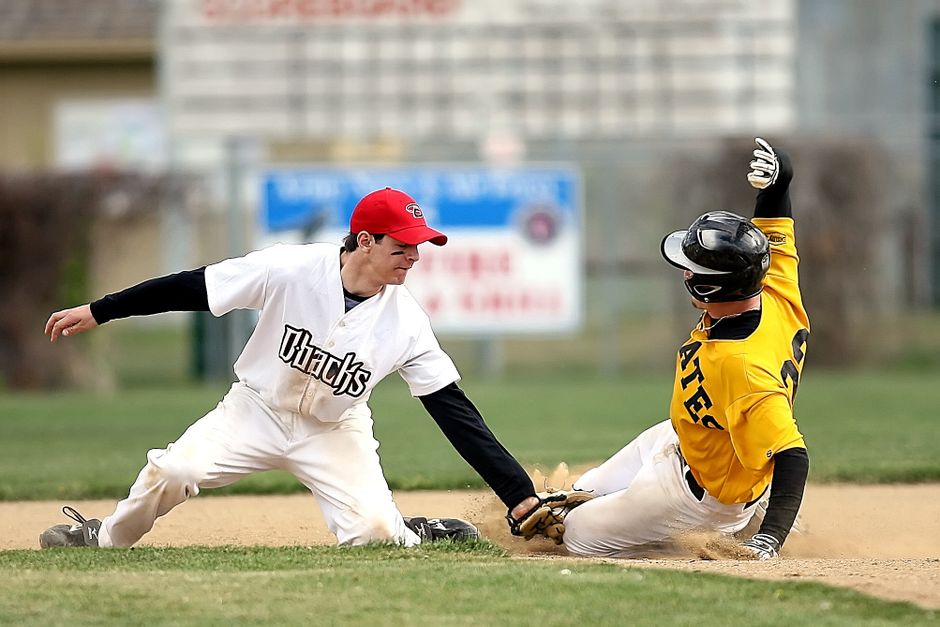
Bottom of the seventh, a runner on second, and the count is 1-2. The batter steps out, taps the dirt off both cleats and takes a slow breath before stepping back in. Baseball is a game of pauses: seconds between pitches, minutes between innings, and a whole bench of people watching you fail seven times out of ten and still call it a good night. Baseball mental training means practicing the skills between your ears (routines, focus, confidence, handling a slump) the same way you practice a swing or a bullpen. This page is about mental performance for hitters, pitchers, fielders and coaches. Mental performance is not the same as mental health; see the section below.
Quick answer: Mental skills are habits you can practice: a short, repeatable routine before every pitch or at-bat, simple imagery, goals you control, and a plan for what you do after a strikeout or a walk. Research on these tools is promising but mixed, and none of them guarantees better results. If worry, low mood, or trouble eating or sleeping lasts more than a couple of weeks or gets in the way of daily life, see a doctor, licensed psychologist or other qualified professional, and in a crisis call or text 988 (US).
Confidence: built from reps you can point to
Sport psychologists often call confidence self-efficacy: your belief that you can do a specific thing, like lay off a slider in the dirt or hit your spot with a fastball. It tends to grow from evidence, such as good practice at-bats, bullpens where you hit your targets, and video of your own best swings. In a 2026 functional MRI study of baseball batters (Chen and Chen, Scientific Reports), players watched score situations before predicting whether to swing. Batters rated themselves more confident when their team was far ahead than when the score was even, and skilled batters reported lower stress than intermediate batters in the even-score situation. That is one small lab study, a hint rather than a training method.
A practical habit: after each game, write down one thing you did well, even after an 0-for-4.
Focus: one pitch at a time
Baseball asks you to switch your attention on and off. Many coaches teach a simple reset cue (a breath, a glove tap, a word like “next”) that tells your head the last pitch is over. That is common coaching practice, not a studied formula, so keep it only if it helps. A 2025 study in Sports (Morishita and colleagues) found that pitch selection ability and spatial executive function each independently predicted batting performance, so choosing which pitches to swing at is a skill apart from raw bat speed.
At-bat and pitching routines
Watch a veteran hitter and you’ll see the same steps every time: out of the box, same adjustment, same breath, same look at the third-base coach. A pre-performance routine is a short, fixed sequence that gets you ready and shuts out noise. A 2026 position statement from Exercise and Sports Science Australia on performance under pressure (Schweickle and colleagues, Sports Medicine) lists pre-performance routines among the evidence-based strategies, alongside psychological skills training and mindfulness-based approaches. It is not specific to baseball and promises no result.
- Hitter’s routine: two or three repeatable steps you can finish in the time you have, for example step out, breath, one swing thought, step in. Use it in every practice round, not only games, so it feels normal when the crowd is loud.
- Pitcher’s routine: the same steps from the rubber between pitches, for example walk off, breath, pick the target, then go. A routine fixes your attention on what you control: your target and your next pitch.
- Between innings: a reset cue in the dugout, then a drink and a quick plan for the next at-bat or inning. For fueling, hydration and doubleheader logistics, see our baseball game day guide.
Goal setting and motivation
Coaches often split goals into three kinds: outcome (make the playoffs), performance (cut strikeouts this month) and process (take my routine every at-bat, throw strike one). Process goals are fully in your control, so they still count when a hard-hit ball finds a glove. The split is common coaching practice, not a single study’s finding. A 2026 systematic review of 14 studies on slumps and burnout in competitive athletes (Rajpoot and colleagues, Sports) found that burnout and controlled motivation, meaning playing mainly because of pressure from others, predicted performance decline and dropout, while higher resilience and mental toughness were linked to less burnout. It covered athletes generally, not only baseball.
Visualization and imagery
Imagery means rehearsing a skill in your mind with as many senses as you can: the sound of the pitch, the feel of the grip, the pop of the glove. Brain-stimulation studies from a Japanese research group (Yamasaki and colleagues, 2026) found that imagining a pitch increased activity in the arm-to-hand muscle pathway in baseball players, the way actually moving does, and the effect was specific to pitching compared with other sports skills. That does not show imagery makes a pitcher throw better. Treat it as an add-on to real reps, never a replacement.
- Try 3 to 5 minutes on the bus or before bed: see yourself, through your own eyes, taking your routine and then seeing the pitch well.
Pitching under pressure
Pressure on the mound can show up as a rushed delivery, a tight grip or sudden wildness. The ESSA position statement above says pressure can help or hurt depending on the athlete, and lists pressure training (practicing under game-like stress) among its strategies. For pitchers that can mean bullpens with a count and a score in mind.
One related problem is the “yips,” involuntary jerks, tremors or freezing during a throw. In a 2025 survey of 285 youth baseball players (Maruo and colleagues, Perceptual and Motor Skills), about 10% reported yips symptoms, which were more common among pitchers than other positions and linked to anxiety while throwing and to high-pressure situations. It is a self-report snapshot, not a diagnosis or treatment guide. A player whose throwing suddenly changes should see a sports medicine doctor or athletic trainer first, since an injury can look similar. Our baseball injuries page covers the arm.
Slumps and failure tolerance
The 2026 systematic review above found psychological factors (burnout, motivation, resilience) tied to performance decline. It tested no cure for a batting slump and was not baseball-specific. A 2021 study of 209 Asian university baseball players (Yoon and colleagues, International Journal of Environmental Research and Public Health) found that perfectionism was associated with more choking in extremely stressful game situations. It was a one-time survey, so it cannot show cause, but demanding perfection may work against you.
- Review once, then move on: watch the at-bat, write one process fix, and let it go. This is a coaching habit, not a studied method.
- Check the basics: sleep, food and a sore arm or hand can look like a “mental” slump. Our baseball recovery page covers the rest.
Handling nerves and competitive anxiety
A 2026 network meta-analysis of 46 trials (Li and colleagues, Sports Medicine – Open) compared different psychological interventions for athletes’ competitive anxiety and reported substantial uncertainty about which works best. A slow breath inside your routine is an easy place to start. These tools are for ordinary game-day nerves, not treatment for an anxiety disorder.
Teammates, coaches and the dugout
Teamwork research in baseball is thin, so this stays short. A 2023 qualitative study of one competitive youth team (Gurgis and colleagues, Sports) interviewed 21 coaches, players and parents. Exercise as punishment, benching and yelling were the most reported behavior management tactics, and participants saw yelling as punitive. The authors call for more awareness of age-appropriate approaches. It describes one team, not what works everywhere.
Preparing for the game
Put your plan on a short card: pre-game routine, between-pitch routine, one process goal and your reset cue. For meals, fluids, heat and pitch counts, see our game day page; for arm care and strength, baseball training; for young players, youth baseball.
Mental health is not the same as mental performance
Everything above is about skills: routines, focus, goals and handling pressure. Anxiety disorders, depression, disordered eating and burnout are health matters, not mindset problems, and they need a qualified professional such as a doctor, licensed psychologist or counselor, not a better routine. The International Olympic Committee consensus statement on mental health in elite athletes (Reardon and colleagues, British Journal of Sports Medicine, 2026) says these conditions are common in elite athletes, can affect performance, are treatable, and that many athletes keep competing while getting help. In the US, the 988 Suicide & Crisis Lifeline offers free, confidential support by call or text to 988, any time. In immediate danger, call 911. Student-athletes can also ask their school’s athletic department about campus resources.
Baseball mental training FAQs
What is a good at-bat routine?
One you can repeat in the same few seconds every time: step out, breath, one swing thought, step in. The ESSA position statement lists pre-performance routines among evidence-based strategies for pressure.
How do I get out of a hitting slump?
There is no proven cure. The 2026 systematic review on slumps and burnout points to motivation, burnout and resilience as factors in performance decline, so rest, sleep and focusing on process over results are sensible places to start. Ask a coach about your swing and a trainer if anything hurts.
What are the yips in baseball?
Involuntary jerks, tremors or freezing during a throw. In a 2025 survey of 285 youth players, about 10% reported symptoms, more often pitchers, along with anxiety about throwing. If your throwing suddenly changes, tell a coach and see a sports medicine doctor or athletic trainer to rule out an injury.
Does visualization help pitchers?
Lab studies show imagining a pitch activates the muscle pathways used in pitching, but that is not proof it improves pitching in games. Use it as an add-on to real bullpens.
Is a bad slump a sign of a mental health problem?
Usually a slump is a performance problem. If low mood, constant worry, changes in eating or sleep, or loss of interest in baseball last more than a couple of weeks, talk to a doctor or other qualified professional. In a crisis, call or text 988 (US).
Sources
- Schweickle MJ et al. Performance under pressure in sport: ESSA position statement. Sports Medicine, 2026. PMID 42271117
- Chen YH, Chen YL. How game score shapes anticipatory swing decisions in baseball players: a functional MRI study. Scientific Reports, 2026. PMID 42289413
- Morishita Y et al. Pitch selection ability and spatial executive function independently predict baseball batting performance. Sports, 2025. PMID 41150502
- Rajpoot YS et al. From slump to comeback: psychological determinants of performance decline, burnout, and recovery in competitive athletes, a systematic review. Sports, 2026. PMID 42188542
- Yamasaki D et al. Motor imagery of yips-affected pitching and corticospinal excitability in baseball players with yips. Medicine & Science in Sports & Exercise, 2026. PMID 42841528
- Yamasaki D et al. Pitching-specific facilitation of upper-limb corticospinal excitability during motor imagery. Experimental Brain Research, 2026. PMID 41557017
- Maruo Y, Shimizu K, Miyamoto T. Exploring throwing yips in youth baseball players. Perceptual and Motor Skills, 2025. PMID 39529306
- Yoon SJ et al. Perfectionism, mood states, and choking in Asian university baseball players under pressure during a game. Int J Environ Res Public Health, 2021. PMID 34886577
- Li L et al. Psychological interventions and competitive anxiety: Bayesian network meta-analysis. Sports Medicine – Open, 2026. PMID 41866642
- Gurgis JJ, Kerr G, Battaglia A. Behaviour management within a competitive youth baseball team. Sports, 2023. PMID 36976955
- Reardon CL et al. IOC consensus statement on mental health in elite athletes. British Journal of Sports Medicine, 2026. PMID 42580854
- 988 Suicide & Crisis Lifeline
General information for education only, not medical advice. It does not replace a doctor, psychologist or other qualified professional. See how we work in our editorial policy. Back to the baseball hub.