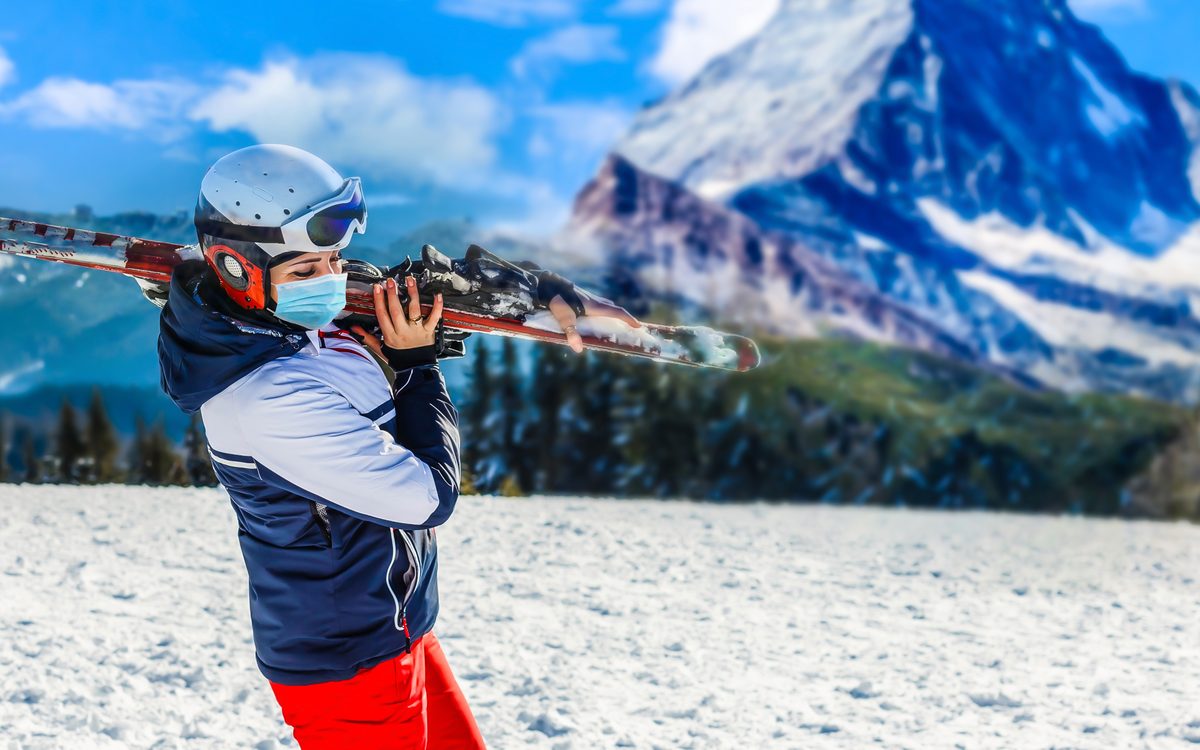
A parent stands at the edge of a snowy stadium in Wisconsin, watching a teenager skate in, drop onto the mat and breathe through five shots before skiing out again. It looks complicated until you learn three things: what a target is, what a miss costs, and which format you are watching. Biathlon is cross-country ski racing with rifle shooting built in, and this page explains how it works and how a beginner gets started. The full overview is on our biathlon hub.
Quick answer: Biathlon is a ski race with shooting stops. Athletes shoot five targets at 50 m per bout, prone (4.5 cm targets) or standing (11.5 cm targets), and each miss costs a 150 m penalty loop or, in the individual, one minute (IBU). Beginners usually start through a local club or USA Biathlon, often with laser or air rifles, and learn to ski first. Ask your club about age rules and equipment before buying anything.
The basic idea
The International Biathlon Union (IBU) describes a round of shooting as five targets, 50 metres away. Targets start black and turn white when hit. Prone targets are 4.5 cm across, standing targets 11.5 cm, which is why the standing bout, shot when the athlete is tired and breathing hard, is the harder one. Athletes carry four magazines of five rounds, and relays allow three spare bullets per bout that are loaded by hand.
The winner is the athlete with the fastest total time, or in a mass start, the first across the line. A missed target is paid for with distance or time, depending on the format.
Formats and what a miss costs
| Sprint | 10 km men, 7.5 km women, three ski loops, one prone and one standing bout. Each miss: 150 m penalty loop. |
|---|---|
| Pursuit | 12.5 km men, 10 km women, five loops, prone, prone, standing, standing. Starts are staggered by sprint results, top 60 sprint finishers. Each miss: 150 m. |
| Individual | 20 km men, 15 km women, four bouts (prone, standing, prone, standing). Each miss: one minute added to the time. |
| Mass start | 15 km men, 12.5 km women, 30 athletes start together. Each miss: 150 m. First across the line wins. |
| Relay | Four legs of 7.5 km (men) or 6 km (women), one prone and one standing bout per leg, spare rounds allowed. |
| Mixed relay | Two men and two women per team, 6 km each. |
IBU events also include a super sprint and a single mixed relay, where the penalty loop is 75 m, and a short individual, where a miss costs 45 seconds. These formats are listed on the IBU site and the USA Biathlon race disciplines page, so check the current rulebook if you are organising or officiating an event.
The skills a beginner learns first
Because biathlon is mostly skiing, the first skills are the ones in our cross-country skiing rules and trail etiquette guide: balance on the skis, classic and skating technique, stopping, and controlling speed on downhills. Shooting skills come in a separate, supervised track. The sport-specific skills are these:
- Range procedures and commands, learned before anyone shoots. The National Shooting Sports Foundation (NSSF) rules of firearm safety are the common baseline: muzzle in a safe direction, finger off the trigger until ready, be sure of your target and what is behind it, and wear eye and ear protection.
- Position: prone (lying) and standing, each with its own body set-up. Coaches teach these slowly, one at a time.
- Breathing and settling the heart rate before the shot. This is where skiing fitness and shooting meet.
- Transitions: arriving at the mat, loading, shooting and leaving, in a repeatable order.
We found no published beginner progression from a governing body, so the order above is general coaching practice, not a set curriculum. Your club coach will set the real one.
How to start in the United States
USA Biathlon’s website points newcomers to pages titled “How to Get Involved” and “Find a Club,” and it lists a Laser and Electronic Biathlon program. The pages we could read did not spell out age limits or equipment, so we do not state them. Many beginner programs in the sport use laser or air rifles that do not fire live ammunition, but confirm this with the club. Practical steps:
- Find a club on the USA Biathlon site and ask whether they run an intro day or a youth program.
- Ask what rifles they use for beginners and who supervises the range.
- Rent skis and boots first. Many Nordic centres offer rentals, and our biathlon gear page explains what matters when you buy.
- Build the skiing base. Our training page shows a sensible weekly shape.
Outside the United States, start with your national federation, which you can find through the IBU.
Levels, from club to Olympics
USA Biathlon sends youth and junior teams to the Youth/Junior World Championships. Above that sit the IBU Cup, the World Cup and World Championships. At Milano Cortina 2026 the IBU says biathlon had 11 medal events at Antholz-Anterselva, with 210 quota places. For the status of future Games, check the official Olympics.com programme. In the mass start at the Olympics, the field is the top 15 of the World Cup total score plus medallists not in that group (USA Biathlon).
Para biathlon in plain words
Para biathlon has three groups of athletes: vision impairment, standing and sitting (paralympic.org). Athletes with a physical impairment use their own rifles, shot at targets 10 m away measuring 13 mm. Athletes with vision impairment use a shared rifle with electro-acoustic glasses, where a tone rises as the rifle points closer to the target centre, and shoot at 21 mm targets. Para biathlon debuted at Innsbruck 1988; vision impairment was added in 1992, and women and the sitting class in 1994. Classification is decided by the federation, so ask the national Paralympic committee or a para-friendly club how to be assessed. Our cross-country skiing page covers the related Para skiing.
Official rulebooks
The IBU publishes the official rules and formats; the pages we used are in Sources below. We read the rules overview and competition formats pages, not the full legal rulebook, so event organisers should download the current IBU Event and Competition Rules directly.
Biathlon FAQs
How many targets are in a biathlon shooting bout?
Five targets, 50 m away. Prone targets are 4.5 cm wide and standing targets 11.5 cm (IBU).
What is the difference between a sprint and a pursuit?
A sprint is one start every 30 seconds over three loops. A pursuit starts the top 60 sprint finishers with their sprint gaps, then adds a longer course and four bouts (IBU).
Can kids try biathlon without a real rifle?
USA Biathlon lists a Laser and Electronic Biathlon program, and many beginner programs use laser or air rifles. We could not read age limits, so ask a club.
Do I need to be an expert skier first?
Biathlon is mostly skiing, so a basic ability to ski comfortably helps. Coaches usually introduce range work separately and under supervision.
How is Para biathlon different?
Targets are 10 m away and 13 mm or 21 mm wide, and visually impaired athletes use electro-acoustic glasses that raise a tone as aim improves (paralympic.org).
Sources
- IBU, Rules overview
- IBU, Competition formats
- IBU, Milano Cortina 2026
- USA Biathlon, race disciplines
- USA Biathlon, home
- Paralympic.org, Para biathlon
- NSSF, rules of firearm safety
General information for education only, not medical advice. It does not replace a visit with a sports medicine doctor, physical therapist or athletic trainer. See how we write and check our pages in our editorial policy.