This article contains affiliate links: if you buy through them we may earn a commission, at no extra cost to you. Read our affiliate disclosure.
The last practice of the night at the local track, the lights are on, and a rider who has been taking the same first turn all evening decides to try one more lap. Her coach, leaning on the fence, calls her in instead. “Tired legs, tired lines,” he says. Those small calls are BMX injury prevention: the choices around a rider, such as certified protective gear, a bike that has been checked, skills learned in order, a body that is ready for the work, and a track day paced so that the last lap is not the sloppiest one. They can lower the odds of getting hurt. They cannot take crashes out of BMX.
Quick answer: Wear a helmet certified for BMX (ASTM F2032, according to the US Consumer Product Safety Commission), ideally a full-face one, with full-finger gloves, long sleeves and pants or pads, and enclosed shoes. Check the bike before every session, learn skills in order with a coach, and stop riding when you are tired. See a sports medicine doctor, physical therapist or athletic trainer for any suspected concussion, a wrist or shoulder that stays sore, or pain that keeps coming back, and call 911 after a crash with loss of consciousness, neck pain or numbness.
General information, not medical advice. This page is about lowering risk. For what each BMX injury looks like and when to get it checked, see our BMX injuries guide.
Know what you are preventing
A 2025 scoping review of 37 BMX studies (Rockliff et al., Sports Health) found that the sport has some of the highest injury rates in multisport research, and the arms and shoulders took the most hits, about 40% of injuries across the pooled studies. A 2025 meta-analysis of competitive cycling (BMJ Open Sport & Exercise Medicine) found upper limb injuries made up about 65% of BMX injuries. So most prevention here is about three things: the head, the hands, wrists and shoulders that meet the ground first, and the handlebars. The data come mostly from elite events and emergency rooms, so treat the numbers as a rough guide.
Before you ride: warm-up and a bike check
We found no published BMX-specific warm-up program with proven injury results, unlike soccer’s FIFA 11+, so we will not name one. Many coaches have riders spin and roll the track easily before gate starts or jumps. That is common practice, not a published trial. At the Rio 2016 Olympics, injuries were 3.5 times more likely in competition than in training (scoping review), so race nerves are worth planning for.
The bike check is cheap and specific. The scoping review linked handlebar impacts to more intensive care admissions and surgery than ordinary falls, which is why grips that cover the bar ends are a USA BMX equipment rule and a good habit. A quick pass before each session: grips and bar-end plugs in place, headset and stem tight, brakes working, pedals straight, tires pumped. Race-day logistics are on our BMX race day guide.
Learn skills in order, and learn to bail
The scoping review found falls over the handlebars accounted for 5% to 23% of injuries across studies, and stunts for 0.5% to 43%. The range is wide because the studies counted differently, but it shows where the risk sits: speed and height. The skill order on our BMX training guide (body position, cornering, pumping, manuals, small jumps, then gate starts) is general coaching practice, not a governing-body rule, and we know of no trial showing it prevents injury.
Learning to fall: we found no published study showing that practicing falls or “bailing” lowers BMX injury rates, so we will not tell you it does. Coaches commonly teach riders to let go of the bike and roll rather than hold on into a bad landing, and to practice new tricks into a foam pit or padded landing first. A track coach is the best place to learn this in a controlled setting.
Pace the week
The 2016 IOC consensus statement on load in sport (Soligard et al.) makes the general point that quick jumps in training load are risky and a gradual, planned build protects athletes. It gives no BMX number, and neither do we. For young riders, the American Academy of Pediatrics (AAP, Brenner 2016) recommends 1 to 2 days off each week and time away from a single sport during the year, and a 2015 study (Jayanthi et al., American Journal of Sports Medicine) linked training more hours per week than your age in years with higher injury risk. We found no BMX data on time of day, but stopping when your lines get sloppy is a reasonable habit. Recovery habits are on our BMX recovery guide.
Strength and conditioning
A 2025 systematic review of BMX racing (Becerra-Patino et al.) recommends exercises for the hip, knee and ankle extensors and the shoulder muscles, because pumping, take-offs and landings load them over and over. It examined performance, not injury rates, so it does not show strength work prevents injury. The AAP says supervised, technique-focused resistance training is safe for children and adolescents. Hurst et al. (Journal of Science and Medicine in Sport, 2018) studied 23 youth BMX racers and found that neck braces reduced the number of strong head accelerations; the authors suggest braces plus neck-strength work for youth riders, but nobody has shown braces lower injury rates, so ask your coach and doctor.
Track, park and weather safety
- Gate rules. USA BMX rules limit who can help at the gate: only riders 5 and younger may be assisted, and parents of older riders may not be at or on the gate.
- First aid. USA BMX recommends first aid personnel at races.
- Fewer riders per race. One study in the scoping review found injuries fell from 2.1 to 1.6 per 1,000 participants when races went from six riders to four, but the change was not statistically significant, so it is a hint, not a result.
- Heat. The National Athletic Trainers’ Association (NATA) says athletes should acclimatize to heat over 7 to 14 days and that exertional heat stroke needs fast cooling, with cold-water immersion the most effective method.
- Lightning. NATA’s rule is “When Thunder Roars, Go Indoors”, then wait 30 minutes after the last thunder.
- Skatepark and pump track. We found no published safety standard specific to BMX at skateparks or pump tracks, so ride within the posted rules of the facility, go at quiet times to learn, and watch the flow of other riders before you drop in. These are general practical tips, not research findings.
Helmets and concussion
The CPSC points BMX riders to helmets certified to ASTM F2032, the BMX standard, and says no helmet has been proven to prevent concussions. A lab study of 13 helmet models (DeMarco et al., 2016) found that none of the three uncertified helmets met its test criterion, so check the label. A meta-analysis of bicycle studies (Olivier and Creighton, 2017) linked helmet use with lower odds of head injury, but it covers cyclists in general and is observational.
- Rules. USA BMX requires a helmet with a permanent strap (no snaps) and highly recommends a full-face helmet or one that covers the ears. At UCI events, a full-face helmet with a visor at least 10 cm long is mandatory and open-face helmets are not allowed.
- Fit and replacement. The CPSC says a helmet should sit level and snug without moving, that bike helmets are built for one serious impact and should be replaced after one even if no damage shows, and that without maker guidance it may be prudent to replace a helmet in 5 to 10 years.
- Recognize and remove. The CDC’s HEADS UP program says a rider with a possible concussion stops for the day and returns only when a health care provider clears them, and USA BMX requires a written release. Detail is on the injuries page.
Protective gear and what is verified
Separate the rules from the sales pitch. What is verified: the CPSC helmet guidance above and the USA BMX and UCI equipment rules. USA BMX requires enclosed shoes, recommends long sleeves and long pants, and allows shorts only with knee and shin pads and short sleeves only with elbow protection; the UCI requires full-finger gloves and strongly recommends rigid back, elbow, knee and shoulder protectors and neck protection. What is the maker’s word: Bell says its Sanction 2 carries both ASTM downhill and BMX certifications, and pad makers describe how their foam or hard caps work. We do not claim that any product prevents a particular injury. Rules differ by track and event, so check the current rulebook.
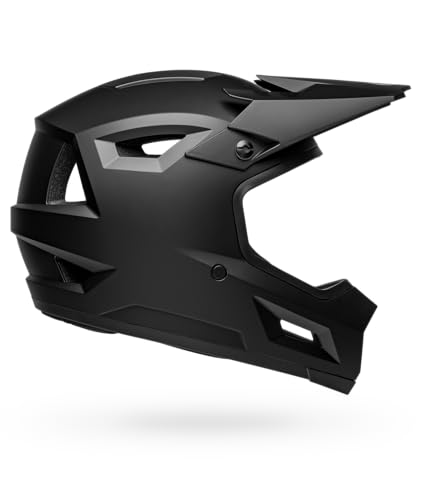
Bell Sanction 2 Full-Face Helmet
- ASTM downhill + BMX certified (maker)
- Sizes from XXS for young riders
- Removable cheek pads
$131.26 at Amazon, as of Nov 17, 2026 02:07 UTC
Check price on Amazon
Fox Racing Dirtpaw Gloves
- TPR knuckle guards
- Padded palm
- Neoprene cuff
Sizing and choosing gear is covered in our BMX gear guide. See also BMX racing, BMX freestyle and the rules page.
Young riders
USA BMX’s apparel rules apply to every age, balance bikes included, and riders 12 and under must use flat pedals. The CPSC advises bringing your child to fit the helmet. The AAP (Brenner 2016) encourages time off and variety rather than a single sport all year. Class and gate details for parents are in our youth BMX guide.
What prevention cannot do
BMX puts several riders into the same first turn at speed, and a front wheel clipping a back wheel is not something a helmet or a checklist can stop. Good gear and good habits make a bad day less likely or less severe; they do not make you safe. Several points above come from small or observational studies, so they are a guide, not a guarantee. The Rockliff review also noted BMX riders were less likely than other cyclists to seek medical care after a crash; when in doubt, get checked.
When to see a professional
- Call 911: a rider who lost consciousness, is confused or vomiting repeatedly, has neck pain, numbness or weakness after a crash, a bone that looks bent, or belly pain after a handlebar hit. Do not move someone with neck pain.
- See someone within a day or two: a suspected concussion, a wrist or shoulder that stays swollen or sore, or an arm a child keeps protecting. For scrapes, the American Academy of Dermatology suggests washing gently, keeping the wound moist and covered; see a doctor for deep wounds or dirt you cannot clean out.
- Book a visit soon: pain that keeps coming back or changes how you ride. These timeframes are general guidance, not research thresholds.
A sports medicine doctor diagnoses, a physical therapist plans strengthening and the return to riding, and an athletic trainer can help at the track. For injury detail, see BMX injuries.
BMX injury prevention: FAQs
Do I need a full-face helmet for BMX?
At UCI events, yes. USA BMX requires a helmet with a permanent strap and highly recommends full-face. The CPSC points BMX riders to helmets certified to ASTM F2032.
Does a neck brace prevent injuries?
A small study of 23 youth racers found braces reduced the number of strong head accelerations, but nobody has shown they lower injury rates. Ask your coach and doctor.
Can I learn to crash safely?
We found no published study showing that fall training lowers BMX injuries. Coaches commonly teach letting go of the bike and practicing new tricks into a padded landing. Learn in order, with a coach.
When should a helmet be replaced?
The CPSC says replace a bike helmet after a serious impact even if no damage shows, and consider replacing it within 5 to 10 years without maker guidance.
Does lifting weights prevent BMX injuries?
The BMX review recommends hip, knee, ankle and shoulder exercises for performance, and the AAP says supervised training is safe for kids and teens. None of it proves fewer injuries.
Sources
- Rockliff et al., BMX injuries, risk factors and prevention: a scoping review, Sports Health, 2025
- Injury and illness across competitive cycling disciplines, BMJ Open Sport Exerc Med, 2025
- Becerra-Patino et al., BMX racing performance review, 2025
- Hurst et al., neck braces in youth BMX, 2018
- CPSC, Which Helmet for Which Activity?
- DeMarco et al., bicycle helmet drop tests, 2016
- Olivier and Creighton, bicycle injuries and helmet use, 2017
- USA BMX / BMX Canada 2025 Rulebook
- UCI Regulations Part 6, BMX Racing
- CDC HEADS UP, signs and symptoms of concussion
- Soligard et al., IOC consensus statement on load and injury, 2016
- AAP clinical report, sport specialization, Brenner 2016
- Jayanthi et al., sport specialization and injury, 2015
- AAP clinical report, resistance training for children and adolescents, 2020
- NATA, Exertional Heat Illnesses, 2015
- NATA, Lightning Safety, 2013
- American Academy of Dermatology, wound care
General information for education only, not medical advice. It does not replace a visit with a doctor, physical therapist or athletic trainer. See how we write and check our pages in our editorial policy.