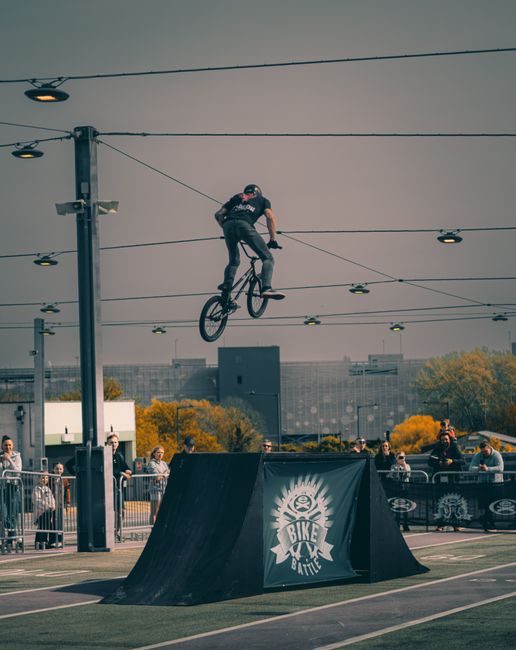
You are in the staging lane, eighth in line for your moto, watching the riders ahead roll up to the gate. The hill is steep, your hands feel cold, and in about a minute a starter will say the words you have heard a hundred times and your stomach will still flip. Nothing about your bike has changed. What you do in that minute is a skill, and it can be practiced. Mental training for BMX riders is the deliberate use of routines, attention, self-talk, goals and imagery to ride your own race at the gate, over the jumps and through the first turn, whether you race at a local track or a national. It supports good riding; it cannot promise a result.
Quick answer: A BMX moto lasts only about 30 to 50 seconds, so the mental work happens before the gate drops and in the minutes after a crash or a bad lap. The habits most coaches use are a repeatable gate routine, one or two simple focus cues, small steps when you learn something that scares you, and a plan for resetting. None of these guarantees a result. See a doctor after any hard hit to the head, and a doctor or licensed mental health professional if worry, low mood, disordered eating or exhaustion are affecting daily life.
General information for riders and parents. Back to the BMX hub. The physical side, including gate-start practice and skill progressions, is on our BMX training page, and the logistics of a long race day (motos, food, heat) are on the race day page. This page covers the thinking side and avoids repeating those.
Why the mind matters when a race is under a minute
A BMX race typically lasts 30 to 50 seconds (Daneshfar and colleagues, Open Access Journal of Sports Medicine 2020), and riders are at or near their limit almost the whole way. Almost all of the mental work comes before the gate drops: how you arrive, how you handle the wait, and what you do when it opens. A 2024 study of 24 young BMX riders at an intensive training center found that riders who scored higher on certain mindfulness measures (for example, not reacting to thoughts and feelings) showed better recovery patterns over a 10-day pre-competition period (Sondt and colleagues, Psychology of Sport and Exercise). It is one small study and does not show that a technique improves racing.
Gate nerves
The start is the most routine and most nerve-racking moment in the sport. At UCI events the starter calls riders to the gate, then gives the “random start” sequence, and after a random delay of 0.1 to 2.7 seconds the gate falls (UCI BMX regulations, Part VI). You cannot predict the moment, so the job is to be ready rather than to guess. Under USA BMX rules, breaking the plane of the gate early is a gate jump and may lead to disqualification (2025 rulebook, section XI), so being jumpy has a real cost too. In a small study of six Spanish national team riders, adding audiovisual feedback to gate practice brought their gate start time down (Zabala and colleagues, Journal of Sports Science and Medicine 2009). Feedback in practice is one way to make the start feel familiar, which is the opposite of nerves. A few things riders and coaches use:
- A fixed routine from staging to gate. The same breath, the same grip check, the same look down the hill every time. A routine gives a nervous mind something to do. (Common coaching practice, not tested for BMX.)
- One cue for the start, such as “explode on the first pedal.” A meta-analysis of 32 studies found self-talk helped most on fine or unfamiliar tasks (Hatzigeorgiadis and colleagues, Perspectives on Psychological Science 2011).
- Practice the wait. Gate drills on your training days, including the unpredictable pause, make the real thing less of a surprise.
- Read the feeling as readiness. A fast heart rate and tight stomach are normal before an all-out effort. Slow breathing, under about ten breaths a minute, has been linked with feeling calmer and more alert (Zaccaro and colleagues, Frontiers in Human Neuroscience 2018). That supports a slow breath in staging; it does not prove it makes you faster.
Fear and progression
New jumps, a steeper start hill, a bigger trick on a freestyle session: fear is a normal response to real risk, and it is useful information. Injury reviews of BMX describe falls over the handlebars and trick attempts as common injury mechanisms (Rockliff and colleagues, scoping review 2025), which is a good reason to respect the feeling. The aim is to progress without ignoring it or freezing. We have not found a BMX-specific study of fear and progression to cite, so what follows is general coaching practice, not research:
- Break it into steps you can do cleanly several times before the next one: roll it, then pump it, then jump it small, then at full speed.
- Ride it when you are fresh, warm and not rushed, not as the last run of a tired day or in the middle of a race.
- Take advice from someone who rides it well, and a “not today” is allowed.
- Keep race and learning days separate. A race is usually the wrong place to try something new.
For skill steps and safety habits, see the training page and our youth BMX page.
Confidence after a crash
The first step after a hard crash is physical, not mental. A concussion can happen with no loss of consciousness, and USA BMX has a concussion policy that requires a written release from a health care professional before a rider returns (2025 rulebook, section XXIII). A 2025 study of 25 cyclists, including BMX riders, who had histories of concussion found that those with persistent symptoms reported more past concussions and had measurable differences in concentration, balance and reaction time compared with controls (Pearce and King, Journal of Functional Morphology and Kinesiology). It is small, but a good reason to get checked and not ride through symptoms. Our BMX injuries page covers signs and what to do.
Once you are cleared, confidence does not always return with the green light. Again, we found no BMX-specific study of fear after a crash, so these are common coaching ideas, not findings:
- Go back to a step you can do well and rebuild, rather than going straight to the obstacle that hurt you.
- Check the bike, helmet and pads first. See the gear page.
- Let a coach or experienced rider watch your first sessions back.
- If the fear stays strong, spills into daily life, or you are having nightmares or avoiding riding altogether, talk to a doctor or licensed mental health professional (see the health section below).
Focus: the lap, one section at a time
A BMX track asks you to do different things in quick succession: start, pump, jump, corner, repeat. Many coaches split the lap into sections so that attention has one job at a time. Choose one process cue for each, such as “pedal” out of the gate, “low and quick” over the first rhythm, “look through” the turn. The cues are examples, not a prescription. Keep the score, the rider next to you and last lap’s mistake out of the cue list. After a mistake, let it go with one word and ride the next section. Practice this on training laps first.
Goals you control and a long season
“Win my moto” depends on the other riders. “Run my gate routine every time” is entirely yours. An expert statement on goal setting for Exercise and Sports Science Australia (Swann and colleagues, Sports Medicine 2026) is a good place to read about setting goals well. Many coaches pair a process goal you control with a performance goal, such as a better practice gate time, and hold outcome goals loosely. For young riders, a 2025 article in the British Journal of Sports Medicine raised the question of whether goal setting in youth sport can unintentionally contribute to dropout, so keep goals playful and flexible for children. Over a season, small proof of progress (a cleaner gate, a jump you now clear) keeps motivation going; that is general practice, not a study result.
Imagery
Imagery means rehearsing a run in your mind: the gate, the first pedals, each obstacle and the finish line, with the feel and sound of it and not only the picture. A 2026 scoping review (Zhao, Wang and Anuar, Frontiers in Psychology) mapped how athletes use mental imagery to manage stress, but we are not aware of a BMX-specific study to cite on how much it helps. Try a couple of minutes the night before and a few seconds in staging.
After a bad run or a bad moto
A missed gate or a crash in the second turn will happen. A plan helps: one slow breath, a cue word, then a short, specific review (one thing that went well, one thing to practice) after you have cooled down, not in the pits while others are watching. Rest and sleep matter too: see recovery.
Decisions and teamwork
BMX racing is eight riders at a time, and decisions are fast: which line into the first turn, whether to back off when a rider crashes ahead. We did not find BMX-specific studies on this, so settle your rules in practice, not at the gate. Formats are on the rules page.
Getting ready for race day, and young riders
Mental preparation means removing surprises: ride the track in practice and decide beforehand what you will do if you draw a tough gate. Logistics are on the race day page. See youth BMX for young riders. For children, the most useful skills are simple: a short routine, a calm adult who praises effort and safe habits rather than results, and goals that can change. We have not cited BMX-specific research on age-appropriate mental skills, so this follows the general caution above about goal setting in youth sport.
Mental performance is not mental health
Routines, imagery and self-talk are performance skills. Anxiety that will not settle, low mood, loss of interest, disordered eating, constant exhaustion or burnout are health matters, not weaknesses of technique. The International Olympic Committee consensus statement on mental health in elite athletes (Reardon and colleagues, British Journal of Sports Medicine 2019) treats them as health concerns that need appropriate assessment and care. If these are affecting your sleep, school, work or relationships, talk to a doctor or a licensed mental health professional. In the United States, you can call or text 988 (the 988 Suicide and Crisis Lifeline) at any time if you or someone you know is in distress. The Association for Applied Sport Psychology lists resources on finding a sport psychology professional. If you are outside the US, contact your national emergency or crisis service.
BMX mental training: FAQs
How do I stop being so nervous at the gate?
Some nerves are normal before an all-out effort. Build a fixed routine from staging to gate, use one short start cue and a slow breath, and practice gate starts in training so the moment is familiar. If worry is severe or constant, speak to a doctor or licensed mental health professional.
How do I get over being scared of a jump?
Fear is a sensible response to risk. Coaches usually suggest small steps you can repeat cleanly, riding it when fresh, and advice from a more experienced rider. We could not find a BMX study on this, so treat it as general practice. Skip it for the day if you are tired or unsure.
When can I ride again after a crash?
That is a medical decision, not a mental one. After a possible concussion, USA BMX requires a written release from a health care professional. See a doctor, and use our injuries page for the signs to watch for.
When is nervousness or fear a health problem?
Pre-race nerves are common. If worry, low mood or avoiding riding are frequent, last more than a short time or interfere with daily life, speak to a doctor or licensed mental health professional. In the US, 988 is available by call or text.
Sources
- Daneshfar A et al. Power and heart rate in BMX racing. Open Access J Sports Med 2020 (PMID 32765128)
- Sondt N et al. Mindfulness and the stress-recovery balance in young BMX riders. Psychol Sport Exerc 2024 (PMID 38797224)
- Zabala M et al. Audiovisual feedback and the BMX gate start. J Sports Sci Med 2009 (PMID 24150003)
- Pearce AJ, King D. Repeated concussions in cyclists. J Funct Morphol Kinesiol 2025 (PMID 41283521)
- Rockliff et al. BMX injury scoping review 2025 (PMID 39460724)
- USA BMX 2025 Rulebook (PDF)
- UCI Regulations Part VI, BMX Racing (PDF)
- Hatzigeorgiadis A et al. Self-talk and sports performance: a meta-analysis. Perspect Psychol Sci 2011 (PMID 26167788)
- Zaccaro A et al. Slow breathing review. Front Hum Neurosci 2018 (PMID 30245619)
- Swann C et al. Goal setting: expert statement for Exercise and Sports Science Australia. Sports Med 2026 (doi)
- Goddard SG et al. Goal setting in youth sport: are we unintentionally contributing to dropout? Br J Sports Med 2025 (doi)
- Zhao L, Wang Y, Anuar N. Mental imagery for stress management in athletes: a scoping review. Front Psychol 2026 (doi)
- Reardon CL et al. Mental health in elite athletes: IOC consensus statement. Br J Sports Med 2019 (doi, PMID 31097450)
- 988 Suicide and Crisis Lifeline (988lifeline.org)
- Association for Applied Sport Psychology resources (appliedsportpsych.org)
General information for education only, not medical advice. It does not replace a doctor, licensed mental health professional or qualified coach. See our editorial policy for how we research and write.