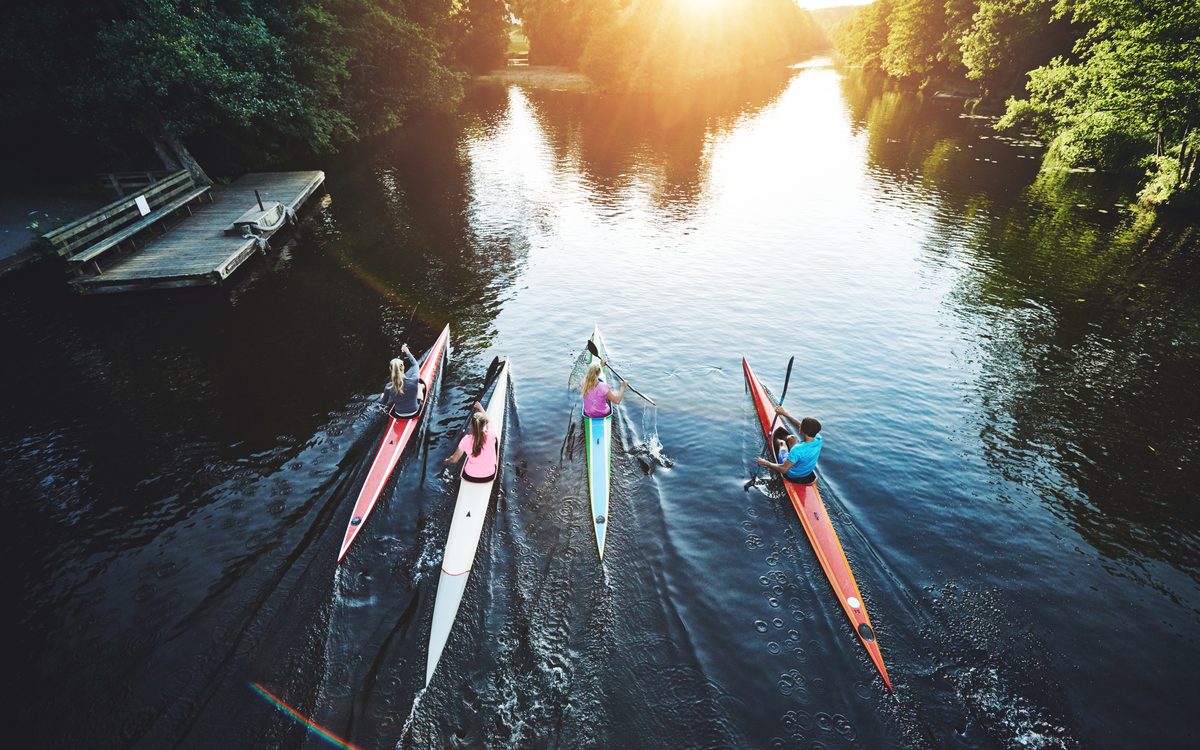
The wind has picked up an hour before the 500 metre final, and the water by the dock has turned from glass to chop. A coach walks the line of boats, checking that every paddler has a buckled life jacket, then sends the crews out to warm up away from the start area. Nothing happens, which is the point. Canoe sprint injury prevention is the set of habits, from how you warm up to how you paddle, load your training and dress for the water, that aim to lower the chance of getting hurt. It can lower the odds. It cannot promise anything.
Quick answer: The most reported sites of injury in elite teenage flat-water paddlers were the lower back and shoulder (2025 survey), so sensible prevention centers on good technique, gradual increases in training, strength work for the trunk and shoulders, and a warm-up you repeat before every session. On the water, wear a properly fitted life jacket, dress for the water temperature, and leave the water for lightning. See a sports medicine doctor, physical therapist or athletic trainer if pain keeps coming back or does not settle.
General information, not medical advice. This page is about lowering risk; for what specific injuries look like, see canoe sprint injuries. Back to the canoe sprint hub and the canoeing hub.
Know where the risk sits
A 2025 survey of 140 Chinese elite adolescent flat-water paddlers (89 kayakers and 51 canoeists) recorded 207 injuries in the past year. In kayakers the most common site was the lower back, followed by the shoulder, wrist and knee; in canoeists it was the shoulder, then the lower back, back and knee. The survey was self-reported and from one country, so treat it as a guide. For a bigger picture of risk on the water, see the environment section below.
Warm-up
We found no published injury-prevention warm-up program for canoe sprint that has been tested in trials, unlike some team sports, so be wary of anyone selling one. What does exist is performance research: a 2026 randomized crossover trial of 11 elite male sprint kayakers compared four warm-ups before a 2-minute ergometer test. An interval-style warm-up gave the highest power, a self-selected warm-up was not significantly different, and a warm-up that built intensity left blood lactate high and performance lowest. That study measured performance, not injuries.
A typical warm-up in general coaching practice, not from a trial, runs five to ten minutes of easy movement, trunk rotation and shoulder mobility work, then easy paddling that builds to a few short bursts at race pace. Do the same routine every time so you know what ready feels like.
Technique
Technique is the main lever you control. Coaches generally teach paddlers to drive the stroke with trunk rotation and legs rather than the arms alone, to keep the blade placement and lift-out consistent, and to keep the boat balanced. Poor technique is not proven as the cause of any one paddler’s injury, but a coach watching you on the water or on video can often see where the load is going. A 2004 study of 52 long-distance kayakers concluded that rotator cuff injuries resulted from overuse and secondary impingement factors that may be specific to kayakers, which is one reason shoulder control is a recurring theme in paddling coaching.
Progressive training load
Neither the ICF nor the research we reviewed gives a safe weekly increase for paddlers, and we will not invent a percentage. The principle, from general coaching practice, is to raise volume or intensity gradually, change only one thing at a time, and plan easier weeks. The adolescent survey above reported injuries per 1,000 training hours (0.90 for kayakers, and 1.51 for female canoeists against 0.47 for male canoeists), which shows that younger and female paddlers are worth watching closely, but it does not show how much training is too much.
Strength and conditioning
A 2026 review of canoe sprint training research found resistance and core training among the most-studied training types, but not trials of whether it prevents injury. In practice, programs commonly include pulling and pressing, rotational trunk work, hip and leg strength, and mobility for the upper back and shoulders. The American Academy of Orthopaedic Surgeons (AAOS) says its general advice for low back pain includes combining aerobic exercise with strengthening and stretching of the back and abdominal muscles, and not overdoing activities your body is not used to.
Environment: water, cold, heat, sun and storms
- Capsize and cold water. Racing boats tip easily, and a capsize ends a race under the ICF rules. The National Weather Service warns that water below 70 degrees F can quickly reduce muscle control. The US Coast Guard’s 2024 statistics list 21 canoe drownings, none of the victims wearing a life jacket. Ask your club about cold-water rules, chase boats and what happens in an emergency.
- Heat. Paddling in summer sun is hard work. The National Athletic Trainers’ Association (NATA) position statement on exertional heat illness is the standard reference; drink, use shade and rest breaks, and ask your coach what they do in hot weather.
- Sun. The American Academy of Dermatology describes how to apply sunscreen; water reflects sunlight, so cover exposed skin.
- Lightning. NATA’s lightning safety guidance says to leave the water and get to shelter when thunder is heard. A wide-open lake offers no cover.
Protective equipment and fit
The ICF rules require that boats stay buoyant when filled with water and that no part of an athlete’s body is attached to the boat, so a capsized paddler can leave it. The rules text we read does not say whether life jackets are required in racing, so ask your club. The US Coast Guard’s guide calls for one wearable life jacket per person on recreational boats. A jacket that is “USCG approved” is a regulatory label; fit and comfort claims, such as mesh backs for high seats, come from the maker. Choose one that fits snugly, check it for wear, and carry a whistle where you can reach it. Gear details are on the canoe sprint gear page.
Young paddlers
The only youth injury numbers we found were from the elite adolescent survey, so we cannot give a youth-specific rule. Practical measures are qualified coaching, age-appropriate boats and training, and strong communication about pain. Ask the club which youth standards and safeguarding policies it follows.
What prevention cannot do
No warm-up, program or product guarantees you will not be hurt. Capsizes, collisions and overuse can happen to well-prepared athletes.
When to see a professional
See a sports medicine doctor, physical therapist or athletic trainer if pain keeps returning after paddling, wakes you at night, comes with numbness or weakness, or does not improve within a few weeks. The AAOS says back pain with leg weakness or loss of bladder or bowel control needs immediate attention. Anyone pulled from the water who is confused, struggling to breathe or shaking hard needs emergency help.
Canoe sprint injury prevention FAQs
Is there a proven warm-up for canoe sprint?
We found no injury-prevention warm-up tested in trials for this sport. A 2026 trial of elite kayakers compared warm-ups for performance, not injuries, and found a self-selected warm-up worked about as well as an interval one.
Do I need a life jacket in a racing boat?
The ICF rules we read do not say, so ask your club. The Coast Guard counted 21 canoe drownings in 2024 and none of those people wore a life jacket.
Which injuries are most common in young paddlers?
In a 2025 survey of elite adolescent paddlers in China, the lower back and shoulder topped the lists. It is a self-reported sample from one country.
Can strength training prevent paddling injuries?
Programs usually include strength and trunk work, but we found no trial showing it prevents canoe sprint injuries. It is a sensible part of a plan, introduced gradually.
How cold is too cold to paddle?
No single number fits everyone. The National Weather Service warns water under 70 degrees F can quickly reduce muscle control, so ask your club about its cold-water rules and dress for the water, not the air.
Sources
- Epidemiological characteristics of injuries among elite adolescent flat-water kayak and canoe athletes (Front Public Health, 2025).
- Self-selected versus standardised warm-ups in elite kayakers (2026); canoe sprint training scoping review (2026); shoulder pathoanatomy in marathon kayakers (Br J Sports Med, 2004).
- ICF, Canoe Sprint Competition Rules 2025 (3.5).
- US Coast Guard, Recreational Boating Statistics 2024; National Weather Service, hazards of cold water.
- NATA, lightning safety and exertional heat illness; American Academy of Dermatology, how to apply sunscreen.
- AAOS OrthoInfo, Low back pain.
General information for education only, not medical advice. It does not replace a sports medicine doctor, physical therapist, athletic trainer, dietitian or coach who knows you. How we write: see our editorial policy.