This article contains affiliate links: if you buy through them we may earn a commission, at no extra cost to you. Read our affiliate disclosure.
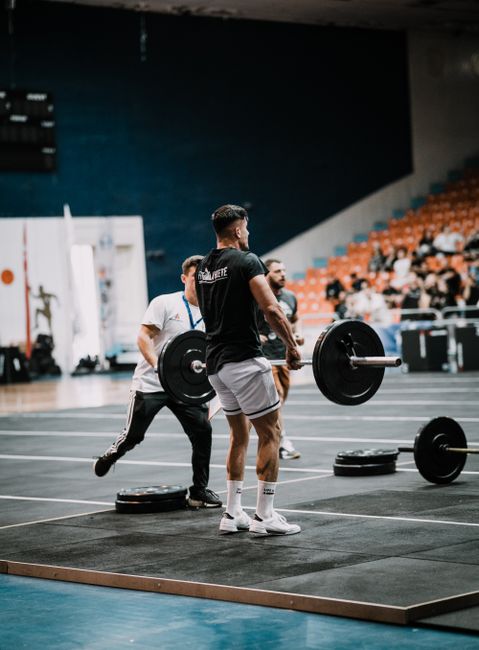
It is 6 a.m. and the whiteboard says 21-15-9 of thrusters and pull-ups. The barbell is loaded to the weight you used last month, but you slept badly, your shoulders feel tight, and the athlete on the next rig is already kipping. The choice you make in the next ten seconds, scale the load or chase the number on the board, is CrossFit injury prevention: the habits around a workout, from scaling and warm-ups to hand care and rest, that aim to lower the chance of getting hurt. They can lower the odds. They cannot promise anything.
Quick answer: CrossFit’s own rule is mechanics first, then consistency, then intensity, with every workout scaled to what you can do well today. The best-supported steps are coaching on form, building volume slowly (especially when you are new or back from a layoff), earning strict strength before kipping, and looking after your hands. See a doctor the same day for dark, cola-colored urine or severe muscle pain and swelling after a workout, and see a sports medicine doctor, physical therapist or athletic trainer for shoulder pain at night, back pain with numbness or weakness, or a knee that gives way.
General information, not medical advice. This page is about lowering risk. For what each injury looks like and what rhabdomyolysis feels like, see our CrossFit injuries guide.
Scale first: the biggest lever
Newcomers carry the most risk. In a survey of 3,049 CrossFit athletes (Feito et al., 2020), short time in the sport was the main factor linked to injury, while competing did not raise the risk. A 2014 survey of 386 athletes found fewer injuries when coaches were involved in correcting form and guiding the workout (Weisenthal et al.). Most CrossFit research is surveys, so treat these as signals, not proof.
CrossFit’s Level 1 trainer guide says every workout can be scaled by load, reps, movement or range of motion, and that several months at scaled loads and volumes is normal, even for very fit newcomers. It also warns about “progressive scaling”: dropping the weight again and again so a tired athlete never stops. When form falls apart, the better move is to stop, breathe and restart, or end the set.
Technique before intensity
CrossFit’s stated order is mechanics, then consistency, then intensity. In plain words: learn the movement, show you can repeat it well when tired, and only then add speed or weight. Its training guide applies this to specific skills:
- Strict before kipping. The guide recommends developing a strict pull-up before kipping pull-ups, and a strict muscle-up before kipping muscle-ups, so the shoulder has strength and stability before speed adds force. Our CrossFit training page has the full progressions.
Warm up on purpose
CrossFit describes a typical class as a 5 to 10 minute warm-up, skill or strength work, the workout of the day and a cool-down. Use the warm-up to rehearse what comes next: empty-barbell cleans before heavy cleans, scapular pull-ups and hangs before the rig, a few easy rounds of the movements in the WOD. No CrossFit-specific trial recorded in our research shows that one warm-up routine lowers injury rates, so this is standard class structure and coaching practice, not a proven injury shield.
Build volume slowly
Two groups need extra care. CrossFit’s guide names athletes who are already fit from other sports but new to CrossFit, people returning after a layoff, and experienced athletes who suddenly do far more volume or intensity than usual as the highest-risk for rhabdomyolysis, the muscle-breakdown condition covered on our injuries page. It also asks coaches to limit eccentric work (slow lowering, like high-rep jumping pull-ups or full-range GHD sit-ups) for beginners. CrossFit’s hand-care page gives the same advice for skin: increase volume and intensity gradually, including after a layoff.
On weekly rhythm, CrossFit’s guide says three days on and one day off allows maximum sustainability at maximum intensities. A 2026 study of 14 athletes (Pinto et al.) found jump height, grip strength and feeling of recovery were lower 24 hours after a strength-and-power focused block and back to baseline within 48 hours. It is a small study. Our CrossFit recovery page covers sleep, food and rest planning.
Rhabdomyolysis: know the warning signs
Rhabdomyolysis is rare muscle breakdown that can harm the kidneys. MedlinePlus lists dark red, brown or cola-colored urine, muscle aching or stiffness, and weakness as signs, and CrossFit’s guide adds severe widespread muscle pain, nausea, vomiting and abdominal cramping, with advice to seek medical attention immediately. Symptoms can appear a day or two after a workout, so do not write them off as soreness. Prevention follows the volume advice above; see the injuries guide for more.
Shoulders and low back
These are the two areas most often hurt, so they deserve their own plan. Research on injury patterns (Weisenthal 2014; Nicolay 2022) links shoulder problems to gymnastics movements such as kipping pull-ups, muscle-ups, handstand push-ups and ring work, and low back problems to deadlifts, squats and cleans. What follows is how to lower the odds, not how to treat an injury.
- Shoulder: earn strict strength before kipping (above). Ask your coach to swap high-rep overhead work on days the shoulder already feels cranky. The American Academy of Orthopaedic Surgeons (AAOS) describes shoulder impingement as pain at the front and side of the shoulder, at night and when reaching overhead; when that appears, see a professional before the next kipping set.
- Low back: keep reps technically clean as fatigue builds, and treat a deadlift or clean that no longer looks like your first rep as the end of the set. AAOS says to get checked promptly for leg weakness, numbness or tingling to the foot, loss of bladder or bowel control (an emergency), or back pain with fever or unexplained weight loss.
- Strength basics: a 2026 review (Malheiro) linked strength, power, technique and postural control to CrossFit performance. It is about performance, not injury rates.
Hands, grips and ropes
A torn callus (“rip”) is the injury most athletes meet sooner or later. CrossFit’s hand-care page says hand tears are more likely with poor technique or excessive volume, and gives this prevention list:
- File or shave calluses so they do not get thick enough to catch, and moisturize, because dry skin tears more easily.
- Use enough chalk to keep hands dry and brush off clumps, which add friction.
- Use grips or tape as a barrier between hand and bar, and test them before a workout, since the feel can change.
- Use the right grip for each movement and limit extra hand movement on gymnastics elements.
- Pace high-rep bar work with small sets and short rests early on, as in the 100 pull-ups of “Angie”.
If a rip happens, CrossFit’s page says to clean it thoroughly, trim loose skin, apply antiseptic and cover it, and to return to bar work once the new skin is stable and pain-free, starting conservatively and scaling. The American Academy of Dermatology says to see a doctor for redness, pus, or worsening pain and swelling.
Ropes. Rope climbs rely on the legs; CrossFit’s own rope-climb video page is about saving your grip by letting the legs do most of the work, and it lists wrapping the feet as a skill with its own tutorials. That page says nothing about burns or descents, and no published injury study on rope climbs is in our research, so the rest is coaching practice, not evidence: learn the wrap close to the floor, practice the descent in small drops, and ask your coach for a partial climb. For jump ropes, a rope sized to you and a few easy minutes of double-under practice when fresh are usual advice (see CrossFit gear).
Heat, hydration and the box
Heat matters at the box, especially in summer garage-style gyms. MedlinePlus lists severe exertion, extremes of body temperature and severe dehydration as causes of rhabdomyolysis. The National Athletic Trainers’ Association (NATA) fluid-replacement position says athletes should aim to stay within about 2% of body weight loss, avoid drinking so much that they gain weight (which risks low blood sodium), and drink to thirst when they do not know their sweat rate. Also clear your lane of loose plates and check boxes are stable before a WOD; that is common sense, not a studied intervention.
Equipment and fit
Gear helps comfort and hand care, but no source in our research shows that sleeves, belts or wraps prevent CrossFit injuries. Our CrossFit gear page explains what each piece does. For hands, the pieces tied to CrossFit’s own advice are grips or tape and a way to keep calluses filed and moist. The Bear KompleX carbon grips and the w.o.d.welder 3 Step Handcare Kit are two products many athletes pick for that; the grips use a size chart, so measure first.

Bear KompleX Carbon 3-Hole Hand Grips
- Carbon fiber, 2- or 3-hole
- Adjustable wrist wraps
- Check the size chart

w.o.d.welder 3 Step Handcare Kit
- Pumice stone
- Moisturizing cream
- Salve
$34.99 at Amazon, as of Nov 17, 2026 01:07 UTC
Check price on AmazonTeens and young athletes
The American Academy of Pediatrics (AAP) says supervised, technique-focused resistance training is appropriate for children and adolescents (Stricker et al., 2020). AAP’s HealthyChildren.org strength-training advice calls for a certified instructor, a ratio of one instructor to 10 or fewer young athletes, a warm-up and cool-down of at least 10 minutes, lifts learned without weights first, no one-rep-max lifts before skeletal maturity, and stopping if there is pain. CrossFit Kids says lifts stay at no load or light loads until mechanics and consistency are seen. More in our youth CrossFit guide.
What prevention cannot do
Even a well-coached athlete can tear a shoulder or a hand. The evidence is mostly surveys and case reports, so no tip here is a guarantee. If you have had an injury, a medical condition or take a medicine that affects muscle (for example statins, which MedlinePlus and CrossFit’s guide list as a rhabdomyolysis risk factor), talk with your doctor before ramping up.
When to see a professional
- Right away: dark red, brown or cola-colored urine, severe muscle pain with swelling or weakness after a workout, loss of bladder or bowel control, or any head injury danger sign. The CDC says anyone who may have a concussion should stop for the day and not return until a health care provider says so.
- Within a day or two: a pop with swelling in a joint, a rip that looks infected, or back pain with numbness or tingling.
- Soon: shoulder pain at night or overhead, or a knee or back that keeps coming back.
A sports medicine doctor diagnoses, a physical therapist builds the path back to the barbell and rig, and an athletic trainer works with many school and college teams. Tell your coach too, so workouts can be scaled around the injury.
CrossFit injury prevention: FAQs
Does scaling really lower injury risk?
No study tests scaling alone. But the clearest risk factor in the 3,049-athlete survey was being new to CrossFit, and CrossFit’s own guide says months at scaled loads is normal. Scaling is how that early period is meant to be handled.
When is it safe to start kipping?
CrossFit’s training guide recommends developing a strict pull-up first, and a strict muscle-up before kipping muscle-ups. Your coach decides when you are ready, and shoulder pain is a reason to wait.
Can I prevent rhabdomyolysis?
You can lower the odds but not erase them. CrossFit’s guide points to building volume gradually, limiting eccentric-heavy work early on, and extra care after a layoff. Ohio State Wexner Medical Center adds staying hydrated. Dark urine plus severe pain means medical care now.
Do grips stop hand rips?
CrossFit lists grips and tape as a barrier between hand and bar, alongside filed calluses, moisture, chalk, technique and pacing. No single item guarantees skin stays intact on a high-rep pull-up day.
Is a weightlifting belt or knee sleeve needed to stay safe?
No source in our research shows these prevent CrossFit injuries. They are a comfort choice; our gear page explains each piece. Learning to brace and lift well comes first.
Sources
- CrossFit Level 1 Training Guide (2020)
- CrossFit Level 1, Responsible Training
- CrossFit, hand treatment essentials
- CrossFit, rope climb video page
- CrossFit, what is CrossFit
- CrossFit, what is CrossFit Kids
- Weisenthal et al., injury rate and patterns among CrossFit athletes, 2014
- Feito et al., CrossFit injury survey, 2020
- Nicolay et al., upper extremity injuries in CrossFit athletes, 2022
- Pinto et al., time-course of recovery after a CrossFit microcycle, 2026
- Malheiro, biomechanical and physiological demands of CrossFit, 2026
- MedlinePlus, rhabdomyolysis
- Ohio State Wexner Medical Center, exercise-induced rhabdomyolysis
- AAOS OrthoInfo, shoulder impingement
- AAOS OrthoInfo, low back pain
- American Academy of Dermatology, blisters
- NATA position statement, fluid replacement, 2017
- AAP HealthyChildren.org, strength training
- AAP, resistance training for children and adolescents (Stricker et al., 2020)
- CDC HEADS UP, signs and symptoms
Keep going with our training, recovery, gear, nutrition and rules pages, and the leagues and associations overview.
General information for education only, not medical advice. It does not replace a visit with a doctor, physical therapist or athletic trainer. See how we write and check our pages in our editorial policy.