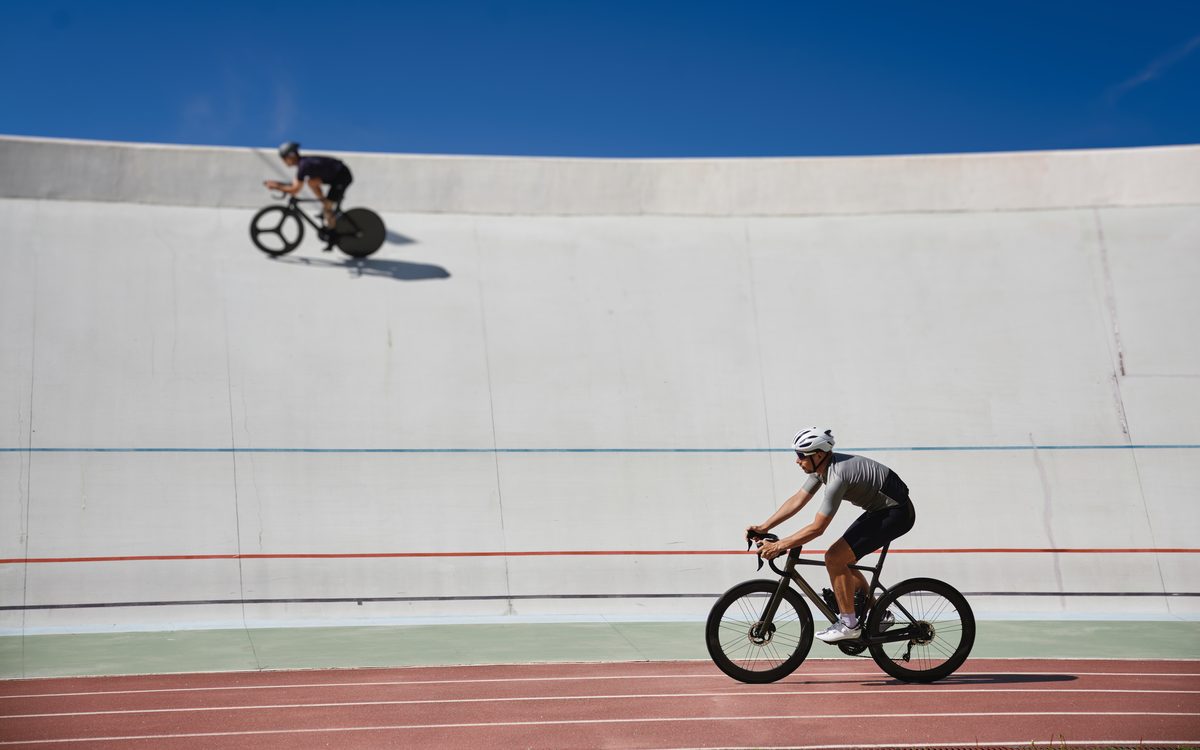
Race night at a velodrome rarely ends when the last race does. A rider might have a points race at seven, an elimination at nine and a drive home after ten, with legs that feel like wet sand and a head still buzzing. Track cycling recovery is everything an athlete does between hard efforts, such as eating, drinking, sleeping, riding easy and loosening up, to be ready for the next session. It sits next to the track cycling hub as the part of the plan that makes training pay off.
Quick answer: Recovery is mostly basics: refuel and drink soon after hard efforts, protect sleep, keep easy days easy and take a rest day. Research on track-style racing supports carbohydrate, protein and fluid, sleep care, short easy riding, and for some riders compression garments or cold-water immersion. Evidence for massage and pneumatic compression devices is weaker. Pain that is sharp, one-sided or lingering is not normal soreness; see a sports medicine doctor, physical therapist or athletic trainer.
Race nights and multi-day meets are their own recovery problem
A 2019 review of recovery for multi-evening racing (Richard and Koehle, European Journal of Sport Science) is one of the few written about track and criterium riders. It notes that these events run 10 to 90 minutes at high speed, with repeated high power and little chance to recover during the event, and that consecutive evenings, such as speed week or a six-day race, compromise the return to normal. The authors recommend pre- and post-race carbohydrate, protein and fluid, sleep strategies because late high-intensity exercise disturbs sleep, a short low-intensity session as active recovery, and compression garments and cold-water immersion as passive options. They conclude that evidence for massage, pneumatic compression and neuromuscular electrical stimulation is still lacking. It is a review, not a trial, so treat the advice as a starting point.
Refuel, rehydrate
When there are fewer than eight hours between hard sessions, the American College of Sports Medicine, Academy of Nutrition and Dietetics and Dietitians of Canada joint position (2016) suggests about 1 to 1.2 g of carbohydrate per kilogram of body weight each hour for the first four hours, with 0.25 to 0.3 g of protein per kilogram early in recovery, and drinking 125 to 150% of fluid lost. That is for quick turnarounds. On an ordinary day, a normal meal with carbohydrate and protein serves the same purpose. See our nutrition and supplements page for more detail.
Sleep
The American Academy of Sleep Medicine consensus says adults need 7 or more hours of sleep a night for good health, and for teenagers 13 to 18 it recommends 8 to 10 hours. Track racing happens in the evening, which pushes bedtime back. A 2023 study of seven elite national track cyclists (Doherty and colleagues, Neurobiology of Sleep and Circadian Rhythms) found that long-haul eastward travel reduced total sleep time and sleep efficiency, especially in the first 48 hours after arriving. If you are traveling to a meet, arrive early, keep a regular routine and talk to your coach about jet lag. A dark, cool room and a consistent wake time are standard sleep hygiene advice from the sleep societies; they are not track-specific.
Load, easy days and rest
Elite team-pursuit riders followed in a 2024 study (Stadnyk and colleagues) did most of their riding at low intensity, with only about 5 to 8% of training above threshold. The practical lesson for everyone else is that easy days exist to let hard days work. The American Academy of Pediatrics recommends 1 to 2 days off a week from the main sport for young athletes and breaks across the year. TrainingPeaks describes Coggan’s “active recovery” level as below about 55% of functional threshold power, which many riders use as an easy spin. A lighter week every few weeks is common coaching practice, not a research finding.
Mobility and flexibility
Track riders hold a low, rounded position and push hard through the hips, so hip flexors, hamstrings, lower back and the shoulders and neck often feel tight. Mobility work is part of many programs. A 2026 study of 19 elite sprinters (Thompson and colleagues, Sports Biomechanics) included a modified sit-and-reach test in its benchmark battery and found it was repeatable, which shows that teams measure flexibility, but it does not show that stretching improves results. A reasonable approach is gentle movement after riding and a few minutes of mobility on rest days. Pain during stretching is a reason to stop.
What the evidence says about recovery tools
- Cold-water immersion. Machado and colleagues (2016) reviewed studies and found short, cool immersion (roughly 10 to 15 degrees C for 10 to 15 minutes) was slightly better than passive rest for soreness, but Roberts and colleagues (2015) found that regular cold-water immersion after strength training blunted muscle gains. Use it when you need to race again soon, not after every lifting day. Cold plunges carry risks; check with a doctor if you have a heart condition.
- Compression garments. A 2017 meta-analysis (Brown and colleagues) found benefits for strength recovery and, in some studies, next-day cycling performance, and called the effect of different pressures unclear.
- Massage. A 2018 meta-analysis (Dupuy and colleagues) found massage the most effective of several methods for soreness and perceived fatigue, while Richard and Koehle call the evidence specific to track racing lacking.
- Foam rollers and massage guns. Many riders like them. A 2026 meta-analysis of percussive devices found no clear benefit for strength recovery or soreness, and possible benefits for explosive performance and early muscle-damage markers. Choose them for comfort, not to treat injury.
Soreness or injury?
General sports guidance, not a diagnosis: normal soreness is dull, felt in both legs, appears a day or two after hard work and eases with movement. Warning signs include sharp or one-sided pain, swelling, pain at rest or at night, numbness, a joint that gives way, or pain that changes how you pedal. After a crash, check for head injury symptoms using the CDC HEADS UP list. Our track cycling injuries page explains what to do. For a plan to follow, see our cycling wearables page for tools that track sleep and heart rate.
Track cycling FAQs
How soon should I eat after a hard track session?
The 2016 ACSM, Academy of Nutrition and Dietetics and Dietitians of Canada position suggests refueling soon when you have less than eight hours before your next hard session. Otherwise a normal meal within a few hours is usually enough.
Do ice baths help track cyclists?
Reviews suggest short, cool immersion reduces soreness for some, but regular use after strength work may blunt muscle gains. It is not for everyone; talk to a doctor if you have a heart or circulation condition.
How much sleep do I need?
The American Academy of Sleep Medicine consensus says 7 or more hours for adults and 8 to 10 hours for teenagers aged 13 to 18.
What is a good easy-day ride?
Many riders ride below about 55% of threshold power, a level called active recovery by Coggan and described by TrainingPeaks. It is a guideline, not a rule.
When is soreness a sign of injury?
Sharp or one-sided pain, swelling, numbness or pain at rest are reasons to see a sports medicine doctor, physical therapist or athletic trainer.
Sources
- Richard and Koehle 2019, recovery for multi-evening cycling competition (PubMed)
- Doherty et al. 2023, long-haul travel and sleep in national track cyclists (PubMed)
- Stadnyk et al. 2024, elite team-pursuit training (PubMed)
- Thompson et al. 2026, benchmark tests in elite track sprinters (PubMed)
- ACSM, Academy of Nutrition and Dietetics and Dietitians of Canada 2016 joint position (PubMed)
- AASM consensus on sleep duration, adults (PubMed)
- AASM consensus on pediatric sleep duration (PubMed)
- Machado et al. 2016, cold-water immersion (PubMed)
- Roberts et al. 2015, cold-water immersion and strength adaptation (PubMed)
- Brown et al. 2017, compression garments (PubMed)
- Dupuy et al. 2018, massage and recovery (PubMed)
- AAP: Brenner 2016, overuse injuries and burnout (PubMed)
- TrainingPeaks: Coggan power training levels
- CDC HEADS UP: signs and symptoms
General information for education only, not medical advice. It does not replace a sports medicine doctor, physical therapist, athletic trainer or registered dietitian who knows you. See our editorial policy for how we research and write. More on this sport: track cycling hub, cycling hub and all sports.