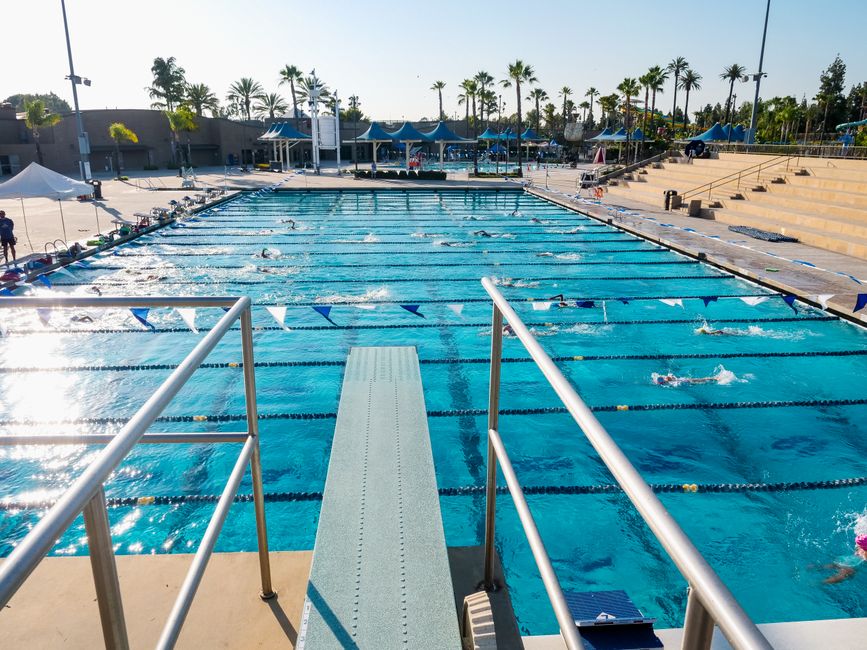
You are standing at the back of the 3-meter board. Your name has just been called, the pool deck has gone quiet, and the dive you have done a hundred times in practice is suddenly the only dive in the world. Or you are at the top of a new dive in training, and your body simply will not go. Every diver knows both moments, from a first back dive to a final at a big meet. Diving mental training means practicing the skills between your ears (a pre-dive routine, imagery, focus, a plan for fear and for a bad dive) the way you practice your hurdle. This page is for divers, parents and coaches. It is about mental performance, which is different from mental health; a section below spells out the difference.
Quick answer: Mental skills for divers are trainable habits: a short routine on the board, imagery of the dive, small goals you control, a coach-led plan when a dive feels scary, and a way to reset after a bad one. Research on these tools is promising but limited, and none of them guarantees a better score. See a doctor, licensed psychologist or other qualified professional if worry, low mood or trouble eating or sleeping lasts more than a couple of weeks or gets in the way of daily life, and in a crisis call or text 988 (US).
Fear of a new dive and mental blocks
Fear is part of a sport where you rotate in the air, sometimes close to the board, and reach the water fast: the AAP notes that divers from the 10-meter platform hit the water at almost 40 miles per hour. A balk (stopping on the end of the board) or a block on a dive you used to do is common, and it often means that confidence has fallen behind the progression. We found no published trials on what works best for diving blocks, so the steps below are common coaching practice, not proven treatment.
- Tell your coach. Hiding fear makes it bigger, and a coach can only change the plan if they know.
- Go back down the ladder. Many coaches return to the spotting belt, the trampoline, the dryboard or a lower board, then build back up. Our diving training guide lays out that ladder and why it is done in a supervised setting.
- Break the dive into parts. Rehearse the take-off, the rotation or the kick-out on its own so each piece feels safe.
- Name what is different. A new height, a new board or a recent bad hit all feel different. Say it out loud and plan for it.
If a fear follows a real injury or a hard hit on the board or the water, get it checked first; see our diving injuries guide. A diver who is hurt should not be pushed through fear to prove a point.
Pre-dive routines
Watch good divers between dives: the same towel-off, the same walk to the end of the board, the same breath. A 2020 qualitative study in Frontiers in Psychology (Yao, Xu and colleagues) interviewed 14 elite Chinese divers and their coaches and observed 13 divers in competition. It described routines made up of psychological skills, pace setting, keeping track of how the competition was going, and behavioral strategies, running through ten stages from off the platform to the dive itself. It is a small study of one national program, so it describes how some elite divers prepare, not a recipe for everyone.
A simple version many coaches teach: stay warm (see diving meet day for warm-up and staying warm between dives), pick one cue (a word for the take-off or the entry), take one breath, then go. Practice the routine in every training dive so it is automatic when the meet starts, and keep it the same length whether you are on 1 meter or at the top of the tower.
Imagery: seeing the dive before you do it
Imagery means rehearsing a dive in your mind, using as many senses as you can: the feel of the board at the hurdle, the spin of the horizon, the sting of the water on your hands. A 2002 experiment in Memory & Cognition (Reed) compared the time it took to visualize springboard dives with the time to physically perform them. Visualized and real times were not identical, and the gap depended on how complex the dive was and how experienced the diver was; the author suggests that skill complexity loads working memory. In plain words, you should not expect a mental dive to run exactly like a real one, so keep your imagery short, one dive at a time.
Across sports, a 2023 systematic review and meta-analysis of psychological interventions (Reinebo and colleagues, Sports Medicine) found moderate effects for imagery, multimodal psychological skills training and mindfulness-based approaches, but the effects were no longer significant when weaker studies were removed. Imagery is best seen as a low-cost add-on to real dives, not a replacement. Many divers use it on the pool deck, between dives and before bed.
Confidence, focus and goals
Confidence grows mostly from evidence you can point to: clean entries in practice, a hurdle you can repeat, a list you have finished. Focus in diving is short and sharp: one dive at a time, with long waits in between where attention wanders. Many divers use a cue for each stage (set, hurdle, take-off, entry) and a different one for the wait, such as a conversation with a teammate or a deep breath. Both are common coaching practice rather than the result of a single study.
For goals, think in three kinds: outcome (make the final), performance (score a certain amount on a list) and process (hold my line-up through the hurdle, hands together at entry). Process goals are fully in your control, so they still work on a day when the scores disappoint. Pick one per practice and check it off afterward.
Competing under pressure
Pressure in diving is unusual: you perform alone, in front of judges, for a few seconds, then wait. A 2026 position statement from Exercise and Sports Science Australia on performance under pressure (Schweickle and colleagues, Sports Medicine) looked at the sources of pressure, how athletes respond and which strategies can help. It lists pre-performance routines, psychological skills training and mindfulness-based approaches among those strategies, and says pressure can have both helpful and harmful effects.
You can practice for it. Coaches often add a little pressure in training: a mock meet where each diver does a full list in order, with scores read out, or a “must-hit” last dive before practice ends. Keep it safe and fair so it builds readiness rather than fear, and never use it on a dive a diver is not physically ready for. A format fact that helps: at Olympic level, scores are reset after each round and only the final round decides medals, so a weak prelim dive does not carry into the final (NBC Olympics, Diving 101). Know your own meet’s rules; see the diving rules guide.
After a bad dive
Every diver smacks one, balks one or takes a low score on a dive they love. In a meet, the next dive is already coming, so the useful skill is a fast reset. Many coaches teach three steps: let it be done (one slow breath, a towel-off), take one lesson (“I rushed the hurdle”), and go to the next job (the next dive in the list). Talk to yourself the way you would to a teammate. Save the long review for after the meet, with the coach and video.
If a bad dive was also a painful one, or you hit your head, tell a coach straight away: the CDC HEADS UP guidance is to remove a possibly concussed athlete from play, and a health care provider decides about return. See the injuries guide.
Getting ready for a meet
In the week before: a few short imagery sessions, practice your routine on every dive, agree your list and your process goals with your coach, and protect sleep. Logistics like warm-up timing, staying warm and food are in diving meet day, and recovery after a heavy meet weekend is in the diving recovery guide.
Young divers
Keep it light for kids: fun routines, effort goals, praise for trying. A 2024 review of early specialization in competitive diving (Lenz, Provance and colleagues, Current Sports Medicine Reports) says specialization is rising because of collegiate and Olympic goals, despite recommendations for diversification, and that it may bring mental health risks, with divers facing pressure about performance, body image and parental expectations. The authors call for guidelines that protect both injury risk and well-being. Parents can help by asking about effort and enjoyment before scores. See the youth diving guide.
Mental performance is not the same as mental health
Everything above is about performance skills. Anxiety disorders, depression, disordered eating and burnout are health matters, not mindset problems, and a better routine does not fix them. The 2026 International Olympic Committee consensus statement on mental health in elite athletes (Reardon and colleagues, British Journal of Sports Medicine) says mental health symptoms and disorders are common among elite athletes, can have sport-related causes and can affect performance, and it recommends screening and monitoring with validated tools. Signs worth taking seriously include worry or low mood that lasts weeks, panic before practice, big changes in eating or sleep, withdrawing from friends, or dreading a sport you used to love.
Start with your doctor, a licensed psychologist or another qualified mental health professional. In the US, you can call or text 988 (Suicide & Crisis Lifeline) at any time. If food and weight are involved, a clinician should lead care; our nutrition and supplements guide is background only.
Diving mental training: FAQs
Why do I suddenly balk on a dive I know?
It is common and has many causes: a recent bad hit, a new height, tiredness, or pressure. Tell your coach, and if you are hurt, get checked. Coaches commonly step back down the progression and build up again; there is no published rule for how long that takes.
Does visualization help divers?
A 2023 review across sports found moderate benefits for imagery, but the effects were not stable once weaker studies were removed. A study of springboard divers found that mental and real dives run at different speeds, so keep imagery short and use it alongside real practice.
What is a good pre-dive routine?
One that is short, the same every time and practiced in training. Elite Chinese divers in a 2020 study used routines with stages from off the platform to the dive; copy the idea (a repeatable sequence), not every detail.
How do I handle nerves before a meet?
Some nerves are normal, and the ESSA position statement says pressure can help as well as hurt. Use your routine, practice under mock-meet pressure, and talk to your coach. If worry is constant, causes panic or disrupts sleep or eating, see a doctor or licensed mental health professional.
Should my child see a sport psychologist?
Most young divers need fun, supportive coaching, not a specialist. If a child shows lasting distress, start with their pediatrician or a licensed mental health professional.
Sources
- Yao and colleagues, 2020, Frontiers in Psychology, pre-performance routines of elite Chinese divers: PubMed 32116970
- Reed CL, 2002, Memory & Cognition, imagery versus physically performed springboard dives: PubMed 12661849
- Lenz and Provance, 2024, Current Sports Medicine Reports, early specialization in competitive diving: PubMed 39499006
- Reinebo and colleagues, 2023, Sports Medicine, psychological interventions meta-analysis: PubMed 37812334
- Schweickle and colleagues, 2026, Sports Medicine, ESSA position statement on performance under pressure: PubMed 42271117
- Reardon and colleagues, 2026, British Journal of Sports Medicine, IOC consensus statement on mental health in elite athletes: PubMed 42580854
- AAP HealthyChildren, Diving: healthychildren.org
- NBC Olympics, Diving 101 (competition format): nbcolympics.com
- CDC HEADS UP concussion guidance: cdc.gov/heads-up
- 988 Suicide & Crisis Lifeline: 988lifeline.org
General information for education only, not medical advice. It does not replace a doctor, psychologist or other qualified professional. See how we work in our editorial policy. Back to the diving hub.