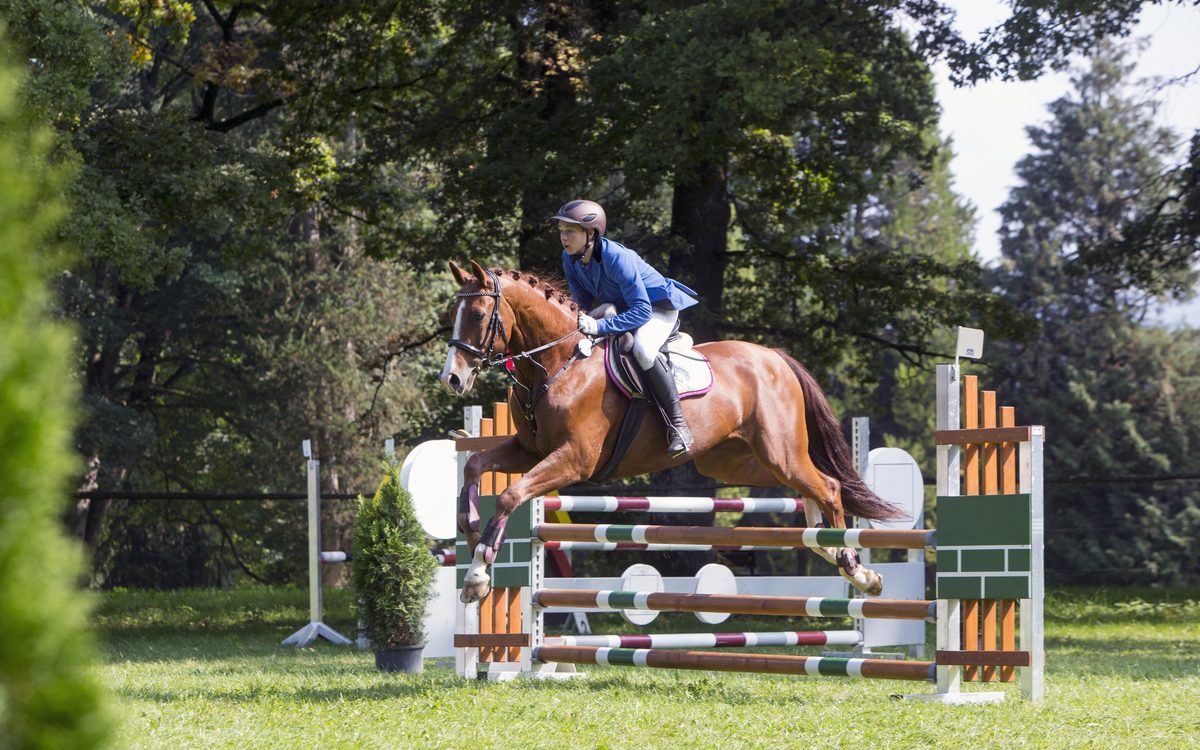
It is 7 a.m. at a three-day show, the first class is at ten, and the only breakfast in the trailer is a granola bar and half a coffee. By the third class the rider is shaky and short of patience, and the horse feels it. Nutrition for show jumpers means eating and drinking so you can stay alert, strong and steady through a long day of short, intense rides. This page covers what the research says about fuel and fluids, awareness of low energy availability, and what to know before you buy any supplement. It is general information, not a diet plan, and a registered dietitian can tailor it to you.
Quick answer: A 2023 review of equestrian riders (Best and colleagues) rates a show jumping round at about 11 METs but under 90 seconds, so what matters most is steady daily fuel, enough carbohydrate and protein across a multi-class day, and good hydration. Under-eating is a health risk, not a performance tool. Supplements are a small part of nutrition: choose third-party tested products, check banned-substance rules, and talk to a doctor or dietitian first.
What a show jumper’s day asks of the body
The Best review lists show jumping as a single short ride of under 90 seconds, with performance judged on faults and course time, and notes riders may compete in several classes. It says nutrition should support alertness and arousal, and that show jumpers need to absorb force at take-off and landing, which calls for enough energy, protein and calcium. It also reports pain in 85% of show jumpers, mainly in the neck and back. None of this is a diet; it describes why eating well matters more than any single product.
Daily fuel
The Best review sets out carbohydrate needs by workload: roughly 3 to 5 grams per kilogram of body weight per day for light or off-horse days, 5 to 7 for moderate riding, 7 to 10 for multiple horses in medium to heavy work, and more for full competitive loads across several days. Those are the authors’ ranges for riders in general and not a prescription for you. For protein it suggests 1.2 to 2.2 grams per kilogram per day, spread across the day in portions of about 25 to 40 grams, and at least 20% of energy from fat. Many riders will find a simple pattern works: a real breakfast, regular meals, and a snack in between classes. A dietitian can adjust for your size, age, training and health.
Competition day
| When | What the Best 2023 review suggests | Plain-words idea |
|---|---|---|
| 1 to 4 hours before | 30 to 60 g carbohydrate per hour of the pre-event period; reduce fibre if the gut is unsettled | Eat a familiar breakfast, not something new |
| Between rounds | 30 to 60 g carbohydrate per hour when waiting | Small snacks you have tried before: banana, rice cakes, sandwich |
| After competition | 1 to 2 g carbohydrate per kg within three hours; protein within one to three hours | Refuel before the next class or the drive home |
Practise your competition-day eating on ordinary training days so that nothing is new on show morning. See recovery and mobility for the post-ride part.
Hydration and heat
Outdoor shows can be hot and long. The ACSM’s position stand on fluid replacement says to start activity well hydrated, to drink during exercise so that you avoid losing more than about 2% of your body weight in sweat, and that sweat rates vary a lot between people. The Best review adds a practical check: urine colour or a urine specific gravity below 1.020, cold drinks in the heat and a reminder that riders often have limited chances to drink. If you feel dizzy, confused, or very hot or stop sweating, get out of the heat, tell someone and call for medical help. Heat illness is an emergency.
Low energy availability and body image
Relative energy deficiency in sport (REDs), described in the IOC’s 2023 consensus statement, means health and performance problems that follow low energy availability: not eating enough for the energy you spend. The Best review says under-fuelling and disordered eating are a risk in equestrian sport and recommends education and a team approach. A 2021 survey of 493 female equestrians found most thought the ideal rider body shape was smaller than their own and that riders who felt larger reported feeling self-conscious (Forino and colleagues). Concern about body shape is a health matter, and a pressure that has no place in how you train. If you skip meals, restrict food, feel faint or tired all the time or lose or miss periods, see a doctor or a sports dietitian.
Supplements: the careful version
The IOC’s 2018 consensus statement on supplements says nutrition makes a small but valuable contribution to performance, that supplements are a minor part of it, and that only a few (caffeine, creatine, certain buffering agents and nitrate) have good evidence of benefit. It warns that some supplements can contain substances prohibited in sport and urges expert advice before use. We do not give doses. Our approach follows common sports-nutrition practice:
- Food first. Fix the plate before the tub. A complete nutritional assessment comes before supplement decisions, according to the IOC.
- Third-party testing. USADA’s Supplement Connect says no supplement is risk-free and points athletes to products with independent certification such as NSF Certified for Sport. A label that says “natural” is not a test.
- Banned substances. The FEI’s Clean Sport programme applies anti-doping rules to human athletes at FEI competitions; check the current rules and medications before an event. Never use anything with a stimulant or prohormone you cannot identify.
- Caffeine. It is one of the few supplements with good evidence, but it raises heart rate and can make nerves worse in a sport that needs a calm focus. Test it in training, if at all, and check with a doctor if you have a heart condition, are pregnant or are sensitive to it.
- Iron and vitamin D. The Best review recommends monitoring in female athletes and in people living far from the equator, and the NIH says too much iron is harmful. A blood test and a doctor should decide, not a guess.
Young riders should not take performance supplements without a doctor’s advice. Alcohol is best avoided before and during riding, according to the Best review.
Show jumping nutrition and supplements FAQs
What should a show jumper eat on competition day?
Something familiar and rich in carbohydrate a few hours before, small snacks between classes, and a mix of carbohydrate and protein afterwards. The Best 2023 review gives ranges, and a dietitian can tailor them.
How much water should I drink at a horse show?
There is no single amount because sweat rates vary. The ACSM suggests starting well hydrated and avoiding more than about 2% body weight loss. Urine colour is a simple check.
Do show jumpers need supplements?
Most do not. The IOC says supplements are a minor part of nutrition and only a few have good evidence. Talk to a doctor or dietitian first.
Is caffeine good for riding?
Caffeine is one of the few supplements the IOC says has good evidence, but it can worsen jitters and is not suitable for everyone. Try it in training and ask a doctor if unsure.
Are riders at risk of eating disorders?
Body image pressure has been reported in female equestrians, and the Best review names under-fuelling and disordered eating as risks. If you are worried about your own or a teammate’s eating, talk to a doctor or dietitian.
Sources
- Best, Williams and Pearce, Nutrients 2023 (full text)
- ACSM position stand, Exercise and Fluid Replacement, 2007
- Maughan et al., IOC consensus statement: dietary supplements and the high-performance athlete, 2018
- Mountjoy et al., IOC consensus statement on REDs, Br J Sports Med 2023
- Forino et al., body image perception in female equestrians, J Equine Vet Sci 2021
- USADA: Supplement Connect and FEI Clean Sport: human regulations
- NIH Office of Dietary Supplements: Iron
General information for education only, not medical advice. It does not replace a visit with a doctor, physical therapist or athletic trainer. See how we write and check our pages in our editorial policy.