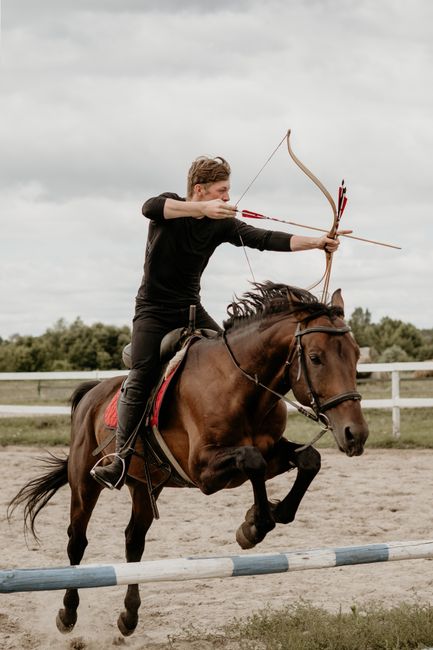
Two hours into a cold sit, a shape moves in the brush at the edge of the field. Your heart jumps, your hands start to shake, and every minute of waiting suddenly feels like it was for this. This is the moment hunter education spends the most time on, because excitement is when good people make bad calls. Mental training for hunters is the practice of staying patient through the long quiet hours and staying calm and clear in the few seconds that matter, so that safety comes first and every decision is one you can stand behind. It supports safe, ethical hunting; it does not make game appear.
Quick answer: Hunter education sources agree on the core rule for the moment of excitement: positively identify your target and know what is beyond it, never fire at a sound or movement, and pass on any shot that is not clearly legal, safe and ethical. Slow breathing and a decision made before the hunt help, but nothing here guarantees a calm hand or a harvest. See a doctor or a licensed mental health professional if worry, low mood, heavy drinking or exhaustion are affecting daily life.
General information for hunters. Back to the hunting hub. The body side of long days is on our hunting fitness page, the planning and weather side on the hunt day page, and injury detail on hunting injuries. This page covers mindset and safe decisions only; it is not a guide to how to hunt, and hunter education courses in your state are where firearm and bow safety are taught.
Mental performance is not the same as mental health
Two different things get called the mental game. Mental performance is skill: how you hold attention, handle excitement and make choices. You can practice it. Mental health is health: anxiety, depression, trauma, sleep problems, problem drinking or burnout. Those belong with a doctor or a licensed mental health professional, not with a better routine. The International Olympic Committee consensus statement on mental health in elite athletes (Reardon and colleagues, 2019) treats mental health symptoms as health concerns that need proper assessment and care. There is a short section on this near the end of the page.
Patience and focus during long waits
Hunting is mostly waiting. We found no study of attention or patience in hunters, so the ideas below are general coaching practice, not hunting findings.
- Give the sit a job. Watch one lane, then another. Note wind, light and sound at set times. A small task keeps attention in the present instead of on the clock or on what you hope will happen.
- Expect your mind to wander and bring it back. Drifting is normal; the habit that matters is returning to the job without frustration.
- Protect your attention with the basics. Cold, hunger and thirst wear down focus quietly. Our hunt day page covers layering, food and water, so we do not repeat it here.
- Know when to end the sit. Tiredness and stiff hands make poor decisions more likely. Deciding in advance when you will stop, and keeping that promise, is part of safe hunting.
A meta-analysis of 32 studies by Hatzigeorgiadis and colleagues (2011) found that self-talk improved performance in sport, with larger benefits for tasks needing fine control than for tasks needing mostly strength or endurance. It was not done in hunters. A short cue such as “look, then check” is a simple way to use the idea for the habit described next.
Composure and safe decisions under adrenaline
This is the most important section on the page. Hunter-ed.com’s Washington study guide warns that some hunters are so anxious to shoot an animal that they suffer from “buck fever”: they get nervous, forget firearm safety rules, and sometimes shoot other hunters. A hunter education article on target fixation describes the same thing from the inside. Excitement narrows attention, which makes it easy to misidentify an animal, take a poor shot or miss other people or buildings nearby.
The rules that answer it are short, and they come from hunter education sources:
- Identify the target. The NRA’s hunter basics say not to shoot at a noise, movement or dark shape in brush, and to confirm the animal and, where rules apply, that it is legal. Hunter-ed.com says never to fire at a sound or movement and to use binoculars, not a rifle scope, to identify a target.
- Know what is beyond it. The NRA says to shoot only with a solid backstop, and if you cannot tell where the shot will end up, not to take it. Texas Parks and Wildlife also teaches that knowing your limits means being certain of your target and what lies beyond it.
- Check your surroundings again and again. The target-fixation article advises scanning for other hunters, buildings and changes through the day, not just at the start.
- Pause and breathe. The same article suggests taking a deep breath, or two or three, before a shot. A 2018 review of slow breathing (Zaccaro and colleagues) found links between slow breathing and calmer mind and body states; it was not studied in hunters, so think of it as one tool, not a safeguard.
A habit that fits all of these: decide your “no” list before the season. For example: no shot at a sound, no shot without a clear view of the target and what is behind it, no shot I am not sure is legal. Deciding when calm is easier than deciding with a pounding heart. Practicing the check out loud, in the same order each time, in the weeks before the hunt turns it into a routine your body can run when your thinking is crowded. That is practical advice, not a tested hunting result.
A rehearsal many coaches use is imagery: picturing the moment, including the slow, careful check, in a calm place. A 2026 scoping review of mental imagery for stress management in athletes (Zhao and colleagues) maps how imagery is used; we read its title only, so we do not claim a result from it.
Handling a missed opportunity
Hunters pass on shots, miss, or watch an animal walk away. We found no study of how hunters cope with this, so the following is general advice.
- Treat a pass as a good decision, not a loss. Texas Parks and Wildlife frames ethics around asking whether a shot is legal, safe and ethical. A no to any of those is the hunt working as intended.
- After any shot, safety first. The target-fixation article says to check the safety, muzzle direction and trigger finger before you move.
- Do not chase the miss. Frustration is when rushed, marginal shots happen. Reset with a few slow breaths, and note what you would do next time.
- If you may have hit the animal, take it seriously. Hunter education guidance treats following up on a shot as part of the job, and Texas Parks and Wildlife notes the importance of enough light to track a blood trail. Your state’s hunter education manual and wildlife agency set the legal rules on recovery.
- Debrief later, kindly. A few notes at the end of the day (what happened, what I would keep, what I would change) turn a disappointing sit into information.
An ethical decision mindset
Ethics in hunting is a personal code that goes beyond the written law. Texas Parks and Wildlife’s hunter education course presents it as asking whether a shot is legal, safe and ethical, and sums up the idea as doing the right thing when no one else is watching. It also describes fair chase as pursuing game lawfully without an unfair advantage. The Boone and Crockett Club, which defines fair chase in similar terms, and Arizona’s hunter education course both advise avoiding extreme-distance shots, risky angles and shots you are not confident you can make cleanly. The target-fixation article says the same about knowing your effective range and your own skill.
Mentally, that comes down to honesty about your limits and a willingness to pass. Many of those limits can be set at home: the distances you are confident at, the light you need, how far you are from the truck. Those are rules for you to decide and to know before you are in the moment; this page does not teach shooting, tracking or field skills.
Preparing for hunt day
For the practical side, see the hunt day page: telling someone your plan, weather, layers, food and water, and blaze orange. For mindset, the most useful preparation is the same as in other sports: a routine you can repeat (arrive, settle, scan, check), a short list of decisions already made, and time in regular practice rather than only on the big day. The 2026 network meta-analysis by Chen and colleagues of 24 randomized trials in competitive athletes found that sport psychology interventions reduced anxiety overall, with the largest effect when done during regular training. It was not about hunters and competition is not the same as a hunt, so treat it as general evidence only.
Youth and first-time hunters
We did not find a hunting-specific source on mental training for young hunters, so we do not give advice here beyond the rules above. Young and new hunters should learn the identification and backstop rules in a hunter education course, with a mentor beside them. See the hunting youth page for the basics.
When it is health, not performance
If you notice constant worry, low mood that does not lift, trouble sleeping, drinking more than you want to, or a feeling of being worn down, that is not a mindset problem to fix with a routine. Talk to your doctor or a licensed mental health professional. In the United States, you can call or text 988 to reach the 988 Suicide and Crisis Lifeline at any time if you or someone you know is in crisis. The Association for Applied Sport Psychology lists resources for finding qualified help. Mental performance coaching can sit beside care but does not replace it.
Mental training for hunters: FAQs
What is buck fever?
It is the nervous excitement some hunters feel when game appears. Hunter-ed.com says it can make hunters forget safety rules and sometimes shoot other hunters, which is why identifying the target and what is beyond it comes before everything else.
How do I stay patient on a long sit?
We found no hunting study, but general coaching advice is to give the sit a small job, such as watching one lane at a time, and to bring your attention back when it drifts. Keep warm, fed and hydrated; see the hunt day page.
Does breathing help with shaking hands?
A 2018 review of slow breathing (Zaccaro and colleagues) found associations with calmer states, and a target-fixation article from hunter-ed.com suggests a breath or two before a shot. It is a tool, not a guarantee, and it does not replace the safety checks.
What should I do if I miss or pass on a shot?
Treat a pass as a decision, check your safety and surroundings, take a few slow breaths, and do not rush the next opportunity. If you may have hit the animal, follow your state’s hunter education guidance and wildlife agency rules on recovery.
Is it okay to go home without taking a shot?
Yes. Hunter education treats restraint as part of ethics: a shot should be legal, safe and ethical, and if any of those is in doubt, passing is the right call.
Sources
- Hunter-ed.com, Washington study guide: Victim Mistaken for Game
- Hunter-ed.com, Hunter Safety Tip: Watch for Target Fixation
- NRA Family, 4 Things to Learn Before Hunting
- Texas Parks and Wildlife, Hunting Ethics (hunter education online course)
- Hatzigeorgiadis A et al. Self-talk and sports performance: a meta-analysis. Perspect Psychol Sci 2011 (PMID 26167788)
- Zaccaro A et al. How breath-control can change your life: slow breathing review. Front Hum Neurosci 2018 (PMID 30245619)
- Chen et al. Sport psychology interventions and anxiety in competitive athletes: network meta-analysis. Front Psychol 2026 (PMID 42656332)
- Zhao L, Wang Y, Anuar N. Mental imagery for stress management in athletes: scoping review. Front Psychol 2026
- Reardon CL et al. Mental health in elite athletes: IOC consensus statement. Br J Sports Med 2019 (PMID 31097450)
- 988 Suicide and Crisis Lifeline
- Association for Applied Sport Psychology resources
General information for education only, not medical advice. It does not replace hunter education, a doctor, a licensed mental health professional or a qualified coach. See our editorial policy for how we research and write.