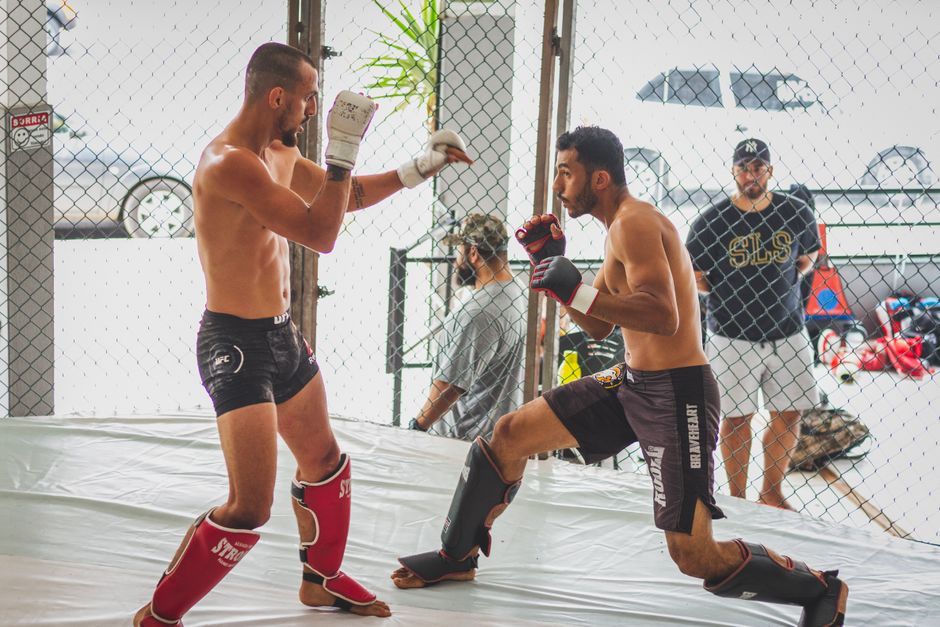
The locker room is loud and then it isn’t. Your wraps are on, your coach has just said the last thing he is going to say, and the walkout music is a few minutes away. Or it is Tuesday night and a sparring partner has just landed a clean low kick in front of the whole class, and your face is hot. Or it is the week after a loss, and the bout keeps replaying in your head. Every fighter knows these moments, from a first amateur bout to a pro card. Kickboxing mental training means practicing the skills between your ears (a routine, a few simple keys, a plan for nerves and for a bad round) the way you practice your jab. This page is for fighters, coaches and families, and it is about mental performance. Mental health is a different subject, and a section below spells out the difference.
Quick answer: Mental skills for kickboxers are trainable habits: a short routine before a bout, one or two simple keys for the round, calm sparring with a purpose, and a plan for resetting after a hard exchange or a loss. Research on these tools is limited and mostly surveys, and none of it guarantees a win. Nerves are normal and did not separate winners from losers in one small study of pro kickboxers. See a doctor, licensed psychologist or other qualified professional if worry, low mood, or trouble with eating, weight or sleep lasts more than a couple of weeks or gets in the way of daily life, and in a crisis call or text 988 (US).
Fight-day nerves are normal, and not a forecast
In a 2026 study in Frontiers in Sports and Active Living (da Silva Duarte and colleagues), 20 professional kickboxers (10 winners, 10 losers) filled in the CSAI-2, a questionnaire on pre-competition anxiety and self-confidence. Anxiety and confidence scores did not differ between winners and losers. What did differ was in the ring: winners threw more attacks and landed them better. It is one small sample, so it proves nothing about you, but it suggests nerves are not a forecast.
So the job is not to feel calm. It is to have something to do with the nerves. The ESSA position statement on performance under pressure (Schweickle and colleagues, Sports Medicine, 2026) says pressure can have both facilitative and debilitative effects, and lists pre-performance routines, implicit attentional strategies, psychological skills training and mindfulness-based approaches among the strategies that can be used. Our fight day guide covers the logistics (weigh-in, warm-up, wraps and food), so here we stay with the mind.
A routine and a few keys
Many fighters use the same sequence on every fight day: wake-up time, meals, wrap time, warm-up start, a few quiet minutes before the walkout. Routines are one of the four strategies the ESSA statement lists. The details below are common coaching practice, not tied to a kickboxing study:
- Make it repeatable. Run the same routine before hard training days so it is automatic when the stakes are high.
- Two or three keys, not a game plan. For example "jab first, kick off the punch, check the low kick." Short enough to remember between rounds.
- One breath. A slow breath with a longer breath out is a simple way to bring your hands and shoulders down before the bell.
Composure inside the round
A bout is a series of short decisions under pressure: check or counter, step off or trade, kick or punch. The Duyan study of 470 university combat athletes in Turkey (Frontiers in Psychology, 2026) used questionnaires and found that higher mental performance skills went along with higher mental toughness and higher self-rated athletic performance. That is an association in a survey, not proof that one causes the other, and the athletes were not all kickboxers. We found no kickboxing study on decision-making under pressure, so what follows is coaching practice:
- Reset between exchanges. Many coaches teach a quick reset after a hard shot or a lost exchange: guard up, one breath, back to the keys.
- Stay with the next action. The point you just lost or the kick you just ate is gone; the next exchange is the one you can change.
Sparring mindset
Sparring is where composure is built, because it gives you a safe place to practice getting hit, staying loose and thinking. We found no study of sparring mindset in kickboxers, so these are coaching ideas, not research findings:
- Give each round a job. Work only the jab, practice checking low kicks, or keep a long guard. A job keeps ego out of it.
- Leave the ego at the door. Winning every round in the gym is not the goal. A partner who makes you uncomfortable is teaching you something.
- Keep it controlled. If a round gets angry, stop and reset. How much and how hard to spar, and what to do about head blows, is in our kickboxing training guide and injuries guide.
Confidence, focus and goals
In a 2025 study of 110 competitive karate, taekwondo and judo athletes (Di Corrado and colleagues, Frontiers in Psychology), self-efficacy, meaning belief in your own ability, mediated the link between mental imagery and stress. In plain words, vivid imagery was linked to lower stress partly through higher confidence. It is a survey of martial artists, not kickboxers, and it does not show that imagery will make you win. Many fighters rehearse a few key sequences in their head, such as the jab into the low kick, with sound, feel and rhythm.
Confidence grows mostly from evidence: rounds of pad work you finished, sparring you stayed calm in, camp weeks you completed. A simple goal split many coaches use is outcome (win the bout), performance (keep my output up in the third round) and process (hands back after every combination). Process goals are fully in your control, so they still work on a day when the result goes the other way. Focus works the same way: one round at a time, with a cue word for the round and a different one for the minute between rounds.
After a loss
Every fighter loses sooner or later. We found no kickboxing study on how fighters cope with a loss, so the steps below are common coaching practice:
- Give it a few days. Rest, eat, sleep and let the emotion settle before reviewing the bout. If you took hard shots, get checked first; see our recovery guide and injuries guide.
- Review with your coach and video. Pick two or three things to fix, and one thing that worked.
- Talk to yourself like a teammate. Harsh self-talk is not a training plan.
- Make the next goal a process goal. Set it for the next training block, not the next bout.
A 2026 study of 379 athletes in Olympic combat sports (Kaçay and colleagues, Frontiers in Psychology) found that higher sport mindfulness went along with higher self-compassion, and higher self-compassion with lower athlete burnout. It is a cross-sectional survey, so it shows links, not cause.
Weight-cut stress and disordered eating: health matters, not mindset
Kickboxing is a weight-class sport, and the weigh-in is a source of stress in its own right. A 2026 study in Frontiers in Psychology (Karababa and colleagues) compared 12 elite kickboxers who cut at least 5 percent of body weight in the 48 hours before competing with 13 who did not. The cutters had lower heart rate variability (a marker of physical stress) and higher subjective stress, which peaked before the weigh-in and dropped right after it. Their physical markers stayed suppressed on match day even though they felt better. A 2025 survey of 256 combat sport athletes (Barley and Harms, Translational Sports Medicine) found that muay thai and kickboxing athletes cut larger amounts than most other combat sports, and that high-risk methods such as sauna and fluid manipulation were linked to more disordered eating behaviors.
Disordered eating and the psychology around it are health matters. A 2025 mini review in Frontiers in Sports and Active Living (Levy and Boyd) covers how body image, relationship with food and expectations push combat athletes toward weight cutting, and calls for research on gradual weight loss. In a small 2025 preliminary survey of 45 current elite kickboxers, 57 percent screened positive for psychological distress and 63 percent for disordered eating on IOC screening questionnaires (Bilgoe, Kerkhoffs and Gouttebarge, Discover Mental Health). Screening is not a diagnosis, and the sample was small, but the authors say it shows a need for more attention. If making weight is taking over your head, or you feel dread about food or the scale, talk to a doctor or a registered dietitian and a mental health professional, not only your coach. Our nutrition guide is background only.
Mental performance is not the same as mental health
Everything above is about performance skills. Anxiety disorders, depression, disordered eating and burnout are health matters, and a better routine does not fix them. The 2026 International Olympic Committee consensus statement on mental health in elite athletes (Reardon and colleagues, British Journal of Sports Medicine) says mental health symptoms and disorders are common among elite athletes, may have sport-related causes and can affect performance, and recommends routine screening using validated tools. Signs worth taking seriously include worry or low mood that lasts weeks, dread before training, big changes in eating or sleep, pulling away from friends, or losing interest in a sport you loved.
Start with your doctor, a licensed psychologist or another qualified mental health professional. In the US, you can call or text 988 (Suicide & Crisis Lifeline) at any time. Head knocks can also change mood and thinking; see our injuries guide.
Young fighters
We found no kickboxing-specific research on mental training for children and teens, so we make no claims. In general, keep it light: fun routines, effort goals, and praise for trying. Our youth kickboxing guide covers the formats and rules for younger fighters. If a young fighter shows lasting distress or changes in eating, start with their pediatrician or a licensed mental health professional.
Kickboxing mental training: FAQs
Are fight-day nerves a bad sign?
No. In a 2026 study of 20 professional kickboxers, pre-fight anxiety and self-confidence did not differ between winners and losers. Have a routine and a couple of keys, and treat nerves as normal. If worry is constant or causes panic, see a qualified professional.
How can I stay calm when I get hit?
Many coaches teach a quick reset: guard up, one slow breath, back to your keys. Practice it in sparring rounds with a job, such as only checking low kicks. This is coaching practice, not a result from a kickboxing trial.
Does visualization help kickboxers?
A 2025 survey of karate, taekwondo and judo athletes linked vivid imagery to lower stress through higher self-efficacy. It was not a trial and not kickboxers, so use imagery as a short add-on to real training, not a replacement.
How do I come back after a loss?
Give it a few days, get checked if you took hard shots, then review with your coach and set a process goal. A 2026 survey of Olympic combat athletes linked self-compassion with lower burnout. If low mood or dread lasts weeks, talk to a professional.
Is weight-cut stress a mental health issue?
It can be. A 2026 study found rapid cutters had higher subjective stress and lower heart rate variability, and a small survey of elite kickboxers found many screened positive for disordered eating. A doctor, dietitian and mental health professional should lead, not a coach alone.
Should I see a sport psychologist?
Many fighters do fine with good coaching. If worry, low mood, eating problems or burnout last more than a couple of weeks, start with a doctor or licensed psychologist.
Sources
- da Silva Duarte and colleagues, 2026, Frontiers in Sports and Active Living, pre-competitive anxiety, self-confidence and performance in 20 professional kickboxers: PubMed 42807216
- Schweickle and colleagues, 2026, Sports Medicine, ESSA position statement on performance under pressure: PubMed 42271117
- Duyan and colleagues, 2026, Frontiers in Psychology, mental performance skills and mental toughness in 470 combat athletes: PubMed 42403619
- Di Corrado and colleagues, 2025, Frontiers in Psychology, mental imagery, self-efficacy and stress in karate, taekwondo and judo athletes: PubMed 40040664
- Kaçay and colleagues, 2026, Frontiers in Psychology, mindfulness, self-compassion and burnout in Olympic combat sport athletes: PubMed 42755439
- Karababa and colleagues, 2026, Frontiers in Psychology, rapid weight cutting, heart rate variability and stress in elite kickboxers: PubMed 41919118
- Barley and Harms, 2025, Translational Sports Medicine, rapid weight loss across combat sports: PubMed 40177332
- Levy and Boyd, 2025, Frontiers in Sports and Active Living, psychology of weight cutting in combat sports: PubMed 39911474
- Bilgoe, Kerkhoffs and Gouttebarge, 2025, Discover Mental Health, mental health symptoms in current and former elite kickboxers: PubMed 41264054
- Reardon and colleagues, 2026, British Journal of Sports Medicine, IOC consensus statement on mental health in elite athletes: PubMed 42580854
- 988 Suicide & Crisis Lifeline: 988lifeline.org
General information for education only, not medical advice. It does not replace a doctor, psychologist or other qualified professional. See how we work in our editorial policy. Back to the kickboxing hub.