This article contains affiliate links: if you buy through them we may earn a commission, at no extra cost to you. Learn more.
Mile four of a Spartan Super. Your shoes weigh twice what they did at the start, your hands are slick with mud, and the next obstacle is a set of monkey bars over a pit of brown water. You make it to the fourth bar, your grip goes, and you drop. Usually that means a splash and 30 burpees. Sometimes it ends with a rolled ankle, a cut shin or a shoulder that doesn’t feel right. Obstacle course racing (OCR), from Spartan Kids races to elite heats and the new obstacle discipline in Olympic modern pentathlon, has its own set of injuries and a few health risks road runners never think about. Here they are, with what lowers the risk and when to get help.
This page is general information, not medical advice. If you’re hurt or sick after a race, see a sports medicine doctor, physical therapist (PT) or certified athletic trainer (AT). For the big picture of the sport, start at our obstacle course racing hub.
How risky is obstacle course racing?
Less than the headlines suggest, but not nothing. A study of medical charts from 33 OCR events in Canada (2015–2017, 73,366 participants) counted 1,782 injuries, an average of 2.4% of racers; 93.9% were treated on site and about 1% needed an ambulance. The most common problems were cuts (lacerations) and muscle, joint and bone injuries. A 2022 review of seven studies found that only about 1.4% of participants sought medical care during an event, yet 27% said afterwards that they’d hurt at least one arm or leg. Sprains, strains, scrapes and blisters top the list; the ankle and knee are the most common places. The Canadian authors add a fair warning: most injuries are minor, but life-threatening emergencies can happen.
The most common OCR injuries
Ankle sprains on trails and landings
Wet roots, hidden rocks under mud, and jumping down from walls make the ankle the classic OCR injury. The American Academy of Orthopaedic Surgeons (AAOS) explains that a sprain happens when the ligaments are stretched past their limit, usually by rolling the foot inward; expect pain, swelling and bruising. The National Athletic Trainers’ Association (NATA) says the most consistent risk factor for a sprain is a previous sprain, and recommends at least three months of balance training, plus a brace or tape for athletes who have sprained an ankle before. If you can’t put weight on it after the race, or the pain is right over the bone, get an X-ray.
Knee injuries, including the ACL
A 2024 systematic review of OCR studies found an ACL injury rate of about 0.45 per 1,000 athlete-exposures, about five times higher in women than in men (1.51 vs 0.29). The risk factors it named are very OCR: obstacles that need high-impact landings or sudden stops, and rubber-matting terrain. AAOS adds that most ACL tears happen without contact; athletes often hear a pop, feel the knee give way and see swelling within a day. A knee like that needs a doctor before your next race.
Falls from obstacles
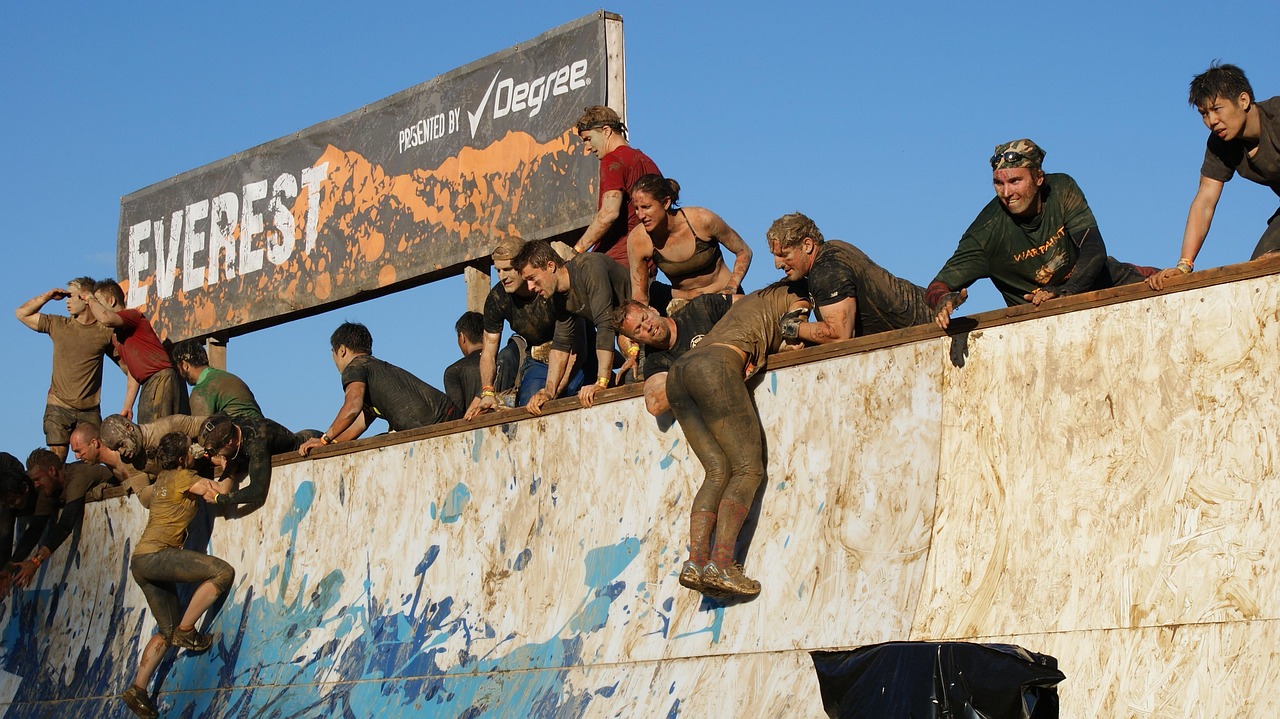
Walls, cargo nets, rigs and slippery inclines all put you off the ground. Most falls are short and onto soft ground or water, but a fall onto an outstretched hand is, according to AAOS, the most common cause of a broken wrist. Hit your head and feel dazed, confused, sick or “not right”? Follow the CDC HEADS UP rule: stop for the day and get checked by a health care provider before you train again.
Shoulder and hand injuries
Monkey bars, ropes, rigs and swinging obstacles hang your whole weight from tired, wet hands and shoulders. Dropping awkwardly from a bar can dislocate a shoulder: AAOS describes a shoulder that looks out of place, can’t move and hurts badly. Don’t let anyone put it back on the course; support the arm and get to the medical tent. CrossFit’s hand-care advice applies well here: keep calluses filed down, keep hands moisturized so the skin is less likely to rip, and clean and cover any tear. A finger that looks bent, won’t straighten, or a wrist that stays swollen and sore in the “snuffbox” at the base of the thumb needs an X-ray.
Cuts, scrapes and blisters
Barbed-wire crawls, gravel, wooden walls and wet shoes rub skin the wrong way. The 2022 review recommends low-friction clothing, gloves where allowed, covering abrasion-prone areas, and for blisters: antiperspirant on the feet, a good sock system and tape over hot spots.
Mud, water and infections: what the outbreaks showed
Mud races happen on farms, ranches and fields, and mud can carry germs from animals. The best-known example comes from the CDC. After a long-distance obstacle race on a cattle ranch in Beatty, Nevada, in October 2012, investigators found 22 cases of Campylobacter coli infection (fever, vomiting and bloody diarrhea). Racers had fallen face-first into mud and had their heads under surface water. Of the sick racers, 89% said they had swallowed muddy water, compared with 30% of racers who stayed well. Other published examples:
- E. coli O157 in England (2018): nine cases linked to a mud-based obstacle race, two of them caught at home from a family member. Sheep had been grazing on parts of the course two days earlier. Public Health England found 41 cases of gastroenteritis tied to muddy assault-course events from 2015 to 2018.
- The Netherlands (2017): a study of 2,646 racers at 17 obstacle runs found swallowing mud was linked to stomach illness, and rinsing off in a hot tub afterwards was linked to skin infections.
- Rare but serious: doctors have reported leptospirosis in a young man two weeks after a mud run in Hawaii, and fungal (histoplasmosis) heart infection in a child after a mud run. The CDC says leptospirosis spreads through water or soil contaminated with animal urine, with symptoms 2 to 30 days later, and advises covering cuts with waterproof bandages.
What lowers the risk: keep your mouth closed in water and mud crawls, and spit rather than swallow; don’t eat or drink with muddy hands; cover open cuts with a waterproof bandage before the start; shower properly after the race (a hose-down, then soap and water) rather than soaking in a shared hot tub; wash your hands well before you eat. Don’t race if you already have diarrhea or vomiting. If you get sick in the days or weeks after a race, see a doctor and tell them you did a mud race; the CDC report asks exactly that. And keep young kids away from your muddy kit, since E. coli can spread at home. The CDC also notes that dirty wounds can need a tetanus shot, so make sure you’re up to date on your 10-year booster.
Heat illness and cold water
Spartan tells Beast (21K) racers to be ready for five or more hours on their feet, often in summer sun with little shade. NATA warns that exertional heat stroke shows up as confusion, odd behavior or collapse in someone working hard in the heat; it’s an emergency, and the rule is cool first, transport second (cold-water immersion on site where it’s available). Heavy sweating, dizziness, headache, nausea and weakness mean slow down, find shade and drink. On the other end, ice obstacles such as Tough Mudder’s Arctic Enema (an ice pit the race describes as 34 degrees) trigger cold shock, a gasp and fast breathing that peaks in the first 30 seconds or so. Keep your face up and breathe slowly. Spring and fall races in wind and wet clothes can bring on hypothermia; the CDC lists shivering, confusion, fumbling hands and slurred speech as signs. More on staying warm and cool is on our OCR race day page.
Electric-shock obstacles, honestly
Tough Mudder’s Electroshock Therapy is a field of dangling wires the race says carry 10,000 volts. Tough Mudder says the obstacle is only on its Classic course and is optional. But emergency physicians in Pennsylvania described patients from a 2013 Tough Mudder with injuries they hadn’t seen at other sports events: in their published case series, 4 of 5 patients had contact with the electrified wires, and reports from the same weekend describe about half of 38 emergency patients with electrical injuries, including an 18-year-old who took 13 shocks and suffered heart inflammation, and a man who fainted and hit his head. The doctors advised skipping electrical obstacles if you’re at medical risk. Our version: skip it if you have any heart condition, a pacemaker or implanted defibrillator, a seizure history, or are pregnant, and ask your doctor if you’re unsure. Nobody needs it to finish.
Prevention that actually helps
- Train balance and landings: The 2022 review points to proprioceptive (balance) training and ankle braces for sprains, and programs combining balance, jumping, strength and running drills for knees.
- Build grip and shoulder strength so you’re not hanging on by tired fingers. See OCR training.
- Wear trail shoes with deep lugs that drain water; road shoes slide on wet walls and mud.
- Skip obstacles you’re not ready for. At Spartan races a failed obstacle costs you 30 burpees; at Tough Mudder you can go around. Both beat an ambulance.
- Write medical info on your bib (allergies, conditions), as the emergency physicians recommended.
Gear many racers keep in the bag
None of these prevent injuries on their own, so ask your PT or athletic trainer what fits your situation. But many racers use a lace-up brace like the ASO EVO Ankle Stabilizer after a sprain, pack Band-Aid Water Block Tough waterproof bandages to cover cuts before the start, and race in a mud shoe such as the inov-8 MudTalon. Our best ankle braces for athletes guide compares more braces.
ASO EVO Ankle Stabilizer
- Lace-up with figure-8 straps
- Fits left or right foot
- Low profile, fits in trail shoes
Band-Aid Water Block Tough Bandages
- 100% waterproof, four-sided seal
- 1 x 3.25 in, 20 count
- About $4
inov-8 MudTalon
- Built for soft, muddy ground
- Deep lugs for grip
- About $95–$140
When to see a sports medicine doctor, PT or athletic trainer
- Right away (emergency): confusion or collapse in the heat, any concussion danger sign, a joint that looks out of place, a possible broken bone, chest pain or fainting after an electrical obstacle, or numbness and tingling.
- Within a day or two: an ankle or knee you can’t walk on, a knee that swelled fast or gives way, a cut that’s deep, gaping or full of grit you can’t clean out, or red, hot, swollen skin or pus around a wound.
- In the days and weeks after: diarrhea (especially bloody), vomiting, fever or flu-like illness. Tell the doctor you did a mud race.
- Book a visit: pain that hasn’t improved after a week or two, a shoulder that keeps feeling loose, or repeated ankle sprains.
Recovering well after the race, including cleaning wounds properly, is on our OCR recovery page. For how another sport handles injury prevention, see soccer injuries.
Obstacle course racing injury questions
What is the most common injury in obstacle course racing?
Cuts and scrapes, plus sprains and strains, with the ankle and knee the most commonly hurt joints. In a Canadian study of 33 events, about 2.4% of racers needed first aid, and most were treated on site.
Can you get sick from a mud run?
Yes, occasionally. The CDC linked 22 Campylobacter infections to swallowing muddy water at a 2012 Nevada race, and England has seen E. coli outbreaks after mud races. Keep your mouth closed, cover cuts, shower with soap afterwards and see a doctor if you get sick, mentioning the race.
Is the Tough Mudder electric shock obstacle dangerous?
For most healthy people it’s a painful jolt, but emergency doctors have reported falls, fainting and at least one heart injury. Tough Mudder says the obstacle is optional and only on its Classic course. Skip it if you have a heart condition, pacemaker, seizure history or are pregnant.
Should I race with a cut or open wound?
Small cuts can be covered with a waterproof bandage, as the CDC advises for water and soil exposure. Large, deep or healing wounds are better kept out of the mud; ask your doctor, and check your tetanus shot is up to date.