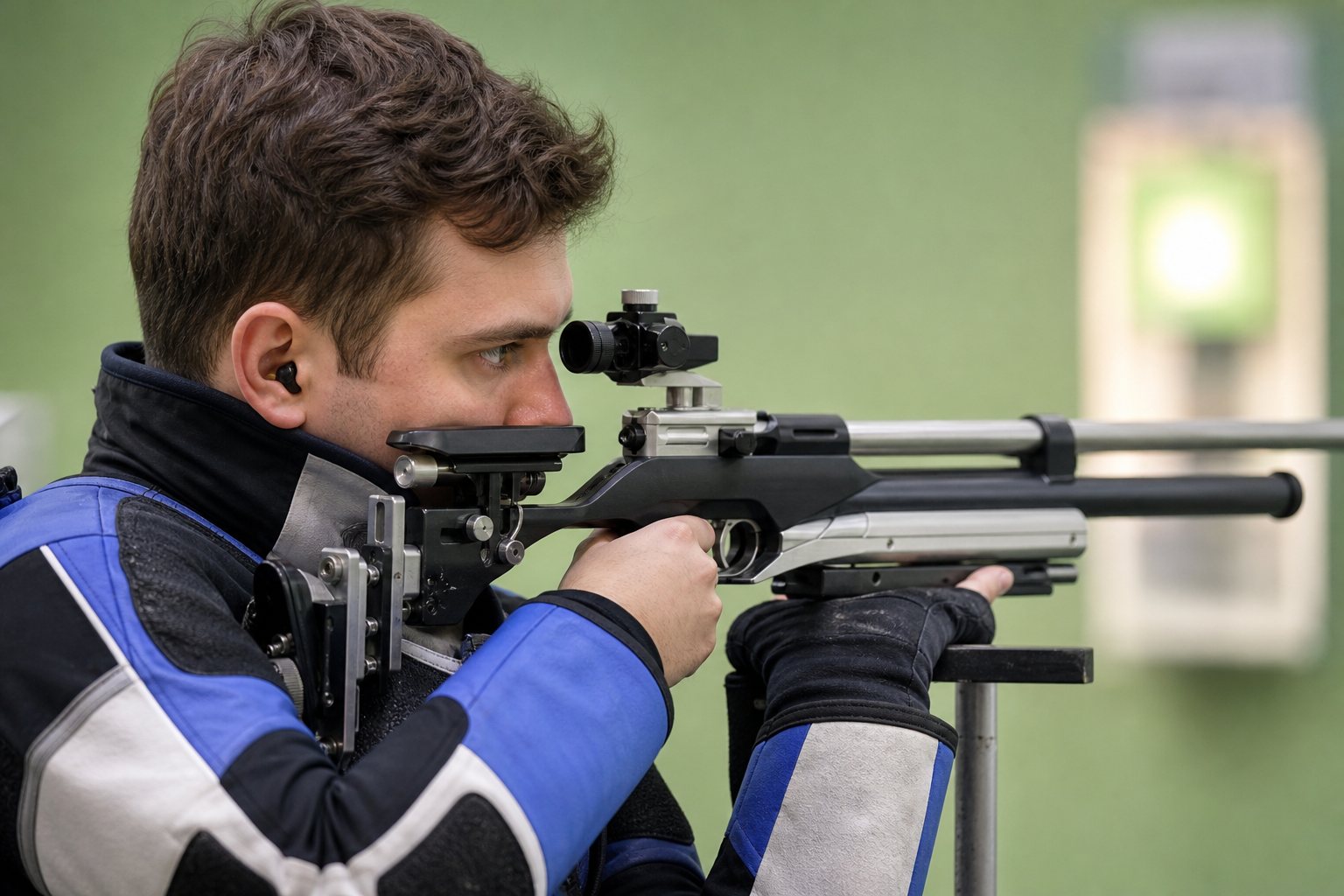
The seat cushion was fine for the first hour; by the end of a long match day a Para shooter notices a sore patch, a tight shoulder and ringing ears. Para shooting injuries are usually not dramatic. They tend to be overuse and posture problems, hearing and lead exposure, and, for athletes who sit or support a limb for hours, problems linked to the setup. This page names what the published sources say, says where there is no Para-specific data, and gives general rehab principles. It does not diagnose and cannot clear anyone to return to the range. Prevention steps are on the injury prevention page.
Quick answer: Published numbers say injury rates in Olympic-style shooting are low, and the most reported problem is back pain in rifle athletes. We found no Para shooting injury surveillance figures. General rehab principles come from sports medicine sources; a sports medicine doctor, physical therapist or athletic trainer should diagnose pain and decide when to return. Stop shooting and get care for severe pain, numbness, a new weakness or any head injury.
What the numbers say
- Olympic-style shooting overall. A 2021 systematic review (Harr and colleagues, International Journal of Sports Physical Therapy) of 19 studies in biathlon, rifle, pistol and shotgun found shooting events had low percentages of injuries compared with other sports: 2.3% in summer versus 6.9% in winter. In summer, women (6.9%) had a higher percentage than men (1.7%). The authors said surveillance focuses on acute injuries and chronic problems may be undercounted.
- Low back pain in rifle athletes. A 2025 survey of 114 US college rifle athletes (Urbach and colleagues) found 89% had at least one episode and 24% of them missed at least a day of training or competition. It was not a Para study.
- Para athletes generally. The Aspetar Sports Medicine Journal notes that the IPC has run injury surveillance at every Paralympic Games since 2012 and that shoulder pain is common in wheelchair track athletes. We did not find a shooting rate from those programs, so we do not quote one.
- Lead and noise. A 2017 review of 36 studies found raised blood lead in some shooters in 31 of them. A noise review found peak levels of 140 to 175 dB. Both are exposures rather than injuries; see prevention.
Common patterns (from sources and general sports medicine)
Back and neck strain from static positions, shoulder and arm discomfort from holding or supporting a rifle, and hand and wrist strain are common complaints in the shooting literature and in coaching practice, though we only have survey numbers for the back. For seated athletes, skin breakdown over bony areas and heat intolerance in athletes with spinal cord injury are reasons to ask a clinician about checks and cooling; the Aspetar article notes the thermoregulation concern briefly without giving figures. Hearing damage builds with repeated loud exposure, and the CDC advises protection from loud noise.
Concussion
Concussion is not a typical shooting injury. If a fall, a collision or a transfer causes a head knock, use the CDC HEADS UP approach: recognise the signs, remove the person from activity and have a health care provider decide when it is safe to return.
General rehab principles
These principles are general and come from sports medicine consensus, not from Para shooting trials. A clinician should tailor them.
- Get a diagnosis before a long self-managed plan.
- Relative rest from what hurts, not total inactivity, is usually the starting point; a clinician decides.
- Rebuild gradually: shorter sessions, one change at a time, with pain as a guide.
- Rehab addresses the cause too (position, support, training load), not only the sore spot.
- Return to shooting is a decision for a health care provider, not an article.
There is no universal recovery time for these problems; it depends on the person and the injury.
When to see a professional
See a sports medicine doctor, physical therapist or athletic trainer for pain that lasts beyond a few days, pain at night, numbness or tingling, a new limb weakness, skin that stays red or breaks down, or hearing changes. Get urgent care for severe symptoms.
Frequently asked questions
What is the most common injury in shooting?
The only specific figure we found is for the back: a 2025 survey of college rifle athletes found 89% had at least one episode of low back pain. It was not a Para study.
Are there Para shooting injury statistics?
We found none specific to Para shooting. The IPC runs injury surveillance at Games, but we did not find a shooting rate.
Can I keep shooting with a sore back?
That is a question for a clinician who can examine you. Rest, position changes and a staged return are general principles, not a plan.
Does hearing loss from shooting come back?
We did not find a source that says it does. The CDC advises protecting your hearing from loud noise, so prevention is the focus.
How long do shooting injuries take to heal?
There is no universal time; it depends on the injury and the person. Ask your clinician.
Sources
- PubMed: injury prevalence and incidence in Olympic-style shooting, systematic review (2021)
- PubMed: low back pain in college rifle athletes (2025)
- Aspetar Sports Medicine Journal: principles of injury prevention in the para athlete
- PubMed: lead exposure at firing ranges, a review (2017)
- PubMed: noise exposure in shooting (peak 140-175 dB)
- CDC: hearing loss
- CDC HEADS UP: respond to a concussion
General information for education only, not medical advice. It does not replace care from a sports medicine doctor, physical therapist, athletic trainer or dietitian who knows you and your impairment. See how we work in our editorial policy.