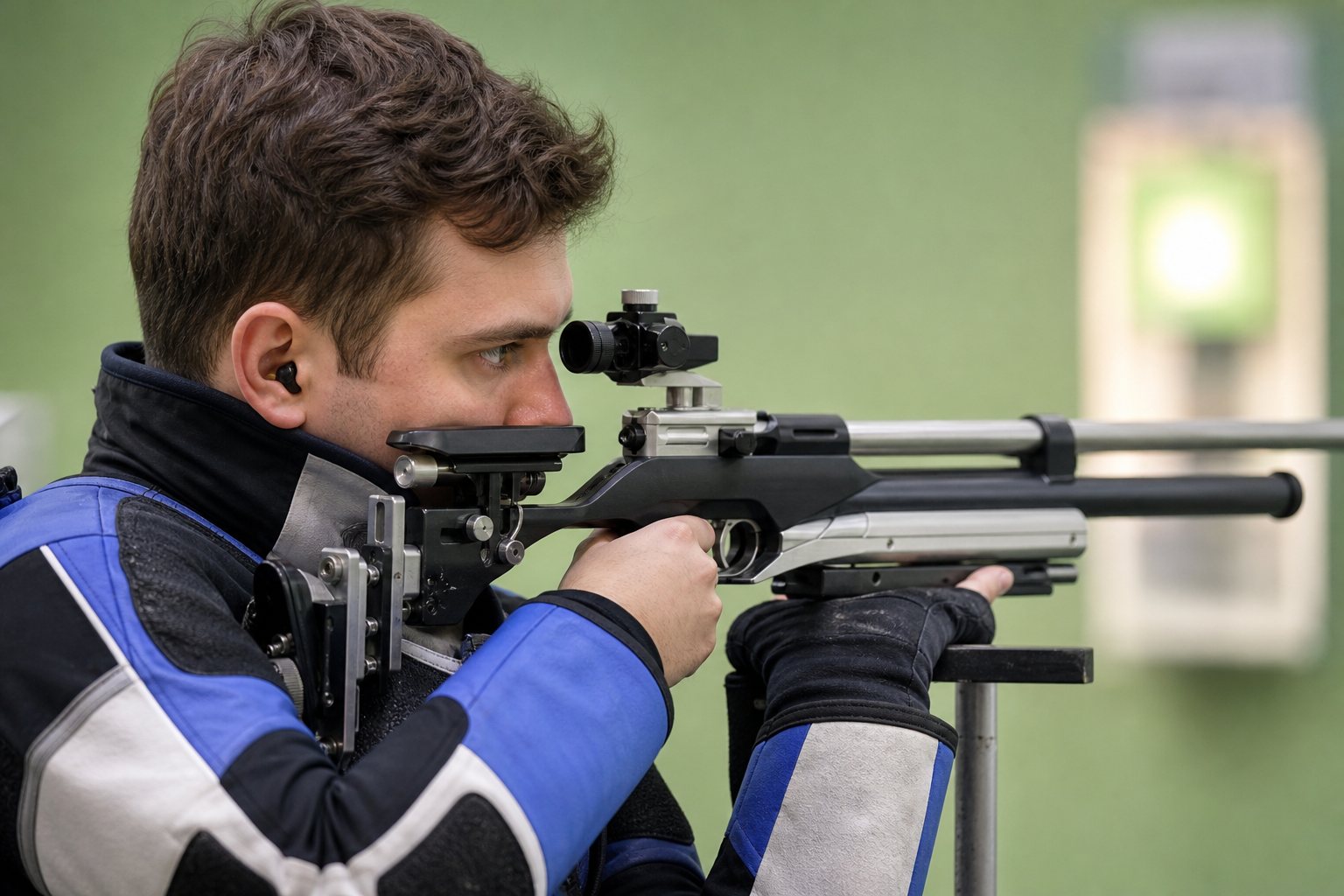
Midway through a three-hour match day, the shooter’s water bottle is empty, lunch was a rushed bar, and the last relay needs the same steady hands as the first. Para shooting nutrition is less about fuel for muscles than about steady energy, hydration and clear thinking, plus health basics that depend on the athlete’s impairment. Shooting has no weight classes. Evidence on nutrition for Para athletes is limited, and nothing here replaces advice from a registered dietitian who knows your situation.
Quick answer: Eat regular meals, drink water through the day and plan snacks for long matches. Research on Para athletes is limited, and needs vary with impairment: a 2024 study of 48 Paralympic athletes found spinal cord disorder was one of the main predictors of energy expenditure. Supplements are optional, caffeine is not for everyone, and beta-blockers are prohibited in shooting Para sport. See a registered dietitian or sports medicine doctor for personal advice.
Fuel and hydration for a long match
A review of 56 studies on Paralympic athletes aged 18 and older (Ghazzawi and colleagues, 2025) found a lack of research on their nutrition and called for tailored plans covering energy, nutrients, supplements and fluids. It noted that hydration is critical, especially for athletes with spinal cord injuries, who may struggle with body temperature regulation. For a long shooting day, general practice (not Para shooting research) is to eat a normal meal a few hours before, bring simple snacks and sip water between relays rather than drinking a lot at once. Gut comfort matters on the line; try foods in practice before match day.
Energy needs vary
A 2024 study in Medicine and Science in Sports and Exercise (Weijer and colleagues) measured energy use in 48 Paralympic athletes across cycling, wheelchair tennis, wheelchair basketball and skiing. Average daily energy expenditure was 2,908 kilocalories with wide variation, and fat-free mass, exercise time and the presence of a spinal cord disorder were the main predictors. None of the athletes were shooters, so these numbers cannot be applied to a Para shooter. The study also found athletes reported eating less than they used while their weight stayed constant, suggesting under-reporting of food intake. The takeaway is that individual needs differ and a dietitian can help more than a table.
Low energy availability (RED-S)
Relative energy deficiency in sport (RED-S) describes the health and performance effects of not eating enough for the energy an athlete uses. The IOC has published consensus statements on it, including a 2023 update. It is more often discussed for endurance and weight-sensitive sports, and we did not find data for Para shooters, but it is worth knowing about: signs such as constant tiredness, frequent illness, missed periods or mood changes should be raised with a sports medicine doctor or dietitian. Spinal cord injury and reduced muscle mass change energy needs in ways a specialist should assess.
Supplements: be careful
The IOC consensus statement on dietary supplements and the high-performance athlete (2018) says that supplements should be used with caution, as many can be contaminated or mislabelled. General guidance for athletes subject to anti-doping rules: if you use a supplement, choose products tested by a third party for sport (such as NSF Certified for Sport or Informed Sport), tell your doctor what you take, and follow the label. We give no dosage advice and no product recommendations on this page.
- Caffeine. The International Society of Sports Nutrition has a position stand on caffeine and exercise performance. Caffeine is not for everyone (sensitivity, heart conditions, pregnancy), and some people feel jittery; try it in practice, never first on match day, and ask your doctor.
- Beta-blockers. These medicines are not a supplement, but note that the IPC says beta-blockers are banned in shooting Para sport and a therapeutic use exemption (TUE) is needed before taking a prohibited medicine you need. Check the current Prohibited List and ask your doctor and the IPC or your national anti-doping organisation before any change to medication.
Health basics
Sleep, a varied diet and regular movement matter more than any product. The CDC recommends at least 7 hours of sleep for adults. For personal questions about your diet, your impairment and your medicines, a registered dietitian, with your doctor, is the right person.
Frequently asked questions
What should I eat before a shooting match?
There is no Para shooting-specific rule. General practice is a familiar, balanced meal a few hours before and simple snacks and water during. A dietitian can tailor it.
Do I need supplements?
Not necessarily. The IOC says supplements should be used with caution because many can be contaminated or mislabelled. Third-party tested products and your doctor’s advice are sensible.
Is caffeine allowed?
The sources we used focus on performance and safety, not on a Para shooting ruling. It is not for everyone; check the current rules and talk to your doctor.
Are beta-blockers allowed in Para shooting?
The IPC says they are prohibited in shooting Para sport; an athlete who needs one must have a therapeutic use exemption before taking it.
Do Para shooters need to worry about RED-S?
We found no data for Para shooters. Know the warning signs and see a sports medicine doctor or dietitian if you have concerns.
Sources
- Ghazzawi and colleagues 2025: tailored nutrition strategies for Paralympic athletes (review, Europe PMC)
- PubMed: energy requirements of Paralympic athletes, doubly labeled water (2024)
- PubMed: IOC consensus statement on RED-S, 2023 update (Mountjoy and colleagues)
- PubMed: IOC consensus statement on dietary supplements and the high-performance athlete (2018)
- PubMed: ISSN position stand on caffeine and exercise performance (2021)
- Paralympic.org: anti-doping in shooting Para sport
- CDC: sleep
General information for education only, not medical advice. It does not replace care from a sports medicine doctor, physical therapist, athletic trainer or dietitian who knows you and your impairment. See how we work in our editorial policy.