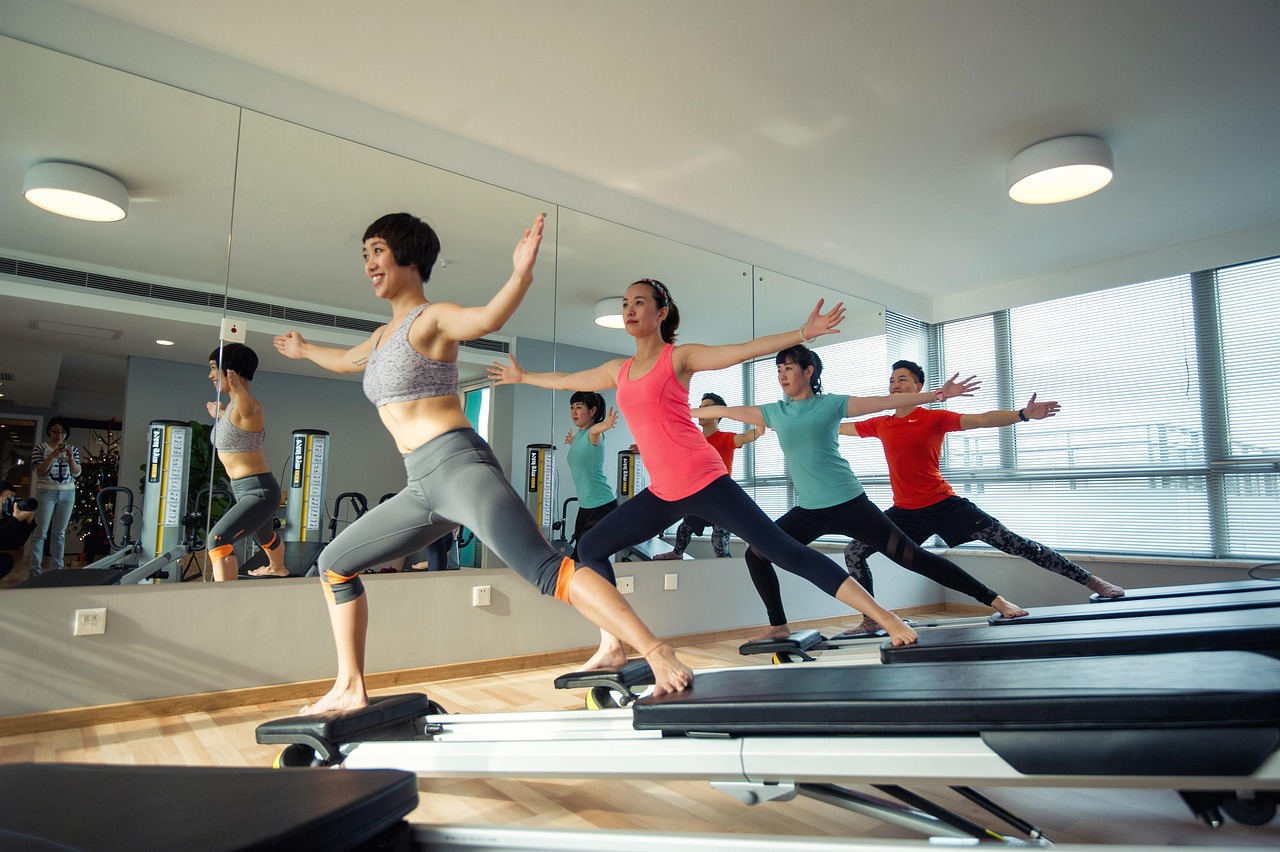
It is the fourth round of the same exercise in a Tuesday evening reformer class, your legs are shaking, and the teacher says, “Stay with your breath.” Half the room is already thinking about tomorrow’s emails. The other half is just trying to keep the carriage from slamming home. In that moment Pilates is as much an attention workout as a strength one. Mental training with Pilates means using the mat or reformer to practice focus, breath control, body awareness and showing up consistently, and then carrying those skills into your own sport. It supports performance; it does not guarantee it.
Quick answer: Pilates is built around concentration, control and breath, so many students find it a useful place to practice attention and body awareness. Small studies point to higher mindfulness and body awareness after several weeks of classes, but no study shows it makes you win. See a doctor or a licensed mental health professional if worry, low mood, disordered eating or exhaustion are affecting daily life.
General information for people who do Pilates, alone or next to another sport. Back to the Pilates hub. How to fit sessions into a season is on Pilates in your training, the day-of routine is on Pilates before and after games, and this page does not repeat them.
Body awareness: knowing where you are
Classes are full of cues about where a rib, a pelvis or a shoulder blade is, and many students say that is the part that lingers. There is some support for it. In a 2026 randomized trial of 88 sedentary young women (Çankaya and colleagues, BMC Sports Science, Medicine and Rehabilitation), a 6-week mat Pilates program raised scores on a body awareness questionnaire and on activity levels compared with the control group. That was a self-reported measure in non-athletes, so treat it as a hint rather than proof for competitive players.
For an athlete the use is practical. If you can feel that your ribs are flaring, your pelvis is tipping or one hip is doing the work, you can correct it in your own sport. How that connects to training is on the training page. The sensing is a skill you practice, and it improves with slow, repeated, well-coached reps.
Focus: one exercise, one cue
Pilates is taught as a few cues at a time, not a flood. A simple way to use it as attention practice:
- Pick one focus per exercise. Pelvis still, ribs down, or the exact moment the spring changes tension, not all three.
- Notice drift, then come back. Your mind will wander in the second set. Noticing it and returning to the cue is the exercise.
- Say it short. One-word self-talk such as “long”, “slow” or “heavy” works better than a paragraph. A meta-analysis of 32 studies (Hatzigeorgiadis and colleagues, Perspectives on Psychological Science 2011) found self-talk helped most on fine, precise tasks, which is a fair description of most Pilates work.
- Phones away. A 50-minute class without a screen is quiet practice at holding your attention on one thing.
These are common coaching habits rather than tested protocols. Whether the focus you build on a reformer transfers to a pitch, court or road is plausible but not proven.
Breath and attention
Breath is the thread through most of Pilates: lateral (rib) breathing, an exhale on the effort, breath timed to the movement. Outside of Pilates, a 2022 systematic review and meta-analysis of 223 studies (Laborde and colleagues) found that voluntary slow breathing raised vagally mediated heart rate variability, a marker linked to the body’s rest-and-recover side. The authors suggest it as a low-cost technique with few adverse effects expected. That review covers slow breathing in general, not Pilates, and it does not show that any breathing pattern improves match results. More on how athletes read this signal is on our HRV guide.
A calm, practical use: before a hard set, take two or three slower breaths with a long exhale, then start. If you feel light-headed, stop and breathe normally. Breath work that makes you dizzy is not the point.
What the mind-body research really says
Pilates gets described as a mind-body practice, so it helps to separate what has been tested from what is marketing.
- Mindfulness: in a 15-week study of Pilates mat classes against recreational exercise classes in dance students (Caldwell and colleagues, Journal of Dance and Somatic Practices 2013), mindfulness scores rose in the Pilates group but not in the exercise group, and the rise was linked to lower perceived stress and better mood. It was quasi-experimental and not randomized, so it cannot prove cause.
- Wellbeing overall: a 2026 systematic review and meta-analysis of 32 trials with 1,264 participants (Tsartsapakis and colleagues, Sports) found benefits for quality of life and self-esteem, while the evidence for depression and anxiety was limited or not significant.
- Mood in older adults: a 2021 meta-analysis of randomized trials (Metz and colleagues, Journal of Bodywork and Movement Therapies) reported possible benefits on some outcomes and warned the results should be read with caution because of varied methods and risk of bias.
The fair summary: Pilates may help many people feel more focused and a bit calmer, and the stress evidence is early. It is not a treatment for anxiety or low mood, and the studies above are not mostly of competitive athletes.
Consistency and motivation
The best class is the one you keep attending. A 2024 interview study of eight people who had practiced Pilates for six years or more (Lorenzo-Villarreal and colleagues, Journal of Bodywork and Movement Therapies) found that long-term students tied their commitment to a few things: relief from pain, seeing Pilates as good for health, and the relationships built in class. Eight people is a small group, but it matches what many studios see. Ideas that follow from this:
- Book it like practice. Put a regular class on the calendar and protect it, rather than “when I have time”.
- Find your people. A friend, a regular teacher or a team session makes it easier to show up on tired days.
- Set goals you control. “Two classes a week for six weeks” or “hold the roll-down with no momentum” beats “get a stronger core”.
- Track one thing. A short note after class on what you felt is enough.
- Expect plateaus. Progress in Pilates is often subtle. A teacher who changes the springs or progression keeps it interesting.
These tips are general practice, not a tested program.
Using Pilates next to your sport
For athletes, Pilates can be a place to practice the mental side of training without the pressure of a scoreboard. Some ways players use it:
- A reset day. A gentle mat class on an easy day gives your head a break from the drill-and-score rhythm. Pair it with the ideas on the recovery page.
- A body scan. Start a session by noticing which side feels tight or heavy. That information is useful to your trainer or coach.
- A cue you can take with you. Choose one Pilates cue, such as a long exhale or “ribs down”, and use it as a reset between points, plays or sets.
- A pre-competition routine. If a short Pilates primer is already part of your week, keep it familiar on the day. The game day page covers timing and what to skip.
Keep it from becoming one more obligation. If a class leaves you flat before important sessions, move it. Beginners and young athletes should also read Pilates for young athletes, and anyone with pain should check Pilates injuries and safety and talk to a clinician first.
Mental performance is not the same as mental health
Breath, focus and routines are performance skills. Anxiety that will not settle, low mood, loss of interest, disordered eating, constant exhaustion or burnout are health matters, not technique problems and not signs of weakness. The International Olympic Committee consensus statement on mental health in elite athletes (Reardon and colleagues, British Journal of Sports Medicine 2019) treats them as health concerns that need appropriate assessment and care. A mat class is not a replacement for that care. If these are affecting your sleep, school, work or relationships, talk to a doctor or a licensed mental health professional. In the United States, you can call or text 988 (the 988 Suicide and Crisis Lifeline) at any time if you or someone you know is in distress. The Association for Applied Sport Psychology lists resources on finding a sport psychology professional. Outside the US, contact your national emergency or crisis service.
Mental training with Pilates: FAQs
Does Pilates improve focus?
It asks for concentration and many students feel more focused afterward. A small 15-week study found mindfulness scores rose with Pilates mat classes but not with recreational exercise. Evidence that this carries into sport results is lacking.
Can Pilates help with stress or anxiety?
It may help you feel calmer, but a 2026 review of 32 trials found limited or non-significant evidence for depression and anxiety. If worry is affecting your life, see a doctor or licensed mental health professional.
Is mat or reformer better for body awareness?
We found no study comparing them for this. The 2026 trial above used mat classes. Springs on a reformer give extra feedback to some people, and a good teacher matters more than the equipment.
How often should I go to stay consistent?
The studies on our training page mostly used two to three sessions a week for 6 to 12 weeks. Many people do better with one class they never skip than three they sometimes miss.
Should I do Pilates the night before a big competition?
A light, familiar session can help you settle, but a hard or new one can leave you sore. See the game day page.
Sources
- Çankaya M et al. Mat Pilates, body awareness and physical activity in sedentary women. BMC Sports Sci Med Rehabil 2026 (PMID 41998727)
- Caldwell K et al. Pilates, Mindfulness and Somatic Education. J Dance Somat Pract 2013 (PMID 25328542)
- Tsartsapakis I et al. Pilates-based exercise, mental health, psychological well-being and quality of life: systematic review and meta-analysis. Sports (Basel) 2026 (PMID 42188548)
- Metz VR et al. Pilates in older adults: systematic review and meta-analysis. J Bodyw Mov Ther 2021 (PMID 34776186)
- Lorenzo-Villarreal D et al. A narrative study on adherence to Pilates. J Bodyw Mov Ther 2024 (PMID 38763604)
- Laborde S et al. Voluntary slow breathing and heart rate variability: systematic review and meta-analysis. Neurosci Biobehav Rev 2022 (PMID 35623448)
- Hatzigeorgiadis A et al. Self-talk and sports performance: a meta-analysis. Perspect Psychol Sci 2011 (PMID 26167788)
- Reardon CL et al. Mental health in elite athletes: IOC consensus statement. Br J Sports Med 2019 (doi, PMID 31097450)
- Association for Applied Sport Psychology (appliedsportpsych.org/resources)
- 988 Suicide and Crisis Lifeline (988lifeline.org)
General information for education only, not medical advice. It does not replace a doctor, licensed mental health professional or qualified instructor. See our editorial policy for how we research and write.