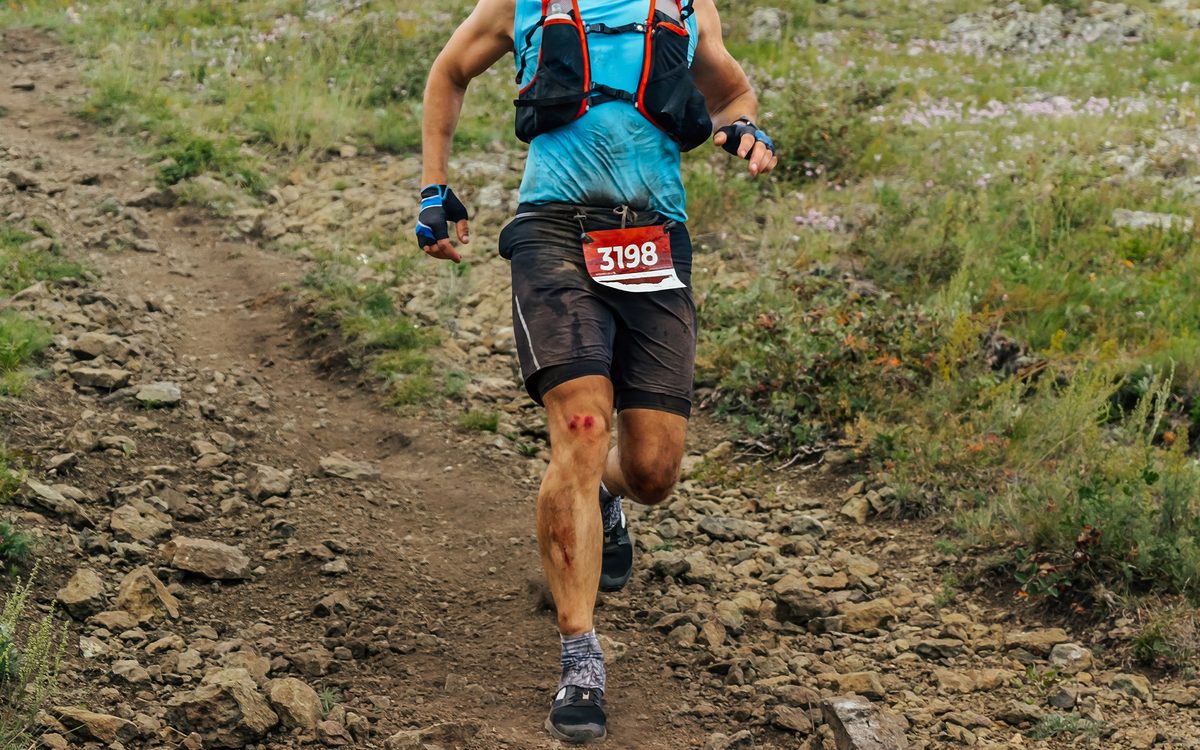
The trailhead is a gravel lot at 7 a.m., a folding table with bibs, a volunteer pointing at a map and saying the first aid station is at mile five. A first-timer is checking the course tape and wondering what happens on a steep hill when everyone around is walking. Trail running is running on mostly natural, off-road terrain, where the fastest time on a marked course wins, and learning its small rules, skills and customs is what makes the first race feel easy instead of intimidating. This page covers how races work, the basic skills, how a beginner starts, and where to find official rules and events.
Quick answer: In a trail race the fastest time over a marked course wins, and the course is laid out so runners need no navigation skills or mountaineering equipment (World Athletics). Walking steep climbs is normal, and organisers decide which gear is compulsory, so read each race’s rules and kit list. Start with a short, local race or a group run, build up gradually, and see a sports medicine doctor, physical therapist or athletic trainer if pain does not settle.
How a trail race works
World Athletics describes mountain and trail running as endurance racing over a set course where the fastest time wins, with men and women racing separately in shorter events and together in longer ones. Courses are mostly off-road on varied natural terrain, and they must be marked so athletes need no navigation skills or specialist gear such as mountaineering equipment (World Athletics). The page adds that paved sections should be kept to a minimum and must not exceed 25% of the course; the international trail association ITRA has described a stricter 20% figure, so rules differ by body and race. Check the event you enter.
Most races publish a course map, aid station locations, cut-off times (the time by which you must reach a point or be stopped), and a list of compulsory gear. World Athletics says organisers may recommend or require items such as minimum clothing, windjackets, headlamps, water and food depending on expected conditions, and that hiking poles are at the organiser’s discretion, especially in longer races. This is the main practical difference from road racing: the rules you must follow sit in each race’s own guide, not only in a global rulebook.
Race formats and distances
The World Athletics championship formats give a useful map of the sport. These are championship definitions; local races can be shorter, longer, hillier or flatter.
- Long Trail: 75 to 85 km with 3,500 to 6,000 m of climbing.
- Short Trail: 35 to 45 km with 2,000 to 3,000 m of climbing.
- Classic (up and down): 12 to 15 km with 600 to 900 m of climbing for seniors; 5 to 7 km with 300 to 450 m for juniors.
- Uphill: 4 to 7 km with 700 to 1,000 m of climbing and an average incline above 10%.
Beyond these sit longer ultras; our ultra running page covers them. Because the climbing changes the effort so much, trail runners talk about distance and vertical gain together, and many judge effort by feel or heart rate instead of minutes per mile (general coaching practice, not a rule).
Basic skills a beginner will use on day one
None of these are official requirements; they are common coaching practice that most clubs teach, labelled as such.
- Walk the steep parts. Power-hiking a steep climb is normal at every level. A review of graded running in Sports Medicine reports that uphill running needs more muscular work than level running, which is one reason runners walk when the grade gets steep (Vernillo et al., 2017).
- Shorten your stride on descents. The same review reports that downhill running has less frequent steps and more airtime than level running. Taking quick, light steps and looking a few strides ahead is the usual coaching advice for staying in control.
- Pick your line early. Roots, rocks and loose gravel are the main hazards. Looking at the ground a few metres ahead, not at your feet, gives time to react (general coaching practice).
- Use aid stations. Eat and drink at stations on longer races, check the cut-off times, and ask volunteers about the next section.
Trail etiquette and the outdoors
Trail running shares paths with hikers, riders and wildlife. The U.S. National Park Service’s summary of the seven Leave No Trace principles includes “be considerate of other visitors”, with advice to be courteous and yield to other users on the trail; Leave No Trace guidance commonly gives uphill travellers the right of way, but local rules and signs come first (NPS, Leave No Trace principles). In practice that means slowing down, saying hello before you pass, staying on the marked trail, carrying out your trash and giving wildlife space.
How a beginner starts
- Start where you are. If you can run or run-walk for 30 minutes on roads or paths, you can try an easy trail. Pace does not matter; effort does.
- Choose a short, local event or a group run. A 5 to 10 km trail race or a club or running-store group run teaches the customs with company and, at a race, marshals and aid. Many beginners find these through local running stores or club pages (general advice).
- Build gradually. The American Academy of Pediatrics suggests no more than a 10% weekly increase in running mileage; our running training page and the trail training page go further.
- Tell someone your route. Many trails have no phone signal. Carry water and a warm layer that suit the day.
Levels, rankings and where to find a race
Local and regional races are run by clubs and race companies, and national bodies sanction championships; in the United States the USATF Mountain, Ultra and Trail Council sanctions national trail championships (Trailrunner Magazine overview). At the top level, World Athletics lists the World Mountain and Trail Running Championships (held in even years) alongside annual series such as the World Trail Majors, Golden Trail Series and UTMB series, and points to the ITRA Performance Index and the WMRA World Ranking for rankings. ITRA describes its index as a 0 to 1000 scale that compares runners by speed (from ITRA’s performance page, read through search summaries). For event lists, start with the World Athletics calendar and results section, ITRA’s race listings, and your national federation, then read each race’s own rules. Youth pathways, such as school cross country, are on our running youth page and our leagues and associations page.
Trail running is not on the Olympic programme as far as we could confirm; check the official programme for the current Games. See our trail running hub for the discussion.
Where to read the official rules
- World Athletics: Mountain and Trail Running (formats, distances, course principles).
- ITRA: Discover trail running and its performance pages.
- The race’s own rule book and gear list, which govern the day you run.
- Our general running rules page for road, track and cross country.
Trail running rules FAQs
Do I have to carry gear in a trail race?
Often yes. World Athletics says organisers may recommend or require items such as minimum clothing, a windjacket, headlamp, water and food depending on conditions. The list is in each race’s guide, and checks can happen at the start.
Are poles allowed?
World Athletics leaves hiking poles to the organiser, especially in longer races. Read the race rules before you buy or pack them.
Is it okay to walk in a trail race?
Yes. Walking steep climbs is normal and often just as fast; the fastest time wins, and nobody is required to run every step.
How long is a beginner trail race?
Many beginners start with a 5 to 10 km event, though the distance is up to the organiser. Championship formats start at a few kilometres of uphill and go to 85 km.
Who has the right of way on a trail?
Leave No Trace guidance asks everyone to be courteous and yield, and commonly gives uphill users priority. Local signs and rules come first, so slow down and let people know you are there.
Sources
- World Athletics: Mountain and Trail Running
- ITRA: Discover trail running
- National Park Service: Leave No Trace seven principles
- Vernillo et al., Biomechanics and physiology of uphill and downhill running, Sports Med 2017
- Trailrunner Magazine: USATF Mountain Ultra Trail
- AAP HealthyChildren: Running (10% weekly increase)
General information for education only, not medical advice. It does not replace a visit with a doctor, physical therapist or athletic trainer. See how we write and check our pages in our editorial policy.