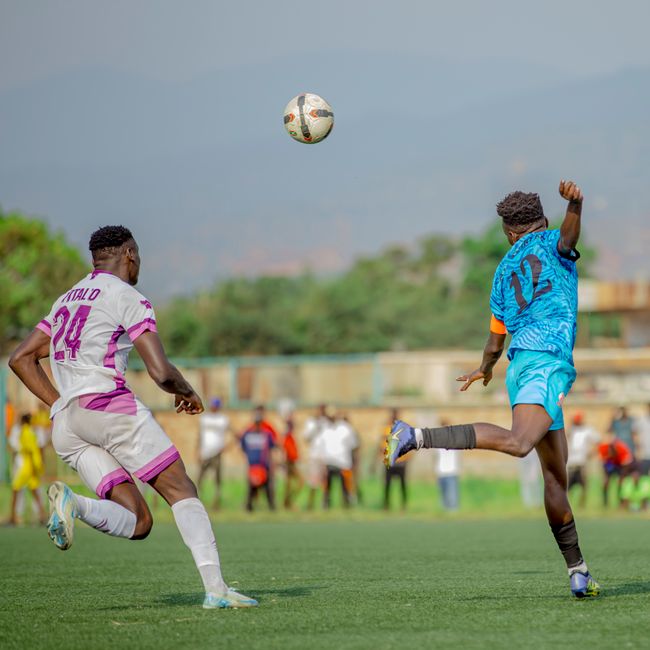
Penalty shootout, level after extra time. Fifteen players stand in the center circle watching one teammate walk 11 meters to a ball, and nobody on the field can do anything to help. Everyone who has played soccer knows some version of that walk, whether it is a rec-league final or a cup tie. Soccer mental training means practicing the thinking side of the game (reading the play, working with teammates, steadying yourself under pressure) the way you practice passing. This page is about mental performance. Mental health is a different subject, and it has its own section below.
Quick answer: Mental skills in soccer are habits you can practice: a steady routine before a set piece, scanning before you receive the ball, clear talk with teammates, and a short reset after a mistake. Studies on tools such as imagery, quiet-eye training and mindfulness are small and mixed, and none of them guarantees a better result. See a doctor, licensed psychologist or other qualified professional if worry, low mood, or problems with sleep or eating last more than a couple of weeks or get in the way of daily life, and call or text 988 in a crisis (US).
Confidence and focus: attention is part of the skill
Soccer has few stoppages, so focus has to move on its own: wide to read where space is opening, narrow to the ball at your feet, then wide again. A 2024 survey of 266 competitive players in China (Shi and colleagues, Frontiers in Psychology) found that players who scored higher on mindfulness also reported more confidence, less competitive anxiety and better attention control when thinking about penalty kicks. It was a one-time questionnaire, so it shows an association and cannot show that mindfulness caused the difference.
One practical habit is a reset cue for after a bad touch or a goal against: a breath, a glance at the badge, a word like “next.” It only works if you use it in training games first, so it is there when the match is tight. Confidence also grows from evidence, so a short note after each game of three things you did well gives you something real to stand on.
Decision-making: reading the game faster
Good decisions in soccer come from seeing early. In a 2026 study of 40 male players (Ivosevic and Stockel, Frontiers in Psychology), players with a wider peripheral visual field made faster pass or no-pass decisions on video scenarios, even after the researchers accounted for playing level. The link was mostly about speed, not accuracy. The finding comes from a small lab sample and does not tell you how to train your eyes.
What coaches commonly suggest, as practice rather than a studied recipe, is to build the scan into small-sided games: look over your shoulder before the ball arrives, and decide your first touch before you receive it. Small games with few players give many more decisions per minute than a long line drill.
Teamwork and communication
A 2026 comparison of 169 adult athletes (Cammarata and colleagues, Frontiers in Psychology) found rugby players reported a stronger sense of belonging, cohesion and closeness than soccer or basketball players. In all three sports, cohesion and closeness predicted how much each athlete felt they belonged. The study does not test whether better cohesion wins games, but it points to something coaches can work on: players who feel part of the group are in a better spot to talk, ask for the ball and give honest feedback.
- Keep calls short and agreed in advance (“man on,” “turn,” “time”), so a teammate can act on them in a split second.
- Give feedback on what to do next, not on who made the last mistake.
- Let every player, including subs and goalkeepers, take part in setting a team goal for the week.
Goals and motivation
A simple way to keep motivation steady is to split goals into three kinds: outcome (win the league), performance (complete more passes under pressure in training) and process (scan before every first touch, use my set-piece routine every time). Process goals are the ones you fully control on a day when the result goes against you. This three-way split is common coaching practice, not a finding from the studies cited here.
Penalty-kick pressure
Penalty kicks show pressure clearly because the task is fixed and the audience is large. The ESSA position statement on performance under pressure (Schweickle and colleagues, Sports Medicine, 2026) says pressure can help or hurt, and that pre-performance routines, attention strategies and practicing under pressure are among the approaches used. Here is what soccer-specific research adds:
- Rushing. Jordet (Journal of Sports Sciences, 2009) analyzed all 200 penalties taken by players from eight top European nations in World Cup and European Championship shootouts. Players from countries with higher public status spent less time preparing their shots and scored less often. That is an observational study of past shootouts, but it suggests that slowing down and taking your usual time is worth practicing.
- Looking. Wood and Wilson (Cognitive Processing, 2011) trained ten university players in “quiet eye” aiming for 7 weeks, then compared them with ten untrained players. The trained group was more accurate in a retention test, but under the pressure of a shootout they did not keep their advantage. The authors call the support partial.
- Imagining. In a 2026 study of 20 skilled youth players aged about 16 (Joseph-Jacques and colleagues, JSAMS Plus), players who imagined taking a successful penalty from an internal, first-person view or with kinesthetic feel before kicking scored more and were more accurate than with no imagery. The sample is small and the kicks were not in a real match, so treat it as a reason to try it in training, not as a promise.
A routine worth building in practice: pick a spot, decide your plan before you walk up, take a breath, and use the same steps every time. The takers who feel calm in a shootout are usually the ones who have rehearsed the walk, not just the kick.
Imagery and pre-match routines
Imagery means rehearsing a play in your mind with as many senses as you can: the sound of the crowd, the feel of the ball, the line of your run. A few minutes the night before or on the bus is a common approach. Keep it short and realistic, including how you will respond if something goes wrong. A pre-match routine can be as plain as the same warm-up order, a few deep breaths and one clear job for the first ten minutes. For meals, hydration and heat on the day, see soccer game day rather than this page.
Responding to mistakes and setbacks
Every player concedes, misses or gets substituted. Keep three steps handy: reset (your cue), refocus on the next task in front of you, and review later, after the match, when you can look at it calmly. Coaches can help by saying that mistakes made while trying the right thing are part of the game. Longer setbacks such as injury are covered on our soccer injuries page, and the physical side of coming back on recovery.
Mental performance versus mental health
Mental performance skills help you play. Mental health is about how you are doing as a person. Anxiety, depression, disordered eating, burnout and trouble sleeping are health matters, and a routine or an imagery script is not a treatment for them. The International Olympic Committee consensus statement on mental health in elite athletes (Reardon and colleagues, British Journal of Sports Medicine, 2026) says these problems are common among athletes, can affect performance and can be treated. A 2026 survey of Australian A-League players found sport-related psychological distress was common, reaching 43% in men and 66% in women (Mifsud and colleagues, BMJ Open Sport and Exercise Medicine).
If you or a teammate notice symptoms that last, grow worse or affect school, work, relationships, eating or sleep, talk to a doctor, licensed psychologist or other qualified professional, and tell a trusted adult or coach. In the US, the 988 Suicide & Crisis Lifeline is free, confidential and open 24/7 by call or text to 988. Outside the US, use your local emergency number or crisis line.
Youth players
The studies above involved adults or skilled teens, and we found no soccer mental-skills research strong enough to give age-by-age rules. For younger players, keep it simple and fun: one small goal per game, praise for effort and good decisions, and no pressure on a single kicker. Youth soccer is covered on our youth soccer page.
Soccer mental training: FAQs
Does visualization really help soccer players?
The evidence is promising but small. One 2026 study of 20 skilled youth players found more goals and better accuracy in practice penalties after imagery than without it. It is a supplement to real practice, not a replacement.
How do I stay calm taking a penalty kick?
There is no sure method. Research and the ESSA statement point to a consistent routine, taking your normal preparation time, a clear aiming plan and practicing under pressure. Jordet found that players who rushed their preparation in major shootouts scored less often.
How can I make better decisions on the ball?
Scan before the ball reaches you and decide your first touch early. A 2026 study linked wider peripheral vision with faster video-based passing decisions, but that was an association in 40 players. Small-sided games give you the most practice at deciding.
How do teammates build better communication?
Agree short calls in advance, give feedback about the next action and make sure every player feels part of the group. Cohesion and closeness predicted sense of belonging in a 2026 study of 169 athletes, though it did not measure match results.
Is feeling nervous before a match a sign something is wrong?
Nerves before a big match are common. If worry is constant, comes with low mood, sleep or eating problems, or does not ease, see a doctor or qualified mental health professional. That is a health question, not a performance tip.
Can mental training guarantee I will play better?
No. No technique guarantees results, and studies on these tools are often small or mixed. Treat them as habits to try and keep what works for you.
Sources
- Schweickle MJ et al. Performance Under Pressure in Sport: position statement, Exercise and Sports Science Australia. Sports Medicine, 2026. PMID 42271117
- Jordet G. Why do English players fail in soccer penalty shootouts? Journal of Sports Sciences, 2009. PMID 19058088
- Wood G, Wilson MR. Quiet-eye training for soccer penalty kicks. Cognitive Processing, 2011. PMID 21318734
- Joseph-Jacques V et al. Improving penalty shoot-out performance in skilled youth soccer players: an imagery modality-based approach. JSAMS Plus, 2026. PMID 42238611
- Shi L et al. Mindfulness, confidence, competitive state anxiety and attention control in soccer penalty shootouts. Frontiers in Psychology, 2024. PMID 39328817
- Ivosevic L, Stockel T. Peripheral vision as a key factor for decision-making in soccer. Frontiers in Psychology, 2026. PMID 42865354
- Cammarata IG et al. Sense of belonging, group cohesion and interpersonal closeness in rugby, soccer and basketball. Frontiers in Psychology, 2026. PMID 42839933
- Reardon CL et al. Mental health in elite athletes: IOC consensus statement (2026). British Journal of Sports Medicine. PMID 42580854
- Mifsud D et al. Mental health symptoms among men and women Australian professional football players. BMJ Open Sport & Exercise Medicine, 2026. PMID 41888960
- 988 Suicide & Crisis Lifeline
General information for education only, not medical advice. It does not replace a doctor, psychologist or other qualified professional. See how we work in our editorial policy. Back to the soccer hub.