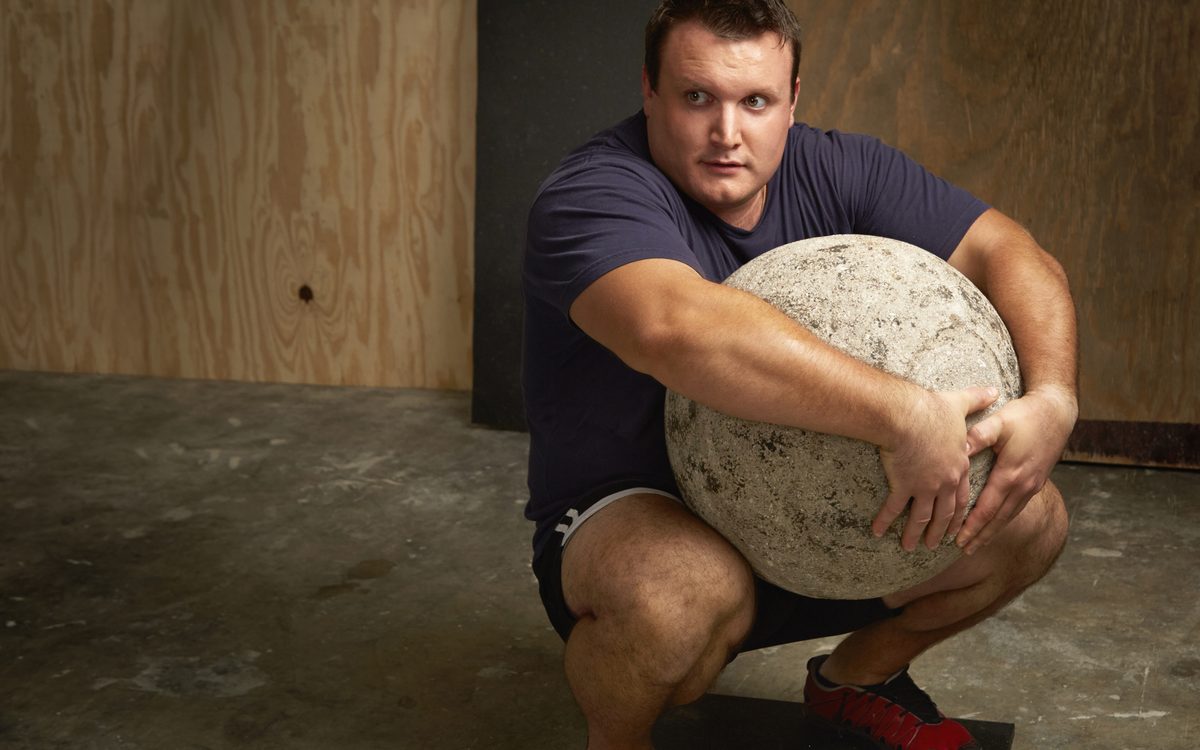
Breakfast on a contest morning in a motel room: oats, eggs, a banana, a bottle of electrolyte drink and a cooler packed with food for a day that may last eight hours. Strongman athletes are often the biggest people in a gym and the ones who eat the most, but size does not guarantee they are well fuelled. Strongman nutrition is the food, fluid and (for some) supplement choices that support heavy training, contest days and long-term health. This page is general information; it is not a diet plan, and a registered dietitian is the right person for one.
Quick answer: Eat enough to fuel training, keep protein spread across the day (the International Society of Sports Nutrition says 1.4 to 2.0 g per kg of body weight daily is enough for most exercising people), drink fluids for long outdoor days, and treat supplements as optional extras. Only a few supplements have good evidence (IOC 2018), and some products contain banned substances. See a registered dietitian or doctor before cutting weight or taking supplements, especially if you have a health condition.
General information, not medical advice. It does not replace a doctor or registered dietitian.
Food for training
The joint position statement of the Academy of Nutrition and Dietetics, Dietitians of Canada and the American College of Sports Medicine (2016) says performance and recovery are enhanced by well-chosen nutrition strategies, and that athletes should be referred to a registered dietitian for a personalised plan; a Certified Specialist in Sports Dietetics (CSSD) is a credentialed sports nutrition expert. We did not find a strongman-specific nutrition guideline, and no study of strongman diets turned up in our searches, so what follows is general sports nutrition.
- Protein: the ISSN position stand on protein and exercise (2017) says 1.4 to 2.0 g per kg of body weight per day is sufficient for most exercising individuals building or keeping muscle; a serving of 0.25 g per kg or 20 to 40 g of high-quality protein, spread roughly every 3 to 4 hours, is the general suggestion. Higher intakes were discussed for specific cases such as dieting; talk to a dietitian before going above the usual range, especially if you have a health condition.
- Carbohydrate and total energy: long contest days with several events and heavy training weeks need enough total energy. General sports nutrition guidance, not strongman data, applies here.
- Food first: the IOC supplement consensus says a complete nutritional assessment should come before decisions about supplements.
Contest day: food, fluid and heat
Many shows are held outdoors over a long day. A 2019 survey of 132 strongman athletes found that electrolyte drinks, caffeine and pre-workout supplements were the most commonly used supplements on competition day (Winwood and colleagues). The National Athletic Trainers’ Association (NATA) position statement on exertional heat illnesses is the standard reference for recognising and responding to heat illness; call emergency services for confusion, collapse or very high body temperature. General practice: bring familiar foods, eat and drink between events at the times you have practised, and keep fluids to what you have tolerated in training.
Weight classes and weight cutting
Classes in Strongman Corporation events are set by body weight in kilograms. According to its 2026 athlete rules, weigh-in can be up to 24 hours before the contest, scales read in kilograms with no rounding or clothing allowance, and you must be at or under your class limit. Some athletes try to cut weight to enter a lighter class. Rapid weight loss before a contest can mean less food and fluid on the day of heavy events; talk to a registered dietitian or doctor before attempting it, and consider moving up a class instead. Under-18 athletes should not cut weight without medical guidance, in our view. Heavier athletes can also under-eat; see the next section.
Low energy availability (RED-S)
Relative Energy Deficiency in Sport (REDs) describes health and performance problems from low energy availability, meaning too little food for the training done. The 2023 International Olympic Committee consensus statement stresses that it affects female and male athletes and that mental health and low carbohydrate availability are part of the picture. The consensus also introduces a clinical assessment tool for doctors, so diagnosis belongs with a clinician. Athletes in weight-class sports, those cutting weight and those who restrict food are the ones to watch. See a doctor or sports dietitian if you are worried about under-eating, unexplained fatigue, frequent injury or illness. We did not find strongman-specific REDs data.
Supplements: what the positions say
Our site rule is to describe supplements cautiously: describe what athletes use, not what a product will do, prefer third-party-tested products, and never go beyond the label dose without a clinician. In that spirit:
- IOC consensus (2018): supplement use is widespread at all levels of sport, but only a few supplements, including caffeine, creatine, buffering agents and nitrate, have good evidence of benefit. Responses vary between individuals. It advises trying any supplement in training before competition and getting expert help first, because some products may harm health or contain substances that lead to an anti-doping violation.
- Creatine: the ISSN position stand (2017) describes it as one of the most popular nutritional aids for high-intensity exercise and says short- and long-term use is safe and well tolerated in healthy individuals. Follow the label and ask a doctor if you have kidney or other health conditions.
- Caffeine: the ISSN position stand (2021) says caffeine acutely enhanced aspects of performance in many but not all studies, including movement velocity and muscular strength, and that very high intakes bring more side effects. It also notes that adverse effects on sleep or feelings of anxiety vary between people. It is not for everyone, for example people with heart conditions, and it can affect sleep before a long contest weekend.
- Pre-workouts and energy drinks: many contain caffeine and other stimulants; check the label, and avoid anything with substances you cannot identify.
Third-party testing and banned substances
The IOC consensus notes that inadvertent ingestion of prohibited substances is a known risk of some supplements. NSF Certified for Sport is a third-party program that tests products for athletes (see nsfsport.com), and the World Anti-Doping Agency publishes the Prohibited List. Whether a given strongman show tests for drugs varies; we could not confirm Strongman Corporation’s policy, so check each show’s rules. Nothing on this page encourages any substance; steroids and prohormones are banned in many sports and carry health risks, and the 2025 resistance-training injury review lists anabolic steroid use among factors linked to injury.
Frequently asked questions
How much protein does a strongman athlete need?
The ISSN says 1.4 to 2.0 g per kg of body weight per day is sufficient for most people who train, and some situations call for more. A registered dietitian can individualise this, especially with kidney or other health conditions.
Is creatine safe?
The ISSN 2017 position stand concluded that creatine supplementation is safe and well tolerated in healthy individuals. Check with a doctor if you have a health condition, and use a third-party-tested product.
Should I cut weight for a strongman contest?
Talk to a registered dietitian or doctor first. Rapid weight loss can leave you under-fuelled on a heavy day, and weigh-in can be up to 24 hours before the contest under Strongman Corporation rules.
What is third-party tested for sport?
It means an independent organisation, such as NSF Certified for Sport, tests products for banned substances. It reduces, but cannot remove, risk.
What should I eat at a contest?
Bring foods you have tolerated in training, plenty of fluids and something to eat between events. Details are individual, and a sports dietitian can help.
Sources
- Academy of Nutrition and Dietetics, Dietitians of Canada and ACSM, nutrition and athletic performance, 2016
- ISSN position stand, protein and exercise, 2017
- ISSN position stand, safety and efficacy of creatine supplementation, 2017
- ISSN position stand, caffeine and exercise performance, 2021
- IOC consensus statement, dietary supplements and the high-performance athlete, 2018
- IOC consensus statement on Relative Energy Deficiency in Sport (REDs), 2023
- Winwood et al., competition-day preparation strategies of strongman athletes, 2019
- NATA, exertional heat illnesses
- Strongman Corporation, athlete info (weigh-in)
- NSF Certified for Sport
- World Anti-Doping Agency, Prohibited List
- Kawa et al., most common injuries in resistance training, 2025
General information for education only, not medical advice. It does not replace a visit with a doctor, physical therapist or athletic trainer. See how we write and check our pages in our editorial policy.