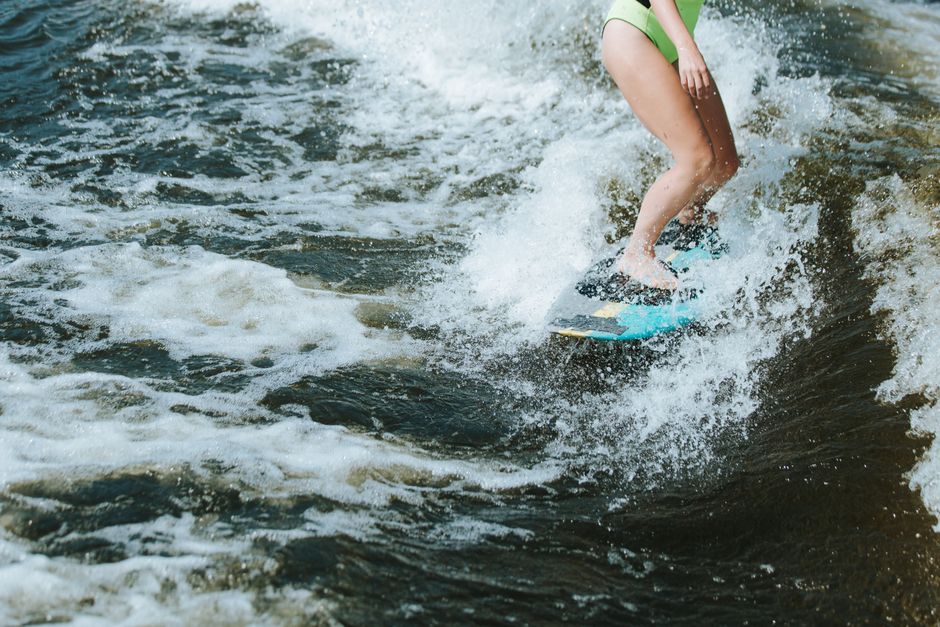
The rope is in your hands, the boat eases forward, and you stand up onto the wave. You drop the rope, drift toward the back, and feel the wave go soft under your feet. Your knees lock, your eyes drop to the board, and you are sure you are about to fall off the back. Or you are a rider at a contest dock with a minute-long pass ahead of you and a judge’s table in view. Wakesurf mental training means practicing the skills that help riders stay loose on the wave, learn new moves in small steps, talk clearly with the boat crew and reset after a fall. This page is for riders, parents and drivers, from first sessions to contest runs.
Quick answer: Mental skills for riders are habits you can practice: build balance confidence in small steps with a life jacket on, change one thing at a time when you learn a trick, agree speed, side and hand signals with your driver and spotter before you leave the dock, and treat a fall as part of the session. We found no published study of these skills in wakesurfers, and nothing here promises better rides or removes the real boating risks. If worry, low mood or trouble with eating or sleep lasts more than a couple of weeks, see a doctor or a licensed mental health professional; in the US, call or text 988 in a crisis.
Balance confidence and the fear of falling
Almost every rider falls off the back of the wave, and many feel nervous before they do. Nerves are normal, and they can make you stiff, which makes falling more likely. Confidence usually comes from doing the thing you fear in a setting that feels safe. Our wakesurf training guide covers land balance work and gentle starts. On the water, many coaches suggest staying close to the pocket, making short sets, and riding the easy side first. We found no study testing these approaches in wakesurfers, so treat them as common coaching practice, not proven treatment.
Fear of the rope is a separate and sensible worry. Discover Boating, the boating industry’s education site, warns never to wrap a slack line around your hand or arm, and a published case report describes a biceps rupture when a rope tangled around a rider’s arm while wake surfing. Dropping the rope cleanly and keeping it clear of your body is a skill worth rehearsing; details are on our injuries and safety page.
A learning progression that keeps nerves manageable
Wakesurf tricks are built from a small set of moves. The World Wake Association (WWA) rule book groups them into airs, turns, carves and technical tricks, ridden frontside and backside, regular and switch. We found no study of how riders learn these moves, so the steps below are coaching practice:
- Pick one move and one change. Try a slightly wider turn or a slightly longer stay at the back, not a new trick and a new side together.
- Practice on your comfortable side first, then work toward the other side and switch when the basics feel easy.
- Keep sets short. Fresh legs and a calm head learn better than a long, tired set. See the lake-day advice on set length on our lake day page.
- Write down one thing that worked after each set, so progress is something you can see.
Talking with the driver and the spotter
Once the rope is dropped, the rider and the boat are a few boat-lengths apart and engine noise covers voices, so agreeing signals on shore matters. Before you leave the dock, settle speed, which side of the wave you ride, and what a thumbs-up, thumbs-down and a cut-the-engine signal mean. The WWA rule book makes this the rider’s job at contests: the rider communicates speed and side to the driver, and there are no re-rides for miscommunication. In the World Series format, riders choose their side at registration and may adjust only the speed and the wave tab.
On the boat, the California Division of Boating and Waterways’ towing safety hints call for an observer at least 12 years old, and our lake day page explains the spotter’s job, why the person filming is not the spotter, and why the engine goes off for every swap. A simple habit is to rehearse the signals once, out loud, with a new crew, so no one is guessing while a rider is in the water. Rider, driver and spotter all have a say: any of them can end a set. That is practical advice, not a research result.
Calm after a fall
In the water, the first jobs are physical: stay with your board and show the boat you are okay. The BoatUS Foundation lists hands clasped over the head as the signal for okay, and our lake day page says the driver circles back slowly with the rider on the driver’s side. A short mental routine can sit on top of that: one slow breath, check your body, then decide whether to go again or rest. If you feel dizzy, have a headache or are confused after a fall, stop riding and get checked; see the concussion advice on the injuries page.
In World Series contest format, a rider may swim only to the board after a fall, and is allowed up to two falls per pass, per the WWA rule book. Practicing that calm swim-and-reset in training means a contest fall is a familiar moment. A fall is data about the ride, not a verdict on the rider. That reframe is common in sport psychology coaching, and we found no wakesurf study on it.
Focus, routines and imagery
Wakesurfing is one of the few board sports where you ride without a rope, so attention can wander. One approach is to choose a single cue, such as hips over the board or eyes up toward the boat, and bring your attention back to it when it drifts. Visualization (imagery) means picturing a ride before you do it. A 2023 systematic review and meta-analysis across sports (Reinebo and colleagues, Sports Medicine) looked at psychological interventions for athletic performance. We found no wakesurf-specific imagery study, so use imagery as one tool and see how it feels.
Contest pressure and setbacks
A WWA contest run is two passes of roughly 45 to 60 seconds, judged on difficulty, risk, intensity, variety and execution plus flow, and you choose your own tricks. A 2026 position statement from Exercise and Sports Science Australia on performance under pressure (Schweickle and colleagues, Sports Medicine) lists pre-performance routines among its strategies and says practice under some pressure can prepare athletes. For a rider, that might mean the same warm-up order each time, a run plan you have ridden at home, and a practice pass with friends watching. Contest logistics are on the lake day and contest day page, rules on the rules page and series on the leagues and associations page.
Bad days happen: a missed run, a sunburned afternoon, a trick that will not come. A three-step reset is to take a slow breath, name one thing to learn, and move to the next job. That is coaching practice. After hard weeks, protect sleep and easy days; see wakesurfing recovery.
Young riders
We found no wakesurf-specific research on mental skills in children or teens. Many young riders do best with patient, fun coaching and short sets at a comfortable speed with a close adult spotter; see youth wakesurfing. If a child shows lasting fear or distress, start with their pediatrician or a licensed mental health professional.
Mental performance is not the same as mental health
Everything above is about performance skills. Anxiety disorders, depression, disordered eating and burnout are health matters, not mindset problems, and a better routine will not fix them. The 2026 International Olympic Committee consensus statement on mental health in elite athletes (Reardon and colleagues, British Journal of Sports Medicine) treats them as matters for medical and psychological care. Signs worth taking seriously include worry or low mood that lasts, loss of interest in riding, changes in eating or sleep, or feeling you cannot stop pushing.
Start with your doctor, a licensed psychologist or another qualified mental health professional. In the US, you can call or text 988 (Suicide & Crisis Lifeline) at any time. For eating and weight concerns, a clinician should lead; everyday basics are on our wakesurfing nutrition page.
Frequently asked questions
How do I stop being afraid of falling off the back of the wave?
Build up in small steps: short sets, the comfortable side, a life jacket and a calm, attentive spotter. Confidence comes from having done it, not from willing the fear away. We found no study testing this in wakesurfers, so treat it as common coaching practice.
How should I learn a new wakesurf trick without getting frustrated?
Change one thing at a time, keep sets short while your legs are fresh, and note one thing that worked after each set. That is coaching practice; we found no study of how wakesurfers learn tricks.
What should I tell my boat driver before I ride?
Speed, which side of the wave you will ride, and your hand signals for faster, slower, okay and stop. The WWA rule book puts speed and side on the rider at contests, with no re-rides for miscommunication.
What should I do right after a fall?
Stay with your board, show you are okay with hands clasped over your head (a BoatUS Foundation signal) and let the driver circle back to you. Then take a slow breath and decide whether to go again or rest.
Does visualization help wakesurfing?
A 2023 meta-analysis across sports looked at psychological interventions for performance, but we found no wakesurf-specific study. Try picturing a ride before your set and see whether it helps you.
When is nervousness a health issue?
If worry, low mood or trouble with eating or sleep lasts more than a couple of weeks or interferes with daily life, talk to a doctor or licensed mental health professional. In the US you can call or text 988 in a crisis.
Sources
- World Wake Association, WWA Rule Book (contest format, judging, falls, rider communication with the driver)
- Reinebo G et al. Effects of psychological interventions to enhance athletic performance: a systematic review and meta-analysis. Sports Medicine, 2023. PMID 37812334
- Schweickle MJ et al. Performance under pressure in sport: a position statement from Exercise and Sports Science Australia. Sports Medicine, 2026. PMID 42271117
- Reardon CL et al. Mental health in elite athletes: International Olympic Committee consensus statement (2026). British Journal of Sports Medicine. PMID 42580854
- Biceps rupture case report, rope tangled around the arm while wake surfing. PMID 37654701
- Discover Boating, ten tips for safety in boating watersports
- California Division of Boating and Waterways, Safety Hints for Towing Sports
- BoatUS Foundation, hands clasped over head signal
- 988 Suicide & Crisis Lifeline
General information for education only, not medical advice. It does not replace a doctor, psychologist or other qualified professional, or a qualified wakesurf coach. See how we work in our editorial policy. Back to the wakesurfing hub.