This article contains affiliate links: if you buy through them we may earn a commission, at no extra cost to you. Read our affiliate disclosure.
Early on a glassy morning the boat idles at the dock, the driver checks the engine cut-off lanyard, the spotter settles in with a ski flag, and the first skier tightens her vest and bindings before the first pass. Nothing about that routine looks exciting, and that is the point. Water ski injury prevention means the habits, gear and training that make a bad fall, a bad landing or a bad moment with the boat less likely, and less severe when it happens. It applies to kids on combo skis, weekend crews, college teams, tournament, show and barefoot skiers.
Quick answer: The most serious water skiing risks involve the boat and the water: the US Coast Guard reports that 87% of boating drowning victims in 2024 were not wearing a life jacket. Wear a snug, approved vest made for towed sports, use a driver and a spotter who each do one job, keep the engine off near anyone in the water, never wrap the rope, and build leg, core and grip strength. Tournament rules make a helmet mandatory in the jump event. See a doctor for a suspected concussion, a knee that gave way, or back pain with leg numbness, and call 911 for any propeller injury or a skier who is unconscious or confused.
General information, not medical advice. This page is about lowering risk. For what each water skiing injury looks like and when to get it checked, see our water skiing injuries guide. Back to the water skiing hub.
Where the risk actually is
Three risks show up in the data. The water and the boat: the Coast Guard counted 169 propeller-strike incidents in 2024 (30 deaths, 158 injuries). The fall: sprains and strains, mostly in the legs, were the most common injuries in a US emergency department study, and college skiers named the ankle and foot, knee, and head and neck as the most injured areas. Overuse: 43% of those college skiers reported chronic trunk pain. Prevention has to cover all three.
Life jackets: the first thing, every time
The CDC says life jackets reduce the risk of drowning while boating for people of all ages and swimming abilities. What to check:
- Coast Guard approved and right for towed sports. Read the label: the Coast Guard notes some life jackets are not approved for water skiing.
- Foam, not inflatable, and not a belt. California’s boating agency says inflatable jackets are not approved for towed sports and ski belts are not Coast Guard approved. Check your own state’s rule, because state law applies on the lake.
- Tournament skiers: USA Water Ski & Wake Sports rules require a Coast Guard approved Type III vest in slalom and jump, or, at the skier’s own risk, a maker’s competition vest or suit designed to float the skier.
- Snug. The Coast Guard guidance for children is to match the vest to weight and fit it snugly. Our youth page has the child sizing steps and the lift test.
Helmets and head protection
USA Water Ski & Wake Sports tournament rules say protective headgear is mandatory in the jump event. Outside the jump it is a personal choice: a review of 898 cases (2012 to 2022) found the head (20%) and face (10%) among the most common injured areas, and its authors called for more protective equipment, especially headgear. No study we found shows how much a helmet helps in water skiing, so it is not a guarantee. Choose one made for water sports, and remember a standard such as CE EN 1385 is different from a maker’s own “impact tested” wording.
Concussion: the CDC HEADS UP program says anyone who may have a concussion should stop activity (“When in doubt, sit them out”) until a health care provider clears them. A skier who hits the water or a ski and then looks dazed or confused is done for the day.
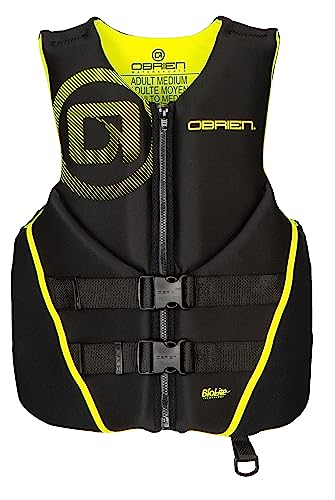
O'Brien Men's Traditional Neoprene Life Jacket
- US Coast Guard and Transport Canada approved (maker)
- Zip front, two adjustable belts
- Check the label and your fit
$64.99 at Amazon, as of Nov 17, 2026 01:07 UTC
Check price on Amazon
Pro-Tec Ace Water Helmet
- Designed to meet the CE EN 1385 water sports standard (maker)
- Vents and removable ear guards
- Jump skiers: headgear is required by tournament rules
$54.99 at Amazon, as of Nov 17, 2026 01:07 UTC
Check price on AmazonBoat, driver and spotter
The boat crew decides how a bad moment ends.
- Engine off near people in the water. The Coast Guard says to shut off the engine when approaching swimmers and skiers, keep them on the driver’s side and in view. California notes a propeller may still turn in neutral and says never to back the boat up to a skier. Tournament rules forbid picking up a ski, skier or rope with the ignition on.
- Cut-off lanyard. On boats under 26 feet, federal law requires the driver to use the engine cut-off switch lanyard while on plane.
- A spotter whose only job is the skier. Some states require an observer; California, for example, requires one at least 12 years old.
- After a fall, be seen. Signal that you are OK and hold a ski up so other boats see you. Hand signals and flag rules are on our rules and safety page.
- Sober crew. Alcohol was the leading known factor in fatal boating incidents in the Coast Guard’s 2024 report, and tournament rules bar anyone under the influence from taking part.
- Carbon monoxide. The Coast Guard warns that this invisible gas can build up around the stern and swim platform, even at idle. No one on the swim platform with the engine running, and treat “seasick” symptoms as possible CO: fresh air and medical help.
Rope handling
A published case report describes a tow rope tightening around a wrist. Never wrap the rope around a hand, wrist or arm, and keep a slack rope away from your legs in the water. Let go of the handle when a fall starts; hanging on is how an arm gets pulled overhead, and shoulders can dislocate that way. California’s boating agency advises checking the towline, handle and hooks every season. In the deep-water start, bend the knees, keep the arms straight and let the boat pull you up, because a study of takeoff forces found the arms take roughly one and a half times body weight at that moment.
Warm-up
Soccer has a published, tested warm-up (FIFA 11+). We did not find a named, tested warm-up program for water skiing, so what follows is common practice, not a proven protocol. Five to ten minutes on the dock helps: leg swings, lunges, squats, hip hinges, arm circles and trunk rotations. Make the first pass easy. Our training page has the full dock routine.
Technique, falls and the knees, shoulders and back
Twisting (33%) and sudden stops (27%) were the most common causes of injury among the college skiers surveyed, and advanced skiers were hurt more by losing control. Habits that follow:
- Knees and ankles. Your feet are locked in bindings, so a ski that stops can twist the knee. Check bindings before every session, and stop when a binding is torn or loose. The National Athletic Trainers’ Association says the most consistent risk factor for an ankle sprain is a previous sprain, and recommends at least three months of balance training after one. A large review found ACL programs combining strength, landing and balance training cut injuries by about half in team sports; skiers can borrow the ingredients.
- Hamstrings. The American Academy of Orthopaedic Surgeons names water skiing among the sports where hamstring injuries are common. Warm up before deep-water starts, and train the back of the thigh.
- Shoulders. Let go early in a fall, and keep the handle low and close with long arms rather than muscling it.
- Back. A core strength program was the recommendation of researchers who found chronic trunk pain in 43% of college skiers.
- Tired legs. Stop the set when your legs and forearms are done. A late turn on tired legs is when skiers lose control.
Progression: speed, rope, jump and tricks
USA Water Ski & Wake Sports describes the standard slalom ladder: speed goes up to the division maximum first, then the rope is shortened. Tournament rules let a skier start anywhere in the line-length matrix. Our rule of thumb, common coaching practice rather than a study: change one thing at a time, and go back a step when you are falling more than running buoys.
Jump. Jumpers hit the ramp at speed and land far down the course. A British review found high-speed impacts caused most slalom and jump trauma, with a surprisingly high rate of lumbar spine injury in the jump event, and suggested overuse may damage the spine, especially before the skeleton is mature. Ramp height is 5 feet as standard, 5.5 for elite women and 6 for elite men. Build jump speed and distance slowly with a coach, wear the required headgear and a proper vest, and get persistent back pain checked.
Tricks. Toehold tricks and wake flips are defined in the tournament rulebook. We found no published trick-progression guide, so learn new tricks with a coach, on calm water, with the boat crew briefed on what you are about to try.
Water, cold and sun
The Coast Guard describes cold shock in the first minute in cold water and loss of muscle control within about 10 minutes, so dress for the water, not the air. The CDC suggests holding your nose or using a nose clip in warm freshwater, because falls force water up the nose and rare Naegleria fowleri infections are linked to it. Sun and heat tips are on our Tournament Day page.
Young skiers
The tournament review above warns about spine overuse before the skeleton is mature, which matters for young jumpers. The American Academy of Pediatrics recommends one to two days off a week from organized sport. Child vest sizing, swim skills and observer rules are on our youth page.
What prevention can’t do
None of this guarantees you will not get hurt. A life jacket cannot stop a propeller, and strong legs cannot undo a tip that catches at full speed. Prevention lowers the odds and the severity; it does not remove them.
When to see a professional
- Call 911: an unconscious or confused skier, concussion danger signs, a propeller injury or heavy bleeding, trouble breathing after being under water, a suspected neck or back injury, or possible CO poisoning.
- See a doctor soon: a knee that popped, gave way or swelled; a hamstring pop with bruising and weakness; an ankle you cannot walk on; a shoulder that slipped out; back pain with leg numbness; any suspected concussion.
- See a physical therapist or athletic trainer: pain that keeps coming back, a joint that feels unstable, or a plan for coming back after an injury.
Water ski injury prevention: FAQs
What is the most important water skiing safety rule?
Wear a snug, Coast Guard approved foam vest made for towed sports. The Coast Guard found 87% of boating drowning victims in 2024 were not wearing a life jacket. After that, keep the engine off near anyone in the water and use a spotter.
Do I need a spotter if the driver is experienced?
Yes. The driver watches the water ahead, so someone else must watch the skier. Some states require one; check yours.
Should I wear a helmet for slalom skiing?
It is not required in slalom, and no study shows how much a helmet helps in water skiing. Head and face were among the most common injured areas in a recent national review whose authors recommended headgear, so many skiers wear one. In the jump event it is mandatory under tournament rules.
How do I keep from hurting my back when jumping?
Build jump speed and distance slowly with a coach, warm up, and do the core strength work researchers recommended. See a doctor for back pain with leg numbness or pain that does not settle.
Is it safe to hold on to the rope when I fall?
Let go. Hanging on can pull an arm overhead and dislocate a shoulder, and a rope wrapped around a wrist or hand can tighten. Never wrap the rope around any part of your body.
Sources
- US Coast Guard, 2024 Recreational Boating Statistics
- US Coast Guard, Boater’s Guide to Federal Requirements
- US Coast Guard, carbon monoxide: protect yourself
- California Division of Boating and Waterways, Safety Hints for Towing Sports
- Florida Statutes 327.37
- USA Water Ski & Wake Sports, AWSA
- AWSA Official Tournament Rules, 2025 (revised 5-21-25)
- CDC, drowning prevention
- CDC HEADS UP, concussion signs and symptoms
- CDC, Naegleria fowleri prevention
- American Academy of Dermatology, how to apply sunscreen
- Hostetler et al., water skiing and wakeboarding injuries, Am J Sports Med, 2005
- Muir et al., injuries related to waterskiing 2012 to 2022, Cureus, 2024
- Jung et al., water ski injuries and chronic pain in collegiate athletes, 2021
- Roberts and Roberts, tournament water skiing trauma, Br J Sports Med, 1996
- Takeoff forces in water skiers, Orthopedics, 2003
- Wrist strangulation by a tow rope, Cases Journal, 2009
- AAOS OrthoInfo, hamstring muscle injuries
- Webster and Hewett, ACL injury prevention programs, 2018
- NATA position statement, ankle sprains, 2013
- AAP clinical report, sport specialization, Brenner 2016
General information for education only, not medical advice. It does not replace a visit with a doctor, physical therapist or athletic trainer. See how we write and check our pages in our editorial policy.