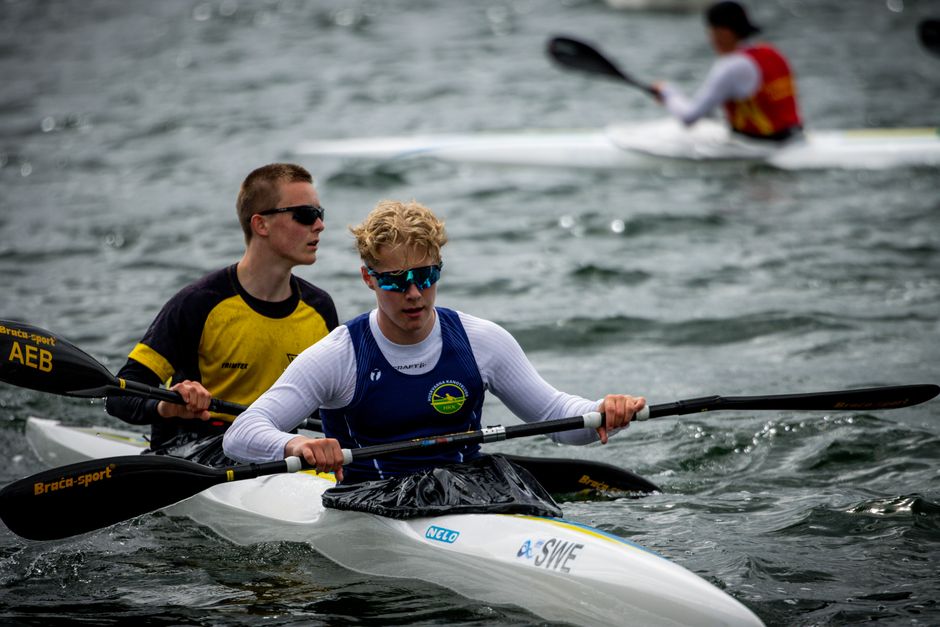
You are floating in an eddy above a rapid you have paddled before, but the river is a little higher today. Your hands feel cold, a friend says “looks fine,” and a small voice in your head says otherwise. Or you are in the pool in January, hanging upside down, and your hand will not quite go back to the paddle. Or you are in lane 5 at a regatta, seconds from the start. Kayaking mental training means practicing the skills between your ears (calm decisions, a steady roll, focus over a long day, a race routine) the way you practice your forward stroke. This page is for touring and sea kayakers, whitewater paddlers and racers. It is about mental performance and judgment, which is different from mental health; a section below explains the difference.
Quick answer: Paddlers can train calm and judgment: practice capsizes and rescues in safe water until they are routine, agree turn-around and portage rules before you launch, use a short routine before a race start, and reset after a mistake. Research on these tools in paddlers is thin, and none of them guarantees a better result or a safer trip. Get proper instruction for new water, and see a doctor, licensed psychologist or other qualified professional if worry, low mood or trouble eating or sleeping lasts more than a couple of weeks or gets in the way of daily life. In a crisis in the US, call or text 988.
Fear of capsizing: a normal reaction, not a flaw
Being upside down in a boat is frightening for most people at first, and some fear is a sensible response to cold, moving water. We found no published trial on reducing capsize fear in paddlers, so this is common instruction practice. Many instructors build comfort in small steps: practice the wet exit in calm shallow water with a partner beside you, then repeat until it is boring. Our kayak training page covers wet exits, braces, rolls and re-entry as skills to practice with a qualified instructor.
Water temperature matters here. The National Weather Service describes the first effects of cold water immersion as panic and shock, with involuntary gasping that can lead to drowning,. So practice in warm water or a pool first, and dress for the water you will be in. If fear stops you from doing things you want to do, a licensed mental health professional can help.
Calm rescue decisions on the water
The American Whitewater Safety Code (2024) is blunt about judgment. It says to attempt only rivers where you are sure you can self-rescue, to stay in enough control to stop or reach shore well before danger, and to remember that each paddler is responsible for the decision to start, to scout, to portage, to keep going downstream and to speak up. It also warns about thinking errors (the “human factor”), such as ignoring rising water or a partner’s discomfort to stick to the plan, and says group discussion is the best way to catch them.
You can turn that into habits that work even when your heart is racing:
- Decide before you launch. Agree as a group on who leads and who sweeps, where you will scout or portage, and what water level or weather means “we turn around.”
- Make “no” easy. The Safety Code asks groups to foster an environment where everyone feels comfortable voicing concerns and unease.
- Re-check as things change. Flows, wind, cold and tiredness all move during the day. See paddle day and race day for trip planning, float plans and weather.
- If you swim, follow your training. The Safety Code says to actively attempt self-rescue by swimming to safety when possible, with a defensive swim (on your back, feet up and pointed downstream) in shallow or obstructed rapids, and an aggressive swim toward shore when the water is slow or deep. It also says not to try to stand in fast-moving water.
Stopping to breathe, look and decide before acting is common coaching practice; we did not find a study that tests it in paddlers. A 2020 review in Wilderness & Environmental Medicine found that most recreational whitewater deaths come from fixed underwater entrapment or “flush drowning”, with entrapment common in both regions studied, mostly at fallen trees or rock formations. When you cannot judge a hazard, the safer line, a portage or the shore is the better call.
Rolling confidence
A roll is a motor skill, and it is easier to learn when you are relaxed. We found no study of how paddlers build or lose roll confidence, so this is general instruction practice: learn in a pool or warm shallow water with an instructor, practice the setup and the hip snap in parts, and then practice again when tired, in wind and in cold gear, so the roll still works on the day you need it. Keep a plan B, a wet exit or an assisted rescue, so a missed roll does not become panic. The Coast Guard asks paddlers whether they can climb back in with all their gear on, and whether they have practiced.
One note on imagery. A 2002 study of 19 elite and 12 intermediate canoe-slalom paddlers (MacIntyre and Moran) found that scores on a mental rotation test, a measure of controlling mental images, were modestly related to race rank among the elite group but did not separate elite from intermediate paddlers. It is small and does not show that picturing a roll improves it; treat imagery as an add-on to real practice.
Focus on a long trip or a long race
A day trip, a multi-day tour or a marathon race all ask for sustained attention, and tired paddlers make poorer choices. Steps many guides use: eat and drink on a schedule (see paddle day and race day), break the day into legs, and check in with the group at each break about wind, water and energy. These are guiding practices, not tested interventions.
One study of national-level paddlers (Davranche and colleagues, 2009) had twelve of them do a decision task on a kayak ergometer. Moderate paddling (75% of maximum heart rate) sped up reaction time but impaired the suppression of automatic responses, compared with very light paddling. That was a lab task, not a river decision, but it is a reason to pause before a big call when you are working hard.
Race routines, pacing and pressure
For sprint, slalom and marathon racers, a routine is a repeatable sequence that takes you from the warm-up to the start. A simple version many coaches teach: finish your warm-up, pick one cue for the first strokes, take one breath, and go. Practice it in every training race. Race-day logistics are in paddle day and race day, and the rules are in the kayaking rules guide.
Pacing is partly a mental skill. A 2025 study in PLoS One by Estreich and colleagues analysed pacing in 500 m and 1,000 m sprint kayak races, finding a velocity dropoff and a late kick as the main features, a trend toward a bigger dropoff in development-pathway athletes, and pacing profiles that change as an athlete matures. It describes pacing; it does not tell an individual what to do. Rehearsing a plan (start, settle, finish) is common coaching practice.
Pressure can help or hurt. A 2026 position statement from Exercise and Sports Science Australia on performance under pressure (Schweickle and colleagues, Sports Medicine) lists pre-performance routines, psychological skills training and mindfulness-based approaches among strategies for pressure. A 2023 review and meta-analysis of psychological interventions across sports (Reinebo and colleagues, Sports Medicine) found moderate effects for imagery, multimodal psychological skills training and mindfulness-based approaches, but the effects were no longer significant when weaker studies were removed. These tools are worth trying, not guaranteed.
After a mistake or a bad run
Every paddler misses a gate, blows a start or swims a rapid. In a race the next stroke is already due; on a trip the next decision is. Many coaches teach a three-step reset: let it be done (one slow breath), take one lesson (“I turned late”), and go to the next job. After a swim, do a quick group check (everyone okay, gear all here, still happy to continue?) and save the long review for later. If a mistake also hurt you, or you hit your head, get it checked: see the kayaking injuries guide.
Young paddlers
Kids and teens do best with a fun, supportive start: pool sessions, games and small wins. Let a child set the pace, praise effort over results, and use a qualified instructor. See the youth kayaking guide.
Mental performance is not the same as mental health
Everything above is about performance skills and judgment. Anxiety disorders, depression, disordered eating and burnout are health matters, not mindset problems, and a better routine does not fix them. The 2026 International Olympic Committee consensus statement on mental health in elite athletes (Reardon and colleagues, British Journal of Sports Medicine) says mental health symptoms and disorders are common among elite athletes and can affect performance, and recommends screening and monitoring with validated tools. A 2024 survey in Scientific Reports of Spanish elite female paddlers found that about a third had a moderate or high risk of anxiety, with higher risk among the less experienced, and that the less experienced were also at greater risk of eating disorders. It is one country and a risk measure, not a diagnosis.
Signs worth taking seriously include worry or low mood lasting weeks, panic before getting in the boat, big changes in eating or sleep, or dreading a sport you used to love. Start with your doctor, a licensed psychologist or another qualified mental health professional. In the US, you can call or text 988 (Suicide & Crisis Lifeline) at any time. If food and weight are involved, a clinician should lead care; our nutrition and supplements guide is background only.
Kayaking mental training: FAQs
How do I get over my fear of capsizing?
Gradually and with an instructor: wet exits in warm, shallow water or a pool, then braces and rolls, repeated until routine. No published trial tells us the best method, so this is common instruction practice.
How do I decide whether to run or portage a rapid?
Decide as a group before you launch, using your honest skills, the water level and the cold. The American Whitewater Safety Code leaves scout, run or portage to each paddler’s best judgment.
Does visualizing a roll help?
Many paddlers do it before practice, but we found no study showing it improves rolling. A 2023 review across sports found moderate effects for imagery that were not stable once weaker studies were removed. Use it as an add-on to real practice in safe water.
When is it a mental health problem and not a mindset problem?
When anxiety, low mood, panic, disordered eating or burnout lasts weeks or gets in the way of daily life. See a doctor or licensed mental health professional, and in the US call or text 988 in a crisis.
Sources
- American Whitewater Safety Code, 2024 (self-rescue, human factor, group decisions, swimming): americanwhitewater.org
- National Weather Service, Hazards of Cold Water Activities: weather.gov
- Farstad and Luttrell, 2020, Wilderness & Environmental Medicine, flush drowning as a cause of whitewater deaths: PubMed 32057630
- Davranche and colleagues, 2009, Journal of Sport and Exercise Psychology, decision making in elite white-water athletes paddling on a kayak ergometer: PubMed 19842546
- MacIntyre and Moran, 2002, Perceptual and Motor Skills, controllability of imagery and canoe-slalom performance: PubMed 12186246
- Estreich and colleagues, 2025, PLoS One, pacing profiles in sprint kayak racing: PubMed 40601604
- Anxiety, eating disorders and menstrual disturbances risk in Spanish elite female paddlers, 2024, Scientific Reports: PubMed 38956353
- Reinebo and colleagues, 2023, Sports Medicine, psychological interventions meta-analysis: PubMed 37812334
- Schweickle and colleagues, 2026, Sports Medicine, ESSA position statement on performance under pressure: PubMed 42271117
- Reardon and colleagues, 2026, British Journal of Sports Medicine, IOC consensus statement on mental health in elite athletes: PubMed 42580854
- US Coast Guard, Boater’s Guide (practice re-entry with gear on): uscgboating.org
- 988 Suicide & Crisis Lifeline: 988lifeline.org
General information for education only, not medical advice. It does not replace a doctor, psychologist, qualified instructor or other qualified professional, and kayaking has real risks. See how we work in our editorial policy. Back to the kayaking hub.