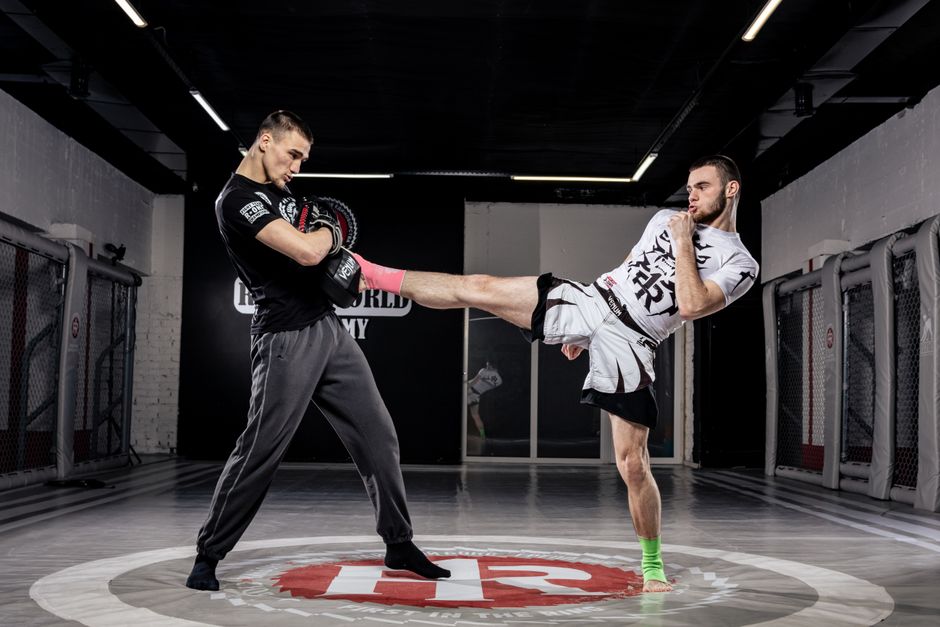
Your name is called for the belt test. The room goes quiet, your hands feel cold, and the combination you could do in your sleep last Tuesday has suddenly left your head. Or you are bowing onto the mat at a tournament, and the opponent across from you looks about a foot taller. Every student who has stayed in martial arts for long has had a moment like this. Mental training for martial artists means practicing focus, routines, self-talk, imagery and goal setting so that you can bring what you know into the room on the day. It supports good training; it cannot promise a belt or a medal.
Quick answer: Habits that coaches and researchers point to include a short repeatable routine before a test or match, one or two simple focus cues, process goals you control, practicing under mild pressure in sparring, and a plan for resetting after a mistake. None of them guarantees a result. See a doctor or a licensed mental health professional, not only your instructor, if worry, low mood, disordered eating or exhaustion are affecting daily life.
General information for students and competitors in karate, taekwondo, judo, BJJ and similar arts. Back to the martial arts hub. The physical side is on our training page, and weigh-ins, warm-up staging and logistics are on the tournament day page, so this page stays with the thinking side.
Focus and discipline start in ordinary classes
Discipline in the dojo or academy is mostly small things: arriving on time, bowing in, listening to the instructor, repeating a technique when it feels boring. Researchers have studied whether those habits carry over. A 2026 quasi-experimental study of 120 adolescents aged 13 to 16 in China compared a 12-week school martial arts program (three 60-minute sessions a week) with regular physical education and a control group. The martial arts group improved more on measures including inhibitory control, working memory, resilience and self-regulation, and reported larger drops in perceived stress (Frontiers in Psychology). It was not a randomized trial, so it shows an association in one school program, not a guarantee for any student.
A practical way to use this idea: pick one focus cue per drill, such as hips, distance or grip, and hold it for the whole round rather than switching cues every few seconds. This is common instructor practice, not a cited study.
A large study of combat athletes: skills, toughness and performance
In a 2026 survey of 470 university combat sport athletes in Turkey, those who rated themselves higher on mental performance skills also rated their mental toughness and their athletic performance higher, with mental toughness partly explaining the link (Duyan and colleagues, Frontiers in Psychology). A survey of 489 combat athletes tied intrinsic motivation (training because you value it) to wellbeing through mental toughness. Both are surveys, so they show associations only, and the performance scores were self-rated. A fair reading is that practicing mental skills and training for your own reasons go together with feeling stronger, not that one causes the other.
Belt-test and tournament nerves
Nerves before a test or a bracket are normal. In a 2026 study of 222 young Chinese judo athletes, researchers measured pre-competition anxiety and perceived social support and found two groups. About 64% reported more support alongside some vigilance, and they showed lower depression scores and higher mental toughness than the group with less support (Frontiers in Public Health). It was a single snapshot, but it fits what many instructors see: students who feel backed by teammates and family carry nerves more comfortably.
The Exercise and Sports Science Australia position statement on performance under pressure (Schweickle and colleagues, Sports Medicine 2026) says pressure can help or hurt performance, and lists four evidence-based strategy groups: pre-performance routines, implicit attentional strategies, psychological skills training and mindfulness-based approaches. For a belt test or tournament, a routine might look like this:
- Before you bow on: one slow breath with a longer exhale, and one intention such as “clean stance, loud kiai” or “establish grips early”.
- In the first moments: walk through your first technique or first exchange in your head. Plan only the start; the rest follows.
- After a slip: a single reset word, look up, back to the next move. A broken kata step or a lost grip does not end the test.
- Between matches or after a form: let it go. The review comes later, with your instructor.
These steps are common coaching practice rather than results from a martial arts trial. Practice the routine in class and in mock tests, not for the first time on the day. For warm-up staging and what to do while a bracket runs late, see our tournament day page.
Fear and confidence in sparring
Sparring and rolling bring a different kind of fear: of being hit, of being thrown, of being caught in a choke, of looking foolish. That fear is common and usually a sign that you are paying attention, not that you are not cut out for it. Confidence tends to grow when you can see evidence for it, so many instructors suggest building up in steps:
- Start with controlled, light, technical rounds with a partner you trust, and agree on the pace out loud.
- Add resistance gradually, one variable at a time: a bit more speed, then a bit more power, then a full-effort round.
- Learn to tap early and tap often in grappling, and to call stop in striking. Knowing you can stop things makes it easier to engage.
A 2025 study of 110 competitive karate, taekwondo and judo athletes (Di Corrado and colleagues, Frontiers in Psychology) found that self-efficacy, meaning belief in your ability to do what is needed, helped explain the link between mental imagery and stress. Again, a survey, not a trial. Imagery in this context can be as simple as rehearsing a technique or an exchange in your mind, picturing the feel of the movement and not only the sight of it. Stop if it makes you more tense. See our rules page for what your style allows, and our injuries page for the physical risks that make careful sparring worthwhile.
Goals you can control
“Win the division” depends on the bracket, the referees and luck. “Run my routine every match” or “attack first in every round” depends on you. Many coaches suggest a ladder of process goals (what you do), performance goals (how you want to do it) and outcome goals (the result), held in that order of importance. For belt progress, the same idea applies: a belt is a result of consistent attendance and learning, so set goals about showing up and practicing the curriculum, and let the promotion follow.
Resilience: losses, failed tests and plateaus
Every martial artist loses, drops a form, or sits on a belt color for what feels like forever. Resilience is partly how you respond. A reasonable after-loss routine, from common coaching practice: give yourself a short, specific review with your instructor (one thing that went well, one thing to fix), then change the practice plan and move on. Avoid replaying the match all evening. In a 2026 survey of 379 athletes in Olympic combat sports, athletes who reported more sport mindfulness also reported more self-compassion, and higher self-compassion went with lower burnout (Frontiers in Psychology). It is an association in a survey, but it points in a kind direction: be as fair to yourself as you would be to a training partner who lost.
Children, kids’ classes and parents
Kids’ classes are often where families first meet martial arts, and parents hope for focus, confidence and self-control. The research is more cautious than the marketing. A 2026 systematic review of 11 longitudinal studies of martial arts and aggression in children and adolescents found no consistent direction of effect, with results depending on the art, the program and the teaching approach (Frontiers in Public Health). A 2026 scoping review of 13 karate studies in children and adolescents mapped outcomes including resilience, stress, behavior and executive function, but said conclusions about effectiveness cannot yet be drawn (Frontiers in Sports and Active Living). In practice, the instructor and the culture of the class appear to matter. Look for a school that praises effort, keeps competition optional at young ages, and welcomes parents watching. Our youth page covers ages, belts, safety and how to choose a school.
For tournaments, keep goals playful, keep the car ride home about the fun parts, and do not tie your love to a medal. We could not find a martial arts study that tests a specific mental training program for young competitors, so the advice here is general.
Mental performance is not mental health
Routines, imagery and self-talk are performance skills. Anxiety that will not settle, low mood, loss of interest, disordered eating, constant exhaustion or burnout are health matters, not failures of discipline. The International Olympic Committee consensus statement on mental health in elite athletes (Reardon and colleagues, 2026) treats them as health concerns that can be sport-related and can affect performance, and that need proper assessment and care. Rapid weight cutting is a particular concern in weight-class arts; see the nutrition page and the tournament day page. If these things are affecting your sleep, school, work or relationships, talk to a doctor or a licensed mental health professional. In the United States, you can call or text 988, the 988 Suicide and Crisis Lifeline, at any time if you or someone you know is in distress. The Association for Applied Sport Psychology lists resources on finding a sport psychology professional. Outside the US, contact your national emergency or crisis service. Physical rest is covered on our recovery page.
Preparing for a tournament, mentally
Mental preparation is mostly about removing surprises: know the format and divisions (see leagues and associations), know your order, rehearse your routine in the same uniform, and decide ahead of time what you will do if you fall behind early.
Martial arts mental training: FAQs
How do I stop freezing at a belt test?
Practice the test in front of people before the day, run a short breathing and first-move routine, and plan only your opening. If freezing happens often or leaves you dreading class, talk to your instructor, and to a doctor or licensed professional if the worry is affecting daily life.
Is it normal to be afraid of sparring?
Yes. Many students feel it, especially early on. Controlled rounds, agreed pace and the ability to tap or stop are common ways instructors build comfort. Fear that is intense or does not ease is worth discussing with your instructor and, if it affects daily life, a professional.
Does visualization work for martial arts?
Many martial artists use it. A 2025 survey of competitive karate, taekwondo and judo athletes linked imagery, self-efficacy and stress, but it did not measure how much imagery improves results, so treat it as one tool among several.
Do martial arts make kids more disciplined?
Evidence is mixed. A 2026 systematic review found no consistent effect on aggression, and a karate scoping review said effectiveness conclusions cannot yet be drawn. The teaching approach and the class culture seem to matter.
When is nervousness a health problem?
Pre-test and pre-match nerves are common. If worry, low mood or avoidance are frequent, last more than a short time or interfere with daily life, speak to a doctor or licensed mental health professional. In the US, 988 is available by call or text.
Sources
- Frontiers in Psychology 2026, school-based martial arts, 120 adolescents, PMID 42996393
- Duyan M et al. Mental performance skills, mental toughness and performance in 470 combat athletes. Front Psychol 2026, PMID 42403619
- Duyan M et al. Intrinsic motivation, mental toughness and wellbeing in 489 combat athletes. Front Psychol 2026, PMID 42058302
- Pre-competition psychological states in young Chinese judo athletes. Front Public Health 2026, PMID 42661691
- Schweickle MJ et al. Performance Under Pressure in Sport: ESSA position statement. Sports Med 2026, PMID 42271117
- Di Corrado D et al. Mental imagery and stress in competitive martial arts athletes. Front Psychol 2025, PMID 40040664
- Kacay Z et al. Mindfulness and burnout among Olympic combat sport athletes. Front Psychol 2026, PMID 42755439
- Martial arts training and aggressive behavior in children and adolescents: systematic review. Front Public Health 2026, PMID 42539616
- Karate interventions in children and adolescents: scoping review. Front Sports Act Living 2026, PMID 42719739
- Reardon CL et al. IOC consensus statement on mental health in elite athletes (2026), PMID 42580854
- 988 Suicide and Crisis Lifeline
- Association for Applied Sport Psychology resources
General information for education only, not medical advice. It does not replace a doctor, licensed mental health professional or qualified instructor. See our editorial policy for how we research and write.