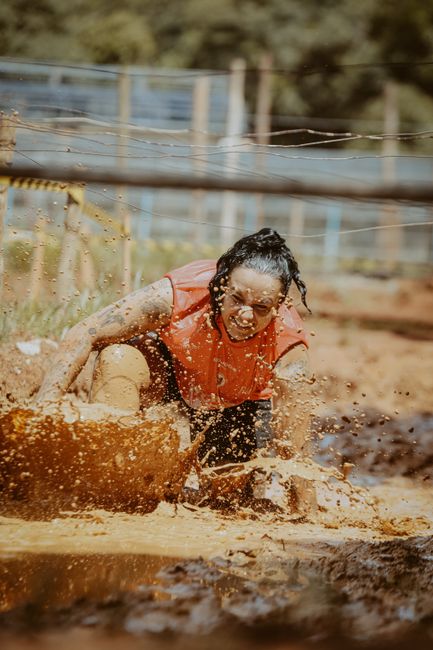
Mile six of a Spartan Super. Your hands are slick, your forearms are cooked, and the monkey bars stretch over a pit of brown water. Two racers ahead of you drop and shrug it off with 30 burpees. The third drops badly, landing stiff-legged on one ankle. Nothing here is unusual for a race day; it is exactly why obstacle racers need a different kind of preparation than road runners. Obstacle course racing (OCR) injury prevention means the habits (how you train your grip and landings, how you handle mud, cold and heat, and what you wear) that make a fall, a sprain or an infection less likely. It can lower the odds. It cannot remove them.
Quick answer: A 2022 review of obstacle events points to balance training for the ankles, multi-part knee programs, covering skin and wounds, and keeping muddy water out of your mouth. Add gradual running and hanging volume, practice soft landings, and plan for heat and cold before race day. See a clinician (a sports medicine doctor, physical therapist or athletic trainer) if you have a shoulder that feels loose, a joint that gives way, pain after a fall, or illness in the days or weeks after a race.
This page is about lowering risk before anything goes wrong. For what each injury looks like and its warning signs, go to our obstacle course racing injuries page. The weekly plan itself is on OCR training, and race-morning logistics are on race day.
What the numbers say about risk
Most racers finish without needing a medic, and most injuries are minor. In a study of medical charts from 33 events in Canada (2015 to 2017; 73,366 participants; Orthopaedic Journal of Sports Medicine), about 2.4% of racers were treated, 93.9% of those on site, and about 1% of injuries needed ambulance transport. Cuts and muscle, joint and bone injuries were the most common, and the authors still warn of “serious potential for life-threatening emergencies”. A 2022 review of seven studies in the Journal of Special Operations Medicine found about 1.4% of participants sought care at the event, yet 27% reported at least one arm or leg injury. Prevention is about the common problems and the rare serious ones.
Warm-up: what is and is not proven
Some sports have a named, tested warm-up program. We could not confirm one built for obstacle racing, so we will not invent one. What the 2022 review does recommend is the kind of work a warm-up can include: balance (proprioceptive) training for the ankles and multicomponent programs for the knees that combine balance, jumping, strength and running drills. A sensible routine before a race or hard session is a few minutes of easy jogging, then dynamic movements such as leg swings and bodyweight squats, then a gentle hang from a bar or a few easy practice landings so your shoulders and ankles have already felt load before the first wall. Treat that as routine, not as a proven shield.
Grip and shoulder
Monkey bars, ropes, rings and rigs hang your full weight from tired, wet hands. We found no OCR trial that tests grip-training methods, so the following is common coaching practice rather than proven prevention. Build hanging volume over weeks, not days: dead hangs, towel hangs and slow lowering on pull-ups, and stop if you feel sharp pain in the shoulder or elbow. Learn the rope foot lock so your legs share the work. On race day, the cheapest protection is a decision: if your grip is gone, step off the obstacle under control and take the 30-burpee penalty that Spartan lists, instead of fighting on until you fall.
Why it matters: AAOS describes a dislocated shoulder as a shoulder that looks out of place, can’t be moved and hurts badly. If it happens, do not let anyone force it back on the course; support the arm against the body and get to the medical tent. For skin, CrossFit’s hand-care guidance (keep calluses filed down, moisturize, clean and cover tears) applies to rope and bar work too.
Falls and landings
Falls and drops are the signature OCR risk. AAOS says the most common cause of a broken wrist (distal radius fracture) is a fall onto an outstretched arm, and notes that a scaphoid fracture, which hurts at the base of the thumb, can look like a sprain. A 2024 review of 16 studies in Arthroscopy, Sports Medicine and Rehabilitation linked ACL injuries to obstacles with high-impact landings and sudden stops, reporting a rate of 0.45 per 1,000 athlete-exposures, about five times higher in women than in men (1.51 versus 0.29). Rubber matting under obstacles was also noted.
- Practice landing before race day. Step-downs and small jump-and-land drills, landing softly with knees tracking over toes, are the sort of balance and jump work that the 2022 review groups under multicomponent knee programs.
- Don’t jump from the top if you can climb down. A planned, controlled drop is safer than an uncontrolled one (our practical advice; no study tests it).
- Out for the day after a head knock. CDC HEADS UP guidance is to leave activity after a suspected concussion and be checked by a health care provider.
Ankles and knees
The 2022 review names the ankle and knee as the common sites, and lists ankle bracing and proprioceptive training as measures. For ankles, the NATA position statement on ankle sprains (2013) says a previous sprain is the most consistent risk factor, recommends a balance program of at least three months after a sprain, and supports bracing or taping for athletes who have had one. Practical version: if you have rolled an ankle before, make single-leg balance part of the week and ask a physical therapist about a brace. Run on trails and hills before race day so roots, mud and downhills are not new; sudden jumps in running volume are a classic cause of shin overuse injuries, according to AAOS.
Mud, water and infection
This is the hazard road runners never meet. In a CDC investigation of a 2012 obstacle race on a Nevada cattle ranch, 22 people had Campylobacter infections, and 89% of the sick racers said they swallowed muddy water compared with 30% of those who stayed well. A study of 2,646 racers at 17 Dutch runs found that swallowing mud was linked to stomach illness, and that rinsing off in a hot tub afterwards was linked to skin infections. The prevention steps from the 2022 review and the CDC are plain:
- Keep your mouth closed in water and mud crawls, and avoid food or drink that has touched mud.
- Cover cuts with a waterproof bandage before the start; the CDC advises this for leptospirosis, which spreads through water or soil contaminated with animal urine.
- Rinse the mud off soon after, with a shower rather than a shared hot tub, and wash hands before you eat.
- Do not race with diarrhea or vomiting, and tell a doctor you did a mud race if you get sick afterwards.
- The CDC notes tetanus can follow wounds contaminated with soil, so check that your tetanus shots are up to date.
Cold and heat
Cold water: the US National Weather Service warns that in water of 70 degrees Fahrenheit or lower you can lose muscle control within 10 minutes, and a cold-shock gasp reflex peaks within about 30 seconds of entry. Some races include ice pits (Tough Mudder describes a 34-degree ice pit on its obstacles page). Enter feet first, breathe out slowly and keep moving. The CDC lists signs of hypothermia and advises removing wet clothes and warming the center of the body first. Because a sudden cold plunge stresses the heart, ask your doctor first if you have a heart condition.
Heat: Spartan says Beast racers should expect five or more hours on their feet. The NATA position statement on exertional heat illness advises acclimatizing over 7 to 14 days, and the ACSM 2023 consensus statement says exertional heat stroke (confusion, odd behavior or collapse) is an emergency where cooling comes first and transport second. If you feel dizzy, nauseated or weak, slow down and find shade.
Shoes, gloves and clothing
What is verified: AAOS advises trying on athletic shoes at the end of the day with the socks you will wear, leaving about half an inch beyond your longest toe. Spartan’s 2025 rules allow gloves, athletic tape and first-aid bandages. The 2022 review lists low-friction clothing, gloves, covering skin that rubs, antiperspirant on the feet, a good sock system and tape over hot spots to reduce skin injuries and blisters.
What is maker claim or common advice, not a tested standard: deep lugs, a snug heel and a draining upper are widely recommended for mud, and some makers claim extra wet grip for their rubber. No published trial shows that a particular shoe or glove prevents injury, so use them for comfort and confidence, not as protection. Details are on our OCR gear page.
Event safety
- Know the rules. Spartan’s 2025 rules ban items such as metal studs, crampons, headsets and trekking poles; check yours on the OCR rules page and your event’s own.
- Electric obstacles are optional. Tough Mudder says Electroshock Therapy (10,000 volts) is on its Classic course only and is optional. Emergency doctors who treated patients at a 2013 Tough Mudder reported injuries they had not seen at other events. Skip it if you have a heart condition, a pacemaker, a history of seizures or are pregnant (our cautious advice; check with your doctor).
- Look before you commit. Walk up to an obstacle, watch two racers, and decline or go around it if it looks beyond you today.
- Find the medical tent early, and write any medical conditions on your bib or tell the event, as the emergency doctors in that Tough Mudder report advised.
Kids and teens
Spartan Kids races are for ages 4 to 14 and run from about a half-mile to 2 miles. The mud and water advice above applies to children too: a pediatric case of histoplasmosis heart infection after a mud run was reported in Pediatrics in 2018, which is rare but a reason to keep mouths closed and rinse well. See our youth OCR page for more.
What prevention can’t do
Even a well-prepared racer can slip on a wet wall or catch a bad landing. The studies above report associations and reviews, and several recommendations rest on other sports or coaching practice. Rest, sleep and fueling help your recovery; see OCR recovery and nutrition.
When to see a professional
See a sports medicine doctor, physical therapist or athletic trainer for a joint that gives way or swells, pain in a bone after a fall (AAOS lists inability to bear weight as a reason for an exam), a shoulder that keeps feeling loose, a hand or finger that won’t straighten, or an ankle that keeps rolling. After a race, see a doctor for fever, vomiting or diarrhea, and tell them you did a mud race. Call emergency services for confusion, collapse, a suspected head injury or severe pain.
FAQs
How can I prevent injuries in obstacle course races?
The 2022 review in the Journal of Special Operations Medicine suggests balance training for the ankles, multicomponent knee programs, protecting skin and keeping mud out of your mouth. Add gradual training and sensible choices on the course.
Are obstacle races dangerous?
Most injuries are minor: about 2.4% of racers were treated in the Canadian study, and about 1% of injuries needed an ambulance. Serious emergencies do happen, so respect the risks.
Do gloves prevent hand injuries?
The 2022 review lists gloves where allowed among ways to protect skin. We found no trial proving a specific glove prevents injuries, and gloves can get slick when wet. Spartan’s rules allow them.
Can I get sick from the mud?
Yes. The CDC documented a 2012 outbreak after an obstacle race, and other reports link swallowing mud to stomach illness. Keep your mouth closed, cover cuts and shower afterwards.
Should I skip an obstacle that scares me?
Often yes. Spartan applies a 30-burpee penalty, and some events (Tough Mudder’s electric obstacle) say obstacles are optional. Check your event’s rules.
Sources
- Rabb and Coleby 2018, Orthopaedic Journal of Sports Medicine: PMC
- Knapik 2022, Journal of Special Operations Medicine (Obstacle Course Events: Hazards and Prevention Measures): PubMed
- Lessiohadi et al. 2024, Arthroscopy, Sports Medicine and Rehabilitation (ACL injuries in OCR): PubMed
- NATA position statement on ankle sprains (Kaminski 2013): PMC
- NATA, Exertional Heat Illnesses (Casa 2015): PMC; ACSM 2023 consensus on exertional heat stroke: ACSM
- AAOS OrthoInfo: Distal Radius Fractures, Scaphoid Fracture, Dislocated Shoulder, Shin Splints, Sprained Ankle, Athletic Shoes
- CDC: HEADS UP; Leptospirosis; Tetanus; Preventing Hypothermia; MMWR 2014 campylobacteriosis outbreak
- den Boogert et al. 2019, Eurosurveillance (Dutch obstacle runs): PubMed; Scott et al. 2018, Pediatrics: PubMed
- Greenberg et al. 2014, Annals of Emergency Medicine (obstacle race injuries): PubMed; TODAY report
- US National Weather Service, Hazards of Cold Water Activities; cold shock review: PMC
- Spartan: race types; 2025 rules. Tough Mudder: obstacles; Electroshock tips
- CrossFit, Hand treatment essentials
General information for education only, not medical advice. If you are hurt or unsure, see a sports medicine doctor, physical therapist or certified athletic trainer. See how we work in our editorial policy. Back to the obstacle course racing guide.