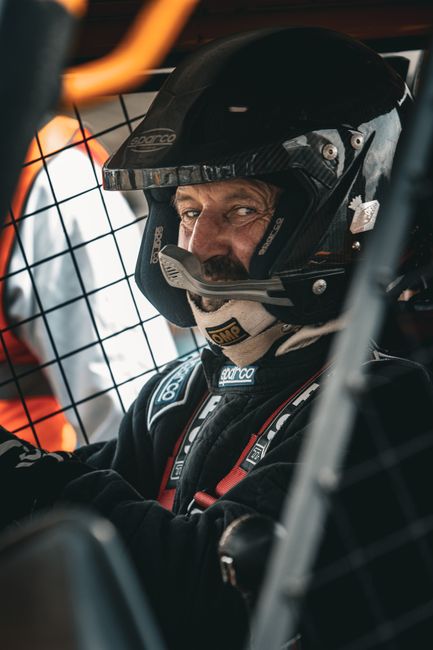
Tech inspection, Saturday morning at a club track day. An official turns your helmet over to read the sticker, tugs the belts, and asks the new driver in the next bay whether he has ever been told what a standing yellow means. He has not. Nobody calls that injury prevention, but it is. Motorsports injury prevention is the set of habits around a driver or rider that aim to lower the chance of getting hurt: certified protective gear that fits, a strong neck, heat and fatigue management, and everyone knowing the flags and the rules of the day. It can lower the odds. It cannot promise anything.
Quick answer: Prevention in racing rests on four things: certified gear that fits and is replaced after a big impact (helmet, head-and-neck restraint where your series requires one, fire suit, and body protection in karting and motocross), neck and core strength, heat and fatigue control, and following the flags and track rules. The FIA, Snell and SFI standards are tested ratings; maker claims are not. See a sports medicine doctor, physical therapist or athletic trainer for neck pain that keeps returning, and use the track medical team after any crash. Call 911 for confusion, collapse, a worsening headache, or neck pain with numbness or weakness.
General information, not medical advice. This page is about lowering risk. For what each racing injury looks like and when to get it checked, see our motorsports injuries guide. Back to the motorsports hub.
What actually needs preventing
Safety rules do work. A 2025 review of 865 Formula 1 drivers from 1950 to 2023 found clear drops over time in total injuries, deaths, fractures, head injuries and burns as the rules changed (Braithwaite and colleagues, JAAOS Global Research and Reviews), and a 2025 review in Current Sports Medicine Reports calls helmets and head-and-neck support devices essential in car racing (Lino). On two wheels the risk is falls: of 9,092 MotoGP-class crashes from 2013 to 2017, only about 1.3% caused a fracture (Campillo-Recio and colleagues, Journal of Clinical Orthopaedics and Trauma).
Warm-up: what is known
Unlike soccer, motorsports has no widely published, tested warm-up program such as the FIFA 11+, so be wary of anyone who says there is one. What exists is common practice, not a trial: a few minutes of easy movement, shoulder and neck mobility, and light neck and core activation before suiting up, adding layers last so you do not overheat on the grid. Cooling and dressing plans are on our race day page.
Technique and seat position
Two things in the data come back to technique. First, the instinct to put out an arm: in the 2024 MotoGP season, serious injuries were mostly hand, wrist and collarbone fractures linked to the instinctive bracing response when a rider falls, and wet conditions raised the risk (Russo and colleagues, Injury, 2026). Second, seat fit: the FIA says rib injuries are the most common in karting, and its karting standard tests rib protectors against impacts with the seat edge, steering wheel and column. We have not recorded a published source for a specific seating or braking technique, so we do not state one; a coach at your track is the right person to watch you drive.
Progressive load: build up, do not jump
Published numbers for how much seat time or training is safe do not exist, and we will not make one up. The research does show real loads: professional drivers averaged about 165 beats per minute for around 54 minutes in 13 official races (Yanagida and colleagues, Environmental Health and Preventive Medicine), and in endurance racing, drivers at the Rolex 24 responded differently in later stints than in their first (Potkanowicz and colleagues, Medicine and Science in Sports and Exercise). So go up in steps: shorter sessions before long ones, practice before racing. Young drivers should follow the American Academy of Pediatrics advice of at least one to two days a week off organized sport (Brenner and colleagues, Pediatrics, 2016). More on our motorsports training page.
Neck, core and strength conditioning
Sports scientists writing in The Conversation report that F1 drivers feel forces upwards of 5 g in fast corners. A 2026 review in the British Journal of Sports Medicine found F1 drivers are not exceptional in aerobic fitness or size, but do have stronger necks, which teams train routinely; it also notes that much of this practice rests on experience, not published data (Tyler and colleagues). For amateurs: build neck, upper back and core strength gradually, light first, and stop at pain, tingling or numbness.
Heat, fatigue and the cockpit
Heat is one of the few racing risks with solid measurements. In nine NASCAR Pro Series drivers racing in the heat, core temperature rose from 38.0 to 38.5 °C (Carlson and colleagues, Journal of Strength and Conditioning Research); closed cockpits produced higher core temperatures than open ones (Ferguson and colleagues, Medicine and Science in Sports and Exercise), and cabin temperatures can exceed 50 °C (The Conversation). In a 2026 laboratory test of 60 minutes of cycling in full fire-protective gear, a blower sending cold air into the suit gave the lowest skin and core temperatures, while cool shirts gave limited cooling (Davis and colleagues).
The National Athletic Trainers’ Association (NATA) says heat acclimatization takes about 7 to 14 days of gradually increasing exercise in the heat, and calls exertional heat stroke (confusion or collapse with a core temperature above 40.5 °C) a medical emergency: cool first, transport second, with cold-water immersion most effective. Dehydration of 1% and 3% of body mass lowered alertness and concentration in a sauna study, though short simulated lap times did not change (Mollica and colleagues, International Journal of Exercise Science). Plans are on our race day page.
Track-day rules, flags and the paddock
Much of racing safety is rules that everyone agrees on. The SCCA’s track day rules require an approved helmet and a vehicle that passes a safety inspection, offer a novice group and a Novice Coach, and allow passing only with a “point-by” from the car ahead. Under SCCA and SKUSA rules a standing yellow means danger at that corner and no passing until past the incident, a waving or double yellow means slow significantly, a black flag calls one driver into the pits, and a black flag with an orange disc means a mechanical problem. A white flag means different things (a slow vehicle at SCCA events, one lap to go in karting and NASCAR, rain in MotoGP), so read your rulebook and attend the drivers’ meeting. The full table is on our racing flags and rules page.
Protective gear and fit: standards versus maker claims
A standard is a written test method run by an independent body. A maker claim is what the box says. Treat them differently, and always check your series rulebook, because it sets the minimum.
Helmets
Standards: Snell SA2025 took effect on October 1, 2025, with a peak-g limit of 275 g, down from 300 g in SA2020. SCCA’s track day rules list Snell SA and M helmets, SFI 31.1 and 41.1, and FIA 8859 and 8860. For karting, the CIK-FIA requires Snell-FIA CMR2016 or CMS2016 for drivers under 15. For you: match the sticker to your event, and replace a helmet after any significant impact. In young motocross riders, expert helmet fitting was associated with fewer concussion symptoms (McIntosh and Christophersen, JAAOS, 2018). No helmet prevents every concussion, so the CDC rule stands: remove from activity until a provider clears the return.
Head-and-neck restraints (HANS-type)
NASCAR made them mandatory in October 2001. The FIA requires an approved frontal head restraint for drivers in international events (FIA 8858-2010), and in the US devices are rated SFI 38.1 by sled testing. They work with the belts, so the device, belts and helmet must be matched; follow the maker’s fitting guide. SCCA’s track day rules require an approved helmet but, as far as we found, no restraint; wheel-to-wheel series often do. SKUSA requires a neck brace in junior karting classes.
Fire suits, gloves and shoes
SFI 3.2A rates suits by thermal protective performance: roughly 3 seconds before a second-degree burn for a /1 suit, about 10 seconds for /5 and about 30 seconds for /15. The number is a rating, not a count of layers. FIA 8856-2018 covers suits, underwear, balaclavas, socks, gloves and boots, and that clothing expires 10 years after manufacture.
Seats and harnesses
We have not recorded a verified seat or harness standard, so we do not give one. What the sources above say: the belts hold the body while the restraint tethers the helmet, so they must be compatible, and your rulebook and tech inspection decide what is legal. Karts have no belts or roll cage, so the driver wears the protection.
Karting and motocross body protection
FIA 8870-2018 is the karting chest and rib standard, mandatory in FIA karting championships from 2021 and at all FIA international-calendar karting events from 2022. SKUSA’s 2026 rules require an SFI-approved chest protector (SFI 20.1/1 up to age 8, 20.1/2 for ages 9 to 12) or FIA 8870-2018 for drivers 12 and under, and “highly” recommend rib protectors for everyone. For motocross we can cite no single standard here: makers describe chest protectors as tested to CE EN1621-2 and knee braces as reducing ligament forces, but those are maker claims, and a 15,870-rider study found knee sprains and wrist and collarbone fractures still common even with better gear (Gobbi and colleagues, Knee Surgery, Sports Traumatology, Arthroscopy). See motorsports gear.
Youth drivers and riders
Kids race karts from about age 5 and motocross from as young as 4. In a 10-year study of one US amateur motocross championship, 25.5% of injured children were admitted to hospital and almost 10% needed surgery (Bruney and colleagues, JACEP Open, 2024). Go-kart head, neck and spine injuries sent an estimated 34,561 people to US emergency departments from 2004 to 2023, nearly two-thirds aged 18 or under (Alam and colleagues, American Journal of Emergency Medicine). The AAP advises no child under 16 should operate or ride off-road vehicles, including dirt bikes. See youth motorsports.
What prevention cannot do
Gear is tested to specific impacts and fire exposures; real crashes are messier. A top-rated helmet does not rule out concussion, a good suit does not remove burn risk, and a strong neck does not make a big crash safe. Prevention lowers odds; it gives no guarantees.
When to see a professional
- Emergency: any CDC concussion danger sign (one pupil larger than the other, a headache that worsens, slurred speech, repeated vomiting, seizure, loss of consciousness), confusion or collapse in the heat, or neck pain after a crash with numbness, tingling or weakness.
- Same day: any suspected concussion, collarbone or wrist pain after a fall, or rib pain that hurts with each breath. The track medical team is the first stop.
- Soon: neck or back pain that keeps coming back after race weekends. A sports medicine doctor, physical therapist or certified athletic trainer can help.
Recovery habits after the race are on our motorsports recovery page.
Motorsports injury prevention: FAQs
Do I need a HANS device for track days?
Usually not at club track days: SCCA’s rules require an approved helmet but, as far as we found, no head-and-neck restraint. Wheel-to-wheel racing is different, with NASCAR requiring one since 2001 and FIA events requiring an approved device. Check your event rules.
Does neck training prevent injuries?
It is not proven to. A 2026 review found F1 drivers have stronger necks and that teams train them, but also that much of the practice rests on experience, not published data. Build strength slowly and stop at pain, tingling or numbness.
What is the biggest health risk at a hot race?
Heat illness. Cockpits can pass 50 °C, closed cockpits run hotter than open ones, and fire suits hold heat in. NATA says exertional heat stroke is an emergency: cool first, transport second, with cold-water immersion best.
Sources
- FIA, “First FIA-Standard Karting Body Protection Delivered”: fia.com
- FIA frontal head restraint guidelines: fia.com; FIA 8856-2018 protective clothing: api.fia.com
- Snell Foundation SA2025 press release: smf.org; SFI Foundation ratings: sfifoundation.com
- SKUSA 2026 Rulebook: superkartsusa.com; SCCA Track Day Rules: scca.com; CIK-FIA helmet standards: fiakarting.com
- NATA, Exertional Heat Illnesses (Casa and colleagues, 2015): PMC4639891
- Tyler and colleagues 2026, Br J Sports Med: PubMed 41708274; Davis 2026: PubMed 41774482
- Carlson 2018: PubMed 29016483; Ferguson 2019: PubMed 30925578; Mollica 2019: PubMed 31523354
- Braithwaite 2025: PubMed 40326967; Lino 2025: PubMed 41358802; Campillo-Recio 2021: PubMed 33987080; Russo 2026: PubMed 42697130; Gobbi 2004: PubMed 15133584
- Yanagida 2016: PubMed 27312140; Potkanowicz 2021: PubMed 32890200; Brenner 2016 (AAP): PubMed 27573090
- McIntosh and Christophersen 2018: PubMed 29473832; Bruney 2024: PubMed 39193087; Alam 2026: PubMed 42715781
- CDC HEADS UP: signs and symptoms; AAP on off-road vehicles: Pediatrics
- The Conversation, “What happens to F1 drivers’ bodies”: theconversation.com
General information for education only, not medical advice. It does not replace a visit with a doctor, physical therapist or athletic trainer. See how we write and check our pages in our editorial policy.