This article contains affiliate links: if you buy through them we may earn a commission, at no extra cost to you. Read our affiliate disclosure.
The morning after a tournament weekend, you wake up with sore forearms, a stiff lower back and a hand that will not close all the way. You are not injured, you are tired. BJJ recovery is what you do between sessions, sleep, easing load, mobility and food, so that the next class goes well. Much of what athletes try has weak evidence, and this page says so where it applies.
Quick answer: Sleep and a sensible training week are the best-supported recovery tools. Protein and fluids after hard sessions help, and a shower and clean clothes protect your skin. Massage may ease soreness; compression has small benefits; ice baths after strength sessions may blunt gains. Soreness fades in a day or two, while sharp, one-spot or worsening pain is a reason to see a sports medicine doctor, physical therapist or athletic trainer.
What a hard session does to you
We found no study of recovery time after BJJ training itself. In a simulated MMA sparring study (three 5-minute rounds, Journal of Strength and Conditioning Research, 2016), the muscle-damage marker creatine kinase was higher 48 hours later than before (255.8 to 395.9 U/L). In BJJ competition, right handgrip fell from 45.9 to 40.1 kgf (Asian Journal of Sports Medicine, 2013). Both point to the same practical idea: allow a day or two before the next very hard session, and expect your hands to be tired first. Different sport and different measure, so use them as a guide only.
Sleep
The American Academy of Sleep Medicine pediatric consensus recommends 9 to 12 hours for ages 6 to 12 and 8 to 10 hours for ages 13 to 18. The AASM and Sleep Research Society adult consensus recommends at least 7 hours. A review in Sports Medicine (Nedelec and colleagues, 2015) lists habits such as a consistent wake time and limiting screens before bed. Late-evening classes can make this hard, so protect your sleep on training days.
Load management and rest days
The IOC consensus on load (Soligard and colleagues, 2016) says load should rise gradually with rest built in. For young athletes, the American Academy of Pediatrics sports guidance suggests one to two days off a week, and its martial arts report links more than three hours a week at young ages to higher injury risk in some evidence. Tournament weekends add load: a systematic review found competitors may fight four to six matches in a day, so plan an easy week after.
Mobility and flexibility
BJJ asks a lot from hips, spine, shoulders and hands. The ACSM position stand (Garber and colleagues, 2011) recommends flexibility exercises for each major muscle-tendon group at least two days a week, about 60 seconds in total per exercise. Mobility work on rest days, easy cycling or a walk are common choices. Finger and grip care (opening the hands, gentle movement) is common practice, but we found no BJJ study on it.
Food, fluids and skin after class
The ACSM, Academy of Nutrition and Dietetics and Dietitians of Canada position (2016) suggests 0.25 to 0.3 g of protein per kg of body weight after exercise, and 1.25 to 1.5 litres of fluid for each kg of body weight lost. For a 68 kg person that protein amount is about 17 to 20 g. More in our nutrition page. Shower after every class, per the NATA position statement on skin diseases, and wash your gi and rash guard each time.
Recovery methods: what the evidence says
- Cool-down: a review in Sports Medicine (Van Hooren and Peake, 2018) found it largely ineffective for next-day performance and mostly not reducing soreness. It can still be a calm way to end class.
- Massage and massage guns: a review of 99 studies (Dupuy and colleagues, Frontiers in Physiology, 2018) found massage the most effective of the methods for delayed onset muscle soreness and perceived fatigue. It is a comfort tool, not a treatment.
- Compression: a review (Brown and colleagues, Sports Medicine, 2017) found small benefits, mainly for strength recovery.
- Cold water after strength training: in a 12-week study (Roberts and colleagues, Journal of Physiology, 2015), cold water immersion after strength sessions led to smaller strength and muscle gains. Heart conditions are a reason to ask a doctor before cold plunges or saunas.

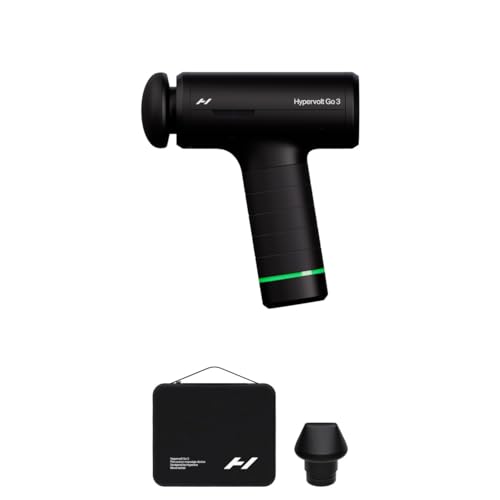
Hypervolt Go 3
- 1.6 lb
- 5 speeds
- USB-C
$149.00 at Amazon, as of Nov 17, 2026 01:07 UTC
Check price on AmazonSoreness versus injury
Soreness is usually spread across a muscle group, shows up a day or so after a hard session and eases as you move. Pain that is sharp, stays in one joint, appears at rest, comes with swelling or numbness, or gets worse over days is a different story. See a sports medicine doctor, physical therapist or athletic trainer, and read BJJ injuries. This soreness description is general guidance, not a diagnosis. After a head knock, follow the CDC HEADS UP steps and see a provider before returning.
FAQs
How long should I rest between hard BJJ sessions?
We found no BJJ-specific number. A simulated sparring study found muscle damage markers still raised at 48 hours, so a day or two before the next very hard session is a sensible rule.
Does a massage gun help recovery?
Massage was the most effective method for soreness and perceived fatigue in a review of 99 studies. It is a comfort tool, not a treatment.
Are ice baths good after BJJ?
The evidence is mixed. One study found cold water after strength sessions reduced strength and muscle gains over 12 weeks. We found no BJJ-specific study.
How much sleep do I need?
The AASM recommends at least 7 hours for adults, 8 to 10 for ages 13 to 18, and 9 to 12 for ages 6 to 12.
Is soreness normal?
Muscle soreness a day or two after hard training is common. Sharp, one-spot or worsening pain is not, and deserves a professional look.
Sources
- BJJ competition handgrip (PubMed 23802056)
- Simulated MMA sparring, muscle damage markers (PubMed 26817739)
- BJJ systematic review (PubMed 28194734)
- AASM pediatric sleep consensus
- AASM/SRS adult sleep consensus (PubMed 25979105)
- Sleep and recovery in athletes (PubMed 26275673)
- IOC consensus on training load (PubMed 27535989)
- AAP: sport specialization (PubMed 27573090)
- AAP: martial arts injury risk
- ACSM position stand (PubMed 21694556)
- ACSM/AND/DC nutrition and athletic performance (PubMed 26891166)
- Do we need a cool-down? (PubMed 29663142)
- Massage and recovery review (PubMed 29755363)
- Compression review (PubMed 28434152)
- Cold water immersion and strength gains (PubMed 26174323)
- NATA position statement: skin diseases
- CDC HEADS UP
General information for education only, not medical advice. It does not replace a sports medicine doctor, physical therapist or athletic trainer who knows you. Read how we work in our editorial policy. Back to the Brazilian jiu-jitsu hub or the sports hub.