This article contains affiliate links: if you buy through them we may earn a commission, at no extra cost to you. Read our affiliate disclosure.
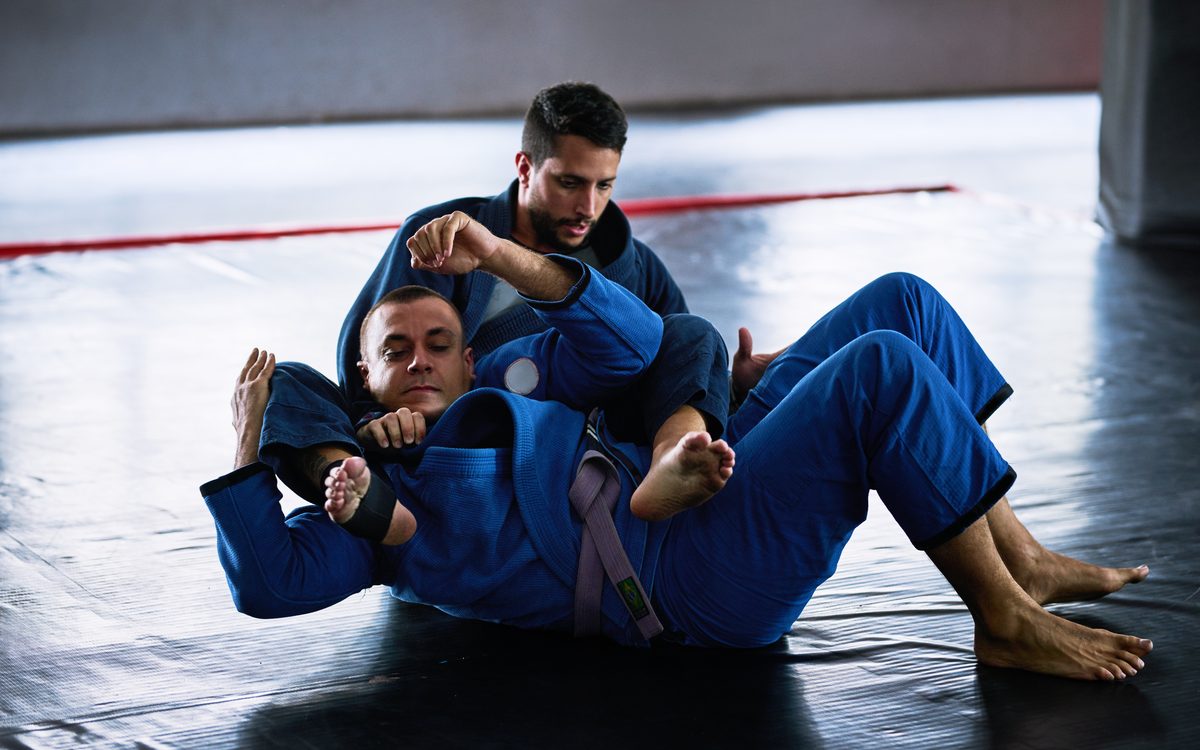
It is the last minute of a purple-belt final. One athlete is stuck on her back with a smaller, faster opponent on top, both of them gripping lapels, and for a full minute nothing seems to happen. Then a hip shifts an inch, a leg hooks, and the roles flip: sweep, two points, then a slide into mount, four more. The crowd explodes. That is Brazilian jiu-jitsu, known as BJJ, “jiu-jitsu” or “the gentle art,” a grappling sport that happens mostly on the ground and is often described as a physical chess match.
Brazilian Jiu-Jitsu guides: what do you need?
New to brazilian jiu-jitsu? Start with the first card. Everything here is general education, not medical advice.
History & Origins of Brazilian Jiu-Jitsu
Brazilian jiu-jitsu grew out of Japanese jiu-jitsu and judo taught in Brazil in the early 1900s. The Japanese fighter and teacher Mitsuyo Maeda settled in Brazil in 1914, and the Gracie family of Belém and Rio de Janeiro, above all Carlos and Hélio Gracie, built a ground-focused style from what they learned and taught it in their own academies (GracieMag history). The story is often told as the Gracie family’s alone; other Brazilian lineages from Maeda’s students also existed, and sources differ on exact dates, so treat the early years as disputed in detail. The modern sport took shape later: a Rio de Janeiro jiu-jitsu federation was created in 1967, the first UFC in 1993 showed the style to a global audience, and the International Brazilian Jiu-Jitsu Federation (IBJJF) was founded in 1994 to write common rules. Its first World Championship, the “Mundial”, followed in 1996 (IBJJF results archive). No single federation governs all of BJJ, so events here come from the IBJJF and from ADCC, the grappling championship that also holds a world event.
- 1914: Mitsuyo Maeda arrives in Brazil to settle (GracieMag).
- 1917 (disputed; some sources say 1916): Carlos Gracie begins training with Maeda.
- 1925 (as one source dates it): Carlos Gracie opens the family’s first academy.
- 1967: A Rio de Janeiro jiu-jitsu federation is created, with Hélio Gracie as president.
- 1993: The first UFC is held; Royce Gracie is named among its pioneers.
- 1994: The IBJJF is founded with Carlos Gracie Jr. among its founders.
- 1996: First IBJJF World Championship; the IBJJF archive begins here.
- 1998: First ADCC World Championship absolute champion, Mario Sperry (FloGrappling).
- 2026: IBJJF Worlds in Long Beach in May and ADCC in Kraków, Poland in September.
Legends of the Sport
These are influential people across eras, in no ranking order. The first two are founders and teachers, the rest competitors.
- Mitsuyo Maeda (Japan, founder-teacher): the Japanese fighter who brought jiu-jitsu to Brazil in 1914 and taught Carlos Gracie.
- Hélio Gracie (Brazil, founder-teacher): developed the Gracie style and was president of the 1967 Rio federation.
- Royce Gracie (Brazil): named among the pioneers of the first UFC in 1993, which brought BJJ to a global audience.
- Roger Gracie (Brazil): won the ADCC absolute division in 2005.
- Leandro Lo (Brazil): eight IBJJF world titles in five weight classes, a record, and with an IBJJF Hall of Fame induction announced at Worlds 2023 (FloGrappling).
- Gabi Pessanha (Brazil): the winningest woman in IBJJF Worlds history per the IBJJF, and open class winner every year from 2023 to 2026.
- Erich Munis (Brazil): seven world titles and open class winner in 2024, 2025 and 2026.
- Felipe Pena (Brazil): ADCC absolute champion in 2017 and 2026.
Official results and records
We only list champions and records here after checking them on the official source. For the latest results, go to:
How we keep this current: we re-check facts after each major championship and update this page. Spot an error? See our editorial policy.
This page is for people starting BJJ, parents choosing a kids’ class, and fans of the sport. We cover how matches work and score, the belt system, who competes at every level, what the sport asks of the body, the injuries and skin risks to know, and the gear worth buying. It is general information, not medical advice.
Brazilian jiu-jitsu at a glance
| What it is | A grappling sport and martial art focused on ground fighting: control, positions, joint locks and chokes. Practiced with a gi (jacket and trousers) or without one (“no-gi”). |
|---|---|
| How you win | Submit your opponent (they tap out), or lead on points when time ends. Points are awarded for takedowns, sweeps, knee on belly, guard passes, mount and back control. |
| Match length | In IBJJF adult competition: 5 minutes for white belts rising to 10 minutes for black belts. Kids’ matches run 2 to 4 minutes depending on age. |
| Participants and levels | Children from age 4 in IBJJF divisions, teens, adults and masters (30 and older), organized by belt color, weight and age. |
| Where it is played | An academy with mats. Tournaments are run by many organizers; the IBJJF is the best-known. |
| Governing bodies | No single Olympic-style federation. The IBJJF (International Brazilian Jiu-Jitsu Federation) writes the most widely used competition rules; other organizations run their own events. |
| Season | Year-round; the IBJJF World Championship results archive begins in 1996. |
How BJJ works
BJJ grew out of the judo that Japanese judoka Mitsuyo Maeda brought to Brazil in the early 1900s, which Carlos Gracie and others developed into a ground-focused art. (Sources differ on exact dates, and the early history is often told as only the Gracie family’s story.) Today the sport is about control. Matches start standing or from the knees; a competitor who gets a takedown or pulls guard (sits or lies down with their legs between themselves and the opponent) begins to work for position.
Under the IBJJF rules, the points are: 2 for a takedown, 2 for a sweep, 2 for knee on belly, 3 for passing the guard, and 4 each for mount and back control. A position must be held for three seconds to count. Advantages and penalties break ties. Submissions end the match at once: a choke, a joint lock such as an armbar, or a leg lock. Because you can win from the bottom, smaller athletes can beat bigger ones, which is a big part of the appeal. In training, “rolling” is live sparring at less than full intensity, where partners tap early and often.
Formats and styles
- Gi: athletes wear a heavy jacket, trousers and a belt, and use the cloth for grips and chokes.
- No-gi: shorts and a fitted rash guard; faster, more wrestling-like, and no cloth to grab. The IBJJF holds separate no-gi championships.
- Self-defense and MMA-oriented classes: many academies also teach BJJ for self-defense or as a base for MMA.
Who trains BJJ and at what level
Belts and ranks
Adults progress from white to blue, purple, brown and black belt. The IBJJF General System of Graduation (June 2026) sets minimum ages: blue and purple belts from age 16 and brown from 18. Children use a separate set of colors (grey, yellow, orange and green) and move to adult belts at 16. Promotions are decided by the professor, not by a test everyone takes the same way.
Kids and teens
The IBJJF has kids’ divisions from age 4, with matches of 2 minutes at ages 4 to 6, 3 minutes at 7 to 9, and 4 minutes at 10 to 15. Its illegal-techniques chart is stricter for younger ages, and jumping to guard is a foul under 15. A review of US emergency department visits for BJJ injuries in children (2012 to 2021) found an increasing trend, with sprains and strains at 28.3% and fractures at 20.1%. The AAP advises qualified instructors who match contact to a child’s age and maturity.
Adults, masters and competition
The IBJJF masters divisions start at age 30. Tournaments are open to all belt levels, and the biggest, the IBJJF World Championship, has a results archive going back to 1996. At the 2023 Worlds, both open-class finals ended by submission for the first time in the event’s history, according to the IBJJF.
Olympic and Paralympic status
Brazilian jiu-jitsu is not a sport we can confirm on the Olympic or Paralympic program; the Olympic grappling sports are judo and wrestling. Check the official programme for the current Games. Related sports with Olympic status include judo and wrestling.
Physical demands of BJJ
BJJ rewards grip strength, hip and trunk mobility, and the ability to stay calm while someone is trying to control you. Rolling is an on-and-off effort with short bursts of force and long stretches of isometric holding, so most players build a mix of aerobic fitness and strength. Hips, hamstrings and spine are used in odd, flexed positions. A 5 to 10 minute match can be exhausting even if it looks slow.
Health and safety in BJJ
BJJ is a contact sport with joint locks and chokes. This section is general information, not medical advice. If you are hurt, see a sports medicine doctor, physical therapist or athletic trainer.
Injury patterns
A survey of 1,140 BJJ athletes (Orthopaedic Journal of Sports Medicine, 2021) found the knee was the most injured joint at 27.1%, most injuries happened in sparring (77.6%), and the common diagnoses were meniscus, ACL and MCL injuries. A 2025 study of 881 practitioners reported 5.5 injuries per 1,000 hours of training and 55.9 per 1,000 matches, with knees at 25% and shoulders at 13%, and 89% of injuries happening in training, mostly in sparring. Studies of tournaments in Hawaii found the elbow the most commonly injured joint, often during armbar attempts.
One leg lock stands out. In a 2026 study of IBJJF brown and black belt matches in 2021, knee injuries occurred at 26.5 per 1,000 matches when heel hooks were allowed versus 2.2 when they were not, a rate ratio of 12.0. The IBJJF allows heel hooks only in the adult brown and black belt no-gi divisions. Talk to your coach about which leg locks your academy teaches and when.
Tap early, and head and neck safety
The best safety rule in BJJ is cultural: tap early, tap often, and release instantly when your partner taps. Slams, spinal locks without a choke and bending fingers backward are illegal under the IBJJF rules. Chokes can cause brief loss of consciousness, and the AAP strongly discourages youth bouts that include slams and chokes. Head impacts can happen, too. Use the CDC HEADS UP approach: recognize the signs (headache, dizziness, confusion), remove the athlete from training, and have a healthcare provider decide on return. Call 911 for danger signs such as repeated vomiting, a seizure or one pupil larger than the other. Severe neck pain or numbness in both arms or legs is an emergency.
Skin infections and hygiene
Mats can spread skin infections. The NATA position statement on skin diseases advises showering after every practice, not sharing towels, soap or gear, laundering training clothes every day, disinfecting mats on a schedule with an EPA-registered product, and being cleared before returning if you have a lesion. IBJJF rules require short fingernails, and gi inspectors check athletes’ skin; a lesion can mean a trip to the medical area and a doctor’s statement.
Training, recovery and nutrition pointers
Most academies teach a technique, then drilling, then rolling. Strength work for the legs, back and grip, and mobility work for hips and shoulders, are common extras. The AAP’s martial arts report links training more than three hours a week at young ages to higher injury risk, so pace kids’ schedules. See the martial arts training page, the recovery page and nutrition and supplements page. The CDC recommends 9 to 12 hours of sleep for ages 6 to 12, 8 to 10 for teens and at least 7 for adults. A foam roller or massage gun is a comfort tool after a hard night, not a treatment. Weight classes mean some players cut weight, which carries risks; talk to a doctor or sports dietitian before trying it.
BJJ gear
You need little to start: many academies lend a gi for trials. If you buy a gi, check the IBJJF’s uniform rules before you compete, since sleeve, trouser and patch rules are strict, and “IBJJF compliant” on a listing is the seller’s claim. A rash guard under the gi or for no-gi training protects the skin. A mouthguard is optional in most BJJ classes; ask your academy. Wash the gi and rash guard after each session and shower right after class.

Hayabusa Classic Pearl Weave Jiu Jitsu Gi
- Pearl weave
- For men and women
- Adult sizes

Hayabusa Essential Jiu Jitsu Gi Kids
- Pearl weave
- Includes white belt
- IBJJF compliant (listing)
$79.99 at Amazon, as of Nov 17, 2026 01:07 UTC
Check price on Amazon
Hayabusa Fusion Short Sleeve Rash Guard
- 4-way stretch
- Silicone waistband
- Short sleeve
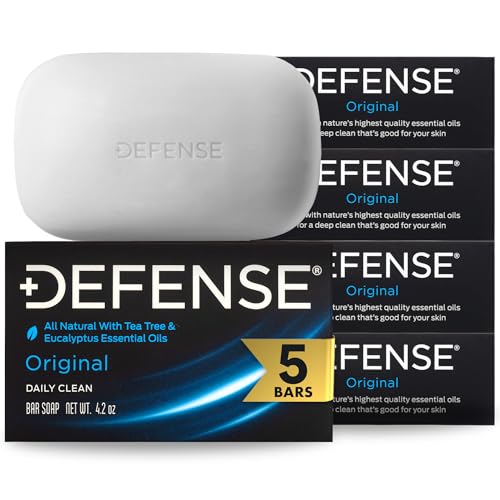
Defense Soap Tea Tree Bar (5-pack)
- Tea tree and eucalyptus oils
- No SLS or added fragrance
- Five bars
$30.99 at Amazon, as of Nov 17, 2026 01:07 UTC
Check price on AmazonRelated sports and disciplines
BJJ sits within martial arts. Neighbors include judo, wrestling and MMA, plus the striking arts karate and taekwondo.
BJJ FAQs
What is the difference between BJJ and judo?
BJJ developed from judo. Judo puts more weight on throws and wins by a big throw or a pin; BJJ puts more weight on the ground and scores positions and submissions. See judo.
How long does it take to get a black belt?
It depends on the academy and the professor, who decides promotions. The IBJJF sets minimum ages, such as 16 for blue belt, but not a universal time.
Is BJJ safe for kids?
It has real injury risk, with sprains, strains and fractures the most common in one US emergency department study. Choose an academy with qualified, kid-focused instructors, age-based rules and a clear tapping culture.
Do I need to be fit to start?
No. Beginners can go slowly and roll lightly. If you have a health condition or past injury, ask a doctor first and tell your coach.
Is BJJ in the Olympics?
We could not confirm it on the Olympic or Paralympic program. Judo and wrestling are the Olympic grappling sports. Check the official programme for the current Games.
Sources
- IBJJF: rule book and illegal techniques chart
- IBJJF: General System of Graduation
- IBJJF: World Championship results archive (1996 edition) and 2023 submission breakdown
- American Academy of Pediatrics: Youth Participation and Injury Risk in Martial Arts
- Injury patterns in BJJ, 1,140 athletes (PubMed 34988235)
- BJJ injury rates, 881 practitioners (PubMed 40092168)
- BJJ tournament injuries in Hawaii (PubMed 26535299)
- Heel hook knee injuries in IBJJF matches (PubMed 41549501)
- Pediatric BJJ emergency department injuries (PubMed 41567655)
- CDC HEADS UP: signs and symptoms
- NATA position statement: skin diseases
Keep exploring: the martial arts hub, martial arts injuries, martial arts gear, our recovery tools guide, and every sport on our sports hub.