This article contains affiliate links: if you buy through them we may earn a commission, at no extra cost to you. Read our affiliate disclosure.
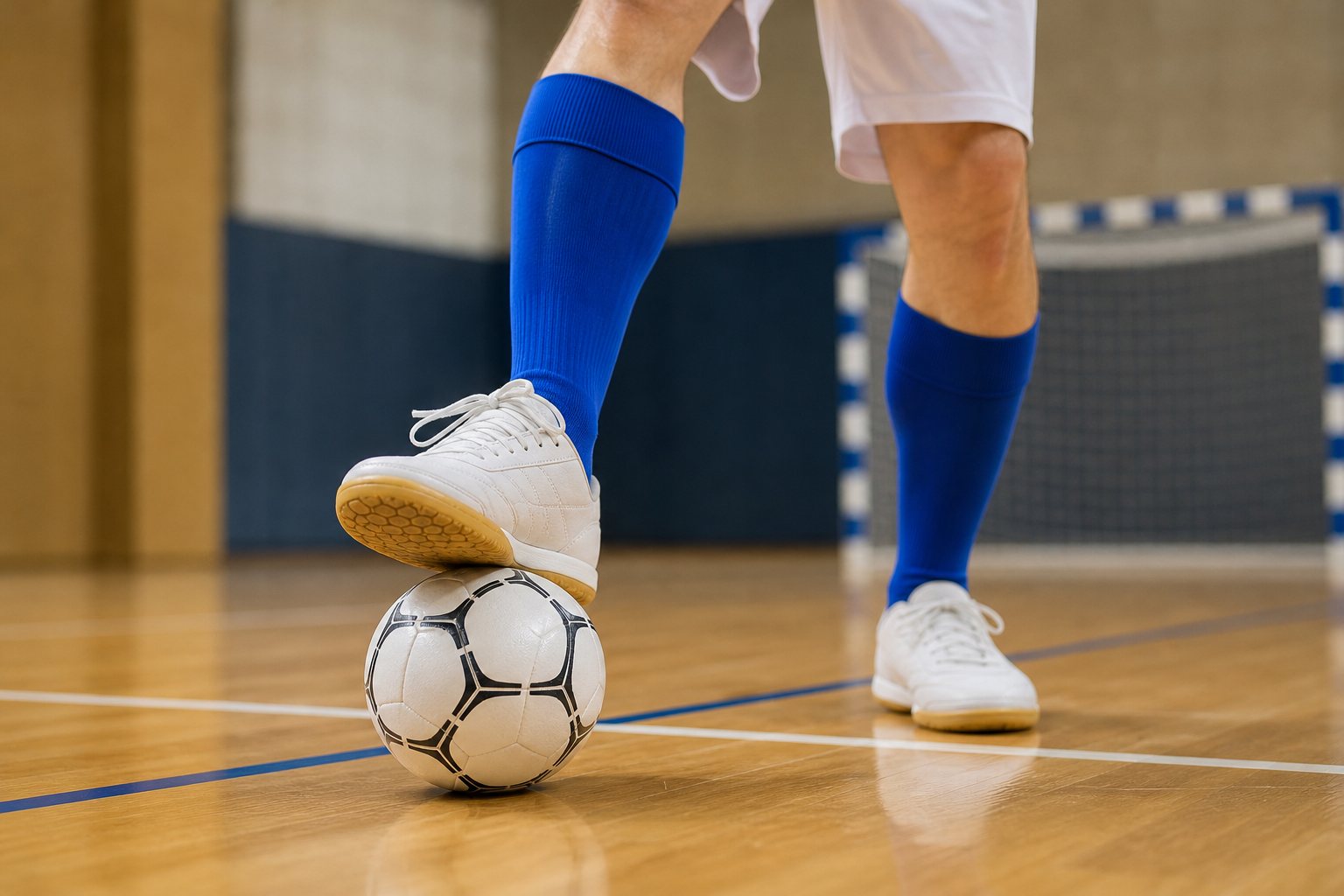
The bag by the door on league night: shin guards still smelling of last week, flat-soled indoor shoes with the laces tied in a double knot, a water bottle, and a ball that does not bounce the way a street ball does. Futsal gear is small and simple compared with many sports, because the Laws require little: shin guards, appropriate clothing and footwear, and a ball made for the game. This page covers what matters, how to check fit, and which claims come from official standards and which from makers.
Quick answer: The only equipment the Futsal Laws make compulsory is shin guards (suitable material, appropriate size, covered by socks); beyond that, you need flat-soled indoor shoes and a ball that meets your league’s rules. Ankle braces are optional and best chosen with a professional. Product details below come from retail listings, and we have not tested them.
Shin guards
Law 4 of the FIFA Futsal Laws of the Game 2025/26 makes shin guards compulsory. They must be made of a suitable material, be of an appropriate size to give reasonable protection, and be covered by socks. Players are responsible for size and suitability. That is the verified standard. US college and high school rule guides for soccer call for guards meeting the NOCSAE standard, with the NFHS guide asking for the NOCSAE seal and height range stamped on the outside; we did not check whether youth futsal leagues require it, so ask yours. Look for a guard that covers the shin without reaching the knee joint, stays put when you sprint and fits under the sock. Replace guards that crack or lose their strap. The Vizari Malaga shin guards are a hard-shell option with hook-and-loop straps in kids’ to adult sizes, according to the listing.
Indoor shoes
Futsal is played on a hard, smooth floor, and indoor soccer shoes have flat rubber soles made for it. Retail buying guides explain that soccer shoe soles are labelled by surface and that IC or IN marks flat rubber soles for indoor courts; studded outdoor soles are not suitable for hard courts. Many facilities specify non-marking soles, so check yours. Fit them as you would any athletic shoe: toes with room, heel secure, and a lace-up you can tighten. The shoe maker’s claims about touch and grip are marketing, not standards. We did not find a study linking particular futsal shoes to injury rates.
The ball
Law 2 describes a futsal ball 62 to 64 cm around, 400 to 440 g, which should bounce 50 to 65 cm when dropped from 2 m. Many leagues specify the size and a quality mark; check yours, and youth leagues may use other sizes. We have not verified a specific ball product, so we do not recommend one here. A ball that is too bouncy will not feel like the game: check the pressure and that the bounce matches the description.
Ankle support
The National Athletic Trainers’ Association (NATA) ankle-sprain position statement recommends that athletes with previous sprains tape or brace for all practices and games, and names a previous sprain as the most consistent risk factor. In the 2026 Spanish under-19 futsal study, ankle injuries were 23.4% of the total. A brace is not a treatment, and it does not replace strengthening and balance work. The ASO EVO ankle stabilizer is a low-profile lace-up that, according to retail listings, fits in court shoes. Ask an athletic trainer or physical therapist whether you need one and how to fit it.
Clothing and the rest of the bag
Law 4 also lists the basic kit (shirt, shorts, socks, shin guards and footwear), and says anything taped or worn over the socks must match them in colour. Jewellery is not permitted in the soccer Laws we reviewed for this page; check the futsal text with your referee. Bring water, a spare pair of socks and a towel. After the game, soft slides such as the OOFOS OOahh slide are one of many recovery-footwear options, and the maker cites an APMA Seal of Acceptance; slides are comfort, not treatment.
How to choose, in short
- Start with the rulebook: shin guards, appropriate footwear, a league-approved ball.
- Buy shoes made for indoor courts and fit them in person if you can.
- Check shin guards for fit and cracks each season, and replace them as kids grow.
- Choose ankle support only after asking a professional.
- Separate official standards (the Laws, NOCSAE) from maker claims (grip, touch, “pro” levels).
See our injury prevention page for how gear fits with warm-ups and strength work, the rules page for what the Laws require, and the soccer hub for outdoor gear.
Vizari Malaga Shin Guards
- Hard shell
- Hook-and-loop straps
- Kids 4-6 to adult sizes

ASO EVO Ankle Stabilizer
- Lace-up with figure-8 straps
- Fits left or right foot
- Low profile, fits in court shoes
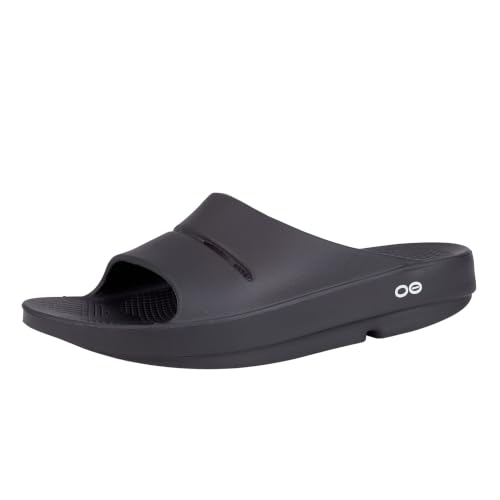
OOFOS OOahh Slide
- OOfoam slide
- APMA Seal of Acceptance
- Machine washable
$59.95 at Amazon, as of Nov 17, 2026 01:07 UTC
Check price on AmazonFutsal gear FAQs
Are shin guards required in futsal?
Yes. The FIFA Futsal Laws make them compulsory, made of a suitable material, an appropriate size and covered by socks.
Can I wear regular running shoes for futsal?
Many facilities allow clean, non-marking indoor shoes, and flat-soled indoor soccer shoes are made for the sport. Ask your venue, and avoid studded outdoor soles on hard courts.
What ball is used in futsal?
Law 2 describes a ball 62 to 64 cm around and 400 to 440 g that bounces 50 to 65 cm when dropped from 2 m. Your league may specify the size and a quality mark.
Do I need an ankle brace for futsal?
Not necessarily. NATA recommends tape or a brace for athletes with a previous sprain. Ask an athletic trainer or physical therapist.
Do product listings prove a product works?
No. Product details here come from retail listings and we have not tested the products. Standards such as the Laws and NOCSAE are different from maker claims.
Sources
- FIFA Futsal Laws of the Game 2025/26
- NOCSAE soccer standards
- NFHS 2024-25 Soccer Guide
- Pro:Direct Soccer: soccer cleat and sole guide
- NATA position statement: ankle sprains, Kaminski 2013 (PMID 23855363)
- Epidemiology of injuries in male under-19 futsal players in Spain, 2026 (PMID 42421836)
- Vizari Malaga shin guards (Amazon listing)
- ASO EVO ankle stabilizer (Amazon listing)
- OOFOS OOahh slide (Amazon listing)
General information for education only, not medical advice. It does not replace a sports medicine doctor, physical therapist, athletic trainer or dietitian who knows you. See how we write and check our pages in our editorial policy. Back to the futsal hub.