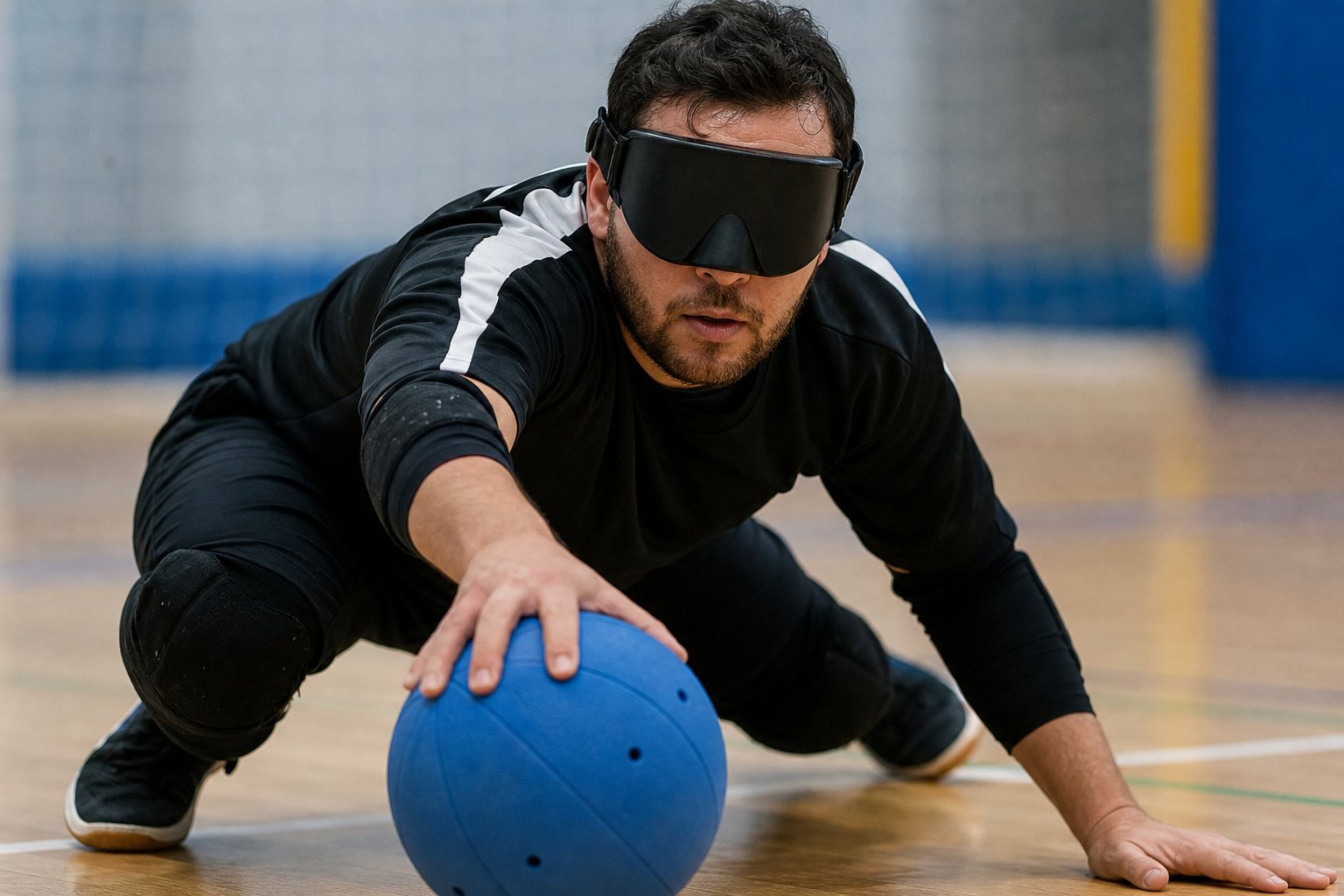
A tournament Saturday: three games, a hall that warms up by the afternoon, and a bag with a banana, a water bottle and a protein bar someone handed over in the car park. What goes into that bag decides whether the last game feels like the first. Goalball nutrition is the food, fluids and, for some athletes, supplements that support training and games; it sits next to athlete health, including eating enough, which is as important as any product.
Quick answer: Goalball has no weight classes, so the goal is eating enough to fuel training, drinking enough to start and finish well, and being careful with supplements. Big sports bodies say food comes first and supplements are a minor add-on, that not eating enough (low energy availability) can harm health, and that supplements can be contaminated, so look for third-party testing and check with a doctor or dietitian. We found no goalball-specific nutrition research.
General information, not medical advice and not a diet plan. Related pages: training and recovery. Start at the goalball hub.
Fuel for a high-intensity intermittent sport
Goalball research describes bursts of high-intensity effort on top of an aerobic base (Alves and colleagues, 2018; see our training page). The joint position of the Academy of Nutrition and Dietetics, Dietitians of Canada and the American College of Sports Medicine (Thomas and colleagues, 2016) says that performance and recovery are enhanced by well-chosen nutrition, and that guidance on the type, amount and timing of food, fluids and supplements varies with the training and competition. In practice: a good meal a few hours before games, carbohydrate-containing snacks between games on tournament days, and protein and carbohydrate afterwards are standard sports nutrition advice. Exact amounts depend on size, training and goals, so a registered dietitian who works with athletes is the right person to set them.
In a study of 11 elite Brazilian goalball players (Goulart-Siqueira and colleagues, 2018), a higher percentage of body fat was linked with poorer jump and Yo-Yo results. That is an association in a small group, not a reason to diet. Weight and shape comments can harm young athletes, so keep the focus on fuelling performance.
Hydration and warm halls
The ACSM position stand on exercise and fluid replacement (2007) advises starting activity well hydrated and drinking during exercise to avoid excessive dehydration, defined as more than 2% body weight loss from water deficit. A review of hydration for sports with repeated intense efforts (Maughan and Shirreffs, 2010) says performance in team sports with repeated intense efforts is impaired by significant dehydration and that athletes should start well hydrated. Because goalball players may sit out and then return after a time-out or substitution, sipping when allowed and between games is practical. A Paralympic heat review (Griggs and colleagues, 2020) says heat risk depends on the sport, the impairment and the environment, so watch for heat in crowded halls.
Eating enough: energy availability and RED-S
Relative Energy Deficiency in Sport (REDs) is a syndrome of health and performance problems from low energy availability, meaning not eating enough for the training done. The 2023 IOC consensus (Mountjoy and colleagues) covers female and male athletes and reports growing evidence of a link between mental health and REDs, plus more data on low energy availability in males. We found no goalball-specific REDs data, and the sport has no weight classes, but any athlete who trains hard can under-eat, on purpose or by accident. Signs such as constant fatigue, frequent illness, injuries that do not heal or missed periods are reasons to talk to a doctor. Eating disorders are health matters for a doctor or dietitian, not a training problem.
Supplements: the cautious approach
The IOC consensus on dietary supplements (Maughan and colleagues, 2018) says nutrition makes a small but valuable contribution to performance and supplements a minor one, that some supplements may harm health or performance, and that use is widespread. Our house rules follow that line: check with a doctor or registered dietitian first, never exceed label directions, and avoid products with proprietary blends or banned ingredients.
- Third-party testing. Prefer products certified by programs such as NSF Certified for Sport or Informed Sport; say plainly if a product is not certified.
- Banned substances. Athletes in IBSA and IPC competition are subject to anti-doping rules based on the WADA Prohibited List. Check any product or medicine against the list and with your national anti-doping organization before competing.
- Stimulants. Caffeine content varies; it is not for everyone (sensitivity, heart conditions, pregnancy). Check with a doctor.
- Young athletes. We did not find goalball-specific supplement guidance for children; food first and ask a pediatrician.
When to get help
See a doctor or registered dietitian if you are losing weight unintentionally, avoid foods or meals, feel faint in training, or have recurring injuries or illness. A para sport dietitian can also help if medications or an eye or health condition affect eating. The Gee review (2021) notes most para research covers single impairment types, so individual advice matters.
Goalball nutrition: FAQs
What should a goalball player eat on tournament day?
General sports nutrition advice is a familiar, easy-to-digest meal a few hours before the first game, carbohydrate-containing snacks and fluids between games, and a meal with protein and carbohydrate afterwards. A dietitian can tailor amounts.
Do goalball players need supplements?
Not necessarily. The IOC says supplements make only a minor contribution compared with nutrition overall. If you consider one, check with a doctor or dietitian and prefer third-party tested products.
Is there a weight class in goalball?
No. The IBSA rulebook divides competition into male and female categories, not weight classes.
How much water should I drink?
The ACSM says to start well hydrated and drink during activity to avoid losing more than 2% of body weight to dehydration. Needs vary; a clinician or dietitian can advise.
What is REDs and does it affect goalball players?
It is a syndrome from not eating enough for the training done. The IOC says it can affect female and male athletes; we found no goalball-specific data, but any athlete can be affected.
Sources
- Thomas et al., position of the AND, Dietitians of Canada and ACSM: nutrition and athletic performance, 2016
- ACSM position stand: exercise and fluid replacement, 2007
- Maughan and Shirreffs, hydration strategies for high-intensity sports and repeated intense efforts, 2010
- Maughan et al., IOC consensus statement: dietary supplements and the high-performance athlete, Br J Sports Med 2018
- Mountjoy et al., IOC consensus statement on Relative Energy Deficiency in Sport (REDs), Br J Sports Med 2023
- Goulart-Siqueira et al., field test performance in elite goalball players, Sports 2018
- Griggs et al., heat-related issues for Paralympic athletes at Tokyo 2020, Temperature 2020
- Gee et al., physiological considerations to support podium performance in para-athletes, Front Rehabil Sci 2021
- WADA, Prohibited List
- NSF Certified for Sport
- Informed Sport
- IBSA, Goalball Rules and Regulations 2025 (copy hosted by the Japan Goalball Association)
- Alves et al., aerobic and anaerobic parameters and game performance in elite goalball, Front Physiol 2018
General information for education only, not medical advice. It does not replace a visit with a doctor, physical therapist or athletic trainer. See how we write and check our pages in our editorial policy.