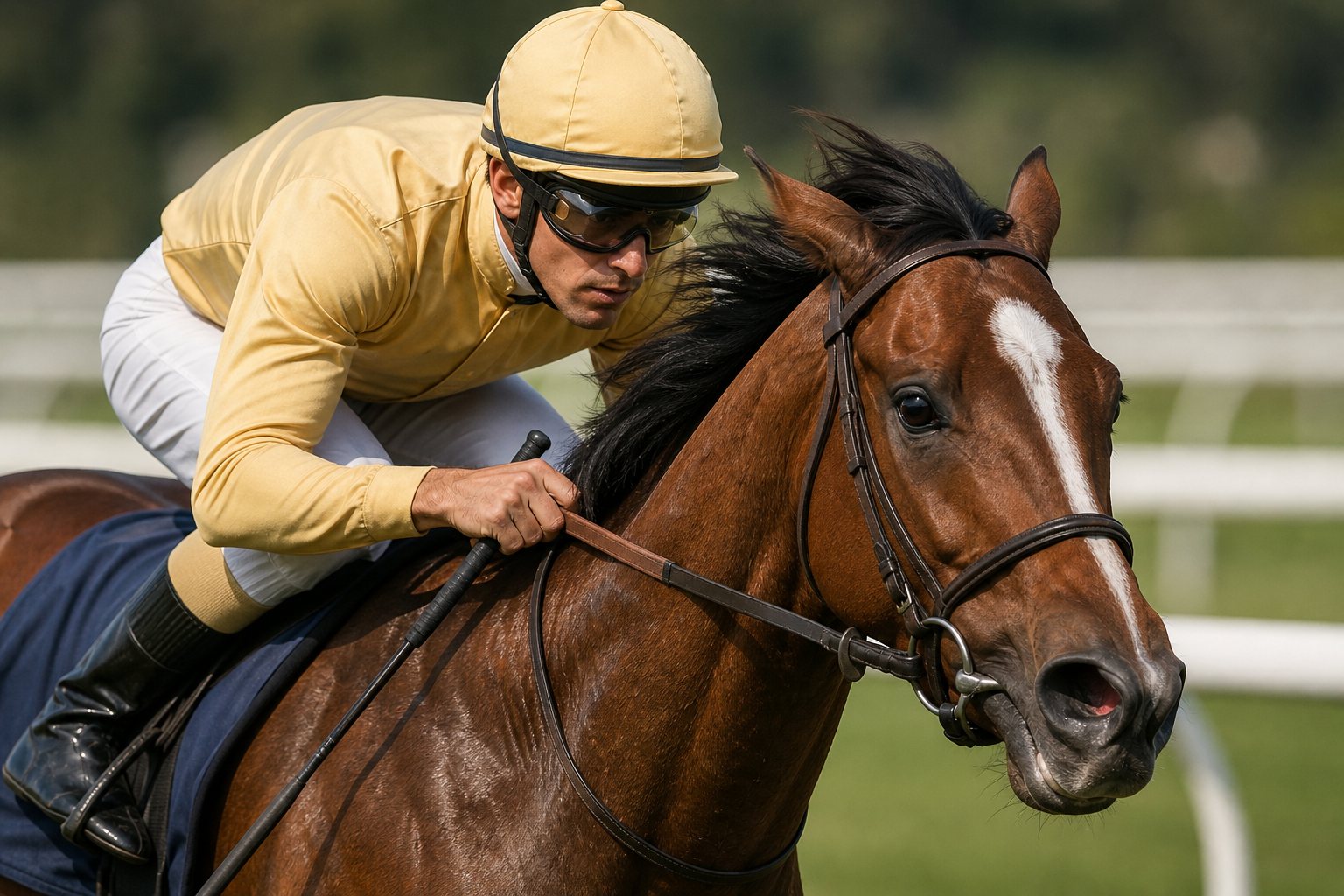
A jockey steps on the scale in the weighing room, and the number decides whether the ride is hers. Nutrition and athlete health in horse racing is mostly a story about weight: how riders meet a racing weight, what that does to energy, bones and mood, and how to eat and drink around a day of riding. This page is general information; it is not a diet, and anyone in a weight-controlled sport should work with a sports dietitian and a doctor.
Quick answer: Jockeys face unusual pressure to stay light, and studies report restricted food and fluid intake, low bone density in many male jockeys and disordered-eating risk. Eating regularly, drinking enough and getting professional support are the best-supported steps. Supplements are a decision for a doctor or dietitian, and drug-tested riders should check that any product is certified for sport.
What studies show about jockeys and food
- American jockeys, 2025. In a study of 37 jockeys, median calorie intake across a workday was 263.8 kcal, and the authors described weight-cycling behaviours with restricted food and fluid (Keener and colleagues).
- Review of weight-making, 2021. Ryan and Brodine found rapid weight loss through calorie restriction and dehydration is commonly thought to be harmful, though little evidence shows lasting health effects, and that jockeys’ dietary choices and training do not match the physiological demands of the sport.
- Bone health, 2022. Dunne and colleagues reported that low bone density appears in a large percentage of young and experienced professional male jockeys.
- Apprentices, 2025. In a Turkish study of 31 apprentice jockeys aged 15 to 19, 25.8% were at high risk for disordered eating on the EAT-26 questionnaire, compared with 13.6% of 22 wrestlers (Ayar and colleagues).
- Regular meals, 2023. In a preliminary five-year study of male flat jockeys who received dietary and exercise advice, regular breakfast rose from 48% to 83% and body composition and hydration markers improved (Wilson and colleagues). It was not a controlled trial.
Fuel and fluids for riding days
We did not find a published fuelling plan for jockeys, so the following is general. Eating regular, planned meals and snacks rather than long gaps is the direction the Wilson study points to, and drinking enough to keep urine light is a standard hydration check. The CDC advises in hot weather to carry water, take shade and breaks, and know the signs of overheating: heavy sweating, cramps, dizziness, headache, weakness and nausea. Riders who restrict fluid to make weight are at more risk of heat trouble. A sports dietitian can build a plan around your own racing weight and schedule.
Relative energy deficiency in sport (RED-S)
The 2023 International Olympic Committee consensus statement describes Relative Energy Deficiency in Sport as a syndrome of harmful health and performance effects in female and male athletes who do not take in enough energy for their training and daily needs. It affects bone, hormones, mood and more. Because jockeys fit the risk profile of weight-controlled athletes, anyone who has missed periods, repeated stress injuries, constant fatigue, low mood or an unhealthy focus on food should see a doctor or sports dietitian. We are not diagnosing anything: only a professional can.
Heat, sweating and weight cautions
Do not use saunas, laxatives, diuretics or extreme fasting to make weight on the advice of a friend. The research above links restricted intake with fatigue and poor health, and we found no study that shows a safe do-it-yourself method. Work out a plan with your doctor and dietitian, and tell the racing authority’s medical team if you are struggling.
Supplements: what to know
The International Olympic Committee consensus statement on dietary supplements (2018) says supplements can make a minor contribution to a nutrition programme, that some may harm health, performance or livelihood if they cause an anti-doping rule violation, and that a full nutritional assessment should come before any supplement decision. For riders who are drug tested, that means choosing products certified by a third-party testing scheme such as NSF Certified for Sport or Informed Sport, reading the label, and checking with a doctor or dietitian first. Nothing here is a dosage recommendation.
For hydration, many athletes use an electrolyte drink mix. The product we feature on our gear page states third-party sport certification from its maker; check the label yourself. See also our electrolyte powder guide.
Frequently asked questions
Why do jockeys struggle with weight?
Racing sets riding weights, and riders must meet them often. Studies describe restricted calories and fluids and a risk of low bone density and disordered eating.
What is RED-S?
Relative Energy Deficiency in Sport is a syndrome from not taking in enough energy for training. The IOC updated its consensus statement in 2023. Only a clinician can assess it.
Can I use a sauna to make weight?
We found no evidence to support a safe do-it-yourself approach, and restricted fluids add heat risk. Talk with a doctor and sports dietitian.
Are supplements safe for drug-tested riders?
Not automatically. The IOC statement warns that supplements can lead to anti-doping violations. Look for third-party certification and ask a professional.
How should apprentices approach eating?
Eat regularly, avoid extreme dieting and get support early. In a study of apprentice jockeys, a quarter were at high risk for disordered eating.
Sources
- Keener MM et al., Workday habits and fatigue of American jockeys, J Occup Environ Med 2025
- Ryan K, Brodine J., Weight-making practices among jockeys, 2021
- Dunne A et al., Body composition and bone health of jockeys, Sports Med Open 2022
- Ayar M et al., Eating attitudes of apprentice jockeys and wrestlers, BMC Nutr 2025
- Wilson G et al., Body composition and resting metabolic rate in male flat jockeys, 2023
- Mountjoy M et al., 2023 IOC consensus statement on Relative Energy Deficiency in Sport (REDs)
- Maughan RJ et al., IOC consensus statement: dietary supplements and the high-performance athlete, 2018
- CDC, Heat and health
General information for education only, not medical advice. It does not replace a sports medicine doctor, physical therapist, athletic trainer or registered dietitian who knows you. See our editorial policy for how we research and write.