This article contains affiliate links: if you buy through them we may earn a commission, at no extra cost to you. Read our affiliate disclosure.
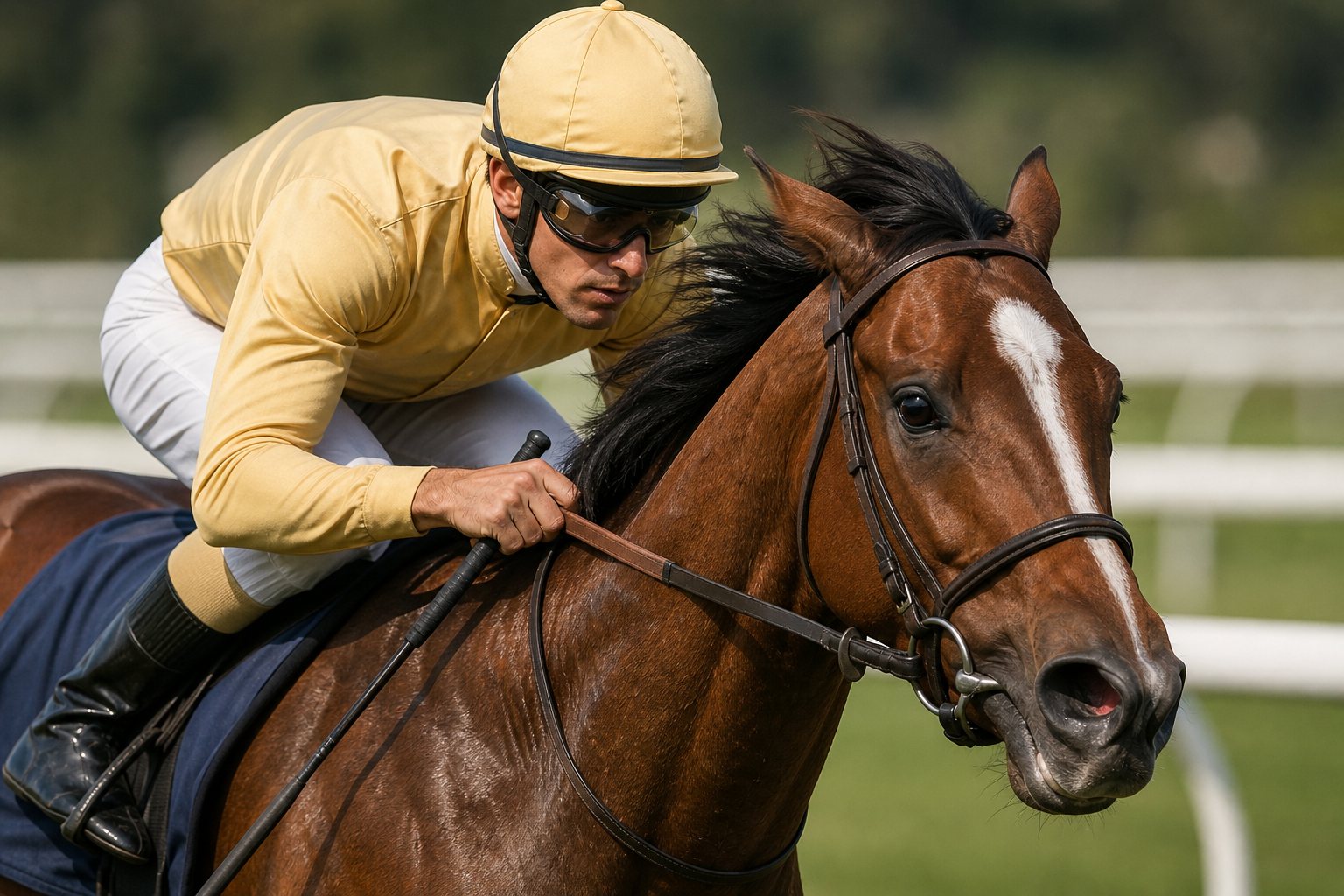
Before sunrise at a racetrack, an exercise rider shortens her stirrups, tucks into a crouch and lets a Thoroughbred stretch out over a dirt track that is still wet from the water truck. Twelve hours earlier, or twelve hours later, a jockey in silks does the same thing in front of thousands, in a field of horses moving at full gallop. Horse racing (also called the “sport of kings,” Thoroughbred racing or “the turf”) is a contest in which jockeys ride horses over a set distance, and the first across the finish line wins.
Horse Racing guides: what do you need?
New to horse racing? Start with the first card. Everything here is general education, not medical advice.
History & Origins of Horse Racing
Horse racing is one of the oldest organised sports, but this page sticks to the milestones we could document for today’s best-known races. In England, the Grand National was first run at Aintree on 26 February 1839 (Grand National overview). In the United States, Meriwether Lewis Clark Jr. visited Epsom and Paris in 1872, came home and organised the Louisville Jockey Club, which led to the first Kentucky Derby on 17 May 1875. Aristides, ridden by Oliver Lewis and trained by Ansel Williamson, won that first race in a 15-horse field (Kentucky Derby overview).
The American “Triple Crown” is the Kentucky Derby, the Preakness Stakes and the Belmont Stakes. Sir Barton was the first horse to win all three, in 1919, although the name only came into use about eleven years later. Writer Charles Hatton popularised it after Gallant Fox won all three in 1930. Since 1931 the Derby has been the first leg. Where origin stories are unclear, we have left them out rather than guess.
- 1839: First Grand National at Aintree (26 February).
- 1875: First Kentucky Derby (17 May), won by Aristides.
- 1919: Sir Barton wins what would later be called the Triple Crown.
- 1930: Gallant Fox’s sweep popularises the term “Triple Crown”.
- 1973: Secretariat wins the Triple Crown and sets the Derby record of 1:59.4.
- 2015 and 2018: American Pharoah (2015) and Justify (2018) become the 12th and 13th Triple Crown winners.
- 2026: Cherie DeVaux becomes the first woman to train a Kentucky Derby winner (Golden Tempo).
Legends of the Sport
In racing the athletes who carry the headlines are often the horses, so this list names horses. Jockeys and trainers are credited in the tables where we confirmed them.
- Sir Barton: in 1919 the first horse to win the Derby, Preakness and Belmont in one year.
- Gallant Fox: the second horse to sweep the three races (1930); his win helped popularise the phrase “Triple Crown”.
- Secretariat: 1973 Triple Crown winner who set the Kentucky Derby record of 1:59.4.
- Red Rum: won the Grand National three times, in 1973, 1974 and 1977.
- Tiger Roll: won the Grand National back to back in 2018 and 2019.
- American Pharoah and Justify: the 12th (2015) and 13th (2018) Triple Crown winners.
This is not a ranking, and no person or owner named here endorses AthleteRx.
Official results and records
We only list champions and records here after checking them on the official source. For the latest results, go to:
How we keep this current: we re-check facts after each major championship and update this page. Spot an error? See our editorial policy.
This page is about racing from the rider’s side: how a race works, who rides at what level, and what injury research says about jockeys and exercise riders. It is general information, not medical advice. Horse welfare is part of the sport’s regulation and we include the headline safety numbers, but the focus here is the people.
Horse racing at a glance
| What it is | Horses race over a measured distance on dirt, turf (grass) or a synthetic surface, with a jockey on each. Flat racing runs on the level; jump racing (steeplechase and hurdles) adds fences. |
|---|---|
| How it is won | The first horse across the finish line wins. |
| Participants and levels | Exercise riders (the morning workers), apprentice and professional jockeys, and amateur riders in point-to-point and amateur races. This page focuses on Thoroughbred racing. |
| Where | Racetracks across the United States, Europe, Australia, Asia and elsewhere; point-to-point and steeplechase meets in the countryside. |
| Governing bodies | In the United States, the Horseracing Integrity and Safety Authority (HISA) sets national racetrack safety and anti-doping rules; state racing commissions license riders and tracks. Abroad, the British Horseracing Authority (BHA), the Irish Horseracing Regulatory Board (IHRB) and others. |
| Season | Year-round somewhere in the world. In the United States the Triple Crown (Kentucky Derby, Preakness Stakes, Belmont Stakes) runs in spring. |
How it works and the formats
Flat races start from a starting gate. The Kentucky Derby is run over 1 1/4 miles and the Preakness Stakes over 1 3/16 miles; the Belmont Stakes is traditionally the longest of the three at 1 1/2 miles, although its distance has differed in years when it was moved to Saratoga during Belmont Park’s renovation, so check the current year.
- Flat racing: sprints and routes on dirt, turf or synthetic surfaces. Falls are rare, but when a jockey comes off at speed the injuries per fall are higher than in jump racing, according to British data below.
- Jump racing: steeplechase and hurdle races. Jockeys fall far more often (46.2 falls per 1,000 rides versus 1.8 on the flat in Great Britain) because of the obstacles.
- Amateur and point-to-point: races for riders who are not paid professionals, often over fences in the countryside. They are a separate group in the injury research.
Jockeys must make and keep a minimum racing weight, which is why weight management is a large part of the rider’s life (see below). Quarter Horse racing and harness racing are related but separate sports with their own rules.
Who rides, and at what level
Racing is a licensed profession rather than a school or college league. A common route is ordinary horsemanship first, then work as an exercise rider or in an apprenticeship before a jockey license. In Great Britain, professional jockeys in one study were on average 19.5 years old when licensed; the sport is demanding for young adults, and licensing is handled by each country’s racing authority. As far as we found, there is no school or college racing league; our youth horseback riding page covers where young riders start.
In the United States, the Horseracing Integrity and Safety Act created HISA, and its Racetrack Safety Program took effect on July 1, 2022. It sets national safety standards, including baseline concussion and physical exams for jockeys and a standardized concussion protocol, according to America’s Best Racing. Horse welfare is regulated in the same framework: HISA reported 1.04 racing-related equine fatalities per 1,000 starts at tracks under its rules in 2025, and the Equine Injury Database figure for North America was 1.07.
Olympics and Paralympics. Horse racing has not been an Olympic or Paralympic sport that we could find. Equestrian events at the Games are dressage, eventing and jumping (see dressage). For the current Games, check the official programme at olympics.com and paralympic.org.
Physical demands
Researchers describe the physiological demands of Thoroughbred racing as intense, with elevated heart rates and substantial oxygen uptake. A 2024 study of 46 elite Australian jockeys compared with 33 people from the general population found the jockeys were shorter (1.64 m versus 1.75 m) and lighter (56.5 kg versus 74.2 kg), and their hearts showed adaptations, including higher left ventricular mass index. The authors suggest this reflects the chronic demands of racing.
Riding a galloping horse is also a balance and control skill. A 2025 study that put accelerometers on 12 apprentice and 2 senior jockeys found that head movement decreased as the horse’s speed rose and as the jockey gained experience, meaning experienced riders absorbed the horse’s motion better, particularly at higher exercise loads.
Health and safety for horse racing
If you are hurt, or you come off a horse, see a sports medicine doctor, physical therapist or athletic trainer. The numbers below are from studies of professional and amateur riders.
Injury patterns
- Great Britain, 2007 to 2018: in a cohort of 234 professional jockeys (278 injuries), Davies and colleagues found 57.2% were soft tissue injuries, 25.3% fractures and 10.5% concussions. The injury rate was 5.1 per 1,000 rides in jump racing versus 1.0 on the flat, but flat jockeys were injured more often per fall (over five times higher).
- Maryland, 2015 to 2019: over about 45,000 mounts, sports medicine physicians logged 204 injuries. Soft tissue was 80% and concussions 4%; the lower limbs (31%) and upper limbs (26%) were hit most, and 41% of injuries happened in and around the starting gate.
- Ireland, 2016 to 2024: amateurs had the highest fall rate (110 per 1,000 rides) and the highest fracture and concussion rates per ride. Jump jockeys had the highest total injury rate (8 per 1,000 rides). Falls and injuries decreased in professional racing compared with the previous study period.
Concussion: recognize and remove
Researchers call horse racing’s concussion risk exceptionally high, and a 2026 Irish study built jockey-specific norms for the ImPACT cognitive test from 663 jockeys. The CDC’s HEADS UP program says a person with a possible concussion should be removed from activity and cleared by a healthcare provider before returning; signs include headache, dizziness, confusion and balance problems, and danger signs such as repeated vomiting or a seizure mean calling 911. America’s Best Racing reports that a rider in concussion protocol should not ride and that a helmet worn in a head injury should be replaced.
Weight, bones and food
Jockeys must meet strict racing weights. A 2021 review by Ryan and Brodine found that rapid weight-loss techniques such as calorie restriction and dehydration are commonly thought harmful, though little evidence shows lasting health consequences, and that jockeys’ training and eating habits are not well matched to the sport’s demands. A 2022 review reported low bone density in a large share of young and experienced male professional jockeys. None of this is a guide for losing weight: anyone in a weight-controlled sport should work with a sports dietitian and a doctor, not copy what other riders do.
Helmets, vests and the track
According to America’s Best Racing, Kentucky asked jockeys to wear helmets in 1925 and made them mandatory in the 1950s; vests spread from steeplechase racing in the 1980s and were mandatory by the mid-1990s. Goggles became standard in the 1920s. Modern rules specify standards: Pennsylvania’s regulation, for example, accepts vests certified to ASTM F2681-08 or F1937, SATRA or Australian Racing Board standards, and Britain’s BHA has required body protectors that meet BS EN 13158:2018 Level 2. Rails, padded starting gates and safer track surfaces also play a role. Early mornings can be cold and summer afternoons hot; the CDC recommends shade, a hat and sunscreen for outdoor workers and athletes.
Training, recovery and nutrition
Riders build fitness off the horse as much as on it: core and leg strength, balance and cardio, with careful hydration. See our riding-sport pages on training, recovery and nutrition. The CDC recommends at least seven hours of sleep for adults, which is hard for riders who start before dawn. Supplements are a decision for a doctor or dietitian, and drug-tested riders should check that products are certified for sport.
Gear
Jockey helmets and vests must meet the standards of the track’s racing authority, and racing silks, tack and goggles are bought through racing suppliers, so we do not recommend a specific helmet or vest here. Check your state’s rules and fit equipment with a professional. For the long days around the track, these are everyday recovery picks from our guides:

Nuun Sport Electrolyte Tablets
- 300 mg sodium per tablet
- 1 g sugar
- Informed Choice (maker)

Theragun Mini (3rd Gen)
- Pocket-size massage gun
- 3 speeds
- Travel case
$219.99 at Amazon, as of Nov 17, 2026 01:07 UTC
Check price on Amazon
TriggerPoint GRID 1.0 Foam Roller
- 13 x 5 in
- Multi-density surface
- Hollow core
Related sports
- Horseback riding and its disciplines: dressage, eventing and show jumping.
- Polo and rodeo, two more sports built around a horse.
Horse racing FAQs
How do you become a jockey?
A common route is to learn to ride well, work with racehorses as an exercise rider or in a stable, then apply for an apprentice license from the state racing commission or the national authority. Requirements differ by country and state, so ask the racing commission or a trainer.
Is horse racing dangerous for jockeys?
It carries real risk. In British professional data, injuries happened at 5.1 per 1,000 rides in jump racing and 1.0 on the flat. Amateurs in Ireland fell 110 times per 1,000 rides. Helmets, vests and medical teams on site reduce harm but do not remove it.
Is horse racing in the Olympics?
No. The Olympic equestrian sports are dressage, eventing and jumping. We found no record of horse racing on the Olympic or Paralympic programme.
What is the Triple Crown?
It is the Kentucky Derby, the Preakness Stakes and the Belmont Stakes, the three biggest U.S. races for three-year-old Thoroughbreds. The Derby is 1 1/4 miles and the Preakness 1 3/16 miles.
Why do jockeys have to be so light?
Racing sets minimum riding weights, and jockeys have to make the weight for each ride. That is why weight management is a health topic in racing. If you ride, work with a sports dietitian and a doctor.
Sources
- HISA, 2025 annual metrics report
- America’s Best Racing, jockey safety history
- Davies M et al. Race day injury in young professional jockeys in Great Britain, BMJ Open 2021
- Ryan K et al. Injuries among Maryland jockeys, BMJ Open Sport Exerc Med 2020
- Reville A et al. Race-day falls and injuries in Irish horseracing, J Sci Med Sport 2026
- Farley A et al. Cardiac structure of elite Australian jockeys, 2024; Legg KA et al. head kinematics in race riding jockeys, 2025
- Shah MH et al. ImPACT benchmarks for jockeys, Brain Injury 2026
- Ryan K, Brodine J. Weight-making practices among jockeys, 2021; Dunne A et al. body composition and bone health of jockeys, 2022
- CDC HEADS UP, response; CDC sleep
Keep exploring: the sports hub, the horseback riding injuries page, our recovery tools guide, the massage gun guide and the electrolyte powder guide.