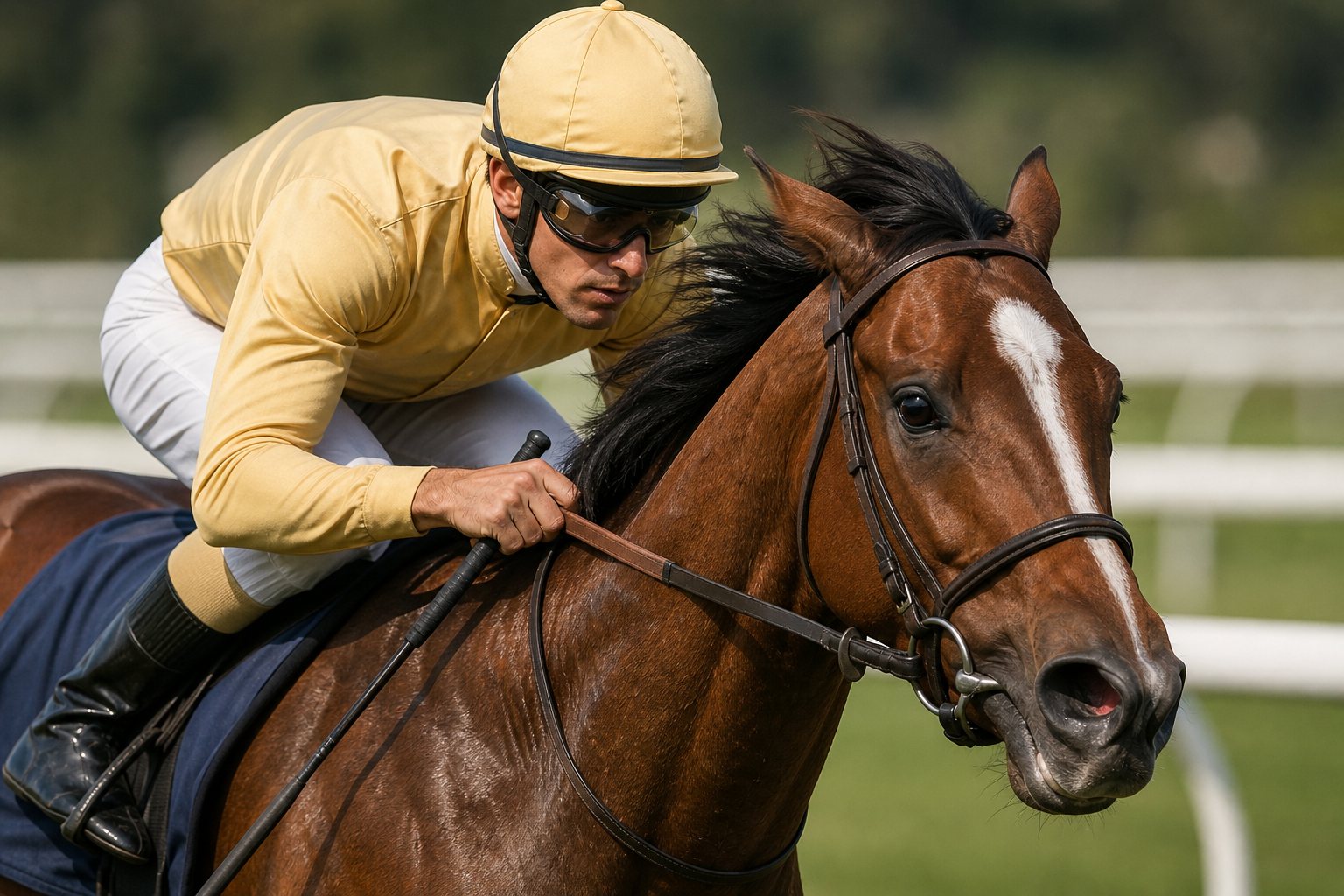
The gate bangs shut behind a jockey who just lost a ride to a rival, and she still has to be calm for the next race in twenty minutes. Mental training for riders is the set of skills that help with focus, confidence, routines and responding to pressure. It is separate from mental health, which is a medical matter covered further down. We found very little research on mental performance skills in jockeys, so this page is honest about the limits.
Quick answer: Mental skills such as routines, goal setting, imagery and breathing are common sport-psychology tools, but we found no jockey-specific trial showing they improve results. Jockeys report higher anxiety and depression symptoms than other elite athletes in one review, so persistent worry, low mood or disordered eating deserve a professional, not a mental trick. In the United States, call or text 988 in a crisis.
Focus and routines
Racing is a rapid decision sport: positions change in seconds, and the rider must read pace, space and a horse that has its own ideas. A pre-race routine is a simple, repeatable sequence, such as checking tack, a breathing pattern and a few cue words, that gives the mind something to hold on to. Routines are common in sport psychology, but we have no jockey study to quote on them. Pick routines you can run on any day, in any weather, with any horse.
Confidence, goals and imagery
- Confidence grows with preparation and honest feedback from a trainer or coach. Experience also helps: a 2025 study found more experienced jockeys moved their heads less at speed (Legg and colleagues), which is a physical sign of settled riding.
- Goal setting works best on things you control: your position, your start, your communication with the horse, rather than results alone.
- Imagery means rehearsing a ride in your head, such as breaking from the gate and finding space. Many athletes use it; we found no jockey trial on it.
Pressure and setbacks
Pressure in racing is high because weight, rides and income are all uncertain. A 2021 narrative review of 16 studies found jockeys reported higher levels of depressive and anxiety symptoms than other elite athletes (King and colleagues). Risk factors included injury, perceived stress, burnout and career dissatisfaction. Steeplechase data shows how disruptive a fall can be: in US races from 2023 to 2025, 19 of 44 riders had at least 30 days away after a dislodgement, and 7 of 38 did not return to jump racing (Markowitz, 2026). After a fall or a losing streak, talking with a trusted coach, family member or clinician is part of the toolkit, not a weakness.
Weight, mood and mental health
This is separate from mental performance. The same review found weight-making negatively affected jockeys’ mood and attitudes to eating, with lower riding weights linked to more disordered eating attitudes, and that help-seeking from mental health professionals appears low. The IOC consensus statement on mental health in elite athletes (2019) says symptoms and disorders are common, can impair performance and raise injury risk, and should be treated by qualified professionals. Anxiety, depression, disordered eating, burnout or substance misuse are health matters: see a doctor or mental health professional. In the United States, the 988 Suicide & Crisis Lifeline is available by call or text. For eating and weight, see our nutrition page.
Preparing for race day
Logistics (arrival time, weighing in, equipment) vary by track and country; ask your trainer. What we can say is that sleep, food and calm preparation are linked to how you handle a race day; see recovery and training. After a head impact, do not rely on willpower: see the injuries page.
Young riders
We did not find sourced guidance on mental training for young jockeys, so we leave it out. Apprentices are at the start of a career where mental health matters, and a licensed trainer or racing school can point you to the support your authority provides.
Frequently asked questions
Does visualization help jockeys?
Many athletes use imagery, but we found no jockey-specific trial showing it improves results.
How do jockeys handle fear after a fall?
We did not find a study with a step-by-step method. Talk with a coach and a healthcare provider; fear after injury is common and treatable.
Do jockeys have more mental health problems than other athletes?
A 2021 review reported higher depressive and anxiety symptoms than other elite athletes, with similar distress levels. It is a narrative review of 16 studies.
Is a pre-race routine worth building?
It is common sport-psychology practice and costs nothing, but we cannot cite jockey-specific evidence of benefit.
Where can I get help?
See a doctor or qualified mental health professional. In the United States, you can call or text 988. Outside the US, use your local crisis line.
Sources
- King L et al., Mental health difficulties among professional jockeys, BMJ Open Sport Exerc Med 2021
- Reardon CL et al., Mental health in elite athletes: IOC consensus statement 2019
- Legg KA et al., Head kinematics in race riding jockeys, Sci Rep 2025
- Markowitz JS., Rider dislodgement events in U.S. steeplechase racing, Inj Epidemiol 2026
- Ryan K, Brodine J., Weight-making practices among jockeys, 2021
- 988 Suicide & Crisis Lifeline, Call or text 988 (US)
General information for education only, not medical advice. It does not replace a sports medicine doctor, physical therapist, athletic trainer or registered dietitian who knows you. See our editorial policy for how we research and write.