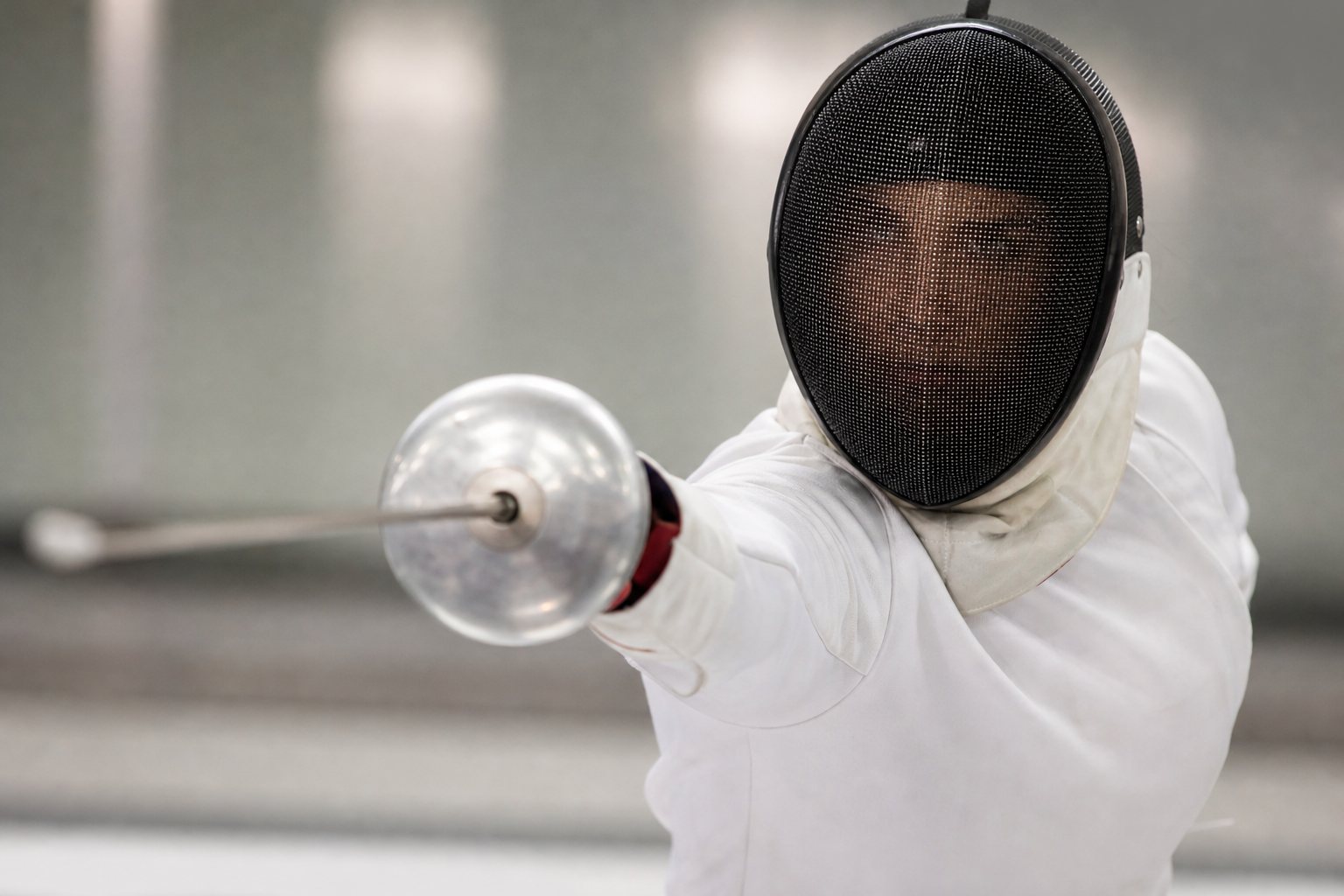
It is nine at night, your hair still smells of chlorine, and tomorrow starts with a 6 a.m. swim. Today you fenced, ran and shot. The real training gain happens in the hours when you stop. Modern pentathlon recovery is everything you do between sessions so that the next one goes well: sleep, food, easier days, mobility and, honestly, patience. Some popular recovery methods have weaker evidence than their marketing suggests, and this page says which.
Quick answer: Recovery in a five-event sport mostly means enough sleep, enough food, planned easier days and rest days, and telling normal soreness from pain that needs checking. Adults are advised to sleep at least 7 hours (AASM and Sleep Research Society), and teens 8 to 10 hours (AASM consensus). Massage has some evidence for soreness; cooldowns, cold water and gadgets are mixed. See a clinician for pain that does not settle.
Sleep comes first
The American Academy of Sleep Medicine and Sleep Research Society recommend that adults sleep 7 or more hours (2015), and the AASM pediatric consensus, endorsed by the American Academy of Pediatrics, recommends 8 to 10 hours for ages 13 to 18. A study of elite female gymnasts (Dumortier and colleagues, 2018, a different sport) found that higher training load went with shorter sleep, and shorter sleep with poorer performance, so heavy weeks are when sleep tends to slip. Pentathletes who train before school or work should plan bedtime from the alarm backward. A review by Nédélec and colleagues (2015) supports consistent sleep and napping for athletes. Nothing in the studies we found is specific to pentathletes.
Load management across five events
Recovery is mostly decided by how the week is built. Give each hard day an easier day, avoid stacking two sessions that stress the same area (a heavy pull day before a swim, for example), and keep at least one full rest day. The 2024 commentary on the new format (Rappelt and Donath) says athletes need effective routines before, during and after competition and notes the demands of the shorter one-day format. For youth, the American Academy of Pediatrics (Brenner, 2016) advises one to two days off from the sport per week and about three months a year away from a given sport in blocks of at least a month; it addresses single-sport specialization, so a multi-sport athlete can read it as a prompt to talk to a pediatrician or coach.
Cooling down, mobility and stretching
A 2018 review by Van Hooren and Peake concluded that cool-downs were largely ineffective for next-day performance, injury or soreness, though they may help cardiovascular and respiratory recovery. That means a short easy swim or walk is fine if it feels good, but it is not a magic fix. For mobility, the American Academy of Pediatrics suggests static stretching in a cool-down in its figure skating advice; that is general guidance, not a pentathlon finding. Foam rolling shows small short-term flexibility gains and appears better used in a warm-up (Wiewelhove and colleagues, 2019). Useful mobility areas for pentathletes are the shoulders and thoracic spine (swim and obstacle), hips and ankles (fencing lunges and running) and calves.
Refuel and rehydrate
The joint position of the Academy of Nutrition and Dietetics, Dietitians of Canada and ACSM (2016) recommends refueling carbohydrate and, early in recovery, about 15 to 25 g or 0.25 to 0.3 g/kg of protein, plus rehydration. Details are on our nutrition and athlete health page.
Recovery tools: what the evidence says
- Massage: a 2018 review (Dupuy and colleagues) found massage the most effective of the methods compared for delayed-onset muscle soreness and perceived fatigue.
- Percussive devices: a 2026 meta-analysis reported improved jump recovery but no clear benefit for strength or soreness.
- Cold-water immersion: Machado and colleagues (2016) looked at water at 10 to 15 degrees Celsius for 10 to 15 minutes; Roberts and colleagues (2015) found that cold-water immersion after strength sessions blunted gains over 12 weeks. If a strength block is your goal, think twice about routine ice baths.
- Foam rollers and slides: comfort items; we do not claim they treat anything.
Safety: people with heart conditions, circulation problems or who are pregnant, and children, should ask a doctor before cold immersion or heat therapy. See our recovery tools guide for product comparisons.
Soreness or injury?
Delayed soreness is usually widespread, peaks a day or two after a new or hard session, and eases with movement. Pain that stays in one spot, sharpens with a specific movement, wakes you, or comes with swelling or instability should be looked at; the AAOS advises not exercising through the pain of conditions such as stress fractures. Overtraining warning signs, like unusual fatigue, a resting heart rate that creeps up, poor sleep and a mood slump, are general guidance rather than pentathlon findings; tell a coach and consider a doctor. See common injuries.
Recovery across a competition day
The one-day format puts four events within roughly 90 minutes (Rappelt and Donath), with scheduled gaps between events. A summary of the UIPM 2026 rules (we did not read the full PDF) lists breaks of 5 minutes after fencing, 5 after obstacle and 10 before laser run at the top-level semi-finals and finals. Use them for fluids, a light snack and a warm layer, and avoid trying a new food or recovery tool that day. After the final, a meal, fluids and a longer sleep matter more than any device.
Recovery FAQs
How much sleep does a pentathlete need?
Adults 7 or more hours (AASM and SRS, 2015); teens 8 to 10 hours (AASM consensus). Heavy training weeks may call for the upper end.
Are ice baths worth it?
Evidence is mixed. One study found they blunted strength gains after strength sessions over 12 weeks (Roberts and colleagues, 2015). Talk to a clinician if you have a medical condition.
Do massage guns work?
A 2026 meta-analysis found better jump recovery but no clear benefit for strength or soreness. Many athletes use them for comfort.
Should I stretch after a swim or run?
A cool-down is a choice, not a requirement (Van Hooren and Peake, 2018). Gentle mobility work can feel good, and it does not replace rest.
How many rest days should I take?
There is no pentathlon-specific number. For youth, AAP advises one to two days off per week from the sport; others should ask a coach.
Sources
- Watson et al. 2015, AASM and SRS consensus on adult sleep (PubMed 25979105)
- AASM pediatric sleep duration consensus
- Dumortier et al. 2018, sleep and load in elite gymnasts (PubMed 29072537)
- Nedelec et al. 2015, sleep and athletes (PubMed 26275673)
- Rappelt and Donath 2024 (PubMed 39168463)
- Brenner 2016, AAP, sports specialization (PubMed 27573090)
- Van Hooren and Peake 2018, cool-down review (PubMed 29663142)
- Wiewelhove et al. 2019, foam rolling (PubMed 31024339)
- ACSM, AND and DC 2016 joint position on nutrition and athletic performance
- Dupuy et al. 2018, recovery methods (PubMed 29755363)
- 2026 meta-analysis of percussive therapy (PubMed 42286692)
- Machado et al. 2016, cold-water immersion (PubMed 26581833)
- Roberts et al. 2015, cold-water immersion and strength gains (PubMed 26174323)
- AAOS OrthoInfo, Stress Fractures
General information for education only, not medical advice. It does not replace a sports medicine doctor, physical therapist, athletic trainer or registered dietitian who knows you. Read how we work in our editorial policy.