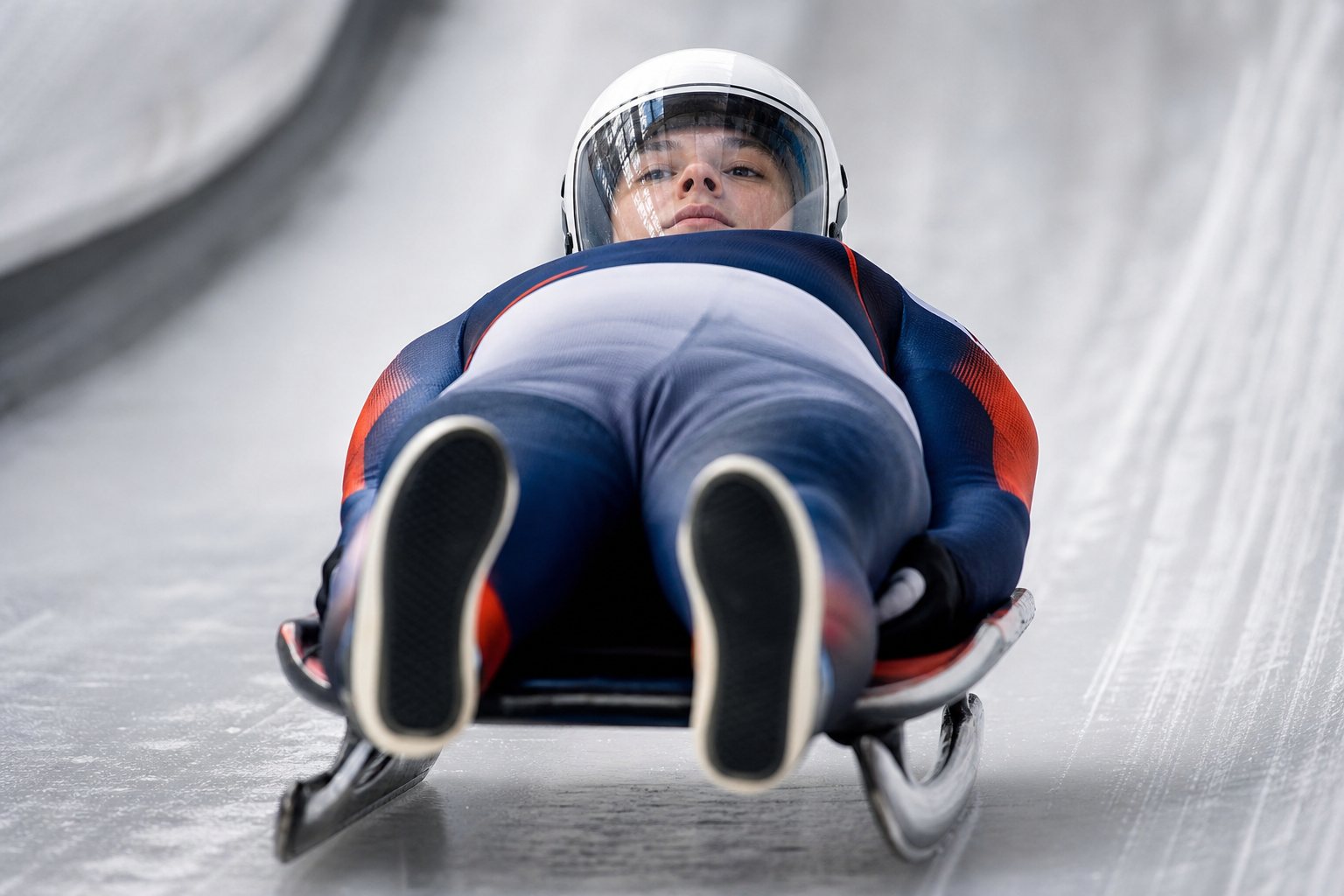
The sled clips a wall in the last curve, the slider slides to a stop and then sits up slowly, shaking a numb hand. A coach jogs over. Luge injuries are mostly bruises and muscle strains, but crashes at speed can also cause concussions and broken bones. This page lays out what the research found, what rehabilitation generally involves, and when to hand the decision to a professional. It cannot diagnose anything.
Quick answer: In the two luge injury studies we found, bruises and strains were the most common injuries, hands, feet, head and neck the most common acute sites, and shoulder and lower back the most common overuse sites. Concussion is rare but serious. Rehabilitation and return to sport should follow a clinician’s plan. See a sports medicine doctor, physical therapist or athletic trainer for any injury, and call 911 for concussion danger signs.
General information, not medical advice. To lower risk, see the injury prevention page; for the sport overall, the luge hub.
What the research shows
US Olympic Training Center, 1985 to 1992
Cummings and colleagues (American Journal of Sports Medicine, 1997) reviewed injury forms for 1,043 athletes who took 57,244 runs and had 407 injuries. The risk was 0.39 injuries per person per year, and 0.04 per person per year for an injury causing more than 1 day of lost practice. Contusions were 51% and strains 27%. Neck muscle strains and contusions of the hands and other limbs were characteristic. Concussions were 2% and fractures 3%, and crashes caused 64%. The authors called luge relatively safe, with injury rates comparable to recreational alpine skiing. The study covers a past era and a specific team, so it cannot be applied to every program today.
46 weeks with 40 elite athletes, 2024
Tomaselli and colleagues used a weekly health questionnaire (OSTRC) with 40 national-team athletes. Illness was the most common problem (41.9%), then acute injuries (31.9%) and overuse injuries (24.0%), and 95% of athletes reported at least one problem. Acute injuries were most often in the hand and foot (14.0% each), head (12.3%) and neck (10.5%); strains were 26.3% and contusions 24.6% of acute injuries. For overuse the shoulder (20.9%) and lumbar spine (16.3%) led. Illness carried the greatest burden by the study’s severity score.
Youth and young athletes
Among 101 Team USA athletes at the 2024 Winter Youth Olympic Games, 18.8% had an injury, and the rate was highest in bobsled; female athletes reported all the time-loss injuries. A German-language case report from 2026, which we know only from its title, describes an 8-year-old with high-speed luge trauma to the foot and compartment syndrome followed for 18 years. It is a reminder that young sliders belong on tracks and speeds suited to their age.
Concussion and “sled head”
A 2018 systematic review (McCradden and Cusimano) found concussions in 13 to 18% of sledding athletes and called “sled head”, a foggy headache after bumpy runs, a key concern that needs study. In the 2024 luge cohort, four concussions were recorded and none of the athletes took more than three days off normal training; the authors note this is shorter than current return-to-sport recommendations and suggest a concussion protocol. The 6th International Conference on Concussion in Sport statement (Patricios and colleagues, 2023) is the current international consensus and comes with the SCAT6 assessment tool. The CDC’s HEADS UP guidance says to recognise and remove: stop activity, get seen by a provider, and let the provider decide on return. Danger signs, such as repeated vomiting, a seizure or a worsening headache, mean call 911.
Rehabilitation: general principles
We found no luge-specific rehabilitation protocols, so these are general principles from the sources we read, not a treatment plan:
- A plan from a clinician. A sports medicine doctor, physical therapist or athletic trainer decides what is safe. We do not give return-to-play criteria or recovery times, because they depend on the injury and the person.
- Balance load and recovery. The 2018 consensus statement on recovery and performance (Kellmann and colleagues) describes keeping training stress and recovery in balance as essential for continuous performance.
- Integrated team. The 2025 commentary on sliding athletes recommends an integrated support team for medical management.
- Head injuries are handled separately and a provider clears return, per CDC HEADS UP.
When to see a professional
- Any head knock followed by headache, dizziness, confusion or sleepiness.
- Pain that does not ease, pain at rest or at night, numbness, a hand or foot that will not bear use, or a joint that looks wrong.
- A neck strain that comes with arm pain or tingling.
- Illness that keeps coming back or lasts, since illness was the biggest burden in the 2024 study.
Luge FAQs
What are the most common luge injuries?
Bruises and muscle strains, according to a US study from 1985 to 1992 and a 2024 study of elite athletes. Hands, feet, head and neck were the most common acute sites in the 2024 study.
How common are concussions in luge?
A 2018 review found concussions in 13 to 18% of athletes across sledding sports. The 1997 luge study found 2% of injuries were concussions. Numbers differ by study design.
What is sled head?
A term sliding athletes use for a foggy headache after repeated bumpy runs. A 2018 review says it is poorly understood and needs more research.
How long does recovery take?
It depends on the injury and the person. We do not give times. A health professional sets the plan, and a provider decides when someone returns after a concussion.
Is luge more dangerous than skiing?
The 1997 US study found luge injury rates comparable to recreational alpine skiing. That study is old and limited to one team.
Sources
- Cummings and colleagues: injuries in the sport of luge (1997)
- Tomaselli and colleagues: health problems in elite luge athletes (2024)
- McCradden and Cusimano: concussions in sledding sports (2018)
- Team USA athletes at the 2024 Winter Youth Olympic Games (2025)
- High-speed luge trauma in an 8-year-old child (2026, German-language case report)
- Patricios and colleagues: consensus statement on concussion in sport (2023)
- Kellmann and colleagues: recovery and performance consensus statement (2018)
- Management of the sliding athlete: clinical commentary (2025)
- CDC HEADS UP: signs and symptoms
General information for education only, not medical advice. It does not replace a visit with a doctor, physical therapist or athletic trainer. See how we write and check our pages in our editorial policy.