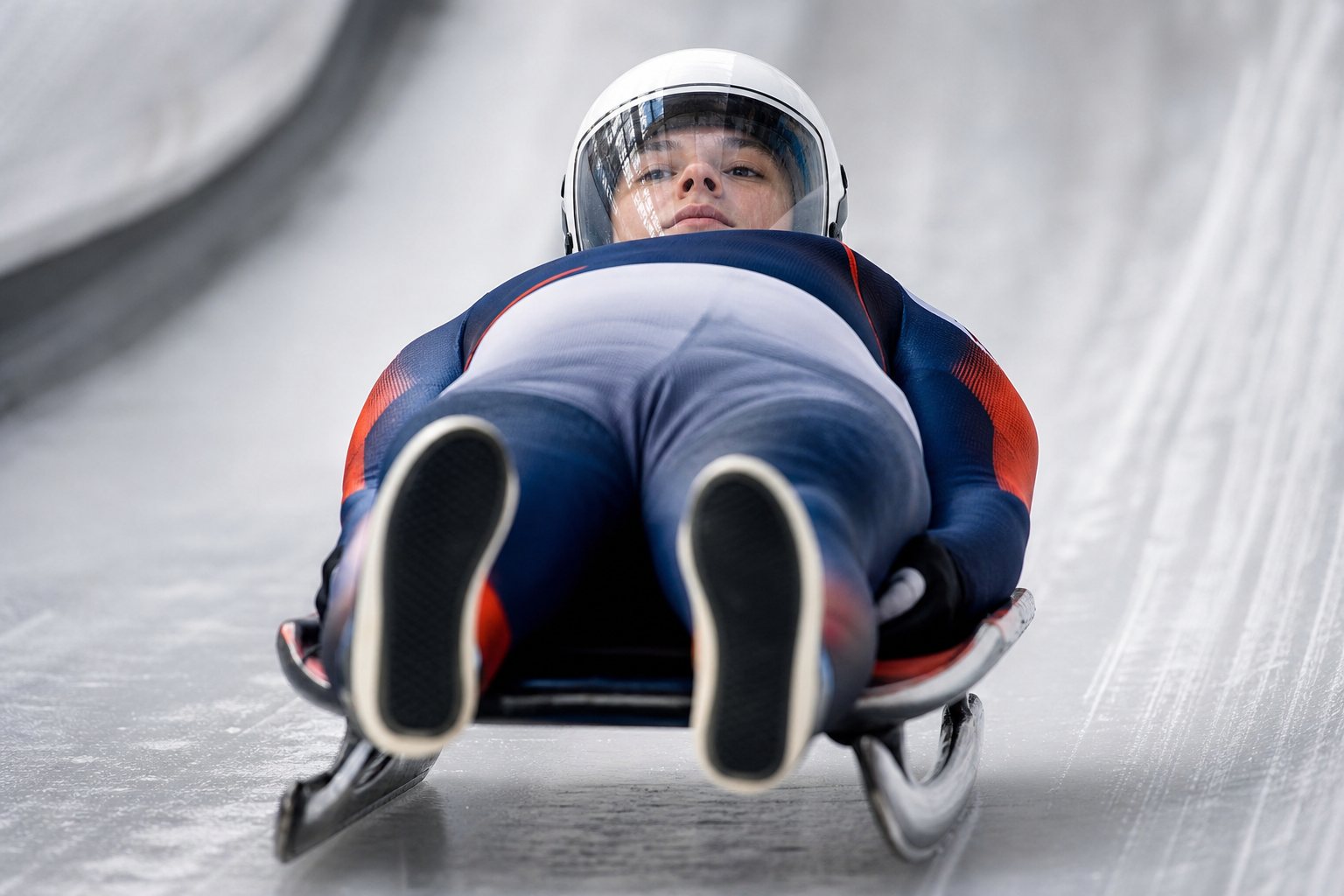
A coach waves a young slider off the track after a wobbly run. The sled kissed the wall, the shoulder is sore, and the next run is tempting. Luge injury prevention is the set of habits that lower the chance of getting hurt on a fast, hard track: slow progression, good technique, strong shoulders, neck and trunk, equipment that fits the rules, and honesty about pain and head knocks. They lower the odds. They cannot promise anything, and luge has real crash risk.
Quick answer: The best-supported steps are a slow progression from wheeled sleds to ice with a coach, certified helmets and the gear your program requires, strength work for the shoulders, neck and lower back, and treating every head knock seriously. Crashes caused 64% of injuries in a US luge study, so technique and track progression matter most. Evidence specific to luge is thin. See a sports medicine doctor, physical therapist or athletic trainer if pain persists, and call 911 for concussion danger signs.
General information, not medical advice. This page is about lowering risk. What the injuries look like is on the luge injuries page, so we do not repeat it. The sport starts at the luge hub.
Warm-up
We did not find a published injury-prevention warm-up program tested in luge athletes, so there is no named routine to point to, unlike sports with FIFA 11+. Ask the coach or team athletic trainer for the program used, and note the 2025 clinical commentary on sliding athletes recommends an integrated support team approach to injury risk. Cold start houses are a reason to start the warm-up earlier and keep it going while you wait.
Technique and progression
Crashes were responsible for 64% of the 407 injuries logged among 1,043 athletes at the US Olympic Training Center from 1985 to 1992 (Cummings and colleagues, American Journal of Sports Medicine, 1997). Staying on the sled and out of the wall is therefore the single biggest lever. USA Luge describes a pathway from wheeled sleds to ice at a sanctioned track, with coaches in charge, rather than a first run from the top of a fast track. Men start higher up the track than women (NBC Olympics). A 2025 commentary on the three sliding sports says technique differs by sport and that sliding has demands that raise injury risk, so luge technique should come from a luge coach.
Training load
In a 46-week study of 40 elite luge athletes (Tomaselli and colleagues, 2024), 95% reported at least one health problem, and overuse injuries made up 24.0% of the problems. Shoulder (20.9%) and lumbar spine (16.3%) were the most common overuse sites. For young athletes the American Academy of Pediatrics (Brenner, 2016) recommends one to two days off a week and about three months a year away from a single sport, and Jayanthi and colleagues (2015) found young athletes training more hours a week than their age in years had about twice the odds of a serious overuse injury; neither study was specific to luge.
Strength and conditioning
Shoulders and the lower back are the overuse hotspots, and the neck and head are among the acute injury sites (Tomaselli): head 12.3% and neck 10.5% of acute injuries. Strength and trunk work for these areas is common sense, and the 2014 international consensus on youth resistance training (Lloyd and colleagues) supports supervised, well-taught strength work for young athletes. No source we read proves that neck strengthening prevents luge concussions. A 2024 study of 12 bobsleigh athletes recorded 1,900 head acceleration events over a World Cup season using mouthguard sensors and measured neck strength, but it did not test whether neck strength changes injury risk, and it was not about luge.
Environment: ice, cold and illness
Cold start houses and long waits are part of the sport. The CDC’s winter weather guidance covers layering, keeping hands and feet dry and recognising hypothermia and frostbite. Illness, not injury, was the most common health problem in Tomaselli’s study (41.9%), and respiratory illness was the most common illness among Team USA’s 101 youth athletes at the 2024 Winter Youth Olympic Games (6%), where the authors called for respiratory illness mitigation and load management. Sleep, hand washing and rest when sick are ordinary steps; ask the team doctor for specifics.
Protective equipment and fit
- Verified rule. FIL requires protective helmets, tight-fitting suits and spiked gloves for the start, and publishes separate helmet guidelines (it names UVEX on its rules page). Follow your federation’s list and ask your coach before buying.
- Fit. Fit and replacement after a hard hit should follow the helmet maker’s instructions and your coach’s advice; we found no luge-specific fit standard beyond the FIL requirement.
- Maker claims. Our product cards on the gear page are comfort items. They are not protective equipment and no standard says they prevent injury.
- Hands. Hands were among the most commonly injured acute sites in the 2024 study (14.0%), and Cummings and colleagues named hand contusions as characteristic, which is why glove choice and a coach’s start technique are worth a conversation.
Head injuries
A 2018 systematic review (McCradden and Cusimano) found concussions in 13 to 18% of sledding athletes and flagged “sled head” as poorly understood. The 2024 study of elite luge athletes recorded four concussions and none of the athletes took more than three days off normal training, which the authors say contrasts with current recommendations; they suggested a concussion protocol be considered. The CDC’s HEADS UP message is to recognise and remove: someone with a possible concussion stops for the day and is seen by a health care provider, who decides when to return.
What prevention cannot do
No habit removes the risk of a crash at speed. The 1997 study judged luge relatively safe, with a rate comparable to recreational alpine skiing, but the same study reported concussions and fractures. Everything here lowers risk; none of it guarantees safety.
When to see a professional
See a sports medicine doctor, physical therapist or athletic trainer for pain that lasts, pain at rest, numbness, or any head knock. Call 911 for danger signs such as repeated vomiting, a seizure or a worsening headache.
Luge FAQs
What is the biggest injury risk in luge?
Crashes. In the 1997 study of US athletes, 64% of injuries came from crashes. Strains and bruises were most common (Cummings and colleagues).
Do luge athletes wear helmets?
Yes. FIL rules require protective helmets and publish helmet guidelines. Your coach or national federation tells you what your program accepts.
Can neck exercises prevent a concussion?
We found no source showing that. Neck conditioning is worth discussing with a physical therapist, but it is not proven to prevent luge concussions.
Is luge safe for kids?
It is safer with progression, coaching and the right track. A 2025 study of Team USA youth athletes found the highest injury rate among bobsled athletes, and the authors called for more attention to prevention in high-risk sliding sports. Follow the program’s steps.
How much rest do young athletes need?
The American Academy of Pediatrics advises one to two days off a week from the main sport and several months a year away from one sport.
Sources
- Cummings and colleagues: injuries in the sport of luge (1997)
- Tomaselli and colleagues: health problems in elite luge athletes (2024)
- McCradden and Cusimano: concussions in sledding sports and sled head (2018)
- Interdisciplinary health and performance management of the sliding athlete (2025)
- Injury and illness, Team USA at the 2024 Winter Youth Olympic Games
- Head kinematics in elite bobsleigh athletes (2024)
- AAP: sports specialization and intensive training (2016)
- Jayanthi and colleagues (2015)
- Lloyd and colleagues: youth resistance training consensus (2014)
- FIL: artificial track rules
- NBC Olympics: how Olympic luge works
- USA Luge: Luge 101
- CDC HEADS UP: signs and symptoms
- CDC HEADS UP (helmets and concussion safety)
- CDC: preventing hypothermia
General information for education only, not medical advice. It does not replace a visit with a doctor, physical therapist or athletic trainer. See how we write and check our pages in our editorial policy.