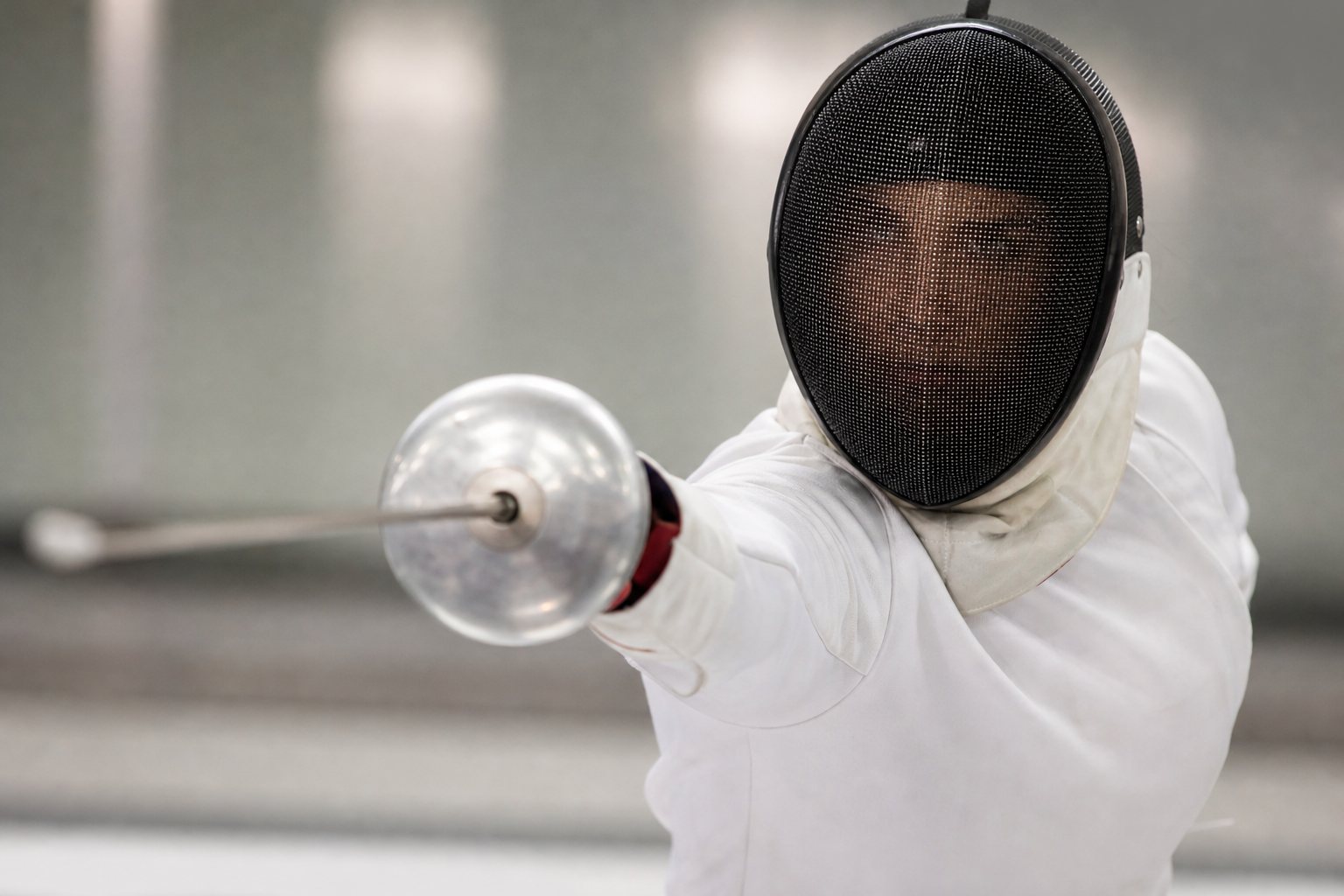
A pentathlete lands badly off the last obstacle, rolls an ankle, and still has a swim and a laser run to go. Is it a tweak or a sprain? Modern pentathlon injuries are the sprains, strains, overuse problems, cuts and knocks that come from fencing, obstacle racing, swimming and running together. An honest start: there is almost no injury research on modern pentathlon itself, so this page explains the sport’s injuries by borrowing the best numbers from each of its parts and labels each source.
Quick answer: We did not find a peer-reviewed injury-rate study for modern pentathlon, and a 2021 scoping review of 33 Olympic sports reported no data for it. The likely trouble spots, based on its four events, are the shoulder from swimming, the knee, ankle and lower leg from running, fencing and landings, and cuts, sprains and falls on obstacles. See a sports medicine doctor, physical therapist or athletic trainer for pain that persists, and get a head injury checked.
What the research says about pentathletes
Gimigliano and colleagues reviewed injury data across 33 Olympic sports in 2021 and found no data available for modern pentathlon. A retrospective survey of 7,809 athletes from Germany, Switzerland and Austria (Lambert and colleagues, 2022) found that across Olympic disciplines 58 percent of injuries occurred in training and 42 percent in competition, and that the knee (28 percent) and shoulder (14 percent) were the most at-risk joints. That study covers many sports, not pentathlon, so treat it as general context. Also, with riding gone and Obstacle in, older pentathlon data would not match today’s format anyway.
Injuries borrowed from each event
Swimming: the shoulder
In a US high school study (HS RIO, 2023), swimmers’ injury rate was 0.26 per 1,000 athlete exposures, and 48.6 percent of injuries were to the shoulder, mostly overuse. A study of 80 elite swimmers aged 13 to 25 (Sein and colleagues, 2010) found that 91 percent had shoulder pain, and training hours and weekly mileage correlated with tendinopathy. See swimming.
Running: knee, shin, foot and stress injuries
A systematic review of 23,047 runners (Kakouris and colleagues, 2022) found 26.2 percent were injured, with the knee at 25.8 percent, the foot and ankle at 24.4 percent and the lower leg at 24.4 percent. AAOS says stress fractures often show up in the foot and lower leg a few weeks after a new routine and that you should not exercise through the pain. See running.
Fencing: lower body and sprains
In 809 FIE competitions from 2010 to 2014 (Harmer, 2019), the injury rate was 0.28 per 1,000 athlete exposures; 72.4 percent of injuries were to the lower extremity, sprains were 40.8 percent of injuries, and the ankle sprain was the most common single injury at 25.3 percent. Épée fencers had a lower risk than foil fencers in that study (relative risk 0.52). Pentathlon fencing is described as épée by Wikipedia only, so check with UIPM before leaning on that comparison. Most minor injuries are blisters, bruises and scrapes (IOC chapter on fencing injury). See fencing.
Obstacle: sprains, cuts and falls
The numbers here come from mass-participation races, not UIPM Obstacle, which is a short head-to-head course. At 33 events in Canada (Rabb and Coleby, 2018), 2.4 percent of 73,366 participants were injured; 1.0 percent of injuries (17 cases) needed EMS transport, and lacerations and musculoskeletal injuries were most common. A review (Knapik, 2022) reported that 27 percent of participants self-reported at least one extremity injury, mostly sprains, strains and skin injuries, with ankle and knee often affected. A 2024 review (Lessiohadi) found an ACL injury rate of 0.45 per 1,000 athlete exposures, higher for women than men. See obstacle course racing.
Laser shooting
Laser run uses laser pistols (UIPM), not live ammunition. We found no injury data for it. Standing and running at high heart rate means the usual running problems apply to the finish.
Concussion and head blows
Falls on an obstacle course, a collision in a pool or a fencing mishap can hit the head. The CDC HEADS UP guidance says anyone who may have a concussion should be removed from activity, and a healthcare provider decides when they can return to activity. Call emergency services for loss of consciousness, a seizure, repeated vomiting, a worsening headache or increasing confusion.
General rehabilitation principles
This is general education, not a plan for your injury. The sources we use agree on a few ideas. Rest from the aggravating activity, not from everything; get a diagnosis before you guess; and rebuild with exercises rather than waiting for pain to vanish. The Journal of Orthopaedic and Sports Physical Therapy guideline on patellofemoral pain puts exercise therapy at the center of care. The NATA position statement on ankle sprains says a balance program of at least three months helps after a sprain. We do not give timelines because recovery times vary widely. A clinician, not a web page, decides when you return to competing.
Cross-training can keep fitness while one body part heals; in a sport with four events, a physical therapist or coach can often swap the aggravating event for another. Read recovery and mobility for everyday recovery and injury prevention for ways to lower the odds.
When to see a professional
- pain that lasts more than a few days or gets worse
- a joint that swells, locks or gives way
- pain over a bone, or inability to put weight on a leg (an X-ray may be needed)
- pain at night or at rest
- numbness, tingling or weakness
- any suspected concussion
Injuries FAQs
What are the most common injuries in modern pentathlon?
No pentathlon-specific study exists. Based on its events, the shoulder (swimming), the knee, ankle and lower leg (running, fencing, landings) and cuts and sprains (obstacle) are likely trouble spots.
Is modern pentathlon dangerous?
We could not find a measured injury rate. Each event has its own risks, and the sport changed recently when Obstacle replaced riding.
Do pentathletes get concussions?
Falls and collisions can cause head injuries in any sport with obstacles or water. Follow the CDC HEADS UP steps and see a provider.
Can I keep training with a minor injury?
That is a question for your clinician. AAOS advises not exercising through pain from conditions such as stress fractures.
How long do injuries take to heal?
It depends on the injury and the person. We do not give universal timelines; ask the professional who examined you.
Sources
- Gimigliano et al. 2021, scoping review of musculoskeletal injuries in adult athletes
- Lambert et al. 2022, Epidemiology of Injuries in Olympic Sports (PubMed 34666411)
- HS RIO swimming and diving injuries, Clin J Sport Med 2023
- Sein et al. 2010, shoulder pain in elite swimmers (PubMed 18463295)
- Kakouris et al. 2022, J Athl Train systematic review of running injuries
- AAOS OrthoInfo, Stress Fractures
- Harmer 2019, fencing injuries at FIE competitions, Br J Sports Med (PubMed 30661010)
- IOC chapter, Epidemiology of Fencing Injury
- Rabb and Coleby 2018, Hurt on the Hill, Orthop J Sports Med
- Knapik 2022, Obstacle Course Events: Hazards and Prevention Measures
- Lessiohadi et al. 2024, ACL injuries in obstacle racing
- JOSPT clinical practice guideline, patellofemoral pain (Willy et al. 2019)
- NATA position statement: ankle sprains
- CDC HEADS UP
General information for education only, not medical advice. It does not replace a sports medicine doctor, physical therapist, athletic trainer or registered dietitian who knows you. Read how we work in our editorial policy.