Week six of a new obstacle block: your pull-ups are better, your swim volume has crept up, and your right shoulder is starting to ache on every freestyle breath. Nothing is badly wrong yet, which is exactly when habits matter. Modern pentathlon injury prevention is the set of habits around a pentathlete, warm-ups, technique, gradual load, strength work, safe venues and honest reporting of pain, that aim to lower the chance of getting hurt. They lower the odds. They cannot promise anything.
Quick answer: There is no pentathlon-specific injury-prevention research, so the best-supported steps come from the individual sports: a proper warm-up, technique coaching, adding training load gradually across all five disciplines, shoulder, core and leg strength, safe obstacle and pool practice, and sensible heat plans. See a sports medicine doctor, physical therapist or athletic trainer if pain stays in one spot, wakes you at night, or changes how you move, and call emergency services after a head injury with danger signs.
Start with an honest limit
A 2021 scoping review of musculoskeletal injuries in adult athletes (Gimigliano and colleagues) covered 33 Olympic sports and reported that no data were available for modern pentathlon. Since the sport recently replaced riding with Obstacle, older numbers would be out of date anyway. So the advice below is borrowed from swimming, running, fencing and obstacle racing, and from general guidance, and none of it has been tested in pentathletes. For the injury patterns themselves, see common injuries and rehabilitation.
Warm-up
The American Academy of Orthopaedic Surgeons (AAOS) suggests before swimming a warm-up of about 5 to 10 minutes of easy movement such as jumping jacks, cycling or walking in place. Pentathletes have to warm up several times a day for different tasks, so a simple order may help: general heat, then movements for the next event (arm circles and band work before a swim or obstacle, leg swings and lunges before fencing, short strides before running). This ordering is general practice and has not been tested in pentathletes.
Technique
- Swimming: the shoulder is the classic trouble spot. In a US high school injury study (HS RIO), 48.6 percent of swimmers’ injuries were to the shoulder. Technique coaching helps spread the load across the stroke, though the studies we read do not prove it prevents injury.
- Obstacle: a 2022 review of obstacle-course events (Knapik) lists proprioceptive training among its prevention measures; practise landings and falls with a coach before racing at speed.
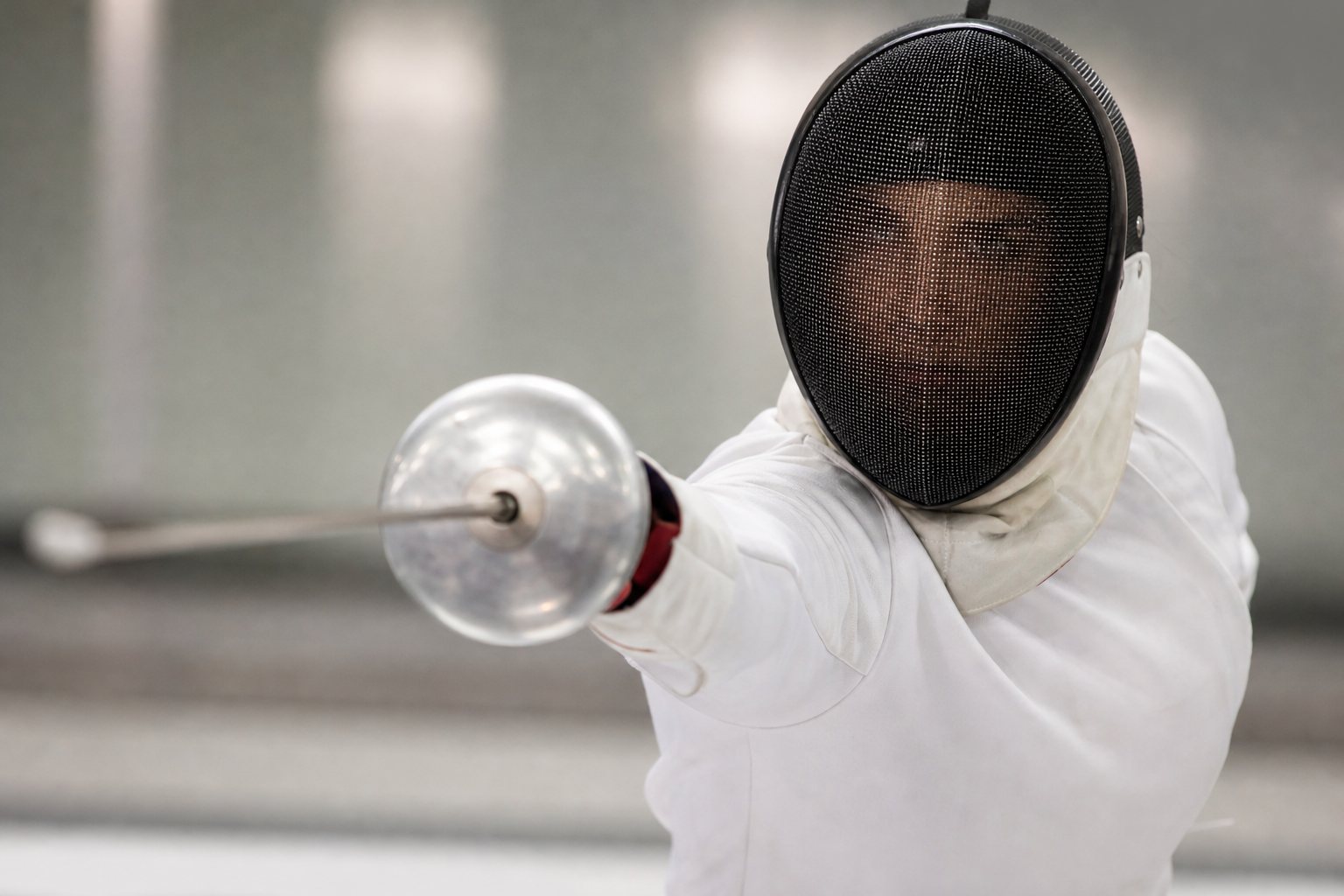
- Fencing: the IOC chapter on fencing injury notes slips and trips on the piste are an important cause, so footwear and floor surface matter. The same chapter says no injury prevention studies had been run in fencing.
- Running: ask a coach to review your form if the same area keeps hurting.
Progressive load across five sports
The common pentathlon trap is that every sport feels like only a small increase, but the body feels the total. A hard run, swim and strength day can each be reasonable and still be too much together. We did not find a sourced percentage rule for pentathletes, so there is no number here to quote. Practical steps are to change one thing at a time, keep a simple log of weekly total hours and hard sessions, and plan an easier week at intervals. AAOS lists risk factors for stress fractures that include a sudden new routine, fewer than seven hours of sleep, no rest days, low bone density and worn shoes.
Strength and conditioning
A 2025 randomized trial in competitive swimmers aged 16 to 35 compared two 12-week programs of five exercises, twice a week, with weights or elastic bands against a sham program. The strength programs led to less rotator imbalance than the controls. That is a change in a measurement, not proof of fewer injuries, but it supports shoulder and upper-back strengthening, as AAOS also advises. For ankles, the National Athletic Trainers’ Association position statement on ankle sprains (Kaminski and colleagues, 2013) names a previous sprain as the most consistent risk factor and recommends a balance program for at least three months and bracing or taping for athletes with a past sprain. Ask a physical therapist to tailor any exercises.
Environment: pool, track, obstacle lane and heat
- Pool: AAOS advises never diving into shallow water, never swimming alone, and avoiding swimming when tired, cold or overheated.
- Obstacle: Knapik’s review of mass-participation obstacle events lists gloves and covering skin among prevention measures, and a 2024 review (Lessiohadi) linked ACL injuries to high-impact landing and deceleration obstacles; those findings come from public races, not UIPM Obstacle, so apply them with care.
- Heat: a pentathlon day mixes hard efforts with breaks. The NATA statement on exertional heat illness (Casa and colleagues, 2015) advises heat acclimatization of 7 to 14 days, and the ACSM 2023 consensus on exertional heat stroke says to cool first, transport second. Read our nutrition and athlete health page for fluids.
Equipment and fit
Check goggles, shoes and any glove or grip aids, and make sure your fencing kit meets your event’s regulations. The FIE (the fencing federation) Material Rules of December 2025 require maraging steel blades at all three weapons and set 800-newton resistance for jackets and under-plastrons, and 1,600 newtons for the mask bib. Those are fencing federation rules; pentathlon equipment follows UIPM regulations, so ask your coach which standards apply. See our gear guide. Laser pistols are not live firearms (UIPM), but follow your club’s handling rules.
What prevention cannot do
Nothing here removes the risk of a sprain, a fall or an overuse problem. Prevention programs reduce the odds in some sports; the pentathlon-specific evidence is missing, and the advice above rests on neighbouring sports.
When to see a professional
See a sports medicine doctor, physical therapist or athletic trainer for pain that persists, swelling, a joint that gives way, pain at night, or numbness. After a blow to the head, the CDC HEADS UP guidance says anyone who may have a concussion should stop activity and be checked by a healthcare provider before returning. Call emergency services for loss of consciousness, repeated vomiting or worsening confusion.
Injury prevention FAQs
Is there research on injuries in modern pentathlon?
We could not find a peer-reviewed incidence study. A 2021 scoping review of 33 Olympic sports reported no data for modern pentathlon.
What is the most common swimming injury?
AAOS says the most common swimming injury is shoulder pain from repetitive motion. A US high school study put 48.6 percent of swimmers’ injuries at the shoulder.
Should I brace my ankles?
NATA says bracing or taping is advised for athletes with a previous sprain. A clinician can judge whether you need it.
Does a warm-up prevent injury?
AAOS recommends one before swimming. We did not find pentathlon-specific proof, so treat it as a sensible habit rather than a guarantee.
How do I know if soreness is an injury?
Soreness from training is usually widespread and fades. Pain in one spot that lasts, grows or changes how you move should be checked. See our recovery page.
Sources
- Gimigliano et al. 2021, Epidemiology of Musculoskeletal Injuries in Adult Athletes: A Scoping Review (PubMed 34684155)
- AAOS OrthoInfo, Swimming Injury Prevention
- High school swimming and diving injuries (HS RIO), Clin J Sport Med 2023
- 2025 RCT of shoulder strength programs in swimmers (PubMed 40077099)
- Knapik 2022, Obstacle Course Events: Hazards and Prevention Measures (PubMed 35649408)
- Lessiohadi et al. 2024, ACL injuries in obstacle racing (PubMed 39776501)
- NATA position statement: ankle sprains (Kaminski et al. 2013)
- AAOS OrthoInfo, Stress Fractures
- NATA, Exertional Heat Illnesses (Casa et al. 2015)
- ACSM 2023 expert consensus on exertional heat stroke
- IOC chapter, Epidemiology of Fencing Injury (hosted by FIE)
- FIE Material Rules, December 2025
- CDC HEADS UP
General information for education only, not medical advice. It does not replace a sports medicine doctor, physical therapist, athletic trainer or registered dietitian who knows you. Read how we work in our editorial policy.