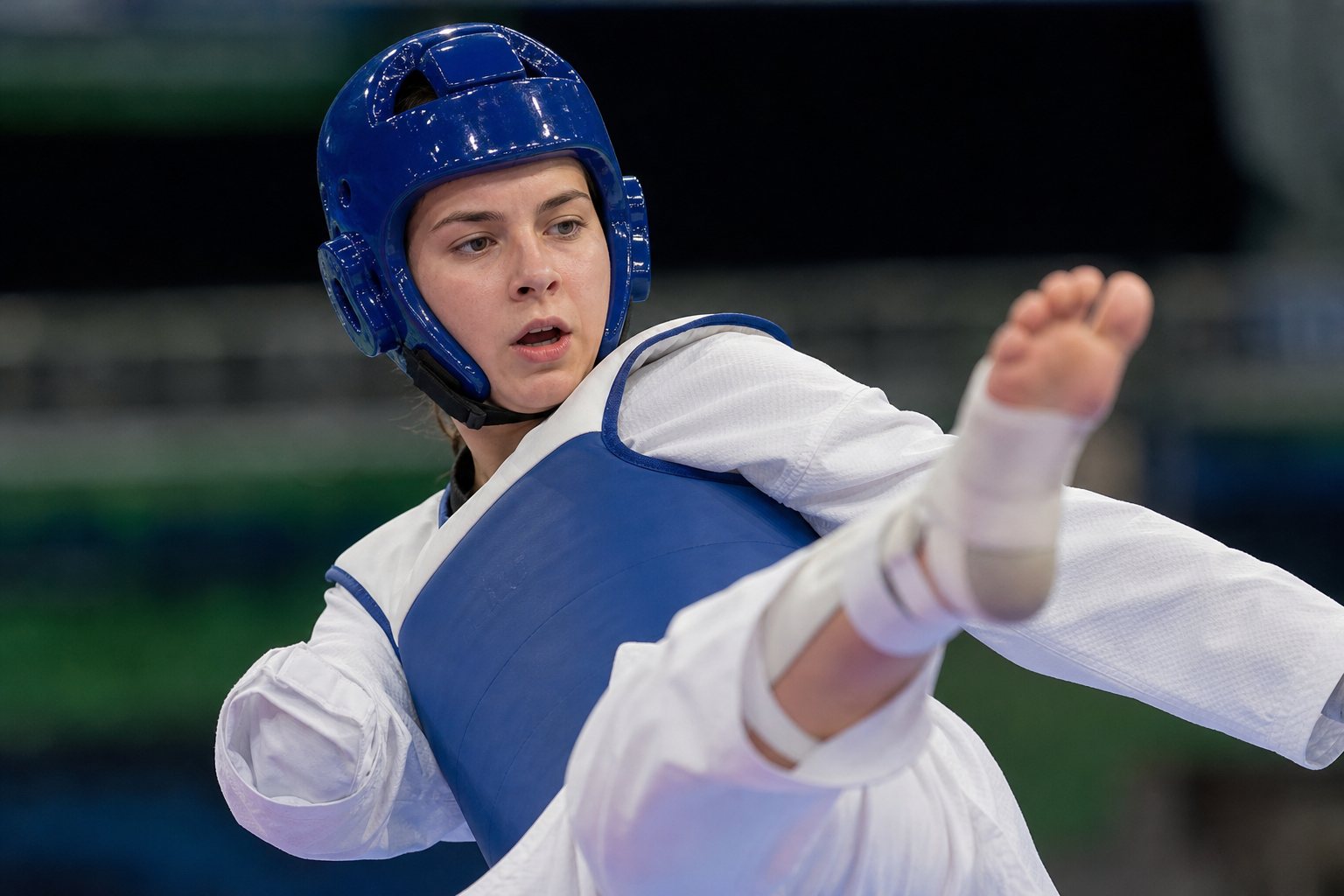
The scale at the weigh-in reads 70.1. The category limit is 70.0 kg, and the athlete has one more chance. Weight-category sports are the reason nutrition in Para taekwondo needs more thought than “eat well.” Nutrition and athlete health here means fueling hard training, staying hydrated, managing body weight safely, and thinking carefully about supplements, which are optional and carry their own risks.
Quick answer: Eat enough, especially carbohydrate and protein, drink regularly, and plan any weight change well ahead and with a doctor or registered dietitian. Avoid crash dieting and dehydration to make weight. Supplements are optional; the IOC says only a few, such as caffeine and creatine, have good evidence, and a product that is not third-party tested for sport can contain banned substances. Check with a doctor or dietitian first.
General information, not medical advice and not a diet or supplement plan. A sports medicine doctor or registered dietitian can tailor advice to your health, medicines and impairment. See the Para taekwondo hub for the sport overview.
Fueling training
A 2026 narrative review of taekwondo nutrition (Amawi and colleagues, Nutrients) says the sport is high-intensity, intermittent and weight-category based, and that nutrition priorities include adequate energy and carbohydrate availability, enough protein, fluids and electrolytes, and gradual, individualized weight management. The authors also note that taekwondo-specific trials are scarce, so many recommendations are borrowed from other combat sports. A 2026 systematic review of 23 studies of combat athletes, including taekwondo (Herrero Barceló and colleagues, Nutrients), found that most athletes had energy and carbohydrate intakes below official recommendations. Under-eating is therefore a common problem, not just over-eating.
For Para athletes, a 2025 review of nutrition in Paralympic athletes (Ghazzawi and colleagues, Frontiers in Nutrition) says that energy and nutrient needs vary with the impairment and the sport, and that research is limited. It calls for individualized planning. For Para taekwondo athletes with an arm impairment, we found no specific energy-need data, so do not copy numbers from other people.
Hydration
Sparring in a dojang or a hot venue makes athletes sweat. General sports nutrition advice is to start training hydrated, drink regularly during long sessions, and replace fluids afterward, with pale urine a simple check. We did not find Para taekwondo hydration studies. If you take medicines that affect fluid balance or have a health condition, ask your doctor.
Weight categories, weigh-ins and safety
Para taekwondo has five weight categories for men (58, 63, 70, 80 and over 80 kg) and five for women (47, 52, 57, 65 and over 65 kg). Under the WT rules, the general weigh-in is the day before the competition, and a random weigh-in takes place the morning of competition, with a plus 5 percent tolerance on the category limit. A contestant who fails the weigh-in is disqualified. The rules also provide for practice scales identical to the official one.
Making weight is where athletes get hurt. A 2026 systematic review of rapid weight loss in combat sports (Lee, International Journal of Molecular Sciences) reports that rapid weight loss stresses the immune system, that the magnitude and speed of loss matter, and that reductions exceeding 5 percent of body mass produced particularly severe consequences. It recommends gradual weight management and nutrition support. In plain words: crash diets, sweat suits, fluid restriction and laxatives are not worth it. Talk to a registered dietitian early in the season and pick a category you can reach without stress.
Relative energy deficiency in sport (REDs)
The International Olympic Committee consensus statement on REDs (Mountjoy and colleagues, British Journal of Sports Medicine, 2023) describes a syndrome of health and performance problems in female and male athletes who do not take in enough energy for what they burn in training. Weight-category sports carry that risk. Warning signs include constant tiredness, repeated illness or injury, poor sleep, mood changes, and, for female athletes, missed periods. These are reasons to see a doctor, not to self-diagnose. We did not find REDs prevalence data for Para taekwondo.
Supplements: a cautious approach
Supplements are optional, and food comes first. The IOC consensus statement on dietary supplements (Maughan and colleagues, 2018) says that nutrition usually makes a small but valuable contribution to performance, that supplements can make only a minor one, that only a few (including caffeine, creatine, specific buffering agents and nitrate) have good evidence of benefit, that responses vary between people, and that supplements should be trialed in training rather than on competition day. It also warns that products may contain substances prohibited under anti-doping rules.
- Banned substances: WT events apply the WADA Prohibited List. Athletes are responsible for what they take. Check any product and any medicine with your doctor or your national anti-doping organization.
- Third-party testing: look for programs such as NSF Certified for Sport or Informed Sport, which test products for banned substances. Testing lowers risk but does not remove it, and a product without certification is simply “not third-party certified for sport.”
- Caffeine: a 2026 meta-analysis of randomized trials in taekwondo athletes (Cai and colleagues, Metabolites) found favorable pooled effects on explosive performance (moderate-certainty evidence) and no clear effect on endurance. Caffeine is not for everyone: sensitivity, sleep problems, heart conditions and pregnancy are reasons to check with a doctor first. We give no doses.
- Creatine and others: many athletes use creatine, one of the more studied supplements, but ask a doctor or dietitian whether it suits you. We do not recommend any product on this page.
Frequently asked questions
How should I eat on the day of a tournament?
Eat familiar foods, mostly carbohydrate with some protein, at times that fit your weigh-in and bout schedule, and sip fluids. No Para taekwondo trial tells us a precise plan. A sports dietitian can build one for you.
Is it safe to cut weight for a category?
Rapid weight loss carries health risks. A 2026 review found immune effects and worse outcomes with larger, faster losses, particularly above 5 percent of body mass. Plan gradually with a doctor or dietitian, or choose a category that does not need a cut.
What is REDs?
Relative energy deficiency in sport is a group of health and performance problems linked to not eating enough for training. See a doctor if you notice constant fatigue, repeated illness or injury, or changes to your periods.
Which supplements are worth taking?
Per the IOC consensus statement, only a few have good evidence, among them caffeine and creatine, and food comes first. Talk with a doctor or dietitian and choose products tested for banned substances.
Can a supplement cause a failed drug test?
Yes. Contaminated or mislabeled products are a known risk, and the athlete is responsible. Third-party testing such as NSF Certified for Sport reduces the risk but does not remove it.
Sources
- Amawi et al., integrative nutritional strategies in taekwondo, Nutrients 2026 (Europe PMC)
- Herrero Barcelo et al., body composition and dietary intake of combat sports athletes: systematic review, Nutrients 2026 (Europe PMC)
- Ghazzawi et al., tailored nutrition strategies for Paralympic athletes, Front Nutr 2025 (Europe PMC)
- Lee, effects of rapid weight loss on the immune system in combat sports athletes, Int J Mol Sci 2026 (Europe PMC)
- Mountjoy et al., 2023 IOC consensus statement on Relative Energy Deficiency in Sport (REDs), Br J Sports Med (PubMed)
- Maughan et al., IOC consensus statement: dietary supplements and the high-performance athlete, Br J Sports Med 2018 (PubMed)
- Cai et al., caffeine intake and performance outcomes in taekwondo athletes: meta-analysis, Metabolites 2026 (Europe PMC)
- World Taekwondo, Para Taekwondo Competition Rules in force as of 23 October 2025, Art 4.3, 5 and 10
General information for education only, not medical advice. It does not replace a visit with a doctor, physical therapist or athletic trainer. See how we write and check our pages in our editorial policy.