This article contains affiliate links: if you buy through them we may earn a commission, at no extra cost to you. Read our affiliate disclosure.
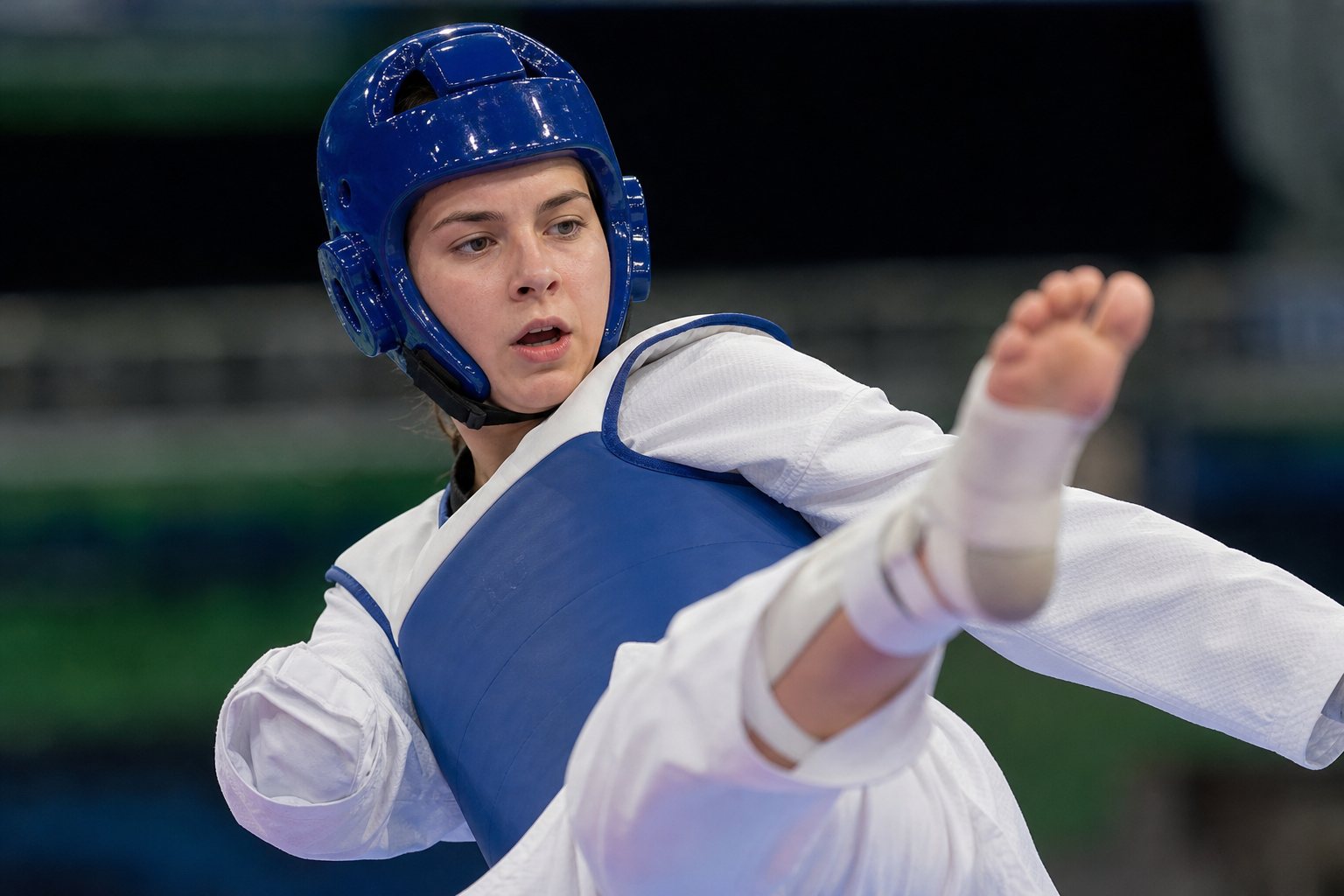
Two fighters circle on an eight-meter mat in the Grand Palais in Paris. One lands a spinning kick on the chest protector, the sensor registers it, the score flashes, and the crowd roars. Both athletes compete with an impairment in one or both arms, and the sport they play is the first full-contact sport in the Paralympic Games, according to the IPC. Para taekwondo (adaptive taekwondo, with sparring called kyorugi and forms called poomsae) is taekwondo for athletes with a physical impairment, and sparring made its Paralympic debut at Tokyo 2020.
Para Taekwondo guides: what do you need?
New to para taekwondo? Start with the first card. Everything here is general education, not medical advice.
History & Origins of Para Taekwondo
Taekwondo was developed in postwar Korea and made its Olympic debut as a demonstration sport at Seoul 1988 (Paralympic.org). The para version is much younger. World Taekwondo began developing para kyorugi (sparring) in 2005, the first world championships were held in Baku, Azerbaijan, in 2009, and the sport was confirmed for the Paralympic programme in 2015.
Para taekwondo made its Paralympic debut at Tokyo 2020 (held in 2021), with 70 athletes from 37 countries. At Paris 2024 the field grew to 121 athletes from 54 nations competing in 10 medal events, five for men and five for women, in sport classes with weight categories (Paralympic.org).
- 1988: Taekwondo is a demonstration sport at the Seoul Olympics.
- 2005: World Taekwondo begins developing para kyorugi.
- 2009: First world championships, Baku.
- 2015: Para taekwondo is confirmed for Tokyo 2020.
- 2021: Paralympic debut at Tokyo 2020: 70 athletes, 37 countries.
- 2024: Paris: 121 athletes, 54 nations, 10 medal events.
Official results and records
We list official sources instead of repeating results we have not checked ourselves:
- Paralympic.org: Para taekwondo (results, medals, athlete profiles)
- Paralympic Games results
- World Taekwondo (para championships and rankings)
Notable Athletes of Para Taekwondo
The sport is new, so these are athletes from its first two Paralympic Games. This is not a ranking.
- Leonor Espinoza Carranza (PER): named by Paralympic.org as the sport’s most successful athlete; her profile shows K44 gold medal contests won at Tokyo 2020 (-49 kg) and Paris 2024 (-47 kg) (profile).
- Zakia Khudadadi (Refugee Paralympic Team): bronze in the women’s K44 -47 kg at Paris 2024 on 29 August 2024, the Refugee Team’s first Paralympic medal.
- Palesha Goverdhan (NEP): Nepal’s first Paralympic medallist, at Paris 2024.
- Amy Truesdale (GBR): a Paris 2024 Paralympic medallist, listed by Paralympic.org.
How we keep this current: we re-check facts after each major championship and update this page. Spot an error? See our editorial policy.
This page explains how Para taekwondo works, how classes and weight categories are set, what the injury research says and how to start. It is general information, not medical advice. This is a full-contact sport, so talk with a sports medicine doctor, physical therapist or athletic trainer before you begin if you have any concern about your health or your impairment.
Para taekwondo at a glance
| What it is | Taekwondo for athletes with limb impairments or arm amputations (sparring), plus a forms discipline open to many impairments. |
|---|---|
| How it is won | Points for kicks that land on the body, scored by an electronic chest protector; more points for turning and spinning kicks. Kicks to the head are forbidden. |
| Classes | Sparring classes by arm impairment; under the current World Taekwondo Para rules, world and Paralympic sparring lists classes K41 and K44; at Paris 2024 the Paralympic class was K44. |
| Weight categories | Five for men and five for women at Paris 2024. |
| Where it is played | Club dojangs and tournaments, up to World Para Championships and the Paralympic Games. |
| Governing body | World Taekwondo (WT); in the United States, USA Taekwondo. |
| Season | Tournament-based; the Paralympic Games every four years. |
How Para taekwondo works
The rules follow Olympic taekwondo with safety changes, says the IPC. Fighters score by landing kicks to the body with enough power and accuracy; the chest protector is electronic and registers the hit. Turning kicks earn extra points, and spinning kicks earn more, and spinning kicks are confirmed by judges pressing a button. Punches to the body do not score. A kick to the head is not allowed and is penalized, as are grabbing, pushing, kicks below the belt and stepping out of the ring. These penalties are called gam-jeom and give the opponent a point. A fighter can win on points, by a large lead, because the opponent collects 10 penalties, or by disqualification. A tie goes to a Golden Round in which the first fighter to score wins.
Fighters wear head, mouth and chest protection. The current World Taekwondo Para rules set the default as three two-minute rounds with a one-minute rest. Event formats can vary, so check the competition notice for the format that applies.
Classes and weight categories in plain words
- K44: one arm impaired below the elbow.
- K43: both arms impaired below the elbow.
- K42: one arm impaired above the elbow.
- K41: both arms impaired above the elbow.
These descriptions come from Paralympic Canada and World Taekwondo news. Around 2021 World Taekwondo adopted a combined “Super K44” class that merged most fighters formerly in K42 and K43 with K44, and at Paris 2024 the Paralympic events were all K44. Fighters meet only opponents in the same class and weight category. The Paris 2024 weights were men -58, -63, -70, -80 and +80 kg, and women -47, -52, -57, -65 and +65 kg. How classes are grouped can change from one event to the next, so check the rules for the event you plan to enter.
Poomsae (forms)
Poomsae is a pattern of set movements judged for accuracy and presentation instead of contact. World Taekwondo has developed Para poomsae since 2013 for athletes of all impairment types, according to the IPC, but it was not contested at Tokyo 2020 and we did not find it on the Paris 2024 or LA28 programmes. It is a good route into the sport for people who prefer not to spar, including athletes with neurological or intellectual impairments, who compete in separate “P” classes.
Who plays it and at what level
Beginners and clubs. Most people start in a regular taekwondo school or an adaptive sports program, with a coach who is willing to adapt drills. Belts, forms and light sparring come before any tournament. See our taekwondo hub for the standard path.
Classified competition. International Para events require classification under the World Taekwondo Para classification rules; athletes found not eligible, or whose classification is not complete, cannot compete. Event documents we found ask new athletes to submit a Medical Diagnostic Form well before competition (the current classification rules say about four weeks) and to hold a WT Global Athlete License. We could not confirm USA Taekwondo’s own current process, so contact USA Taekwondo before you plan.
World and Paralympic level. World Taekwondo developed the Para sport in 2006. The first Para World Championships in 2009 had 36 athletes from 16 countries; the 2019 championships had 333 athletes from 66 countries. Para taekwondo debuted at the Paralympic Games in Tokyo 2020. At Paris 2024 there were 121 athletes (61 men, 60 women) from 54 nations in 10 medal events, according to the IPC. The IPC confirmed Para taekwondo among the 22 sports of the LA28 programme (30 January 2023), and its June 2025 announcement lists 10 medal events (five men’s, five women’s) and 120 athlete places for the Games on 15 to 27 August 2028. The schedule can change, so check the official programme for the current Games. We did not find school or college Para taekwondo programs in our sources.
Physical demands
Sparring alternates short explosive attacks with brief recovery and constant movement, so it relies on leg power, balance on one leg while kicking, hip mobility and conditioning for repeated efforts. Para classes group fighters with similar arm function. We found no peer-reviewed physiological data specific to Para taekwondo in our search, so a coach and clinician who know your impairment should shape your training.
Health and safety for Para taekwondo
Para taekwondo has among the highest injury figures in Paralympic sport, so this section matters.
- What the Paris 2024 data show: in the Paralympic surveillance study of 4,450 athletes over 14 days, taekwondo had the highest injury incidence of any sport, 27.3 per 1,000 athlete days, against 8.6 for all sports together, and the highest injury burden (64.3 days lost per 1,000 athlete days). Taekwondo, 5-a-side football and sitting volleyball had the highest incidences.
- Over a full year: in a prospective study of 102 Brazilian para athletes in four sports, taekwondo had the highest prevalence of injuries (44.9%), and across the sports the shoulder, ankle and knee carried the largest burdens. The authors called for prevention plans that fit each sport.
- Head knocks: head kicks are banned, but fighters still fall and collide. The CDC HEADS UP steps are to stop, watch for headache, dizziness, confusion or balance trouble, and have a healthcare provider decide when it is safe to return. Call 911 for danger signs such as repeated vomiting, a seizure or one pupil larger than the other.
- Protection: the head, mouth and chest protection required in competition is not optional in training either. Ask your coach about the fit of every piece and about the extra equipment a classification card or club may require.
- Rest and weight: weight categories can tempt athletes to cut weight quickly. Do not crash-diet or dehydrate yourself; talk to a doctor or registered dietitian.
Injured? See a sports medicine doctor, physical therapist or athletic trainer. This page cannot diagnose anything or clear anyone to return to sparring.
Training, recovery and nutrition pointers
Our martial arts training, martial arts recovery and martial arts nutrition and supplements pages cover the general ground. In Para taekwondo, build in kicking technique, balance and leg strength, hip and ankle mobility, and enough rest days between hard sparring sessions. Sleep is the base: the CDC recommends at least 7 hours for adults and 8 to 10 hours for teens.
Gear
For competition, World Taekwondo approves the protectors and electronic equipment, so buy tournament gear only after your coach confirms what your event requires. For training:
- Mouthguard: a fitted guard protects teeth and is part of required protection in competition. Boil-and-bite guards are a common starter.
- Uniform (dobok), head guard and chest protector: get these through your club so they match its rules.
- Foam roller and slides: for tight legs and tired feet after a session; see our recovery tools guide and recovery shoes guide.

Shock Doctor Gel Max Mouthguard
- Boil-and-bite gel-fit liner
- Breathing channels
- Youth and adult
$11.99 at Amazon, as of Nov 17, 2026 02:07 UTC
Check price on Amazon
TriggerPoint GRID 1.0 Foam Roller
- 13 x 5 in, hollow core
- Multi-density surface
- For legs and back
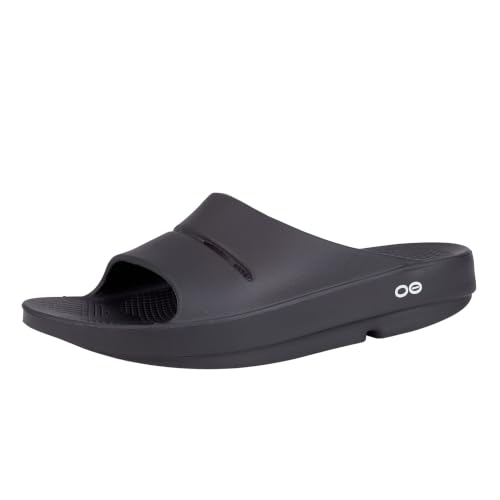
OOFOS OOahh Slide
- OOfoam slide
- APMA Seal of Acceptance
- Machine washable
$59.95 at Amazon, as of Nov 17, 2026 02:07 UTC
Check price on AmazonRelated sports and disciplines
Para taekwondo is the adaptive form of taekwondo. For other martial arts see martial arts, kickboxing and MMA. More adaptive sports: Para archery, Para badminton and Para canoe.
Para taekwondo FAQs
Is Para taekwondo in the Paralympics?
Yes. It debuted at Tokyo 2020, had 10 medal events at Paris 2024 and is among the 22 sports confirmed for LA28 in August 2028.
Who can compete?
Sparring is for athletes with a limb impairment or arm amputation, in the K40 classes; world and Paralympic sparring currently lists K41 and K44. Athletes must be classified under World Taekwondo’s Para rules; those found not eligible cannot compete in Para events.
Are head kicks allowed?
No. Kicks to the head are forbidden and cost a penalty point, and fighters still wear head protection.
Is Para taekwondo dangerous?
It is a full-contact sport, and at Paris 2024 it had the highest injury incidence of any Paralympic sport (27.3 per 1,000 athlete days). Good coaching, protective equipment and rest all help, and a doctor can advise on your own risk.
Can I do Para taekwondo without sparring?
Yes. Para poomsae (forms) is open to many impairment types and has its own classes, though it is not on the Paralympic programme we found.
Sources
- IPC: Para taekwondo
- IPC: Para taekwondo, Paris 2024 overview
- IPC: 10 things to know about Para taekwondo
- IPC: Paris 2024 introduction to Para taekwondo
- Paralympic Canada: Para taekwondo
- World Taekwondo: the “Super” K44 class
- IPC: LA28 medal event programme and athlete quotas
- IPC: LA28 initial sport programme
- Injury and illness at the Paris 2024 Paralympic Games, British Journal of Sports Medicine (Europe PMC)
- Injuries and illnesses in Para athletes: one-year study, PubMed
- Sports-related health problems in para sports: systematic review, PubMed
- CDC HEADS UP: signs and symptoms
- CDC: sleep
Keep exploring: the taekwondo hub, martial arts injuries, martial arts gear, our recovery tools guide and the sports hub.