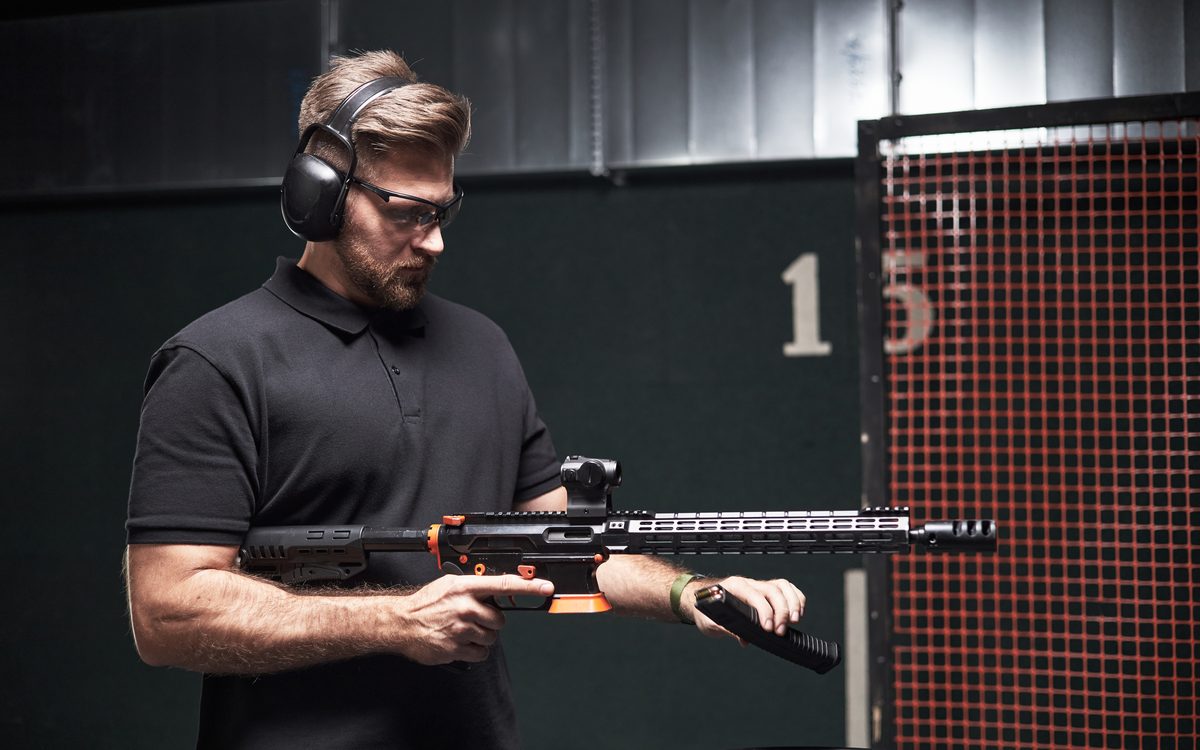
Shot forty-two is a six. Eighteen shots remain, the scoreboard is still glowing, and the only thing the shooter controls is what happens in the next ten seconds. Shooting mental training is the practice of building attention, calm, routines and a useful way of talking to yourself, so that the process stays the same when the match gets tense. It is mental performance, not mental health care, and the two are different things.
Quick answer: Shooting is a sport where mind and body are very tightly linked. The research on shooters is mostly small studies, so treat all of it as promising, not proven. Common tools include a repeatable pre-shot routine, slow breathing, instructional self-talk, mindfulness and imagery, and a plan for what to do after a bad shot. Anxiety, depression, disordered eating or burnout are health matters: take them to a qualified professional.
General information, not medical advice. Back to the shooting hub. For rules and range commands see shooting rules.
Pressure over a whole match
A 2025 study in Scientific Reports took advantage of the 60-shot qualification format, splitting it into six sets of ten, to look at stress and performance in elite shooters. It reported an inverted-U pattern: the best performance came in the middle of the match, with similar dips in the first and last sets. The authors interpret this through the idea that too little and too much arousal both hurt. For a shooter it means the first shots and the last shots are different mental jobs: the first about settling, the last about holding together under the weight of the score. The study cannot say what each athlete should do, and the inverted-U idea itself is debated in sport psychology, so read it as one lens.
Focus and a repeatable routine
Most coaches teach a pre-shot routine: the same sequence of steps, in the same order, every shot. It is general coaching practice, and a good one for a sport where the shot is a closed skill. A routine gives attention somewhere to go. Examples a coach might build with you: stance check, breath, sight picture, release, a short pause after the shot. A routine should be short enough to repeat 60 times.
Attention also tires. A 2026 randomised crossover study of 15 well-trained compound archers, a precision sport close to shooting, found that 30 minutes of a demanding mental task made shooting accuracy worse in the next session. It suggests that mental energy is a limited resource during a match day; plan quiet time and protect it. See shooting recovery.
Breathing and calm
A 2018 systematic review of slow breathing in healthy people found that breathing slower than ten breaths per minute was linked with changes in heart rate variability and calmer, more alert states. The review was not in shooters. A coach can show you a simple breathing pattern that fits your shot routine. We do not recommend dramatic breath holds or anything that makes you feel dizzy; stop if you do.
Self-talk
A 2011 meta-analysis of 32 studies by Hatzigeorgiadis and colleagues found a moderate positive effect of self-talk on sport performance (effect size 0.48), and found that instructional self-talk worked better than motivational self-talk for fine motor tasks and that self-talk helped more for novel tasks than well-learned ones. For a fine-motor sport like shooting that suggests short instructional cues, such as a one-word reminder of the next step, rather than pep talks. Words work differently for different people, so try them in training.
Mindfulness and acceptance
Two recent studies looked at mindfulness-type training in shooters. In a 2026 study in Frontiers in Psychology, 14 elite 10 m air rifle shooters were randomly assigned to a seven-week Mindfulness-Acceptance-Insight-Commitment program or a control group. Under a stress-induction protocol, the mindfulness group showed changes in a brain-wave measure linked to attention. For shooting scores the group-by-time interaction was not significant, so the authors describe only a descriptive improvement. A 2025 paper described the development of a ten-session Acceptance and Commitment Performance Training for shooters, built after a needs assessment with 28 elite and collegiate shooters and tested in small pilots. Both are small and early. If mindfulness appeals to you, ask a qualified sport psychology consultant, for instance via the Association for Applied Sport Psychology’s resources, rather than copying a program from a paper.
Imagery and visualisation
A 2026 scoping review mapped how mental imagery is used for stress management in athletes. Imagery is common in sport, and many shooters rehearse a match in their head. We found no shooting-specific imagery trial to quote, so we describe it as general practice: rehearse the routine, the range, the sights and the pace, and include how you will handle a bad shot.
Handling a bad shot or a bad day
A 2026 pilot study of ten elite youth biathletes tested whether repeated negative priming cues caused extra errors in a shooting task, and found they did not, contrary to a well-known “don’t think of a white bear” theory. It is a small pilot, so it does not settle anything, but it suggests that a mistake does not need to spiral. Practical, general coaching steps: let the shot go, take a breath, return to the routine and make the next shot a fresh one. Goal setting that focuses on process, such as completing the routine on every shot, rather than a final score, is also widely used coaching practice, not a study result.
Competition preparation
For rules and range commands see our rules page. A general approach is to visit the range if you can, practise the match timetable, pack the night before, and have a plan for waiting between relays. Strategy in shooting is mostly about managing yourself; in shotgun events it also includes reading targets and your own gun mounting. Decisions are quick; practice makes them automatic.
Young shooters
We did not find a shooting-specific source on youth mental skills. Young athletes benefit from supervision, a positive coach and an emphasis on learning over scores. Parents and coaches should watch for signs of stress.
Mental performance is not mental health care
Nerves before a match are normal. Anxiety that does not go away, low mood, loss of interest, disordered eating, severe sleep problems or burnout are health matters. The International Olympic Committee’s 2019 consensus statement treats mental health in elite athletes as a health concern requiring assessment and care. Talk with a doctor, a licensed mental health professional or your school or team’s support. In the United States, the 988 Suicide and Crisis Lifeline is available by call or text at 988 at any time; if you are in immediate danger, call emergency services. Sport psychology tools support performance; they do not replace treatment.
Shooting mental training FAQs
How do I stay calm in a final?
No technique guarantees calm. Common tools are a routine, slow breathing and short instructional cues, practised until they are automatic.
Is there a best breathing technique for shooting?
We found no study naming one. Slow breathing is linked with calmer physiology in healthy people; a coach can fit a pattern to your shot.
Does mindfulness improve shooting scores?
A small 2026 study of 14 elite air rifle shooters reported attention-related brain changes but no significant score effect. More research is needed.
What do I do after a bad shot?
Common advice is to let it go, breathe and return to your routine for the next shot. A coach can help you practise it.
When should I talk to a professional?
When worry, low mood, eating concerns or exhaustion persist or affect daily life. See a doctor or licensed mental health professional.
Sources
- The inverted-U relationship between stress and performance in elite shooting, Scientific Reports 2025
- Mental fatigue and archery shooting performance, Brain Sciences 2026
- Zaccaro et al., slow breathing systematic review, Front Hum Neurosci 2018
- Hatzigeorgiadis et al., Self-talk and sports performance: a meta-analysis, 2011
- Mindfulness training and shooting accuracy in competitive stress, Frontiers in Psychology 2026
- ACPT for elite shooters, development and validation, 2025
- Priming negative cues on Stroop rifle shooting in elite biathletes, 2026
- IOC consensus statement, mental health in elite athletes, 2019
- Association for Applied Sport Psychology, resources
- 988 Suicide and Crisis Lifeline
General information for education only, not medical advice. It does not replace a visit with a doctor, physical therapist or athletic trainer, or instruction from a certified coach or range officer. See how we write and check our pages in our editorial policy.