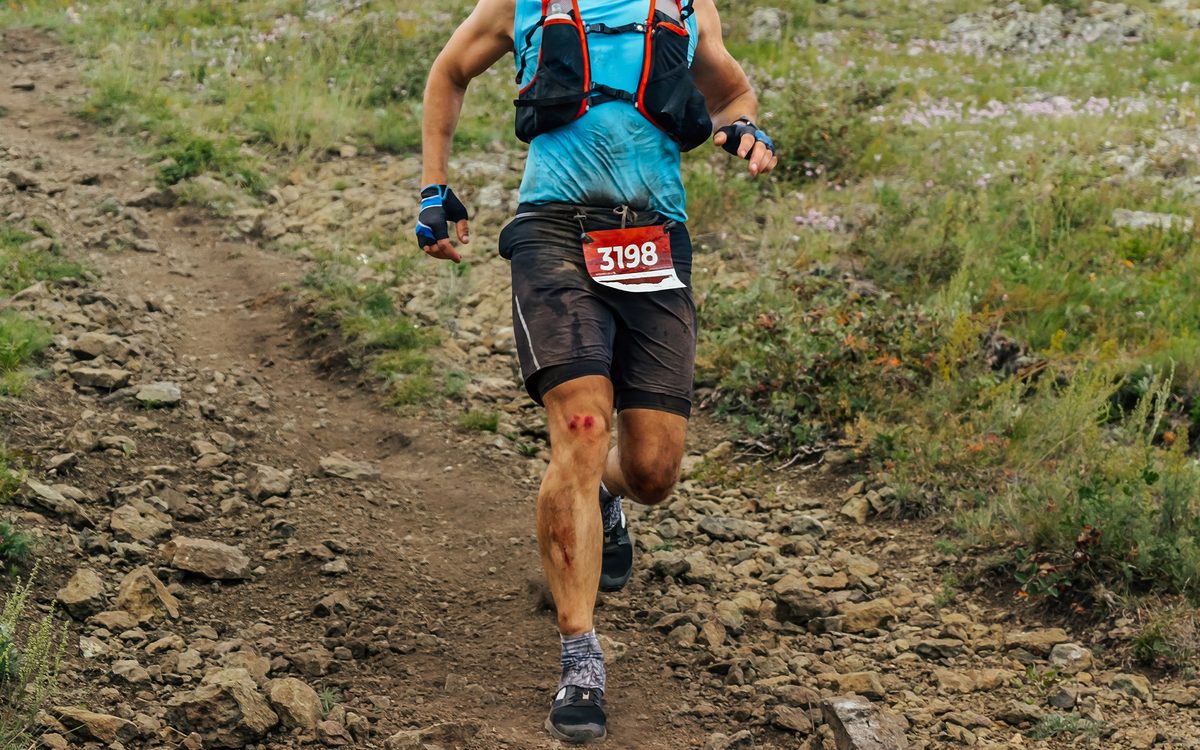
Two miles from the trailhead, a runner on a wet descent catches a toe on a root, windmills, and stays upright by luck. Nobody trains for that exact moment, but the last six weeks of single-leg balance work, a rested body and shoes with grip are what make the stumble a story instead of a sprain. Trail running injury prevention is the set of habits around a runner that aim to lower the chance of getting hurt: preparation, technique, gradual load, strength, sensible choices about weather and terrain, and equipment that fits. It lowers the odds. It cannot promise anything.
Quick answer: The best-supported steps are gradual increases in running load, strength and balance work, rested legs for technical descents, shoes that fit with enough grip, and sensible choices about heat, storms and altitude. Most evidence for trail runners comes from reviews and observational studies, so these are habits, not guarantees. See a sports medicine doctor, physical therapist or athletic trainer if pain stays in one spot, shows up at rest or changes how you run, and call emergency services after a head injury with danger signs.
Warm-up
We did not find a trial-tested trail-running warm-up programme like the FIFA 11+ in soccer, so there is no single published routine to point to. The 2022 trail review recommends “complete kinetic chain prehabilitation” made of dynamic flexibility, neuromotor strength and balance, and plyometrics to build stable movement on trails (Arthrosc Sports Med Rehabil 2022). Common practice is five to ten minutes of easy running or walking, leg swings and a few light hops or skips before technical terrain (general coaching practice, not a tested protocol).
Technique on rough ground
The same review says inadequate neuromotor control, running through fatigue and abnormal movement on variable terrain are key mechanisms behind trail injuries, and that real-time changes in cadence, step length and knee flexion may reduce impact-related risk (trail review). Slow down on wet roots, loose rock and steep descents, keep steps short and quick, and look ahead; this is common coaching advice. Walk the technical bits when tired, because fatigue is a named risk.
Progressive load
The review also says overuse causes more than 70% of trail-running musculoskeletal injuries, mainly in the knee and ankle, and that learning to recognise early pain and adjust training can stop an injury progressing. The American Academy of Pediatrics suggests increasing weekly running mileage by no more than 10% (AAP HealthyChildren: Running). It is a rule of thumb, not a guarantee, and it does not count climbing, so add hills and long descents slowly too. See the training page.
Strength, balance and conditioning
A systematic review of six randomised trials (7,738 participants aged 12 to 40) found that strength training reduced sports injuries, with more strength volume linked to a bigger benefit (Lauersen et al., 2018). It covers sports broadly, not trail runners alone. Because ankle sprains are the most common acute trail injury in the 2022 review, single-leg balance, calf and hip strength and low-impact hops are sensible additions. A physical therapist or athletic trainer can tailor them.
Environment and terrain
- Heat. The ACSM consensus statement calls exertional heat stroke a medical emergency and says most heat illness can be prevented by recognising risk factors (ACSM 2023). NATA says heat acclimatization takes 7 to 14 days (NATA). Start hot-weather runs shorter and slower.
- Altitude. The CDC says acclimatizing for 2 to 3 nights at around 2,450 to 2,750 m (8,000 to 9,000 ft) before going higher is protective against acute mountain sickness, that people should not go higher while they have symptoms, and that symptoms that worsen at rest mean descending (CDC Yellow Book).
- Lightning. The National Weather Service says no place outside is safe in a thunderstorm, advises avoiding ridgelines, hilltops and open fields, and recommends waiting 30 minutes after the last thunder; in mountains it advises being off the peaks by noon when storms often build (NWS).
- Cold and wet. General practice is to carry a warm layer and a windproof jacket and to stop sooner on cold, wet days. Race organisers can require items such as jackets and headlamps (World Athletics).
- Getting lost or hurt alone. Tell someone your route and return time; many trails have no phone signal (general advice).
Equipment and fit
A 2026 scoping review mapped 16 studies on footwear in trail running and hiking. Most looked at biomechanics, and the evidence on injury is limited and fragmented (J Foot Ankle Res 2026). The American Academy of Orthopaedic Surgeons advises trying on shoes at the end of the day with the socks you run in, leaving about half an inch beyond your longest toe (AAOS). Claims about grip and “stability” are maker claims; we found no independent rating system that makes them comparable, so test shoes on the terrain you run. Our gear page covers shoes, vests and kit.
Specific groups
A 2025 systematic review of bone stress injury in female off-road runners (17 studies, 897 runners) linked risk to increasing age, disrupted menstruation, previous bone stress injury, lower calcium, vitamin D and calorie intake, and noted limited data (J Sport Rehabil 2025). Eating enough for the training load is part of prevention; see the nutrition and health page. For children and teens, the AAP advises against marathons and suggests the 10% rule.
What prevention cannot do
Healthy runners with good habits still roll ankles and get injured. A review of ultra trail running says injuries come from many causes together (training, terrain, environment, recovery), so no single habit removes risk. Treat prevention as lowering the odds.
When to see a professional
See a sports medicine doctor, physical therapist or athletic trainer if pain stays in one spot, wakes you at night, changes how you run, or follows a fall with swelling or inability to bear weight. After a head injury, the CDC HEADS UP guidance says to stop and have a healthcare provider assess before returning, and to call emergency services for danger signs such as repeated vomiting, a seizure or worsening headache (CDC HEADS UP). Injury detail is on our trail running injuries page and the running injury prevention page.
Trail running injury prevention FAQs
Does stretching before a run prevent injury?
We did not find a trail-specific trial showing it does, so we make no claim. Dynamic movement before technical terrain is common practice.
How do I avoid rolling my ankle?
The 2022 trail review lists ankle sprains as the most common acute injury and recommends balance and neuromotor training. Slowing down on rough ground and not running while very tired are common sense, too.
Do trekking poles reduce injury?
We did not find evidence on that. World Athletics leaves poles to race organisers, so check your race.
Is it safe to run trails alone?
Many people do, and the usual advice is to tell someone your route, carry water, a phone and a warm layer, and know there may be no signal.
Should I replace my trail shoes after a set mileage?
The AAP running page gives a general range of six months or 300 to 500 miles for running shoes. Trail shoes wear faster on rough ground, so check the outsole and cushioning.
Sources
- Injury prevention, safe training techniques, rehabilitation and return to sport in trail runners, 2022
- Lauersen et al., strength training and sports injury prevention, Br J Sports Med 2018
- Jackson et al., Exploring the role of footwear in trail running and hiking: a scoping review, J Foot Ankle Res 2026
- Stennett et al., Bone stress injury in female off-road runners, J Sport Rehabil 2025
- ACSM expert consensus statement on exertional heat illness, 2023
- NATA position statement on exertional heat illnesses
- CDC Yellow Book: High-altitude travel and altitude illness
- National Weather Service: Lightning safety outdoors
- CDC HEADS UP: signs and symptoms
- AAOS OrthoInfo: Athletic shoes
- AAP HealthyChildren: Running
- Narrative review: injuries and illnesses in ultra trail running, 2026
- World Athletics: Mountain and Trail Running
General information for education only, not medical advice. It does not replace a visit with a doctor, physical therapist or athletic trainer. See how we write and check our pages in our editorial policy.