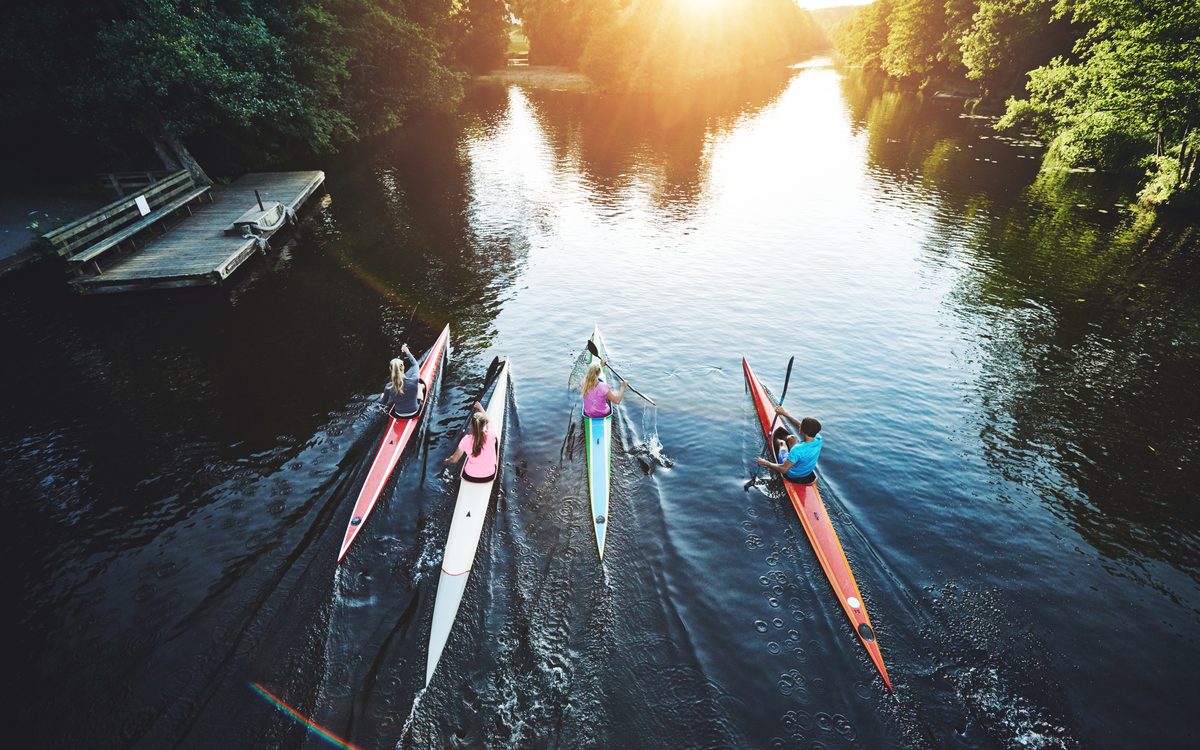
The regatta schedule says the 1000 metre heat is at 9:40 and the final is after lunch, and the question on the dock is what to eat in between. Canoe sprint nutrition and athlete health covers the fuel, fluid and supplement choices around training and racing, plus the warning signs of not eating enough. It is general information, and a registered dietitian who works with athletes can tailor it to you.
Quick answer: Eat enough for the training you do, drink to thirst and plan for heat, and practice any race-day food in training. The International Olympic Committee (IOC) says supplements make only a minor contribution to nutrition, and that only a few, such as caffeine, creatine, buffering agents and nitrate, have good evidence. The 2023 IOC consensus warns that too little energy intake relative to training can harm health and performance in women and men. Choose third-party tested products if you use any, and talk to a doctor or dietitian first.
Fuel for a sport of short, hard efforts
Sprint racing lasts from under a minute to a few minutes, but the training behind it is large. A 2025 systematic review found flat-water kayaking performance is linked to both aerobic and anaerobic capacity, plus strength. That means training days need enough energy and carbohydrate to support both long easy sessions and hard intervals, and enough protein across the day to support strength work. We did not find a sprint-canoe-specific fueling guideline, so general sports nutrition principles apply: eat regular meals, include carbohydrate before and after hard sessions, and include protein at meals. A sports dietitian can give numbers for your size and workload; this page does not.
On race day, general practice is to eat familiar foods you have tested in training, finish the main meal a few hours before the race, and keep light snacks between rounds. Because rounds can be at least 30 minutes apart in 500 and 1000 metre events at a world championship (ICF rules), small, easily digested snacks and fluid are more practical than a full meal.
Hydration, heat and sun
Paddlers work in open sun with little shade and sweat into their clothes without noticing. The National Athletic Trainers’ Association (NATA) position statement on exertional heat illness is the main reference for heat. Practical steps in general coaching practice: bring a bottle that stays in the boat or at the dock, drink regularly, use shade and rest between rounds, and wear sun protection. Heat illness can become an emergency: confusion, collapse, or a very high body temperature needs emergency help.
Body weight and weight pressure
The ICF rules we read do not set athlete weight classes. They set minimum boat weights and maximum boat lengths, which is a rule about equipment, not people. Even so, a paddler may feel pressure to be lighter, or bigger, for a crew or a boat. A 2026 study of 25 Czech sprint kayakers found body mass fell by an average of 1.3 kg and body fat by 0.9 percentage points between the winter preparation and summer competition periods, which shows that normal seasonal change happens. It does not say anyone should try to lose weight.
Relative energy deficiency in sport (REDs)
The IOC’s 2023 consensus statement describes REDs as a syndrome of harmful health and performance effects in female and male athletes who take in too little energy for their exercise. It says that more research since 2018 includes emerging data on low carbohydrate availability, links with mental health, and the effects of low energy availability in males. Signs a clinician might look at include frequent illness or injury, constant tiredness, poor sleep, mood changes, stress injuries, and, in women, changes in menstrual periods. Only a clinician can diagnose it. If you or an athlete you coach is restricting food, skipping meals before training or losing weight without trying, talk to a doctor or sports dietitian. In the United States, the ANAD helpline offers eating disorder support.
Supplements: keep it cautious
The IOC’s 2018 consensus on dietary supplements says supplement use is widespread but only a few products have good evidence of benefit, including caffeine, creatine, buffering agents and nitrate, and that responses vary between people. It also says that a complete nutritional assessment should come before supplement decisions, that supplements intended to boost performance should be trialled in training before competition, and that some products may harm health or lead to an anti-doping rule violation through contamination or banned ingredients.
- Third-party testing. The US Anti-Doping Agency (USADA) says it does not evaluate, certify or endorse any supplement, that labels cannot be relied on to show a product is free of banned substances, and that third-party certification, such as NSF Certified for Sport and Informed Sport, is the best way to reduce risk. It does not remove the risk.
- Banned substances. If you compete in sanctioned events, you are responsible for what is in your body. Ask your national anti-doping agency and team doctor before using anything new.
- Stimulants and young athletes. Caffeine is a stimulant. It is not for everyone, including people sensitive to it or with heart conditions, and youth should not be given performance supplements without a doctor’s advice.
- No dose advice. We do not give doses. Follow the label and your doctor or dietitian.
Canoe sprint nutrition FAQs
What should I eat between heats and the final?
A reasonable approach in general sports nutrition is small, familiar snacks and fluids you have tried in training. A world championship allows at least 30 minutes between rounds for 500 and 1000 metre events under the ICF rules, which is short, so avoid new foods.
Do I need supplements to paddle fast?
The IOC says nutrition makes a small but potentially valuable contribution and supplements only a minor one. Food, sleep and training come first.
Are weight classes used in canoe sprint?
The ICF rules we read do not use athlete weight classes. They set minimum boat weights, which is about the equipment.
What are the warning signs of not eating enough?
The IOC describes REDs as a pattern of health and performance problems from low energy availability. Constant fatigue, frequent illness or injury and changes in periods can be signs; see a doctor or sports dietitian.
How do I choose a safe supplement?
USADA recommends products certified by a third-party program that tests for banned substances, such as NSF Certified for Sport or Informed Sport. Even then, check with a doctor or dietitian.
Sources
- IOC, Consensus statement: dietary supplements and the high-performance athlete (Br J Sports Med, 2018).
- IOC, 2023 consensus statement on Relative Energy Deficiency in Sport (REDs).
- USADA, Supplement Connect.
- NATA, Exertional heat illnesses position statement.
- Physiological and physical determinants of flat-water kayaking (2025); seasonal changes in elite sprint kayakers (2026).
- ICF, Canoe Sprint Competition Rules 2025.
- ANAD, eating disorders helpline.
General information for education only, not medical advice. It does not replace a sports medicine doctor, physical therapist, athletic trainer, dietitian or coach who knows you. How we write: see our editorial policy.
Keep exploring: the canoe sprint hub, recovery and the sports hub.