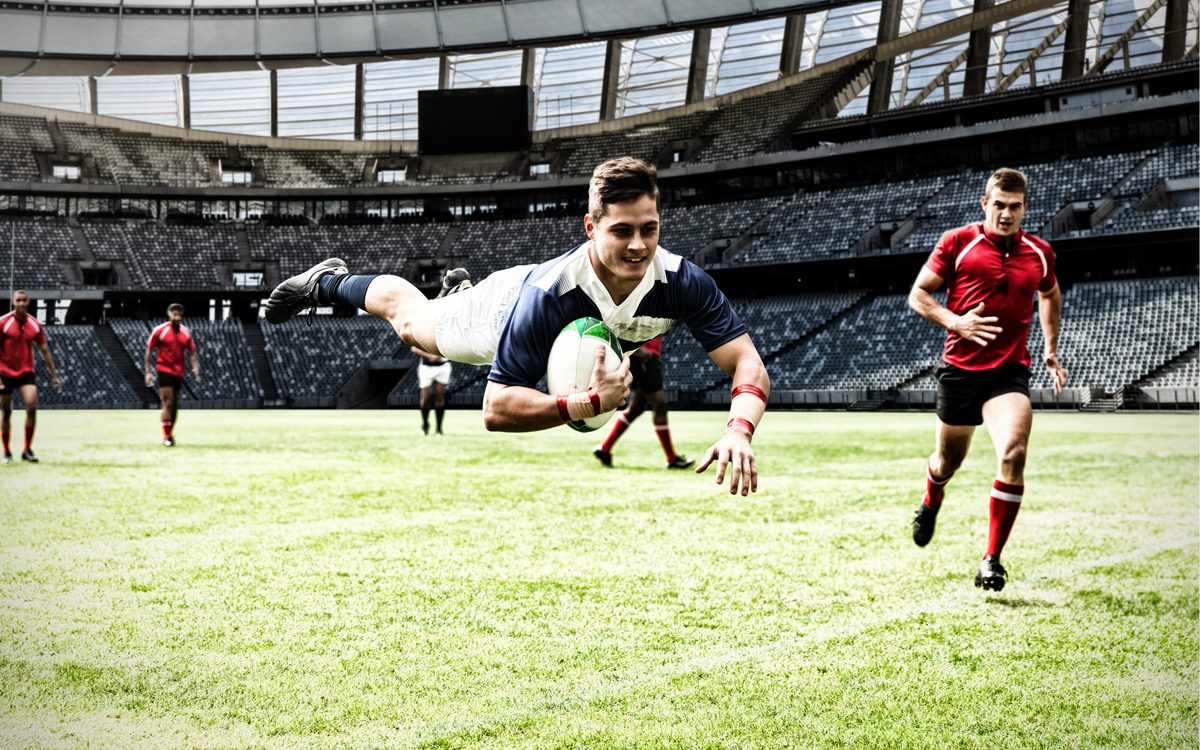
Late in a seven-minute half, the scores are level, and your team has just conceded. In a 15-a-side match there is time to settle. In sevens, the restart kick is already in the air. Rugby sevens mental training is the set of psychological skills, such as focus, routines, imagery, confidence and a way of resetting after a mistake, that help a player perform under pressure and handle a tournament. It is separate from mental health, which we cover in its own section below. This page draws on sport psychology research in rugby, including one interview study of elite sevens players. The format and rules are in our rules and getting started guide.
Quick answer: A 2019 study of 20 elite South African sevens players found five psychological demands: tournament structure, resilience, coping with physicality, performing when fatigued and performing under pressure. Their tools included goal-directed behaviour, imagery, a “back-to-zero” reset after errors and cognitive triggers. No technique guarantees results. Anxiety, depression, disordered eating and burnout are health matters for a qualified professional, not a mindset problem.
What makes sevens mentally different
The South African study (Kruyt and Grobbelaar, Frontiers in Psychology, 2019, PMID 30984080) interviewed 20 professional players aged 21 to 33 and described the sevens-specific demands: the tournament structure with several matches in a day or two, resilience, coping with physicality, performing when fatigued, and performing under pressure. The team culture they described included cohesion, clear purpose, work ethic and a happy environment. This is one qualitative study of one national programme, so treat it as a set of ideas, not proof.
Confidence and focus
A 2025 study of 76 elite players in the Italian rugby union squad before the 2024 Six Nations (Robazza and colleagues, PMID 39674394) found that self-confidence and mental toughness were linked to helpful emotional experiences through problem-focused coping and viewing challenges as challenges rather than threats. In plain words, confident players tended to treat pressure as a problem to solve. A 2009 diary study of five professional union players (Nicholls and colleagues, PMID 18282223) found that blocking was the most cited coping strategy on match days and increased concentration in training, and that strong emotion was linked to lower coping effectiveness. Five players is a very small sample.
Routines and handling pressure
The 2026 position statement from Exercise and Sports Science Australia (PMID 42271117) says pressure can help or hurt performance, and that pre-performance routines, attentional strategies, psychological skills training and mindfulness approaches can be used, with training environments that include realistic pressure. For a sevens player, that means a short routine for the things you control, for example before a drop-kick restart or conversion: the same steps, the same breath, a single focus cue. That application is general coaching practice; the position statement does not name sevens. See our rules page for the 30-second kick clock your routine has to fit.
- Before the match: a short, repeatable routine (warm-up, a few breaths, one or two focus words).
- At restarts and kicks: the same sequence each time; time pressure is part of the skill.
- After a mistake: a reset cue. The South African players described a “back-to-zero” approach, and the next play starts fresh.
- When you are tired: a simple cue about the next action, not the whole match.
Imagery and rehearsal
A 2023 randomised crossover pilot of 10 professional players (Beaven and colleagues, PMID 37527821) tested 15 minutes of mental rehearsal before a stressor and a rugby passing task: passing was better after positive video-guided rehearsal (91%) than after negative video (79%) or self-visualisation alone (86%). It was a small pilot, but it supports using positive, specific imagery rather than dwelling on failure. Imagery should be specific: a kickoff, a tackle, a break.
Contact confidence
A 2023 focus-group study of 18 elite rugby league players (Dixon and colleagues, PMID 38326242) identified bracing for or being blindsided by a collision as factors in how players experienced collisions and concussion, and “psychological readiness for collision” as a theme. Coaches commonly build contact confidence in steps, from no contact to live play. That progression is general coaching practice. A player who is afraid of contact should say so; fear can lead to hesitant, riskier tackles.
Teamwork, leadership and decisions
Sevens has seven players covering the whole field, so every player makes decisions constantly. A 2026 interview study of eight professional women’s rugby captains (Cotterill and Cheetham, PMID 42073969) described empathy, empowerment, collaboration and shared leadership as crucial. Clear roles and a calm voice help; coaches can practise decisions in small-sided games under fatigue.
Setbacks, selection and the next match
A tournament has many chances to bounce back: lose in the morning, play again at noon. The South African players described compartmentalising and resetting. Practical steps (general coaching practice): a quick, honest review with a coach after a match, then a deliberate switch to the next one; separate what you can control (effort, positioning) from what you cannot (the referee, the draw).
Mental health is a separate matter
Mental performance skills are for performing. Anxiety, depression, disordered eating, burnout and the effects of head injuries are health matters and should go to a qualified professional, such as a doctor, psychologist or psychiatrist. The International Olympic Committee’s 2026 consensus statement (PMID 42580854) says mental health symptoms and disorders are common among elite athletes, can affect performance, and can be treated, with many athletes able to continue training and competing with support. A 2020 study of 233 UK Super League rugby league players (PMID 32153985) found moderate or severe anxiety symptoms in 13.7%, and a 2026 study of 235 former elite Australian rugby league players (PMID 41324472) found 29.2% with moderate-to-severe symptoms on a standard scale, higher in those worried about concussion. In the US, you can call or text 988 for the Suicide & Crisis Lifeline at any time. If you are worried about a teammate, tell a coach or a family member.
Rugby sevens mental training FAQs
How do I stay focused in a 7-minute half?
Use a short cue for the next action and a routine you can repeat. Research on pressure (ESSA 2026) supports routines and attentional strategies, but we found no sevens trial that tests them.
How do I handle a mistake in a tournament?
Elite South African sevens players described a “back-to-zero” reset. Make it your own: one breath, one cue, back to the next play.
Does visualisation work in rugby?
A small 2023 pilot of 10 professionals found passing improved after positive video-guided rehearsal. It is early evidence; treat imagery as one tool among several.
Is feeling nervous before a match bad?
The ESSA position statement says pressure can help or hurt performance. Some nerves are normal; if anxiety stops you from playing or sleeping, talk to a professional.
Where can I get help if I am struggling?
Talk to a doctor, a counsellor or a sport psychologist. In the US, call or text 988 for the Suicide & Crisis Lifeline.
Sources
- Kruyt and Grobbelaar 2019, psychological demands of sevens (PMID 30984080)
- Robazza et al. 2025, Italy rugby squad (PMID 39674394)
- Nicholls et al. 2009, stressors and coping (PMID 18282223)
- ESSA position statement: performance under pressure 2026 (PMID 42271117)
- Beaven et al. 2023, mental rehearsal (PMID 37527821)
- Dixon et al. 2023, rugby league collision experience (PMID 38326242)
- Cotterill and Cheetham 2026, women’s rugby captains (PMID 42073969)
- IOC consensus statement on mental health in elite athletes 2026 (PMID 42580854)
- Nicholls et al. 2020, Super League mental health (PMID 32153985)
- Iverson et al. 2026, former elite rugby league players (PMID 41324472)
- 988 Suicide & Crisis Lifeline
- World Rugby sevens variations, Law 8 (30-second kick clock)
General information for education only, not medical advice. See a sports medicine doctor, physical therapist or athletic trainer about any injury or health concern. How we write these pages is in our editorial policy.